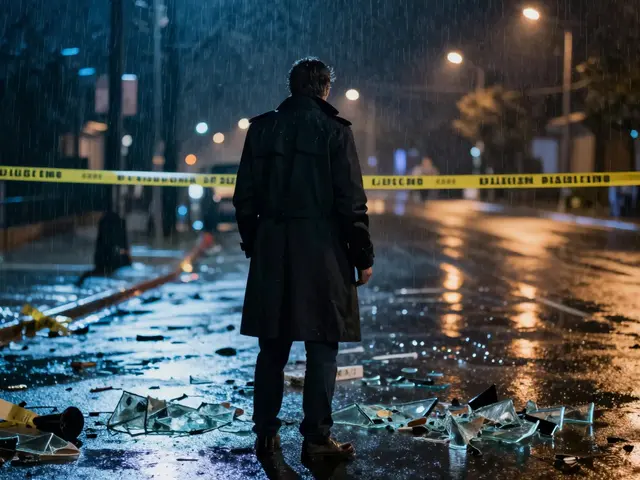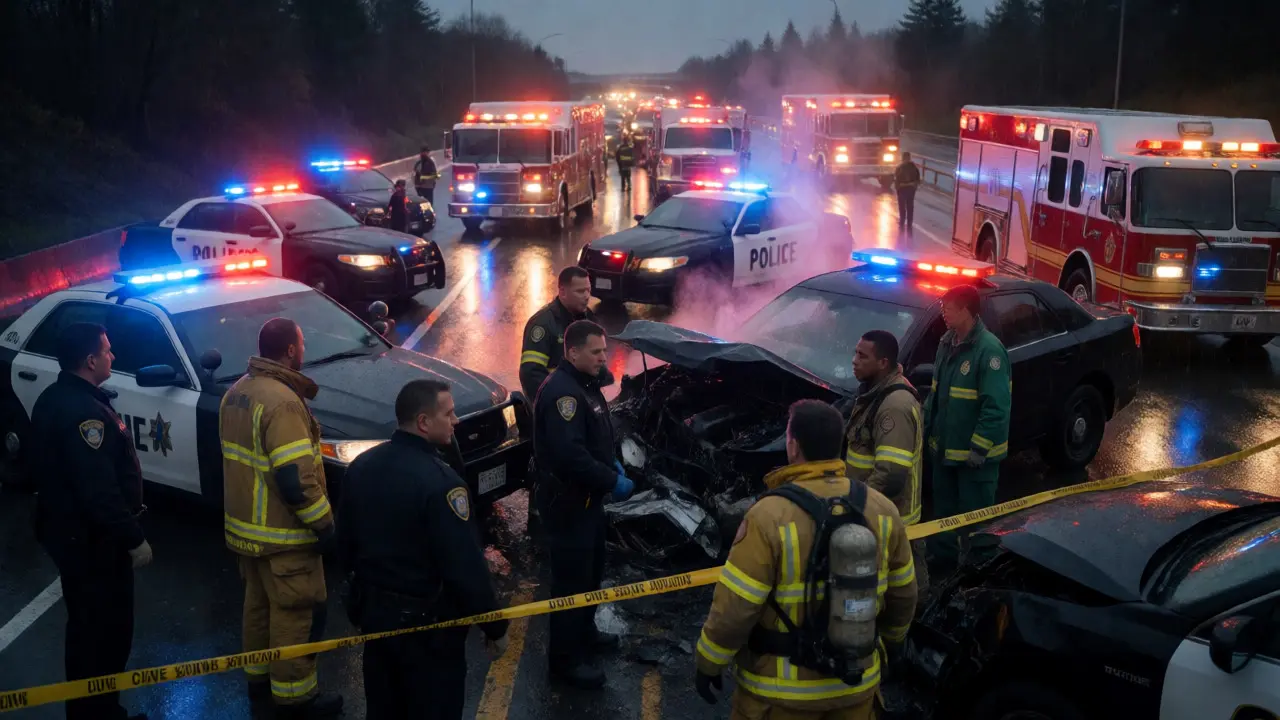
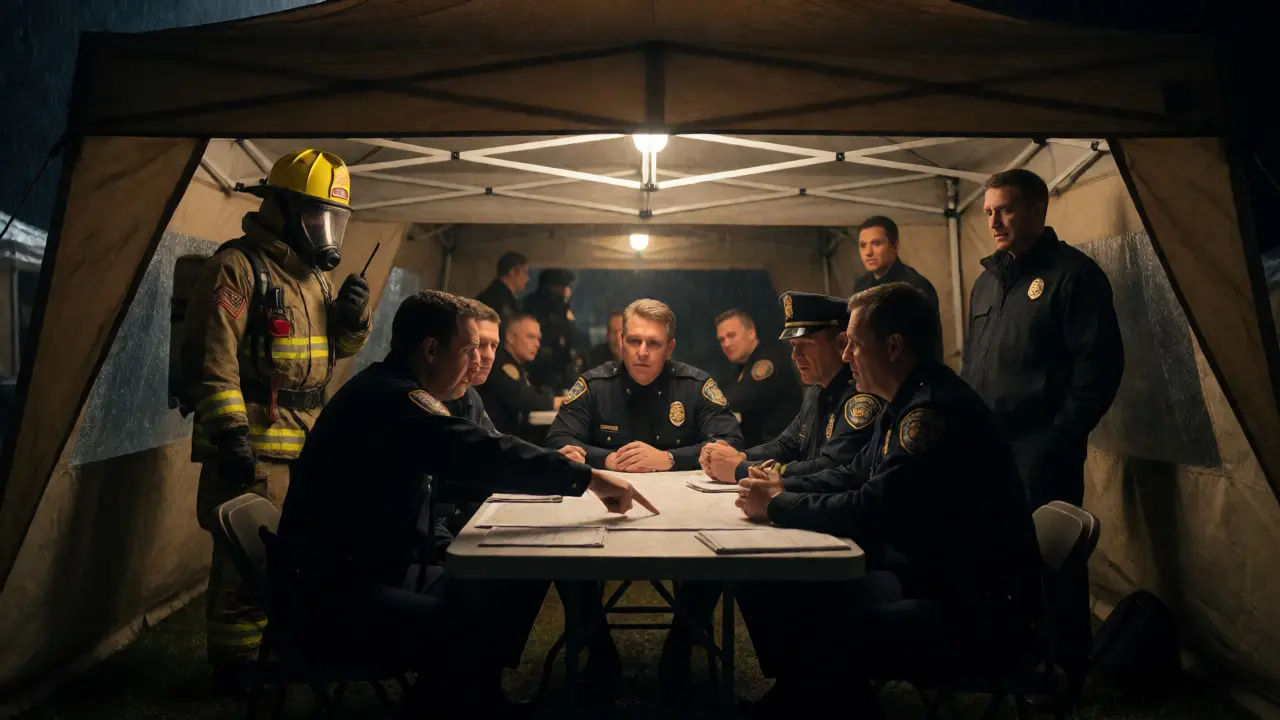
Imagine a multi-vehicle crash on I-5 in Portland that turns out to be more than an accident. It’s a homicide scene with potential explosives, hazardous materials, and multiple victims. Suddenly, you have police officers, detectives, fire investigators, paramedics, bomb squad technicians, and environmental specialists all trying to work in the same muddy, chaotic space. Who steps first? Who touches what? If this isn’t managed well, evidence gets contaminated, legal cases fall apart, and people get hurt. Cross-agency coordination is the structured process that prevents this chaos. It ensures that every responder, from the beat cop to the lead forensic scientist, knows their role, boundaries, and responsibilities.
Why Silos Break Down at Complex Scenes
Most agencies train for their own specific emergencies. Police know how to secure a perimeter. Firefighters know how to put out fires. EMS knows how to stabilize patients. But when these worlds collide, friction happens. In my years working in Portland, I’ve seen scenes where a detective wanted to photograph a blood spatter pattern, but the hazmat team hadn’t yet cleared the area of chemical runoff. The result? Lost evidence and a delayed investigation. The core problem is usually communication gaps and unclear authority. Without a unified plan, everyone acts on instinct. Instinct is great for saving lives, but terrible for preserving evidence. You need a framework that overrides individual agency habits.
The Incident Command System as Your Backbone
You can’t coordinate effectively without structure. Enter the Incident Command System (ICS), a standardized approach used by emergency responders across the United States to manage complex incidents. Unlike traditional hierarchical chains of command, ICS is modular and scalable. It allows different agencies to plug into one organizational chart while maintaining their specific operational needs.
In a major crime scene, the ICS structure typically looks like this:
- Incident Commander (IC): Usually the highest-ranking officer or designated leader who sets overall objectives.
- Operations Section: Handles tactical activities like evidence collection, rescue, and security.
- Planning Section: Tracks resources, documents actions, and forecasts future needs.
- Logistics Section: Provides support services like equipment, food, and communications.
- Finance/Administration Section: Manages costs and procurement.
The key here is that the IC doesn’t necessarily come from the lead investigating agency. In a mass casualty event involving both criminal and public safety elements, the fire department might take initial command until the scene stabilizes, then transfer it to police. This transition must be explicit, documented, and communicated to everyone on site.
Defining Zones and Access Control
Physical control is the easiest place for coordination to fail. You might have three different colored tape lines, each meaning something different to different teams. To fix this, use a concentric zone model. This isn’t just theory; it’s standard practice recommended by the National Institute of Justice.
| Zone | Color Code (Common) | Primary Function | Access Rules |
|---|---|---|---|
| Outer Perimeter | Yellow | Public safety, media control, staging area | Authorized personnel only; check-in required |
| Inner Perimeter | Red | Evidence protection, witness interviews | Investigators and supervisors only |
| Core Scene | White/Blue | Forensic processing, medical examiner entry | Essential processors only; strict PPE compliance |
Notice the strictness of the Core Scene. If a uniformed officer walks through the white tape to grab a coffee cup left by a witness, they’ve potentially destroyed trace evidence. Cross-agency training must emphasize that everyone respects the zones, regardless of rank or badge.
The Chain of Custody Handoff
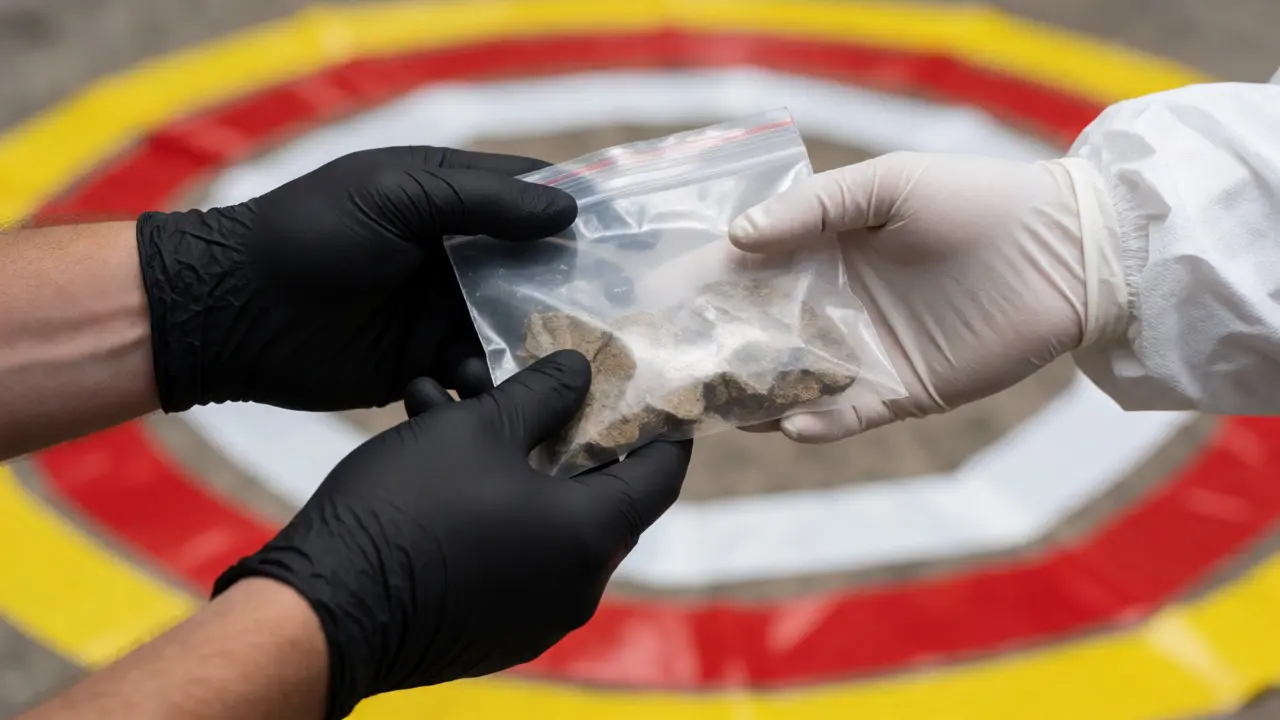
Evidence integrity relies on the Chain of Custody, which is the chronological documentation or paper trail that records the sequence of custody, control, transfer, analysis, and disposition of physical evidence. When multiple agencies are involved, this chain gets fragile fast.
Consider a scenario where the bomb squad finds a suspicious device. They clear it, but leave debris behind. Then, fire investigators enter to look for accelerants. If the bomb techs didn’t document exactly what they removed and where they placed it, the fire investigators might inadvertently contaminate the sample or miss critical context. The solution is a joint logbook or digital tracking system accessible to all authorized parties. Every handoff-whether it’s a weapon from police to ballistics, or a body from police to the Medical Examiner-must be signed, dated, and witnessed.
Communication Protocols That Actually Work
Radios are often incompatible between agencies. A sheriff’s deputy might be on Channel 4, while city police are on Channel 12. During a crisis, relying on runners or cell phones is risky. Here are practical fixes:
- Unified Command Post: Set up a single location where representatives from each agency sit together. Face-to-face interaction solves misunderstandings faster than radio chatter.
- Plain Language Rule: Avoid agency-specific codes. "Code 10" might mean "take a break" to one group and "suspect in custody" to another. Stick to English.
- Daily Briefings: At large scenes lasting hours or days, hold briefings at shift changes. Review what was done, what remains, and any new hazards.
I once worked a scene where two agencies were using different terminology for "secure." One meant "locked down," the other meant "cleared of threats." This led to a premature entry by forensics. Now, we define terms upfront in the Incident Action Plan.
Legal and Liability Considerations
Coordination isn’t just about efficiency; it’s about liability. If a firefighter slips on oil and injures themselves because police failed to cordon off the spill correctly, who pays? Inter-agency agreements (MOUs) should exist before the incident occurs. These documents outline mutual aid expectations, cost-sharing, and liability waivers.
Furthermore, constitutional rights don’t disappear during a coordinated response. Search warrants may need to cover multiple jurisdictions if the scene spans city limits. Ensure your legal advisor reviews the scope of consent or warrant coverage before cross-agency teams begin intrusive searches.
After Action Reviews (AAR)
The job isn’t done when the last body bag leaves. Conducting an After Action Review is crucial for improving future coordination. Gather leads from every agency involved. Ask blunt questions:
- Did we have enough lighting?
- Was the chain of custody maintained?
- Did anyone feel unsafe due to poor communication?
- What resource did we lack?
Document these findings. Share them. Change protocols if needed. Without this feedback loop, you’ll repeat the same mistakes at the next major scene.
Frequently Asked Questions
Who takes command when police and fire respond together?
Typically, the first arriving unit establishes initial command. If the primary threat is life-safety (fire, medical), Fire/EMS often retains command until the scene is safe. Once stabilized, command may transfer to Law Enforcement if the incident becomes primarily investigative. This transfer must be clearly announced via radio and documented.
How do we handle evidence collected by non-police agencies?
Non-police agencies (like HazMat or Bomb Squad) should treat potential evidence with the same care as police. They must tag, package, and log items according to local law enforcement standards. Ideally, they hand these items directly to the Evidence Technician or maintain a parallel log that merges into the main case file immediately.
What is the biggest mistake in cross-agency coordination?
Assuming everyone knows the plan. Often, agencies operate in silos, assuming their standard operating procedures apply universally. The biggest error is failing to establish a Unified Command post early, leading to conflicting orders and duplicated efforts.
Do we need separate warrants for different agencies?
Not necessarily, but the warrant must authorize the specific actions being taken. If police obtain a search warrant for a residence, and fire investigators want to enter to determine the origin of a fire, the warrant language should ideally cover both purposes, or a separate administrative inspection request may be needed depending on state law.
How does technology help coordination?
Digital platforms allow real-time sharing of maps, photos, and logs. Apps like BlueForce or custom GIS tools let agencies see who is where. Body-worn cameras also provide an objective record of interactions and decisions made during the response, aiding in later reviews.