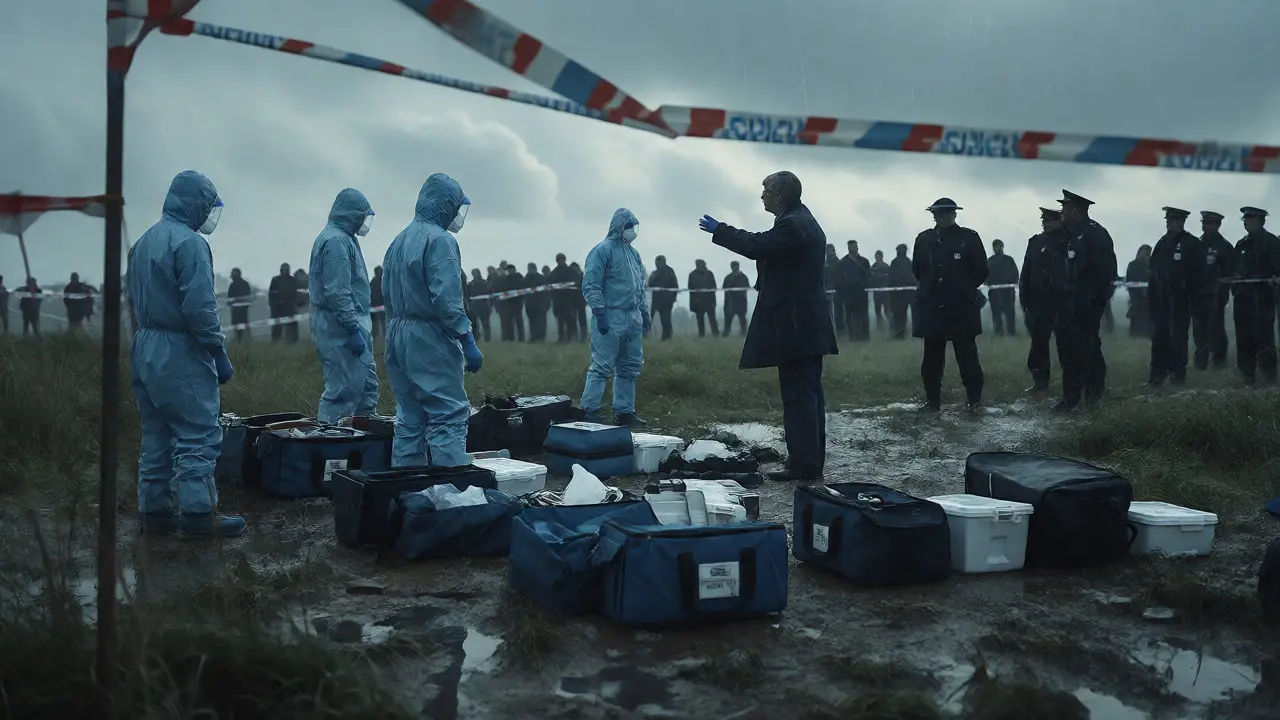
You’ve just arrived at a messy homicide scene. Rain is starting to fall, the local police are holding back a growing crowd of onlookers, and your team of three forensic technicians is standing in the mud, unsure where to put their gear. If you don’t establish a Crime Scene Command Post immediately, that confusion turns into lost evidence, compromised chain of custody, and potentially a mistrial. The command post isn’t just a table with a coffee cup; it is the operational brain of the investigation.
Think of the command post as the air traffic control tower for the entire operation. Without it, everyone flies blind. Whether you’re dealing with a single-room burglary or a sprawling outdoor mass casualty event, the principles remain the same. You need a central hub for information flow, resource allocation, and decision-making. This guide breaks down exactly how to set one up, who runs it, and what actually happens inside those tents when the pressure is high.
Why the Command Post Matters More Than You Think
Most rookie investigators think the action is all about collecting blood spatter or lifting fingerprints. But if the logistics fail, the science fails. A well-run Incident Command System (ICS) structure prevents chaos. It ensures that the person collecting DNA isn’t accidentally stepping on a footprint collected ten minutes earlier. It guarantees that every piece of evidence has a documented path from discovery to the lab.
Here’s the reality: scenes degrade fast. Weather changes, witnesses get tired and start changing stories, and personnel fatigue leads to mistakes. The command post mitigates these risks by creating a static zone of order amidst dynamic chaos. It serves three critical functions:
- Information Hub: All data flows here first. Witness statements, initial suspect descriptions, and lab requests are logged centrally.
- Resource Management: Who needs more gloves? Who needs a flashlight? Who is exhausted and needs a break? The command post tracks this.
- Safety Buffer: It keeps non-essential personnel out of the hot zone, reducing contamination risks and ensuring officer safety.
Choosing the Right Location for Your Command Post
Picking the spot for your command post is a tactical decision, not a random one. You can’t just throw a tent anywhere. If you place it too close to the Primary Crime Scene, you risk cross-contamination. If you place it too far away, communication lags, and morale drops.
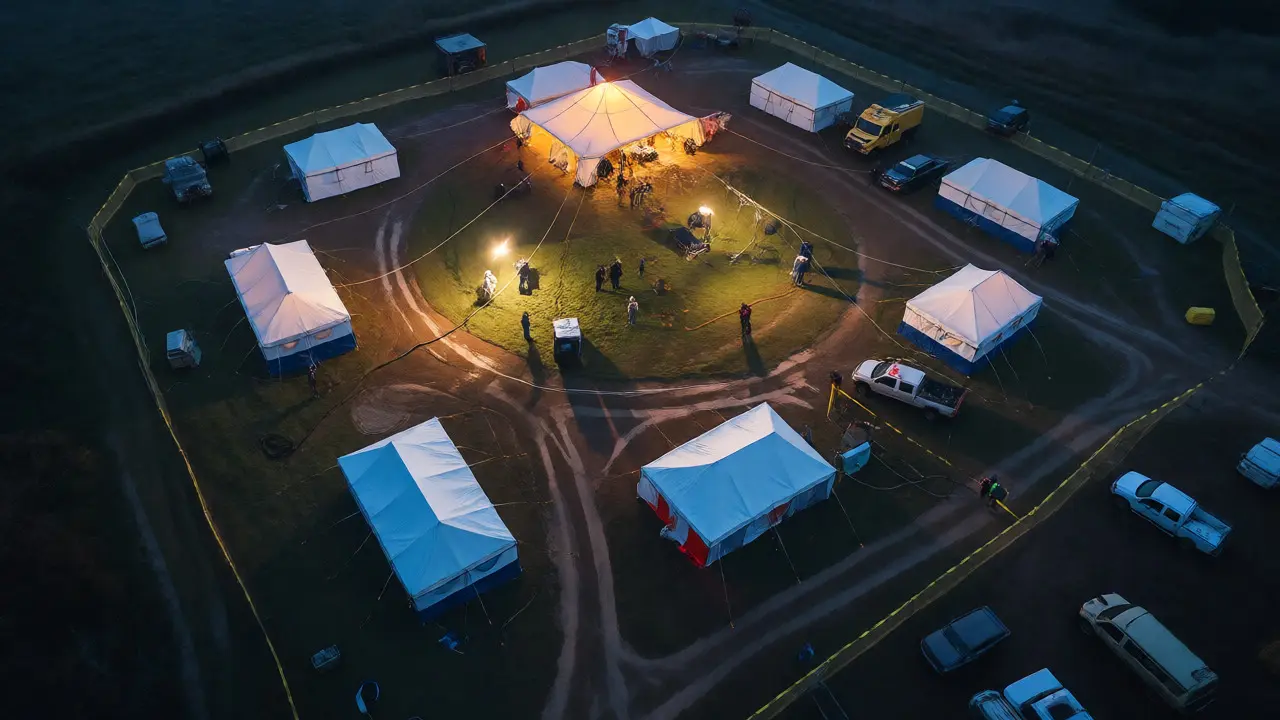
The golden rule is the "Staging Area" concept. Your command post should be located within the outer perimeter but outside the immediate processing area. Ideally, it sits upwind and uphill from any chemical hazards or decomposing biological matter. In urban settings, this might mean using a parked van or a secured section of a nearby sidewalk. In rural areas, you might set up near a vehicle access point so supplies can be brought in without walking through the mud.
Consider these factors when scouting the location:
- Accessibility: Can ambulances, evidence vans, and supervisors reach it quickly?
- Visibility: Can the Incident Commander see key entry points to the scene?
- Privacy: Are you interviewing witnesses where neighbors can overhear sensitive details?
- Power: Do you have access to electricity for laptops, lights, and charging devices?
Essential Equipment and Layout
A bare-bones command post is useless. You need specific tools to make the operation run smoothly. Forget fancy gadgets; reliability is key. Here is what you absolutely need in your kit before you step foot on scene.
| Category | Item | Purpose |
|---|---|---|
| Communication | Radios & Cell Phones | Maintaining contact with dispatch and field teams. |
| Documentation | Scene Log Book | Recording entry/exit times of all personnel. |
| Documentation | Evidence Chain of Custody Forms | Tracking items from collection to storage. |
| Planning | Whiteboard or Flip Chart | Visualizing task assignments and timeline. |
| Comfort/Safety | Tents, Tarps, and Lighting | Protecting equipment and staff from weather. |
| Hygiene | Hand Sanitizer & Waste Bags | Preventing cross-contamination between zones. |
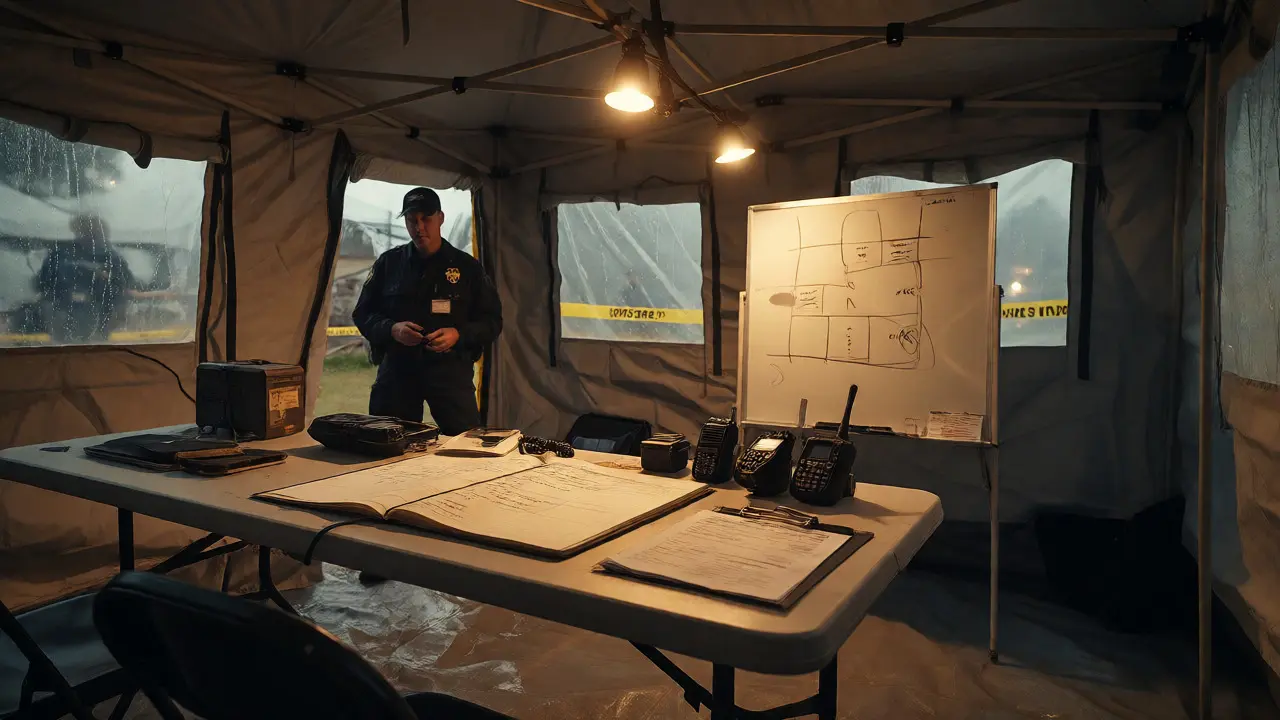
Layout matters, too. Arrange tables so that the Evidence Coordinator sits near the entrance to the hot zone. This creates a natural checkpoint. Every person entering or leaving the scene must sign in and out at this desk. It sounds bureaucratic, but it’s your best defense against claims that an unauthorized person contaminated the site.
Roles Within the Command Structure
You cannot run a complex scene alone. Even if you’re the lead investigator, you need a defined hierarchy. This usually follows the standard Incident Command System model, adapted for forensics.
The Incident Commander (IC) is the boss. They don’t necessarily collect evidence; they manage the big picture. They talk to the press, coordinate with other agencies, and approve major decisions like releasing the body or closing the scene. If the IC is busy talking to the District Attorney, they aren’t watching for potential evidence destruction.
Under the IC, you have the Operations Section Chief. This is often the senior detective or lead CSI. They direct the actual work: who searches which room, who takes photos, who collects samples. They report directly to the IC.
Then there’s the Logistics Officer. This person handles the mundane but vital tasks: getting batteries, ordering food, arranging transport for suspects, and ensuring vehicles are fueled. Don’t underestimate this role. I’ve seen investigations stall because no one remembered to bring extra camera batteries, and the sun went down.
Operational Protocols and Workflow
Once the post is set up, the workflow begins. It starts with the initial briefing. The IC gathers all key personnel for a quick huddle. What do we know? What are the dangers? What is the priority? Is it a rescue situation, or is it purely investigative? This alignment prevents duplicated efforts.
Next comes the documentation phase. The scribe in the command post maintains the master log. Every time a technician enters the scene, they note the time, their name, and their purpose. When they leave, they note the time again. This log is admissible in court and proves that the scene was controlled.
During active processing, the command post acts as a triage center. Technicians bring preliminary findings back to the table. "Hey, we found a shell casing in the backyard." The coordinator logs it, assigns a unique ID number, and ensures it’s bagged properly before moving to the next item. This real-time feedback loop allows the IC to adjust the search strategy instantly. Maybe that shell casing suggests the shooter was further back than we thought. Now, expand the perimeter.
Common Pitfalls to Avoid
Even experienced teams mess this up. The most common error is "command creep," where the Incident Commander gets too involved in the minutiae of evidence collection and forgets to look at the whole scene. Step back. Let your specialists do their jobs.
Another frequent issue is poor communication between the command post and the media. If you let reporters wander into the staging area, you compromise privacy and security. Designate a specific media liaison officer who stays outside the main perimeter. Keep them informed, but keep them out.
Finally, neglecting personal comfort kills efficiency. Investigators working in freezing rain or blistering heat without breaks make errors. Ensure the command post has heating or cooling options, snacks, and hydration. A happy team is a careful team.
Wrapping Up: The Debrief and Release
The job isn’t done when the last body bag leaves. The command post remains active until the scene is fully released. This involves a final sweep, confirming all evidence is accounted for, and securing the site if necessary. The IC conducts a debrief with all team members right there in the command post. What went well? What didn’t? These notes are gold for future training.
Establishing a robust crime scene command post transforms a chaotic emergency into a manageable investigation. It protects the integrity of the evidence and the people handling it. Next time you walk onto a scene, look for the tent. If it’s missing, stop and build one. Your case depends on it.
Who is responsible for setting up the crime scene command post?
Typically, the first arriving supervisor or the designated Incident Commander initiates the setup. However, logistical support units or junior officers often handle the physical assembly of tents and tables under the IC's direction. The goal is to have it operational before extensive processing begins.
Can a command post be mobile?
Yes, many agencies use specialized command vehicles equipped with desks, computers, and communication systems. These are ideal for large-scale incidents or scenes lacking infrastructure. For smaller scenes, a portable folding table and chair set up under a canopy serve as an effective mobile command post.
What happens if multiple agencies respond to the scene?
A unified command structure is established. The primary agency (usually local law enforcement) retains overall authority, while representatives from other agencies (fire, EMS, federal bureaus) integrate into the command post. Clear lines of communication prevent jurisdictional conflicts and ensure coordinated efforts.
How long should the command post remain active?
The command post stays active until the scene is officially released by the Incident Commander. This includes time for final documentation, equipment retrieval, and the post-incident debrief. Leaving early risks losing critical contextual information needed for the final report.
Is digital logging better than paper logs for command posts?
Digital logging offers advantages in speed and searchable records, but paper backups are essential in case of power failure or device malfunction. Many modern command posts use hybrid systems, entering data digitally while maintaining a manual log for redundancy and legal verification.