You walk into a room. The air is still. On the floor, there’s blood. But it isn’t just sitting there. It’s smeared. Dragged. Wiped clean in one spot, but heavy in another. What happened here? Who moved? Where did they go?
Blood doesn’t lie. It tells a story of movement, force, and time. And when someone walks through it-or tries to hide it-they leave behind contact and wipe patterns, which are critical types of bloodstain evidence that reveal how objects or people interacted with existing blood deposits at a crime scene. These patterns aren’t random smears. They’re clues. Clues that can tell investigators whether a victim was dragged, whether someone tried to clean up, or even what kind of shoe left the mark.
What Are Contact and Wipe Patterns?
Let’s break this down. First, you need to know the difference between a contact stain, a wipe, and a swipe. They sound similar, but they mean very different things in forensics.
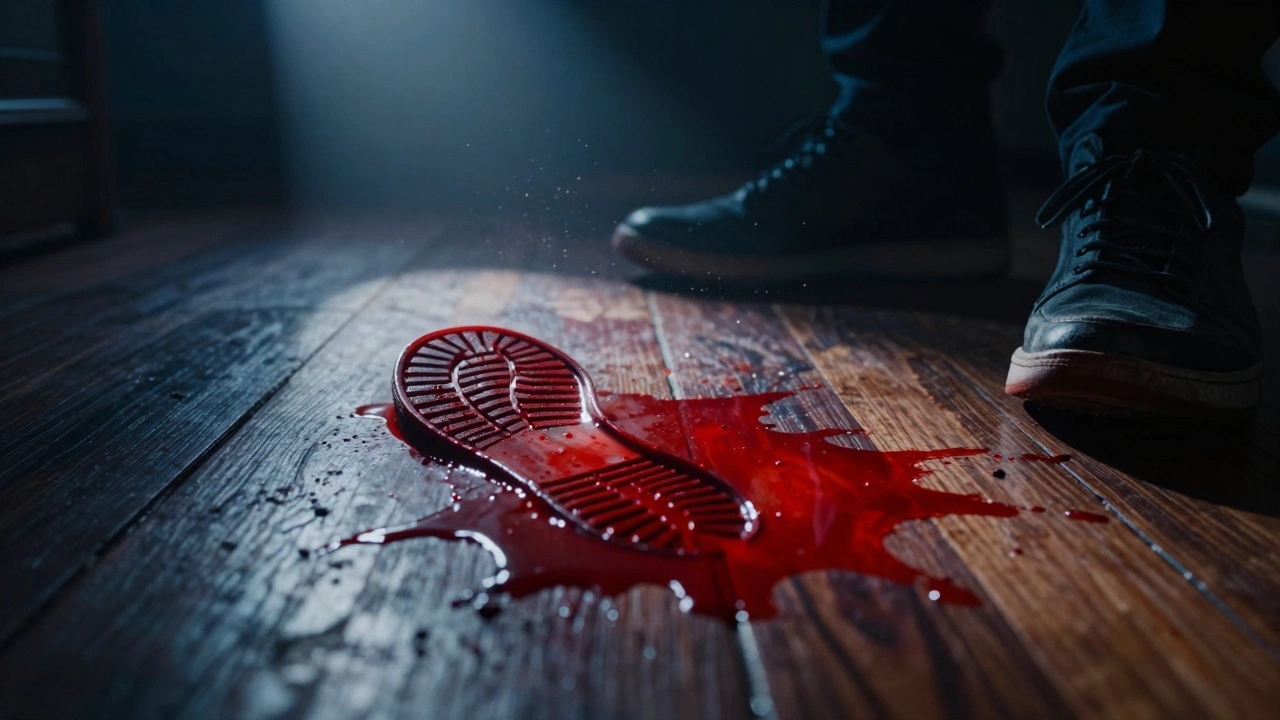
A contact stain occurs when a wet, bloody surface touches a surface that wasn’t previously bloody. Think of stepping in a puddle of blood and then walking across a dry floor. Your foot leaves a print. That’s a contact stain. It preserves details-like tread on a shoe or weave in fabric.
A wipe pattern happens when an object moves through preexisting wet blood on a surface. Imagine a victim falling and bleeding onto the carpet. If they try to crawl away, their arm drags through the blood. That drag mark? That’s a wipe. It shows direction. It shows effort. It shows intent.
And a swipe pattern is the opposite: when a blood-covered object moves across a clean surface. Like wiping your bloody hand along a wall as you back out of a room. The blood transfers from your hand to the wall. Swipe = transfer. Wipe = disturbance.
| Pattern Type | How It Forms | Key Indicator | Example Scenario |
|---|---|---|---|
| Contact Stain | Bloody object touches clean surface | Preserves shape/tread/fabric | Footstep in blood pool |
| Wipe Pattern | Object moves through existing blood | Directional feathering, disruption | Victim crawling through blood |
| Swipe Pattern | Bloody object moves across clean surface | Transfer trail, edge definition | Hand dragging along wall |
Why Feathering Matters
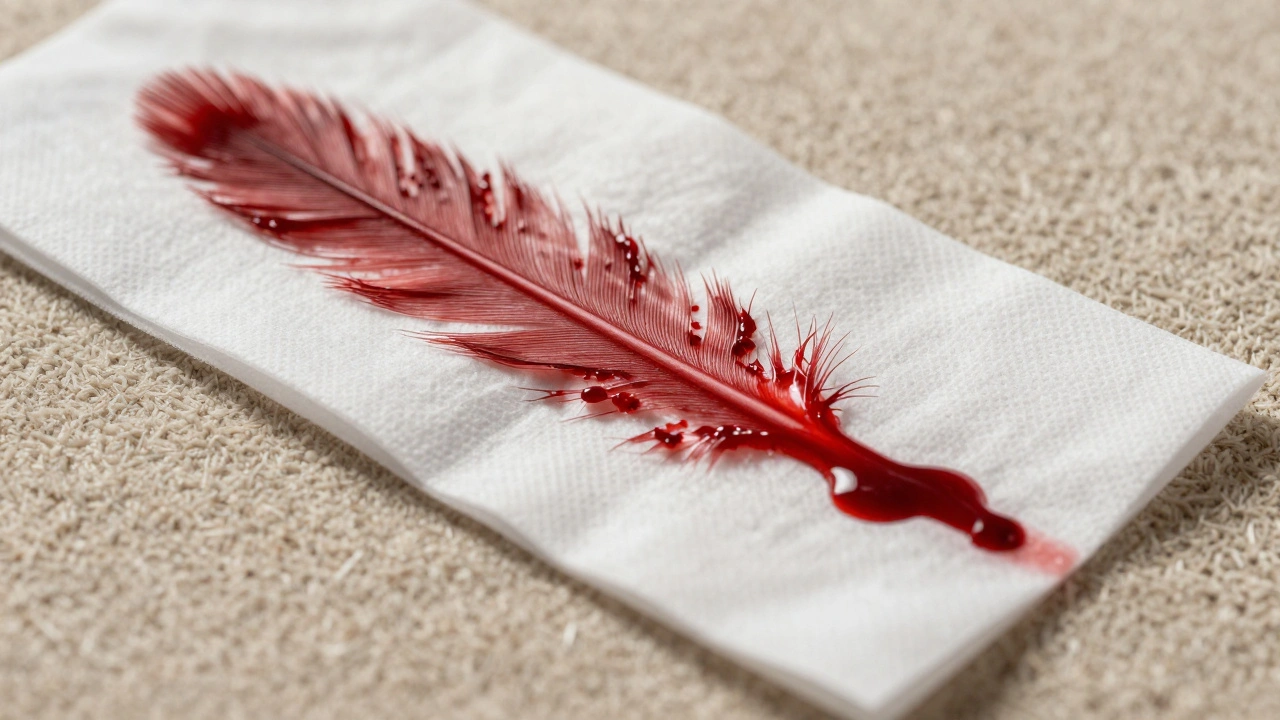
Here’s where it gets interesting. Look closely at the edges of a wipe or swipe. Do you see those tiny hair-like extensions sticking out from the main smear? That’s called feathering, and it indicates the direction an object moved through blood.
If the feathers point forward, the object was moving in that direction. If they trail behind, something pulled backward. This simple detail can reconstruct entire sequences. Did the attacker push the body? Did the victim stumble away? Did someone drag them silently across the room?
Feathering works because blood has viscosity. When you move through it, it resists. Those little tails form as the blood clings to the moving object before breaking off. It’s physics meeting biology-and it’s incredibly reliable.
Voids: The Missing Pieces Tell Stories Too
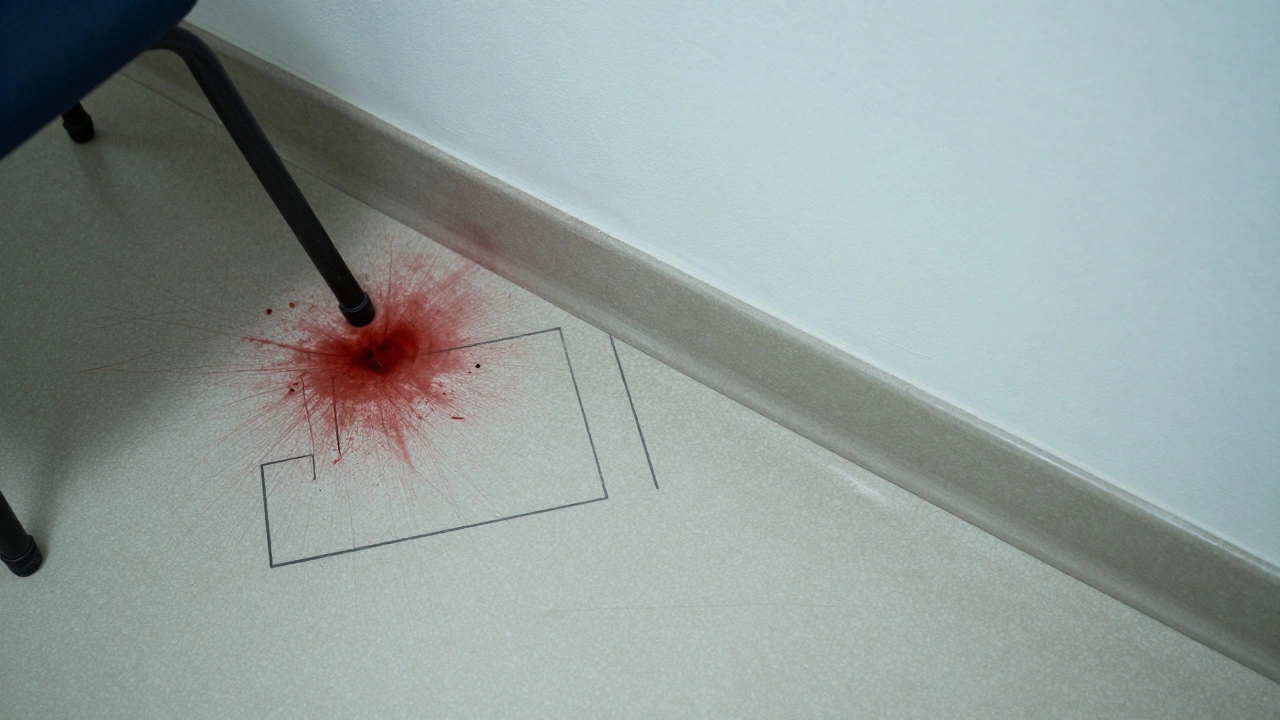
Sometimes, the most important clue is what’s *not* there. Enter void patterns: areas where blood should be-but isn’t-because something blocked its path.
Imagine a chair sitting in a pool of blood. When the chair is removed later, you’re left with a perfect outline. No blood inside. That void tells you exactly where the chair was during the incident. Or maybe it was a person standing still while blood sprayed around them. Either way, voids help map positions, movements, and timelines.
In high-profile cases, voids have been used to prove alibis-or disprove them. If someone claims they weren’t near the victim during the attack, but their silhouette appears in a void pattern... well, that’s hard to explain away.
How Investigators Document These Patterns
You can’t analyze what you don’t capture. So documentation is step one. Photographs come first-wide shots for context, close-ups for detail. Then measurements. Scale rulers next to every smear. Notes on texture, color variation, saturation levels.
Investigators also look for saturation stains: areas where blood soaked deeply into porous surfaces like carpet or clothing. Saturation suggests duration. A saturated stain means the body sat there for minutes-or hours. Not seconds. Not moments. Time matters.
They check for transfer smears: patterns created when a killer adjusts the body or weapon after the fact. Maybe they lifted the head to check for pulse. Maybe they wiped the blade on the victim’s shirt. Each action leaves a trace.
- Photograph all angles before touching anything
- Measure width, length, and depth of each pattern
- Note feathering direction and edge clarity
- Record any voids adjacent to major stains
- Compare against known objects (shoes, tools, fabrics)
Real-World Examples: What These Patterns Reveal
Take a stabbing case. Victim found on kitchen floor. Blood pooled under torso. But wait-there’s a long streak leading toward the door. Feathering points outward. Conclusion? Someone dragged the body. Not fell. Not crawled. Dragged.
Now add this: near the doorway, a partial shoeprint. Tread matches suspect’s sneaker. Inside the print, faint fibers. Same type as victim’s sweater. Now we’ve got movement + identification + connection.
Or consider a domestic dispute. Couple argues. One pushes the other. Victim falls, hits head, bleeds. Gets up, stumbles to bedroom. Leaves wipes on hallway rug. In bedroom, finds phone. Calls friend. Says “I’m okay.” Later dies from internal injuries.
The wipes show self-movement. The call log confirms timeline. Together, they refute claims that the victim attacked the accused. Instead, they support defense argument: accidental fall, delayed medical response.
These aren’t hypotheticals. They happen daily. And without understanding contact and wipe patterns, prosecutors lose key evidence. Defense attorneys miss exculpatory signs. Families get wrong answers.
Common Mistakes Investigators Make
Even seasoned pros slip up. Here’s what to avoid:
- Mixing up wipes and swipes - Leads to incorrect conclusions about who moved whom.
- Ignoring feathering - Misses directional cues critical for reconstruction.
- Failing to document voids - Loses positional data that could place suspects or victims accurately.
- Overlooking small transfers - Tiny prints or fabric marks often link perpetrators directly.
- Disturbing scenes too early - Moving bodies or cleaning floors destroys irreplaceable evidence.
Pro tip: Always treat the scene as dynamic until proven otherwise. Assume everything changed. Assume nothing stayed put. Verify with photos, notes, and comparisons before drawing final conclusions.
Training and Standards in Blood Pattern Analysis
This field isn’t guesswork. It’s science. Organizations like Sirchie Institute, International Association for Identification (IAI), and American Academy of Forensic Sciences (AAFS) set strict guidelines for training and certification.
Analysts learn to distinguish passive stains (drops, flows, pools) from active ones (spatter, cast-off, arterial spurts). They study fluid dynamics, surface tension, impact velocity-all applied to real-world scenarios.
Courses cover not just theory, but practice. Students recreate scenes using synthetic blood. Practice identifying wipes vs. swipes. Learn to photograph properly. Write reports that hold up in court.
Because ultimately, your analysis must survive cross-examination. Judges want facts. Juries want clarity. You give both-with precision, consistency, and professionalism.
Putting It All Together: Reconstructing the Scene
So how do you use all this? Start big. End small.
First, survey the whole area. Note overall layout. Identify major pools, sprays, trails. Mark zones of activity. Then zoom in. Examine individual patterns. Measure. Photograph. Compare.
Ask questions: - Was the victim stationary or moving? - Did someone else enter the space? - Were attempts made to conceal or alter evidence? - Can any object match the observed patterns?
Build a narrative supported by physical data. Not speculation. Not assumption. Data.
Example: In a homicide investigation, analysts noticed multiple wipe patterns converging near a closet. Feathering pointed inward. Voids suggested furniture had been rearranged. Transfer smears matched a hammer handle recovered nearby. Combined with witness statements placing the suspect arguing with the victim earlier that day, the case closed quickly.
No DNA needed. No confession required. Just careful observation, proper technique, and solid interpretation.
Next Steps for Aspiring Analysts
If you’re new to forensics, start here: - Take an introductory course in bloodstain pattern analysis. - Volunteer at local labs or crime scene units if possible. - Study published case studies-especially those involving contact/wipe patterns. - Join professional forums to ask questions and share insights. - Attend workshops led by certified experts.
Remember: mastery takes time. Don’t rush. Observe more than you speak. Question everything. Trust only what the evidence supports.
What is the difference between a wipe and a swipe pattern?
A wipe pattern forms when an object moves through preexisting wet blood on a surface, disturbing it. A swipe pattern occurs when a blood-covered object moves across a clean surface, transferring blood onto it. Wipes indicate movement through blood; swipes indicate transfer of blood.
How does feathering help determine direction of travel?
Feathering refers to hair-like extensions along the edge of a bloodstain. The direction these feathers point indicates the direction the object moved through the blood. Forward-pointing feathers suggest forward motion; trailing feathers suggest backward pull.
Why are void patterns important in investigations?
Void patterns show areas where blood didn’t land because something blocked its path. They help identify positions of people or objects during the event, revealing hidden elements like chairs, bodies, or weapons that were later moved or removed.
Can contact stains provide identifying information?
Yes. Contact stains preserve features such as shoe treads, fabric textures, or fingerprint ridges. When compared to known items, they can link suspects to scenes or confirm presence at specific locations.
What causes saturation stains?
Saturation stains occur when blood soaks deeply into absorbent materials like carpet, upholstery, or clothing over time. They indicate prolonged contact between the source and surface, helping estimate how long a body remained in place.
Are wipe patterns always caused by victims?
Not necessarily. While victims may create wipes while trying to escape or seek help, perpetrators can also generate them-such as dragging a body, adjusting position, or attempting cleanup. Context determines origin.
How do investigators prevent contaminating blood evidence?
By documenting thoroughly before handling anything. Using gloves, masks, and protective gear. Taking photographs from multiple angles. Recording measurements precisely. Avoiding unnecessary movement within the scene until initial assessment is complete.
What role does geometry play in analyzing wipe patterns?
Geometry helps calculate angles of movement, distances traveled, and trajectories based on stain shapes and distributions. Understanding spatial relationships allows analysts to reconstruct events logically and test hypotheses against physical constraints.
Is blood pattern analysis considered reliable in court?
When performed correctly by trained professionals following established protocols, yes. Courts accept BPA testimony provided methodology is sound, observations are documented, and interpretations align with scientific principles rather than personal opinion.
What tools are commonly used to measure bloodstains?
Digital calipers, laser measurers, grid overlays, digital cameras with macro lenses, and specialized software for angle calculation and trajectory mapping. Some teams use 3D scanning technology for complex reconstructions.