When blood, bodily fluids, or contaminated sharps are left behind after a traumatic event, the cleanup isn’t just messy-it’s legally risky. Many people assume that wiping up blood with bleach and tossing the rags in the trash is enough. But under OSHA regulations, that’s not just unsafe-it’s a violation that can cost thousands of dollars or shut down your business. Whether you’re managing a property after an accident, running a cleaning service, or responding to a medical emergency, OSHA biohazard cleanup rules don’t care about your intentions. They only care about whether you followed the law.
What Counts as a Biohazard Under OSHA?
OSHA doesn’t just mean blood when it says "biohazard." The definition is broader-and more dangerous-than most people realize. According to the Bloodborne Pathogens Standard (29 CFR 1910.1030), biohazards include:
- Human blood and blood components
- Body fluids like vomit, urine, feces, and saliva (if visibly contaminated with blood)
- Sharps: needles, broken glass, scalpels
- Unfixed human tissues or organs
- Microbial cultures from human samples
- Animal waste from research labs handling human pathogens
It doesn’t matter if the spill is small. Even a few drops of blood on a carpet can carry Hepatitis B, Hepatitis C, or HIV. And if someone touches it without protection? That’s an exposure incident-and OSHA takes those seriously.
The Core Rule: Your Written Exposure Control Plan
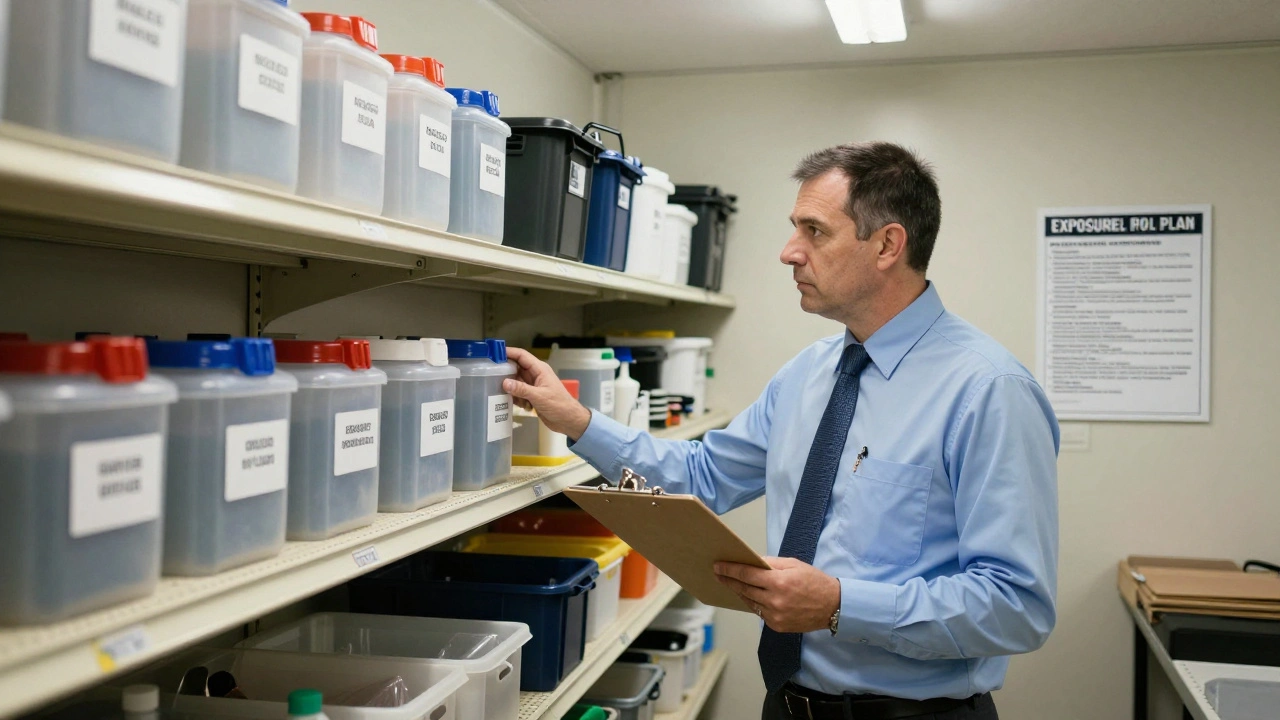
If your job involves handling or cleaning up biohazards-even once a year-you’re required to have a written Exposure Control Plan (ECP). This isn’t a suggestion. It’s mandatory. And it’s not something you write once and forget.
Your ECP must include:
- A list of all job roles with potential exposure (janitors, property managers, first responders, etc.)
- Steps to reduce exposure using engineering controls (like sharps containers and handwashing stations)
- Work practices that prevent contact (no recapping needles, no touching contaminated surfaces bare-handed)
- Procedure for handling exposure incidents
- How and when PPE is used
- Training schedules
This plan must be reviewed and updated every year. If you don’t have one, you’re already in violation. OSHA inspectors don’t ask for permission before showing up. They show up, ask for your ECP, and if it’s missing? That’s a citation.
Personal Protective Equipment (PPE) Isn’t Optional
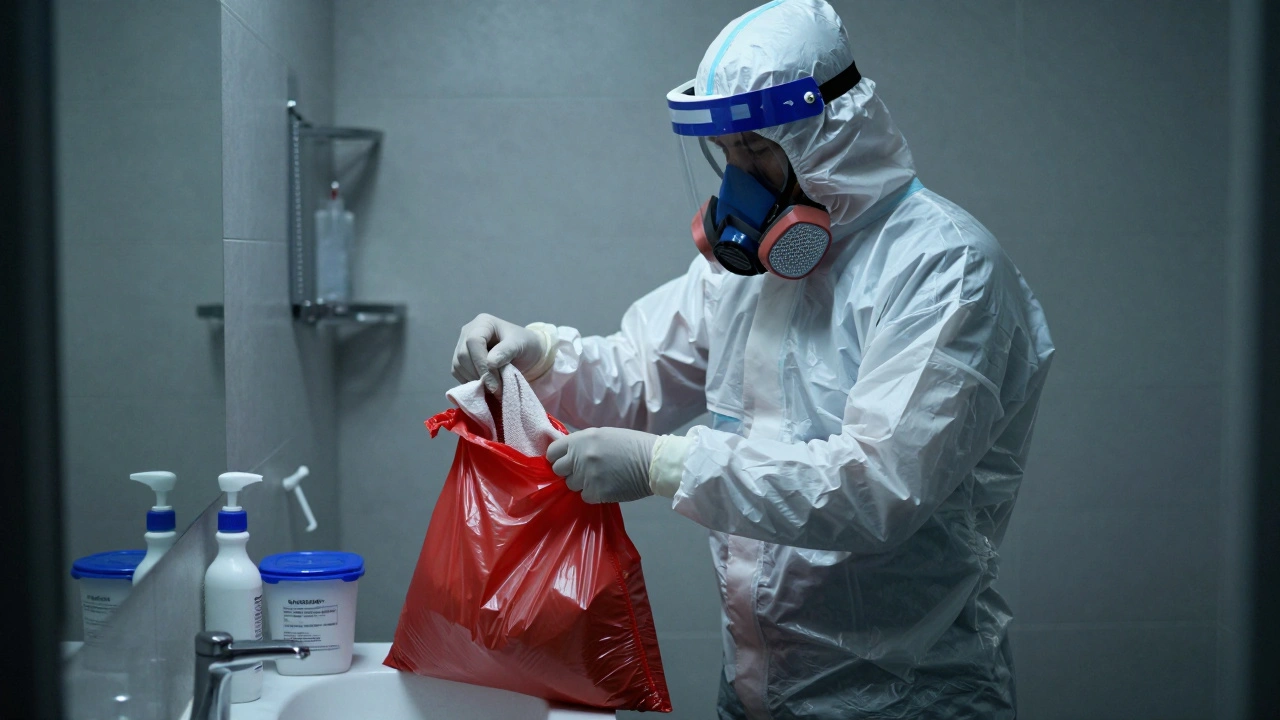
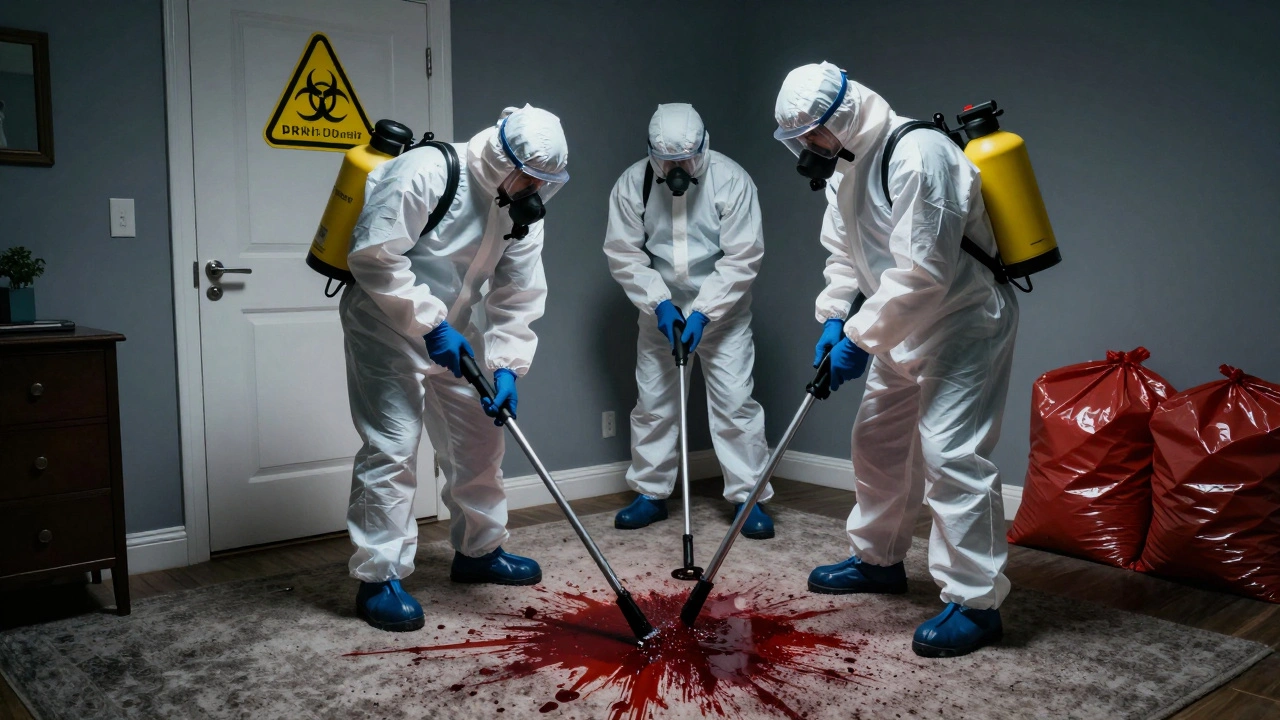
You can’t clean up biohazards in flip-flops and a t-shirt. OSHA requires specific PPE based on the level of contamination:
- Disposable gloves (nitrile or latex-never reuse them)
- Disposable gowns or aprons
- Face shields or goggles (if splashing is possible)
- Respirators (if airborne pathogens or chemical fumes are present)
- Disposable cloth towels for initial absorbent cleanup
And here’s the catch: if your glove gets punctured, your gown gets soaked, or your mask slips-your gear is contaminated. You must remove it immediately. No exceptions. No "I’ll just finish this first." That’s how infections start.
OSHA also requires that employers provide this gear at no cost to employees. If you’re paying for your own gloves or gowns, you’re being illegally underprotected.
How to Dispose of Biohazard Waste (And Why Trash Cans Are Illegal)
Throwing a bloody towel in the dumpster? That’s a violation. OSHA requires biohazard waste to be handled like medical waste-even if it came from a home, not a hospital.
Here’s what you must do:
- Place all contaminated items in red biohazard bags (or clearly labeled leak-proof containers)
- Use puncture-resistant sharps containers for needles and broken glass
- Label every container with the universal biohazard symbol
- Keep containers closed and secured until pickup
- Only trained personnel can handle or transport the waste
- Use a certified medical waste disposal company-never regular trash haulers
Even if the spill is in a private home, the waste still falls under OSHA rules if a worker is involved in the cleanup. That includes property managers, cleaning crews, or even family members hired to clean up after a death. If you’re getting paid to do it? OSHA applies.
Labeling, Training, and Records: The Paper Trail That Saves You
OSHA doesn’t just care about what you do-it cares about what you document.
All containers, storage areas, equipment, and rooms used for biohazard cleanup must be labeled with the biohazard symbol. That includes refrigerators storing contaminated items, carts used to transport waste, and even closets where PPE is kept.
Training is non-negotiable. Every employee who might encounter biohazards must receive training when they start-and annually after that. The training must cover:
- How bloodborne pathogens spread
- How to use PPE correctly
- What to do if exposed
- How to clean and disinfect surfaces
- Where to find the Exposure Control Plan
And you must keep training records for at least three years. No exceptions. If you can’t show proof of training during an inspection, you’re fined.
Medical records for exposure incidents? Those must be kept for 30 years after employment ends. That’s not a typo. Thirty years.
What Happens If You Don’t Comply?
Fines aren’t the worst part. They’re just the beginning.
As of 2024, OSHA penalties are:
- Up to $16,131 per serious violation
- Up to $161,323 per willful or repeated violation
But here’s what no one talks about: lawsuits. If someone gets sick because you didn’t follow OSHA rules, they can sue you for damages. That includes medical bills, lost wages, and emotional distress. One case in 2023 involved a property management company fined $98,000 after a cleaner contracted Hepatitis C from improperly disposed linens. The company didn’t have an ECP, didn’t train staff, and used regular trash bags.
Insurance won’t cover it. Most policies exclude negligence violations. And once your name is in OSHA’s public database? Clients vanish. Reputation? Gone.
When to Call a Professional
Small spills? Maybe you can handle them. A bloodstain on a bathroom floor? With the right gear and training, you can clean it safely.
But anything larger? A suicide, a violent incident, a medical emergency with heavy bleeding? That’s not a DIY job. Professional biohazard remediation teams use EPA-approved disinfectants, HEPA vacuums, and industrial-grade decontamination tools. They’re trained, licensed, and insured. And they follow OSHA, CDC, and EPA guidelines together.
Trying to cut corners here doesn’t save money. It multiplies risk. The cost of hiring a pro is a fraction of the cost of a single OSHA fine or lawsuit.
Bottom Line: Compliance Isn’t a Burden-It’s Your Shield
OSHA regulations exist because people get sick and die from biohazards. Not because bureaucrats want paperwork. Because real people, in real jobs, were exposed and never recovered.
Compliance isn’t about checking boxes. It’s about protecting lives-yours, your employees’, and the people you serve. Whether you’re cleaning up after a car accident in a garage or managing a rental property after a tenant’s death, you have a legal and moral duty to do it right.
Update your plan. Train your team. Use the right gear. Dispose of waste legally. Document everything. If you do that, you’re not just avoiding fines-you’re building trust, safety, and credibility.
Do OSHA biohazard rules apply to private homes?
Yes-if someone is being paid to clean it. OSHA protects workers, not property. So if a property manager, cleaner, or family member is hired to clean up blood or bodily fluids in a home, OSHA regulations apply. The location doesn’t matter. The job does.
Can I use household bleach to clean up biohazards?
Only if it’s diluted correctly and you’re following OSHA’s disinfection guidelines. A 1:10 bleach-to-water solution is acceptable for surfaces, but it must sit for at least 10 minutes to kill pathogens. However, bleach doesn’t work on porous materials like carpets or drywall. In those cases, professional-grade disinfectants and removal are required. Never use bleach alone without proper PPE-it creates toxic fumes when mixed with other cleaners.
What if I don’t have an Exposure Control Plan?
You’re already violating OSHA. An ECP isn’t optional-it’s the foundation of compliance. Without it, you can’t prove you’ve trained staff, identified risks, or prepared for exposure. OSHA inspectors will issue a citation immediately. Start by downloading OSHA’s free template and customizing it for your operation. Update it yearly.
Are biohazard bags required even for small spills?
Yes. Even a single blood-soaked towel must go into a red biohazard bag or a labeled, leak-proof container. OSHA doesn’t make exceptions based on volume. The risk of exposure remains the same. Using regular trash bags is a violation and can lead to fines and exposure incidents.
Do I need training if I only clean up biohazards once a year?
Yes. OSHA requires annual training for anyone who may be exposed, regardless of frequency. One time a year still counts as potential exposure. Skipping training because it’s rare puts you-and your team-at risk. And if you’re inspected, you’ll be cited for not training.