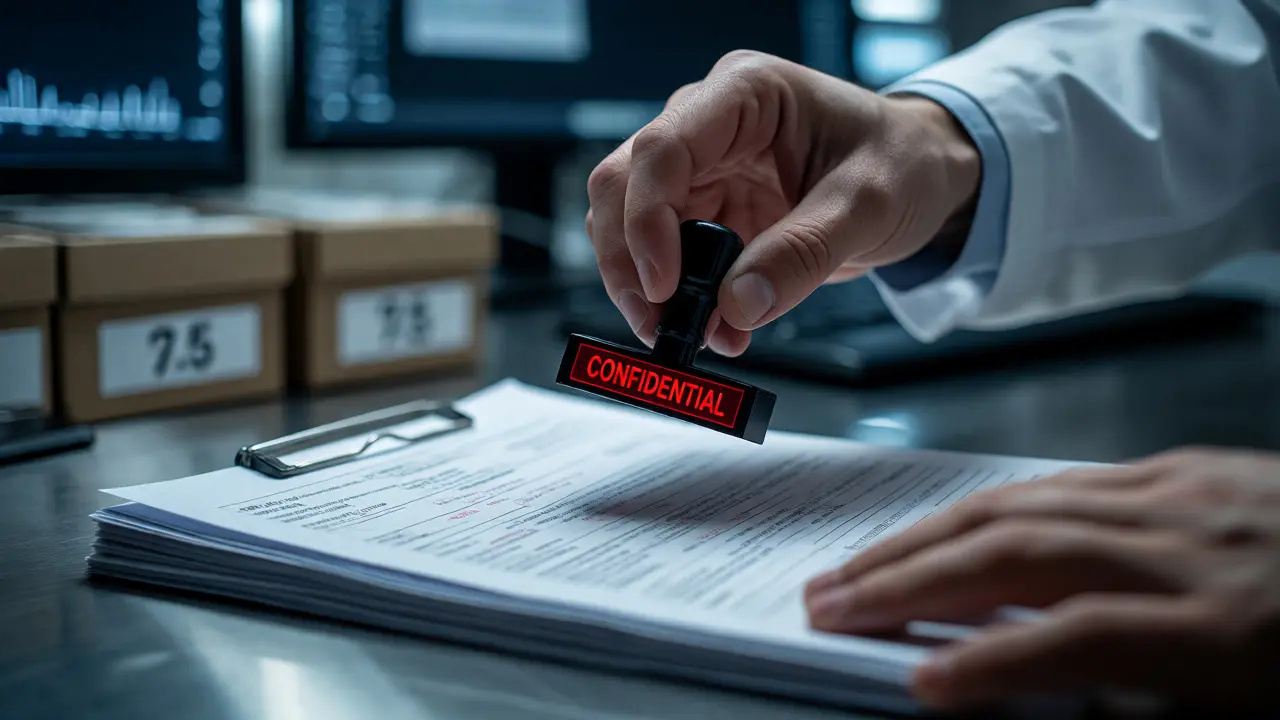
You’ve just finished a grueling week analyzing DNA samples. The report is done, the conclusions are solid, and you’re ready to hit send. But then you pause. Who exactly gets to see this? If you slap a generic "Confidential" stamp on it and email it to the wrong clerk at the district attorney’s office, have you just breached a statute? Or worse, compromised a case?
Confidentiality markings aren’t just bureaucratic red tape. They are the legal firewall protecting sensitive information. In forensic reporting, getting these markings wrong can lead to evidence being thrown out, lawsuits against your lab, or even criminal charges for mishandling protected data. It’s not about hiding the truth; it’s about controlling who knows what, and when.
Why Confidentiality Markings Matter More Than You Think
Think of confidentiality markings as traffic signals for data. Without them, information flows chaotically. With them, you direct access based on legal privilege and necessity. When a forensic examiner labels a document, they are making a legal assertion about its sensitivity. This label dictates how the document is stored, who can read it, and how it must be destroyed.
If you ignore these protocols, you risk more than just a scolding. Consider the Health Insurance Portability and Accountability Act (HIPAA) in the United States. If your forensic report contains medical history from an autopsy, and you fail to mark it appropriately before sharing it with a non-covered entity, you might trigger a HIPAA violation. That’s not just a policy breach; that’s federal law. Similarly, under the General Data Protection Regulation (GDPR) in Europe, failing to protect personal data identified in a report can result in fines up to 4% of global annual turnover. The stakes are real, and the markings are your first line of defense.
The Core Hierarchy of Classification Levels
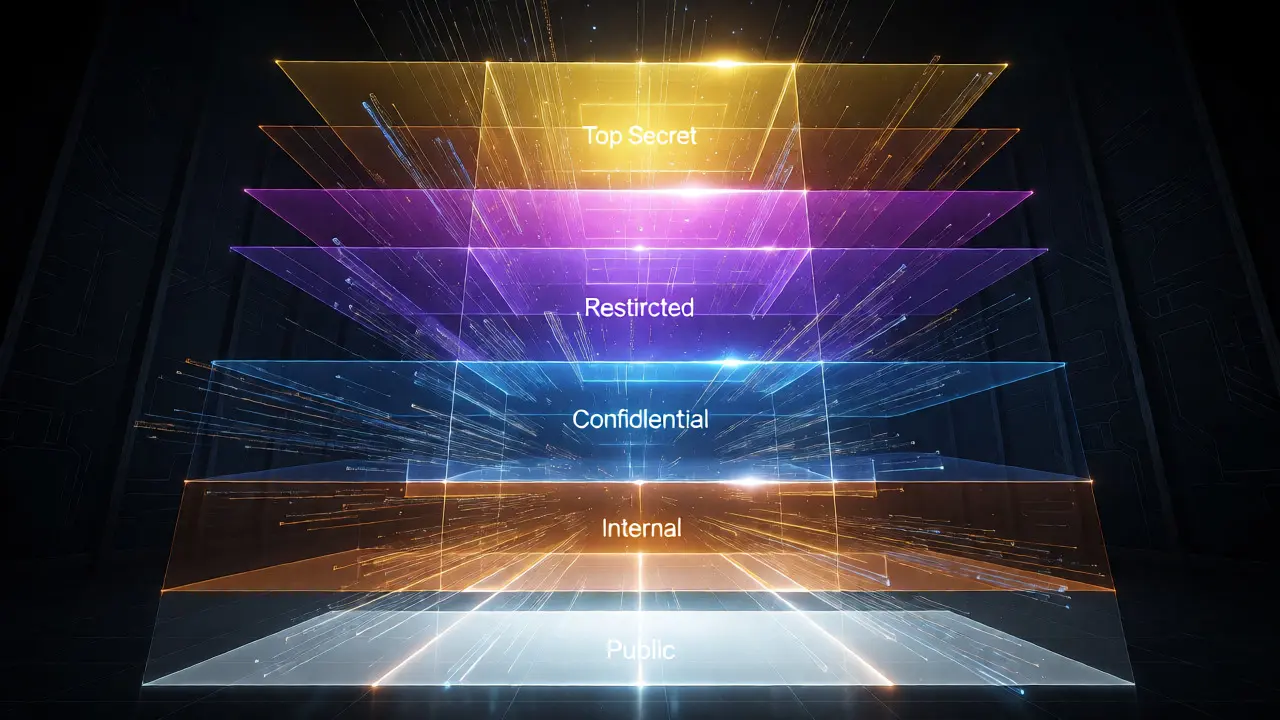
Not all secrets are created equal. Most jurisdictions and labs use a tiered system. Understanding the specific definitions for each level is critical because the handling requirements change drastically between tiers. Here is how the typical hierarchy breaks down:
| Marking Level | Definition & Scope | Handling Requirement | Dissemination Rule |
|---|---|---|---|
| Public | Information released to the general public; no restrictions. | No special storage needed. | Unrestricted distribution. |
| Internal Use Only | Data safe for staff but not for external release without approval. | Standard secure network; no encryption required for internal transfer. | Within the organization only. |
| Confidential | Sensitive info where unauthorized disclosure could cause damage (e.g., victim names). | Encrypted at rest and in transit; password protection. | Need-to-know basis within authorized personnel. |
| Restricted | Highly sensitive; disclosure could compromise ongoing investigations or safety. | Air-gapped storage or high-grade encryption; physical locks. | Specific named individuals only; written log of access. |
| Top Secret / Classified | National security implications or extreme vulnerability risks. | Cleared personnel only; SCIF-like environments. | Strict compartmentalization; no digital copies allowed. |
Notice the jump in effort between "Confidential" and "Restricted." That’s intentional. Once you cross into Restricted territory, you’re dealing with information that could get someone hurt or blow a covert operation wide open. Your marking must reflect that reality. If you mark a Restricted document as merely Confidential, you’ve inadvertently lowered the security bar, potentially exposing witnesses to retaliation.
Legal Frameworks Dictating Your Markings
You don’t choose your markings in a vacuum. Laws dictate them. While every country differs, three major frameworks dominate the landscape for English-speaking forensic professionals.
First, there’s the Freedom of Information Act (FOIA) in the US. FOIA allows the public to request government records, but it includes exemptions for law enforcement techniques and personal privacy. If you don’t mark specific sections of a report as exempt under FOIA Exemption 7(C) (personal privacy), the agency might be forced to redact everything or release too much. Proper marking helps the agency identify what *can* be released versus what *must* stay hidden.
Second, consider state-level statutes like California’s Proposition 69. This law mandates that DNA profiles collected from arrestees are retained in a database. However, the law strictly limits who can access those profiles and for what purpose. A forensic report referencing a CODIS match must clearly indicate that the profile itself is restricted by statute, not just by lab policy. Mixing up statutory restriction with administrative preference creates legal ambiguity.
Third, international standards like ISO/IEC 27001 play a role. If your lab is accredited to ISO 17025, you likely follow ISO 27001 for information security. These standards require a formal classification scheme. Auditors will look for evidence that you defined what "Confidential" means in your Quality Manual and that you consistently applied it. If your manual says "all client data is confidential," but you email unencrypted spreadsheets to police officers, you’re out of compliance.
Practical Implementation: How to Mark Correctly
So, how do you actually apply these rules? It starts with the document header and footer. Every page should bear the appropriate marking. Why every page? Because pages get separated. If page 5 falls off the back of a truck and has no marking, the finder assumes it’s Public. If it says "Restricted," they know to hand it over to authorities immediately.
- Header/Footer Placement: Place the marking in bold, capital letters at the top center and bottom center of every page.
- Digital Watermarks: For PDFs, use dynamic watermarks that include the recipient’s name and timestamp. This deters screenshots and leaks.
- File Naming Conventions: Include the classification in the filename, e.g., `Case_123_Report_RESTRICTED.pdf`. This prevents accidental misfiling in shared drives.
- Email Subject Lines: Always prefix the subject line with the highest classification level contained in the attachment. Example: `[RESTRICTED] Case 123 Findings`.
Don’t forget declassification. Information doesn’t stay secret forever. After a trial concludes, some documents become public record. Your policy should include a review date or an event trigger (like "upon verdict") that automatically lowers the classification. Leaving documents marked "Top Secret" five years after the case closed creates unnecessary administrative burden and confusion.
Pitfalls to Avoid in Forensic Reporting
Even experienced examiners slip up. Here are the most common errors I’ve seen in audits and court challenges.
One major mistake is over-classification. Lab managers sometimes mark everything "Confidential" to be safe. This dilutes the meaning. When everything is special, nothing is. Staff start ignoring the markings, treating a routine toxicology screen with the same caution as a witness list. Over-classification also slows down discovery processes in court, frustrating judges and attorneys who want timely access to non-sensitive data.
Another pitfall is inconsistent terminology. Does "Sensitive" mean the same thing as "Confidential" in your lab? If not, define it. Ambiguity leads to breaches. Ensure your Quality Management System (QMS) provides clear, one-sentence definitions for each term. Train new hires on these definitions during onboarding, not just in passing.
Finally, beware of metadata leakage. You might remove names from the text of a Word document, but if you don’t scrub the metadata, the author’s name and previous edits remain embedded. Send that file to defense counsel, and you’ve just revealed internal deliberations that were supposed to be privileged. Always convert final reports to PDF/A format, which strips editable metadata, before applying final confidentiality markings.

The Role of Technology in Enforcement
Manual marking is prone to human error. Modern Laboratory Information Management Systems (LIMS) help automate this. Many LIMS platforms allow you to tag a case with a default confidentiality level upon intake. When the report is generated, the system automatically stamps the pages and applies digital rights management (DRM) controls.
For example, if a case is flagged as involving a juvenile offender, the LIMS can enforce a rule that prevents the report from being emailed outside the domain unless manually overridden by a supervisor. This technical control adds a layer of safety that relies less on individual vigilance and more on systemic design. However, technology isn’t foolproof. Garbage in, garbage out. If the intake officer fails to flag the juvenile status, the system won’t know to restrict the output. Training remains essential.
Frequently Asked Questions
What happens if I forget to mark a confidential forensic report?
The consequences depend on the content. If the report contains protected health information (PHI), you may face HIPAA penalties. If it involves active investigation details, you could compromise the case integrity, leading to suppression of evidence. At minimum, it triggers an internal incident report and potential disciplinary action for negligence.
Can I share a 'Restricted' report with a defense attorney?
Usually, yes, but only through proper legal channels like discovery requests. The marking indicates that unrestricted casual sharing is prohibited. You typically need a court order or a signed waiver from the client (often the prosecutor) to release Restricted materials to opposing counsel. Never share directly via informal email without verifying authorization.
Do digital signatures affect confidentiality markings?
No, digital signatures verify authenticity and integrity, not confidentiality. A signed document can still be Public or Top Secret. However, ensure your signing software doesn’t strip away header/footer markings or metadata used for classification tracking. Test your workflow to confirm markings survive the signing process.
How long should I keep confidential forensic reports?
Retention periods vary by jurisdiction and case type. Generally, biological evidence and associated reports are kept until the statute of limitations expires or the case is officially closed. Some states mandate permanent retention for homicide cases. Always check local laws and your lab’s retention policy. Do not destroy confidential documents until the retention period ends, regardless of their classification level.
Is 'Internal Use Only' legally binding?
It is an administrative control, not usually a statutory one. Violating it might breach your employment contract or lab policy, but it rarely carries criminal penalties like HIPAA violations do. However, courts may view failure to respect Internal Use Only markings as evidence of poor quality control, which can impact expert testimony credibility.