Most labs treat competency assessments as a box-ticking exercise. They run a test once, file the paperwork, and forget about it until the next audit. But if you are preparing for or maintaining accreditation under standards like ISO/IEC 17025, this approach is a ticking time bomb. The difference between an initial evaluation and an ongoing one isn't just timing; it's purpose, depth, and risk profile.
Initial assessments prove you can do the job. Ongoing assessments prove you haven't forgotten how. For forensic labs, clinical diagnostics, or environmental testing facilities, getting this wrong doesn't just mean a failed audit-it means invalid data, legal challenges, and lost client trust. This guide breaks down exactly how these two types of evaluations differ, what they require, and how to build a system that satisfies both without burning out your staff.
Key Takeaways
- Initial competency assessment verifies baseline capability before a method is used on real samples.
- Ongoing competency assessment monitors performance over time to catch drift, skill decay, or equipment changes.
- Both are mandatory for ISO/IEC 17025 accreditation but serve different quality control functions.
- Proficiency testing (PT) is a critical tool for ongoing monitoring but does not replace internal verification.
- A robust program uses a mix of peer review, blind samples, and statistical process control (SPC).
What Is a Competency Assessment?
In the context of laboratory accreditation, a competency assessment is a systematic process to verify that personnel, methods, and equipment produce reliable and accurate results. It goes beyond simple training records. While training proves someone *knows* how to perform a test, competency proves they *can* perform it correctly under real-world conditions.
This concept is central to Quality Management Systems (QMS). Without it, a lab might have perfectly calibrated instruments and certified technicians, yet still produce erroneous data due to subtle procedural errors. Think of it like a pilot’s checkride: passing the written exam (training) is necessary, but flying the plane safely through turbulence (competency) is what actually matters.
Initial Competency Assessment: Proving Baseline Capability
The initial assessment happens before a new analyst starts performing a specific test method independently, or before a new method is introduced into routine operations. This is a high-stakes moment. If you get this wrong, every subsequent result from that analyst or method is suspect.
When it applies:
- New hire or new role assignment.
- Introduction of a new analytical method (e.g., switching from GC-MS to LC-MS/MS).
- Significant change in equipment or software versions.
Core Components:
- Demonstration of Knowledge: Reviewing SOPs, safety protocols, and instrument theory.
- Observed Performance: A qualified senior technician watches the candidate perform the full workflow from sample prep to data reporting.
- Blind Sample Analysis: The candidate analyzes a known standard or spiked sample without knowing the expected value.
- Data Interpretation: Evaluating whether the candidate can identify outliers, calculate uncertainty, and document deviations.
For example, if a toxicology lab introduces a new HPLC method for drug screening, the initial assessment requires the analyst to run at least three replicates of a calibration curve and two unknown samples. Their results must fall within predefined acceptance criteria-typically within ±10% of the target value. If they miss, they don’t “fail” permanently; they receive targeted retraining and repeat the assessment. But they cannot sign off on real patient reports until they pass.
Ongoing Competency Assessment: Monitoring for Drift
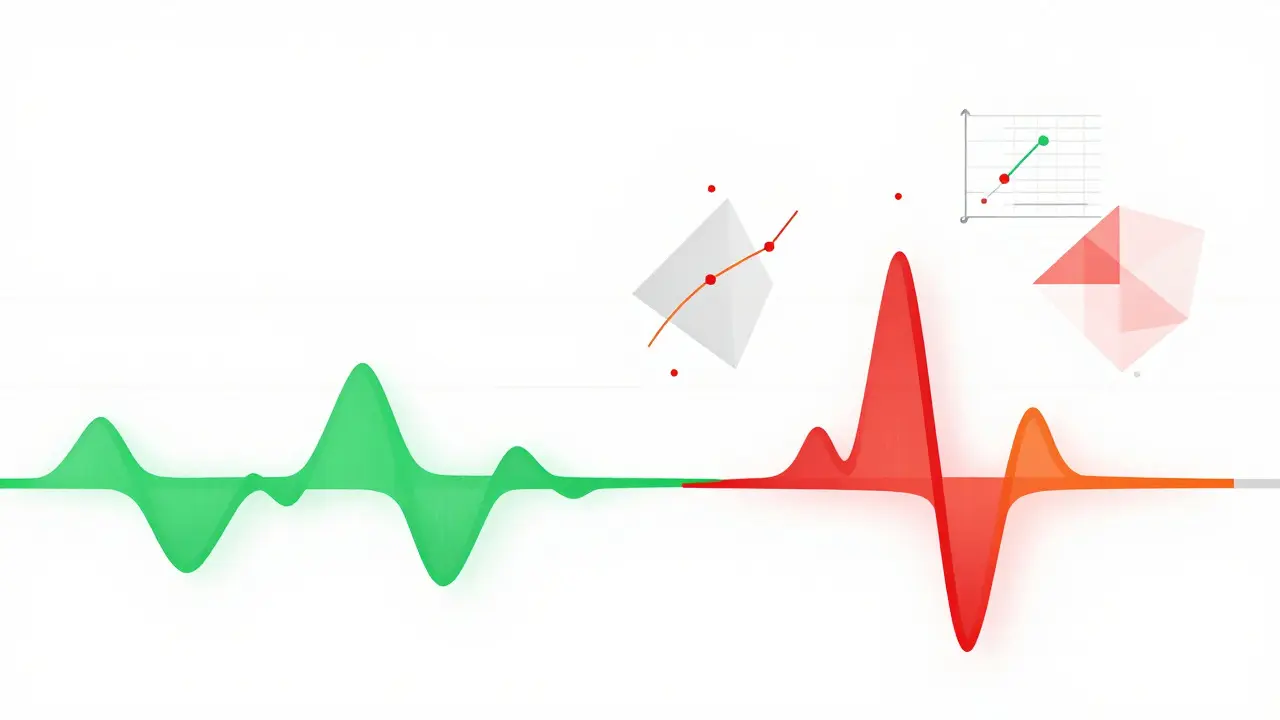
Once an analyst is competent, the work isn’t done. Skills degrade. Instruments drift. Reagents expire. Environmental conditions change. Ongoing competency assessment is the continuous loop that catches these issues before they corrupt data integrity.
Frequency:
- At minimum, annually per ISO/IEC 17025 clause 6.2.
- More frequently (quarterly or monthly) for high-risk methods or volatile analysts.
- Triggered by events: after long leave, after major equipment maintenance, or after a reported error.
Tools for Ongoing Monitoring:
- Proficiency Testing (PT): External labs send you unknown samples. You analyze them, report results, and compare against peer groups. Z-scores outside ±2 indicate a problem.
- Internal Quality Control (QC): Running control charts with mean and standard deviation limits. If a control chart breaches its Westgard rules, the batch is held, and the analyst’s competency is reviewed.
- Peer Review: Another qualified person reviews 10-20% of raw data and calculations each quarter.
- Method Validation Updates: Periodically re-validating precision and accuracy to ensure the method itself hasn’t drifted.
Imagine a water quality lab testing for lead. An analyst runs their daily controls, which look fine. But during an annual PT event, their z-score comes back as +3.5. That’s a red flag. Was it a one-off mistake? Or has their technique subtly changed? The ongoing assessment protocol kicks in: investigate the root cause, retrain if needed, and document the corrective action. This is where the real value of ongoing assessment lies-not in proving competence, but in maintaining it.
Comparison: Initial vs. Ongoing Assessments
| Feature | Initial Assessment | Ongoing Assessment |
|---|---|---|
| Purpose | Verify baseline capability | Maintain and monitor sustained performance |
| Timing | Before independent work begins | Periodic (annual/quarterly) or event-driven |
| Primary Tools | Observed demonstration, blind samples | Proficiency testing, QC charts, peer review |
| Risk Focus | High (new variables) | Medium (drift, fatigue, changes) |
| Documentation | Detailed checklist, signed off by supervisor | Trend analysis, corrective action logs |
| Failure Consequence | Cannot perform method independently | Corrective action, possible suspension of method use |

Common Pitfalls and How to Avoid Them
Labs often stumble in three areas when managing competency programs:
1. Confusing Training with Competency. Many labs assume that completing a course equals being competent. Not true. A technician can memorize every step of an ELISA protocol but still pipette incorrectly. Always include a hands-on component in both initial and ongoing assessments.
2. Over-Reliance on Proficiency Testing. PT is excellent for external validation, but it only happens a few times a year. Between PT events, you’re flying blind if you don’t have internal QC. Use PT as a benchmark, not your sole safety net.
3. Inconsistent Criteria. If Analyst A passes with a 95% recovery rate and Analyst B fails at 94%, your program lacks objectivity. Define clear, numerical acceptance criteria upfront. Document them in your QMS so there’s no room for interpretation.
Building a Sustainable Competency Program
To make this manageable, integrate competency checks into your existing workflows rather than treating them as separate projects.
Remember, accreditation auditors aren’t just looking for documents. They want to see a living system. When they ask, “How do you know Jane is still competent?” the answer shouldn’t be “She did her training last year.” It should be, “Her last three PT scores were within ±1.5, her QC charts show stable variance, and she passed her quarterly peer review.”
Frequently Asked Questions
How often must competency assessments be conducted?
Minimum frequency is typically annual for each analyst and method combination, per ISO/IEC 17025. However, high-risk methods or new hires may require more frequent checks, such as quarterly or even monthly, until stability is demonstrated.
Is proficiency testing sufficient for ongoing competency?
No. Proficiency testing provides external validation but occurs infrequently. It should be combined with internal quality control, peer review, and periodic re-validation to ensure continuous monitoring between PT events.
What happens if an analyst fails an ongoing competency assessment?
The analyst should be removed from independent sign-off for that specific method. A root cause analysis is performed to determine if the issue is technical, procedural, or equipment-related. Retraining and re-assessment follow. All affected data since the last successful assessment must be reviewed for validity.
Can initial and ongoing assessments use the same documentation?
Yes, using standardized templates reduces administrative burden. However, the content differs: initial assessments focus on detailed step-by-step verification, while ongoing assessments emphasize trend analysis and comparative metrics like z-scores or control chart limits.
How does competency assessment differ from method validation?
Method validation proves the *method* works under defined conditions. Competency assessment proves the *person* can execute the method correctly. Both are required. A validated method run by an incompetent analyst will still produce bad data.