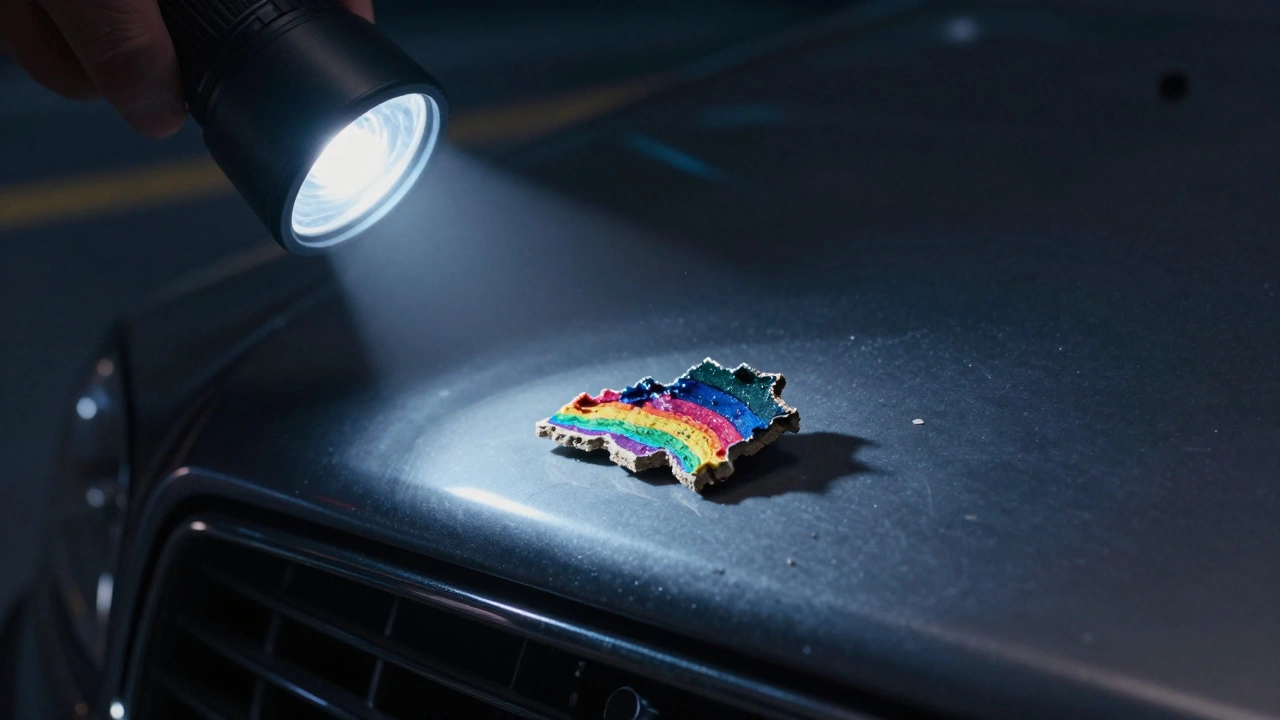
Imagine a hit-and-run scene where the only clue is a tiny, jagged flake of paint clinging to a damaged bumper. To a casual observer, it is just a speck of color. To a forensic investigator, that chip is a chemical roadmap. Because cars aren't just painted with one thick coat of pigment, but rather a complex stack of engineered layers, these flakes can tell us exactly what make, model, and year a vehicle belongs to. This process of trace evidence analysis turns a microscopic sample into a powerful tool for source attribution.
The Anatomy of a Paint System
Modern vehicles don't just have "paint"; they have a multi-stage coating system. When we talk about Automotive Paint Systems, we are talking about a precise architectural stack. If any one of these layers is missing or applied incorrectly, the whole system fails, leading to rust or peeling. From a forensic perspective, the sequence of these layers is what allows investigators to narrow down a suspect vehicle.
A standard high-quality finish usually consists of five distinct layers:
- Metal Substrate: The raw steel or aluminum body of the car.
- Electroplating Treatment: A chemical layer used to prevent corrosion.
- Primer Coat: This is the foundation. It fills in tiny gaps in the metal and ensures the rest of the paint actually sticks. Without primer, the base coat would peel off almost immediately.
- Base Coat: This is where the color lives. Whether it's a bright red or a deep metallic blue, this layer provides the visual identity of the car.
- Clear Coat: The thick, transparent shield on top. It protects against UV rays, road salt, and scratches.
Breaking Down the Layers for Attribution
When a forensic scientist looks at a paint chip under a microscope, they aren't just looking at the color. They are looking at the "stratigraphy"-the order and thickness of the layers. For example, the Clear Coat is typically the thickest part of the system, often making up 33% to 50% of the total film thickness. If a sample shows an unusually thick clear coat followed by a specific shade of mica, it significantly limits the number of possible vehicles that match that profile.
The Base Coat (or color coat) is usually applied in 2 to 3 layers, typically ranging from 15 to 25 microns in thickness. In high-end forensic labs, experts use spectroscopy to determine the exact chemical composition of the pigments used in this layer. Since different manufacturers use different chemical formulas for the same "color," two cars that look identical to the eye might have completely different chemical signatures in their base coats.
| Layer | Primary Function | Typical Thickness/Role | Forensic Value |
|---|---|---|---|
| Primer | Adhesion & Leveling | Foundation layer | Manufacturer-specific chemical markers |
| Base Coat | Color & Aesthetics | 15-25 Microns | Pigment analysis & color matching |
| Clear Coat | Protection & Gloss | 33%-50% of total build | Polymer composition & hardness |
Decoding Paint Methodologies
Not every car is painted the same way. Depending on the factory process, you'll encounter different "stages" of paint. Understanding these methodologies is key to source attribution because they change the layer count.
Single-stage Paint is the simplest. It combines the color and the protective clear layer into one single product. These are rarer in modern cars but common in older classics. If an investigator finds a single-layer chip, they know they aren't dealing with a modern multi-stage factory finish.
Two-stage Paint is the industry standard. It involves a base coat for color and a separate clear coat for protection. This creates a distinct boundary between the color and the gloss, which is a goldmine for forensic analysts.
The most complex is the Three-stage Paint process. This is used for pearlescent or high-metallic finishes. It uses a colored base, followed by a specialized pearlescent or mica top coat, and finally a lacquer or clear coat. When you see a "flip" in color as you move around the car, you're looking at this complex layering. In a lab, these extra layers act like a fingerprint, making it much easier to attribute the sample to a specific luxury model or trim level.
The Process of Source Attribution
So, how do we go from a chip to a suspect? It starts with a process called physical and chemical comparison. First, the analyst examines the chip's layers using a cross-section technique-basically cutting the paint in half to see the stack. They measure the thickness of each layer and note the colors.
Next, they use tools like Infrared Spectroscopy to identify the organic binders and polymers. If the chip contains a specific type of acrylic resin used only by a German manufacturer in 2023, the search area narrows instantly. They also check for additives like mica or metallic flakes, which vary in size and shape between different brands.
Once a potential match is found, the investigator takes a "known sample" from the suspect vehicle. If the layer sequence, chemical composition, and thickness of the crime scene chip match the known sample perfectly, the evidence provides a strong link between the vehicle and the scene. While paint isn't always unique (thousands of cars share the same color), the specific combination of primer, base, and clear coat chemistry makes a coincidence very unlikely.
Common Pitfalls in Paint Analysis
It is not always a slam dunk. Analysts have to watch out for "repainted" sections. If a car was in a fender-bender and got a cheap respray, the layering might not match the original factory specifications. A professional shop might skip the primer or use a different brand of clear coat than the factory. This creates a "discrepancy in attribution" where the paint on the door doesn't match the paint on the hood.
Environmental degradation also plays a role. Sun exposure (UV degradation) can break down the polymers in the clear coat, changing its chemical signature over time. A car that has sat in the Arizona sun for ten years will have a different clear coat profile than a garage-kept car of the same model. Forensic experts have to account for this "weathering" to avoid incorrect exclusions.
Can paint analysis prove a specific car was at a scene?
Paint analysis is generally used for "exclusion" or "association." While it can rarely prove a car was there with 100% certainty (like DNA), it can definitively prove a car was NOT there if the layers don't match. When the chemical and physical profiles match perfectly, it provides strong associative evidence that supports other clues.
Why does the primer layer matter for forensics?
The primer is the foundation that bonds the paint to the metal. Different manufacturers use different primer formulas to handle different substrates (like aluminum vs. steel). Analyzing the primer allows forensic scientists to identify the type of metal used and the manufacturer's specific prep process, which helps narrow down the vehicle's make.
What is the difference between a base coat and a clear coat?
The base coat is the layer that contains the pigment and provides the actual color of the car. The clear coat is a transparent, hard resin applied over the base coat to provide gloss and protect the color from fading, chemicals, and physical wear.
How do pearlescent paints change the analysis?
Pearlescent paints usually involve a three-stage process. They add an extra layer of mica or specialized flakes between the base color and the clear coat. For an investigator, this is an advantage because it adds another unique layer to analyze, making the "fingerprint" of that paint more specific and easier to attribute to a particular model.
What happens if a car has been repainted?
Repainting can complicate source attribution. Aftermarket paint often lacks the precise layering of a factory finish or uses different chemical binders. Analysts look for "over-spray" or differences in layer thickness to determine if the paint is original or a later addition, which can either lead to a false negative or a new lead if the repaint was done at a specific known shop.