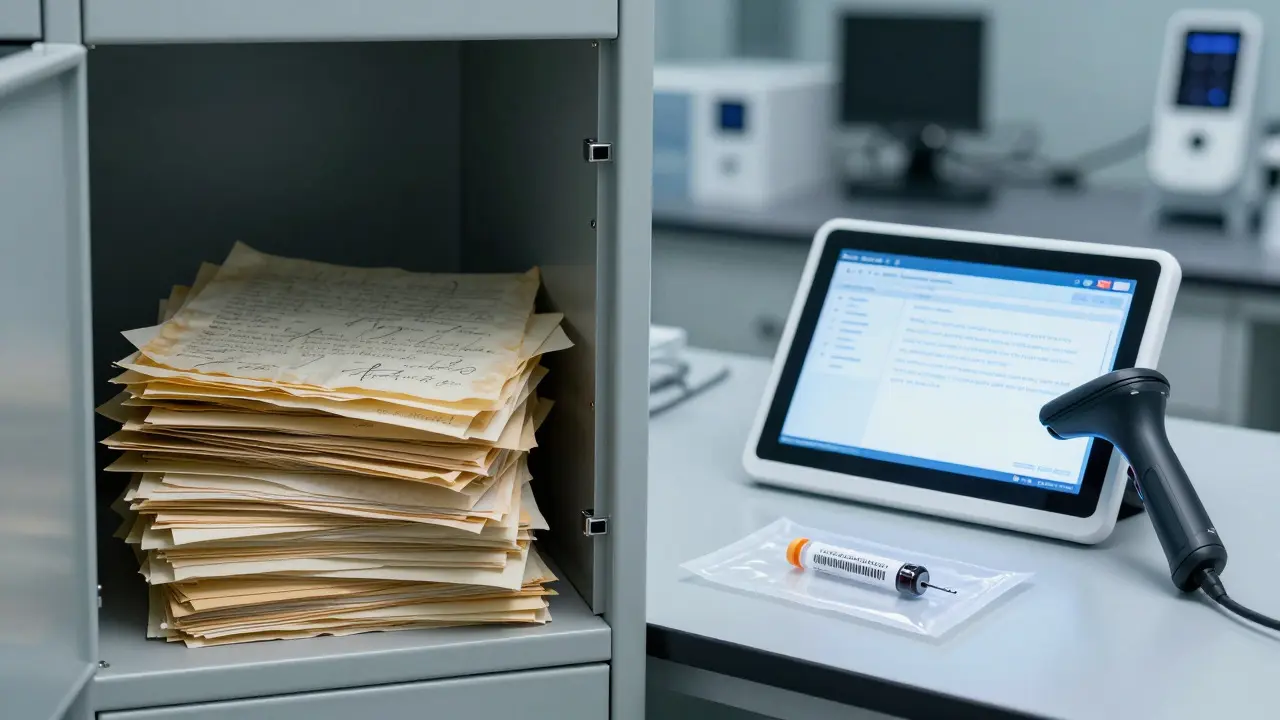
Imagine a jury questioning the validity of a DNA sample because a single signature is missing on a transfer form. In high-stakes litigation, chain of custody isn't just paperwork; it is the lifeline that connects physical evidence to its final analysis. For decades, this process relied heavily on carbon-copy paper forms. Today, however, digital systems are reshaping how law enforcement and forensic labs track items from crime scene to courtroom. The shift is not just about convenience-it is about reducing human error, speeding up case resolution, and ensuring that evidence holds up under rigorous legal scrutiny.
The core problem with traditional methods is simple: humans make mistakes. A smudged ink stamp, a missed initial, or a delayed entry can create gaps in the timeline. When these gaps exist, defense attorneys have an easy target. They don’t need to prove the evidence is fake; they just need to prove it might have been tampered with. This article breaks down the practical differences between digital and paper documentation, helping you decide which approach best fits your operational needs in 2026.
Why Chain of Custody Matters More Than Ever
Chain of custody is the chronological documentation or paper trail that details the sequence of custody, control, transfer, analysis, and disposition of physical or electronic evidence. It serves as the primary proof that evidence has not been altered, lost, or contaminated. In criminal cases, if the chain is broken, the judge may exclude the evidence entirely, regardless of how conclusive the lab results are.
As technology advances, the types of evidence we handle have changed. We no longer just track vials of blood or shell casings. We now manage smartphones, cloud data, and IoT devices. These digital artifacts are fragile and easily overwritten. Consequently, the method used to document their handling must be precise and instantaneous. A delay of even ten minutes in logging a data extraction can raise questions about whether the original state was preserved.
The Reality of Paper-Based Documentation
Paper forms have been the standard for over a century. They are tangible, require no electricity, and work in any environment, from a snowy mountain pass to a server room without Wi-Fi. For many small agencies, the cost barrier to switching remains the biggest hurdle. A stack of pre-printed custody forms costs pennies per unit, whereas software licenses can run into thousands annually.
However, the hidden costs of paper are significant. Consider the time spent manually transferring data. An investigator collects an item, fills out a form, hands it to a transport officer, who fills out another form, and so on. Each handoff is a potential point of failure. If a name is spelled differently on two forms, or if a date is written ambiguously (e.g., 10/11/25), reconciliation becomes a nightmare during trial preparation.
Furthermore, storage is a physical burden. Evidence rooms fill up quickly. Finding a specific form from three years ago requires digging through boxes, which takes hours. If that form is needed for a deposition tomorrow, the delay can stall the entire case. Paper also degrades. Ink fades, corners tear, and humidity warps pages. While rare, these physical damages can undermine the credibility of the record itself.
The Rise of Digital Evidence Management Systems
Digital solutions, often referred to as Evidence Management Systems (EMS), are software platforms designed to digitize the tracking, storage, and retrieval of physical and digital evidence. Modern EMS platforms use mobile apps, barcode scanners, and RFID tags to automate the logging process. When an item moves, the system updates in real-time. No more handwriting names. No more guessing dates. The timestamp is generated by the device, not the human.
This automation brings speed. What used to take 15 minutes to log manually now takes seconds. Investigators can focus on the scene rather than the clipboard. Labs receive metadata automatically, meaning the analyst knows exactly when the item arrived and who brought it in before they even open the box. This efficiency translates directly to faster case turnaround times, which is a critical metric for modern justice systems dealing with backlogs.
Security is another major advantage. Digital records are backed up continuously. If a fire destroys the evidence room, the physical items are gone, but the audit trail remains in the cloud. Access controls ensure that only authorized personnel can view or modify records. Every change is logged with a user ID and timestamp, creating an immutable history that is far harder to dispute than a scribbled note on a piece of paper.

Comparing Digital and Paper Methods
To help you visualize the trade-offs, here is a direct comparison of the two approaches across key operational metrics.
| Feature | Paper Documentation | Digital Documentation (EMS) |
|---|---|---|
| Setup Cost | Low (printing supplies) | High (software license, hardware) |
| Speed of Entry | Slow (manual writing) | Fast (scan/type/auto-fill) |
| Error Rate | High (illegible handwriting, typos) | Low (validated fields, auto-timestamps) |
| Searchability | Difficult (manual file search) | Instant (keyword/date filters) |
| Reliability | Dependent on physical condition | Dependent on internet/power |
| Audit Trail | Basic (signatures only) | Comprehensive (user, time, IP, action) |
Notice the reliability column. Paper fails if it gets wet or lost. Digital fails if the network goes down. This is why hybrid models are emerging. Many agencies use offline-capable mobile apps that store data locally on the device until a connection is restored. This mitigates the risk of downtime while retaining the benefits of digital structuring.
Legal Admissibility and Courtroom Implications
Does a digital record hold up in court? Generally, yes. Courts have long accepted computer-generated records if the system’s integrity can be demonstrated. However, there is a nuance. Judges and juries are accustomed to seeing paper exhibits. A printed report from a digital system looks similar to a traditional form, but the underlying data structure is different.
When testifying, experts must explain how the digital system works. They need to show that the database was secure, that backups were regular, and that no one had unauthorized access. This adds a layer of technical testimony that doesn’t exist with paper. If a system update changes a field format, or if a server migration loses metadata, those issues can become focal points for cross-examination.
On the other hand, paper records face their own skepticism. Handwriting analysis is rarely required, but inconsistencies in signatures or dates are common targets. Defense attorneys often argue that "human error" compromised the chain. With digital records, the argument shifts to "system error," which is statistically less likely if the software is validated according to industry standards like ISO 17025.

Implementation Challenges and Best Practices
Switching to digital isn’t plug-and-play. It requires training. Officers who have used clipboards for 20 years may resist new interfaces. The learning curve can slow operations initially. To mitigate this, start with pilot programs. Train a small group of officers and lab technicians first. Gather feedback, refine workflows, and then roll out agency-wide.
Data migration is another hurdle. If you have decades of paper files, scanning them all is expensive and time-consuming. Most agencies adopt a "cutoff date" policy. New evidence is tracked digitally, while old cases remain on paper unless reopened. This keeps the scope manageable.
Best practices for maintaining robust digital chain of custody include:
- Unique Identification: Use barcodes or QR codes for every item. Never rely on manual entry of case numbers.
- Immediate Logging: Log the item at the moment of collection. Do not wait until returning to the station.
- Regular Audits: Conduct random spot-checks to ensure physical items match digital records.
- Offline Capability: Ensure your software works without internet connectivity.
- User Training: Provide ongoing refresher courses to prevent habit-based errors.
Frequently Asked Questions
Is paper chain of custody still legally valid?
Yes, paper records remain fully admissible in court provided they are complete, legible, and consistent. However, they are increasingly viewed as less reliable due to higher susceptibility to human error and physical degradation compared to digital systems.
What happens if a digital evidence system crashes?
Reputable Evidence Management Systems use cloud redundancy and local caching. If the main server crashes, data is usually recoverable from backups. If the internet is down, offline-capable apps allow continued logging, syncing later. The key is having a documented disaster recovery plan.
How much does a digital chain of custody system cost?
Costs vary widely based on scale. Small agencies might pay $50-$100 per user per month for SaaS solutions. Large metropolitan departments may spend tens of thousands annually for enterprise-grade platforms with custom integrations. Hardware like scanners and rugged tablets adds to the initial investment.
Can I mix paper and digital records in the same case?
It is possible but not recommended. Mixing formats creates confusion and increases the risk of discrepancies. If you must mix them, ensure clear cross-referencing between the paper form number and the digital case ID. Ideally, maintain a single source of truth for each item's journey.
Do digital records protect against tampering better than paper?
Generally, yes. Digital systems use audit trails that record who accessed a record and what changes were made. Altering a digital record leaves a trace in the backend logs. Altering a paper form (like using white-out) can sometimes be done without immediate detection, though forensic examination can reveal it.