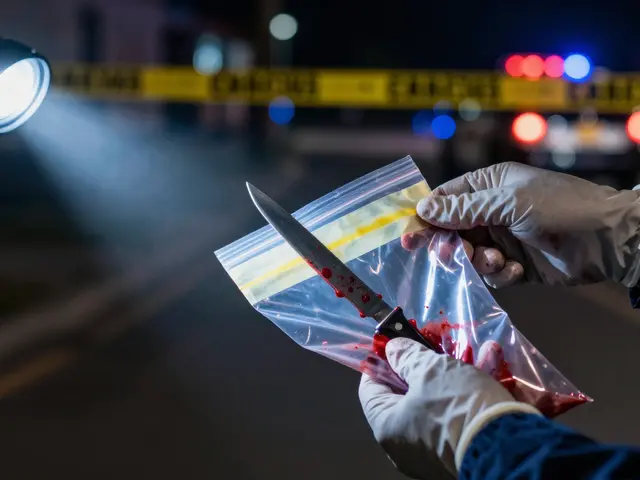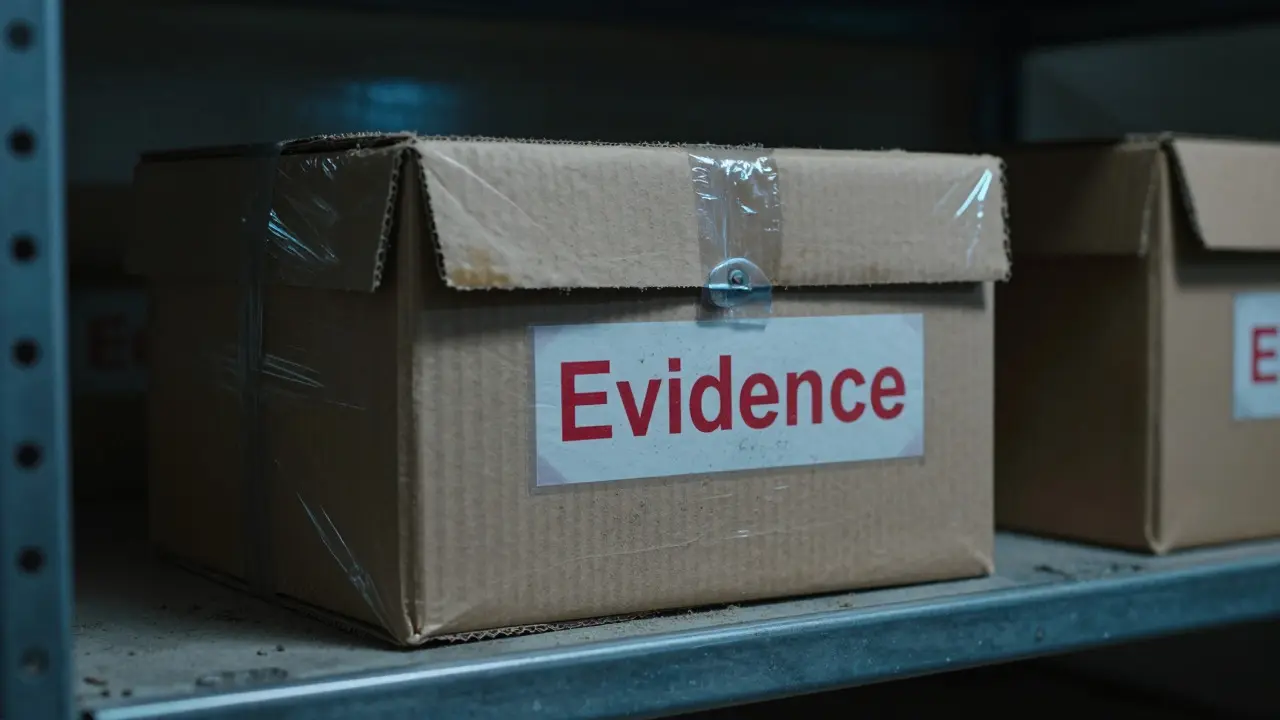
Imagine pulling a sealed box from a basement archive. It’s been sitting there for twenty years. Inside is a blood-stained shirt from a homicide that never went to trial. The police officer who collected it is retired. The detective who assigned the case number passed away five years ago. Now, a new prosecutor wants to bring this case back to life. The first question they ask isn’t about the crime; it’s about the paper trail. Did anyone touch that box between 1998 and 2024? If so, was it documented? This is where chain of custody becomes the difference between a conviction and a dismissed charge.
In active investigations, we track evidence from the scene to the lab in real-time. In cold cases, the timeline stretches across decades, personnel changes, storage facility relocations, and even shifts in legal standards. The core problem is simple: time erodes memory, but it doesn’t erase liability. To revive a cold case, you must prove that the evidence hasn’t been compromised by neglect, theft, or environmental decay over those long periods of dormancy.
The Unique Challenges of Long-Term Storage
Most evidence protocols are designed for short-term holding-days or weeks. When an item sits in a locker for fifteen years, the rules of engagement change. The primary risk isn’t just tampering; it’s degradation. DNA samples stored in humid basements can degrade beyond usefulness. Physical items like clothing can mold, rot, or be eaten by pests. If the physical state of the evidence changes without documentation, its value drops significantly.
Consider a specific scenario: a digital hard drive seized in 2005. In 2026, the file system formats have evolved, and the original extraction software may no longer be supported. If the chain of custody log shows the drive was moved three times without checksum verification, a defense attorney will argue that data corruption occurred during one of those moves. You need to prove not just *who* had the drive, but *how* it was handled each time.
- Environmental Control: Temperature and humidity logs must exist for the entire storage period. A single week of unmonitored heat can ruin biological samples.
- Access Logs: Every key or badge entry into the evidence room must be recorded. In older systems, this might mean paper sign-in sheets that are now faded or lost.
- Packaging Integrity: Seals must be intact. If a plastic bag has cracked due to age, the seal needs to be re-applied and documented with a photo and timestamp.
Reconstructing Broken Links in the Chain
Here is the harsh reality: in many cold cases, the chain is already broken. Officers forget to sign out items. Clerks misfile boxes. Facilities move without updating inventory databases. When you find a gap, you don’t panic-you investigate. A gap in the chain doesn’t automatically void the evidence, but it requires explanation.
You can often reconstruct missing links using secondary sources. Security camera footage from the evidence room (if retained) can show who entered when. Email correspondence between detectives and lab technicians can confirm transfer dates. Witness testimony from retired officers, while less ideal than written records, can still support continuity if their memories align with other documentary evidence.
The goal is to create a narrative that makes sense to a judge. If a box was missing from the inventory list for six months in 2010, but security logs show it stayed in Room 4B the whole time, and two witnesses confirm it was there, the chain is arguably preserved despite the clerical error. However, if the box was moved to a different building and no record exists, the burden of proof shifts heavily to the prosecution.
Digital Evidence and Modern Forensic Standards
Cold cases involving digital media present a unique set of hurdles. Unlike physical objects, digital files can be altered without leaving physical traces. In 2026, the standard for digital forensics relies heavily on hash values (MD5 or SHA-256). These are digital fingerprints of a file. If the hash value of a hard drive image taken in 2005 matches the hash value calculated today, the data is identical to what it was then.
If you don’t have the original hash value from 2005 because the technology wasn’t widespread yet, you’re in a tricky spot. You might rely on metadata analysis. File creation dates, modification timestamps, and access logs within the file system itself can help establish a timeline. But these are internal to the device and can be manipulated. Therefore, external documentation of the seizure and initial imaging is critical.
| Factor | Active Investigation | Cold Case Revival |
|---|---|---|
| Timeframe | Days to Months | Years to Decades |
| Personnel Stability | High (same team) | Low (multiple generations of staff) |
| Primary Risk | Tampering/Theft | Degradation/Loss of Documentation |
| Documentation Focus | Real-time logging | Historical reconstruction |
| Legal Standard | Strict continuity | Probable continuity + Explanation for gaps |

The Role of Laboratory Quality Management
Laboratories play a crucial role in maintaining the integrity of cold case evidence. When a lab receives old samples, they must assess their condition before testing. This assessment should be part of the chain of custody record. For example, if a hair sample arrives brittle and dry, the technician notes this condition. If the same sample is later found to be moist, something went wrong in storage.
Modern labs use barcoding and RFID tags to track items. If a cold case item was digitized into a modern system, its history should be imported. If it wasn’t, you have a “dark” item in the system-one with no digital footprint. Finding these dark items is the first step in any cold case audit. You cannot manage what you cannot see.
Furthermore, accreditation bodies like ISO/IEC 17025 require strict controls over reference materials and calibration. While this applies mostly to active testing, it sets the benchmark for how seriously we take measurement accuracy. In a cold case, if the lab used outdated methods that are no longer accepted, the results might be challenged. The chain of custody must also include the *methodology* used at each stage, not just the movement of the object.
Legal Admissibility and the Daubert Standard
In the courtroom, the chain of custody is often attacked under the guise of reliability. Under the Daubert standard, expert testimony must be based on reliable principles. If the chain of custody is riddled with unexplained gaps, the expert’s opinion on the DNA match becomes suspect. Why? Because the expert assumes the sample tested is the same as the sample collected.
To counter this, prosecutors must present a “substantial compliance” argument. They don’t need a perfect chain; they need a chain that is good enough to rule out reasonable doubt regarding contamination. This means highlighting the safeguards that were in place, even if imperfect. For instance, if the evidence room had limited access and a logbook, that supports substantial compliance even if one signature is missing.
Judges look for patterns. Isolated errors are forgivable. Systemic negligence is not. If every item in a batch has missing signatures, it suggests a broken process. If only one item has a gap, it looks like a human error. Context matters immensely here.
Practical Steps for Reviving a Cold Case
If you are tasked with reopening a cold case, start with the paperwork, not the science. Here is a practical workflow:
- Audit the Physical Inventory: Locate the item. Check seals, packaging, and labels. Photograph everything in situ.
- Retrieve Historical Records: Pull all incident reports, property receipts, and lab requisition forms. Look for discrepancies in dates or names.
- Interview Key Personnel: Talk to the original collector, the last known handler, and any current custodians. Get signed statements where possible.
- Assess Environmental History: Check facility maintenance logs for temperature/humidity excursions during the storage period.
- Create a Gap Analysis Report: Document every break in the chain. Provide a plausible explanation for each. Attach supporting evidence (emails, logs, witness statements).
- Consult with Legal Counsel: Before sending anything to the lab, get a lawyer’s read on whether the chain is strong enough to survive a motion in limine.
Frequently Asked Questions
Does a broken chain of custody always mean evidence is inadmissible?
No. A broken chain does not automatically exclude evidence. Courts often apply the concept of "substantial compliance." If the prosecution can demonstrate that the likelihood of tampering or contamination is low despite the gap, the evidence may still be admitted. The key is explaining the gap with credible secondary evidence.
How long should evidence be kept for potential cold case review?
There is no universal rule, but best practice suggests keeping biological and digital evidence indefinitely if resources allow. Physical items prone to degradation should be assessed for long-term viability. Many jurisdictions retain major case evidence for the statute of limitations period plus an additional decade to account for delayed reporting or new forensic technologies.
What is the most common cause of chain of custody failure in old cases?
The most common cause is administrative neglect during facility moves or system upgrades. When evidence rooms are relocated or digital property management systems are replaced, data is often lost or not migrated correctly. This creates "dark" items with no digital history, making it difficult to prove continuous control.
Can witness testimony fix a missing signature on a chain of custody form?
Yes, but it is weaker than documentary proof. Testimony from the person who should have signed can explain the omission, especially if corroborated by other records like security logs or emails. However, relying solely on memory after 20+ years is risky. Judges prefer objective, contemporaneous records over retrospective recollections.
How do hash values help in cold case digital forensics?
Hash values act as digital fingerprints. If you have the hash value from the time of seizure and calculate the same hash today, you prove the data hasn't changed. In cold cases where original hashes weren't recorded, analysts may use metadata and file system structures to infer integrity, but this is less definitive than a matching hash pair.