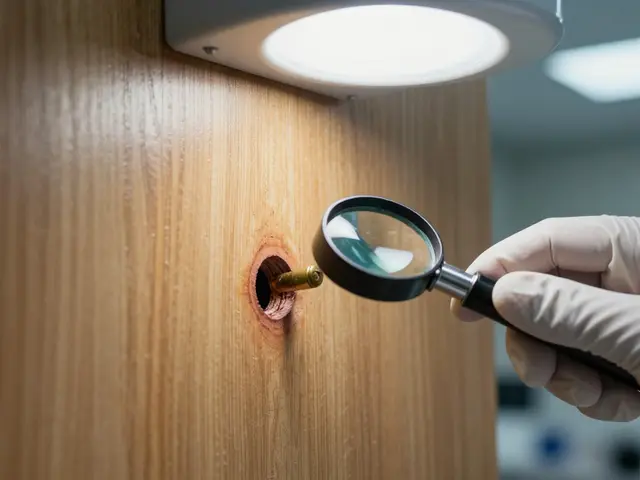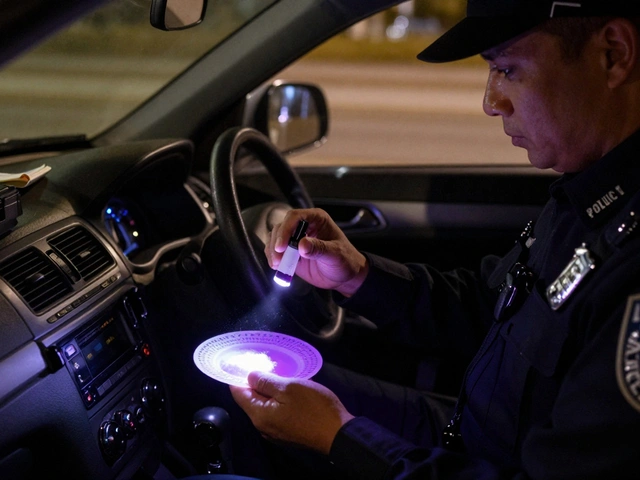
Imagine a detective finding a bloody knife at a crime scene. It looks like the murder weapon. But if that knife sits on a desk for three days before being bagged, or if it gets swapped with another item without a record, does it still prove guilt? In court, the answer is often no. This is where chain of custody is the documented process that tracks every person who handles physical evidence from collection to presentation in court. Without a solid chain, even the most damning piece of evidence can be thrown out by a judge.
For law enforcement officers, forensic analysts, and legal teams, understanding the legal requirements behind this process isn't just about paperwork-it's about saving cases. A single missing signature or an unexplained gap in time can give defense attorneys exactly what they need: doubt. Here’s how to keep your evidence bulletproof.
What Exactly Is Chain of Custody?
At its core, chain of custody is a chronological log. It records who had the evidence, when they had it, why they took it, and where it was stored. Think of it as a passport stamp for physical proof. Every time the item changes hands, a new entry must be made. If you skip a step, the "passport" has a hole in it, and the jury might question whether the item in front of them is actually the one found at the scene.
The goal isn't just administrative tidiness. It serves two main purposes:
- Authentication: Proving the evidence is what it claims to be.
- Integrity: Showing the evidence hasn't been altered, contaminated, or tampered with.
If a prosecutor can’t show a continuous trail from the crime scene to the courtroom, the defense will argue that the evidence could have been planted or changed. That argument is hard to fight once it’s raised.
Key Components of a Valid Record
Not all logs are created equal. To hold up under cross-examination, your documentation needs specific details. Vague entries like "Held by Detective Smith" aren't enough. You need precision.
- Date and Time: Use 24-hour format to avoid AM/PM confusion. Note the exact minute of transfer.
- Full Names and Signatures: Initials are risky. Write full names and get wet-ink signatures whenever possible. Digital signatures are acceptable in modern digital forensics but must be timestamped.
- Purpose of Transfer: Why did the item move? Was it sent to the lab for DNA testing? Returned to storage? Displayed in court? State the reason clearly.
- Location: Where did the evidence go? "Evidence Room B" is better than "Storage."
- Condition Notes: Did the seal break? Was the container damaged? Note any anomalies immediately.
A common mistake is assuming that if you don't sign it, it didn't happen. But in court, if it isn't written down, it didn't happen. The burden of proof for authenticity rests heavily on the prosecution.
Common Pitfalls That Ruin Cases
You don't need a fancy crime lab to mess this up. Most failures happen in the field or during transport. Here are the traps that catch people off guard:
The "Leftover" Problem
Officers often collect multiple items. If one item is set aside because it doesn't seem relevant yet, but isn't logged, it becomes a liability later. If it turns out to be crucial, the defense will ask, "Where was this between 10 PM and 6 AM?" If there's no record, the item is suspect.
Broken Seals
Evidence bags should be sealed with tape and signed across the seal. If a seal is broken to add an item or check contents, the old seal is void. You must apply a new seal and document the break. Forgetting to re-seal properly is a classic error that suggests tampering.
Digital Evidence Gaps
With smartphones and laptops, the chain of custody extends to data. If you pull a phone from a suspect's pocket, do you power it off? Do you use a Faraday bag? If you let the phone receive calls or sync with cloud services, data can change. The "custody" here includes protecting the data state, not just the physical device.

Legal Standards: What Courts Actually Look For
There isn't one single federal rule that dictates the exact format of a chain of custody form. Instead, courts rely on general principles of evidence law, primarily the Federal Rules of Evidence (FRE) Rule 901 regarding authentication. However, local jurisdictions may have specific statutes or case law that impose stricter requirements.
Judges generally ask three questions when evaluating chain of custody:
- Was the evidence identified correctly at the start?
- Was there a logical explanation for every gap in time?
- Was the handling consistent with standard procedures?
Notice the word "logical." You don't always need a perfect, unbroken line of sight. If a detective leaves a bag in a locked evidence room for four hours while working another call, that's usually fine. But if they leave it on a nightstand in their home office, the defense will attack the security. The key is explaining *why* the gap existed and showing it wasn't an opportunity for tampering.
Best Practices for Field Officers and Analysts
How do you make sure your records pass muster? Keep it simple and consistent.
- Use Standardized Forms: Don't invent your own log sheets. Use the department-approved forms. They are designed to capture the necessary legal elements.
- Sign Immediately: Don't wait until you're back at the station to fill out the form. Sign it at the point of transfer. Memory fades; ink doesn't.
- Photograph the Scene: Take pictures of the evidence in place before moving it. This helps establish the initial condition and location.
- Secure Storage: Ensure evidence rooms are locked and access-controlled. Log who enters the room, not just who touches the item.
- Train Regularly: New officers make rookie mistakes. Annual refresher courses on evidence handling reduce errors significantly.
One pro tip: If you have to break a seal, take a photo of the broken seal before applying the new one. It’s cheap insurance against a future accusation of tampering.
Comparison: Physical vs. Digital Chain of Custody
While the principles are similar, the execution differs for digital media. Here’s a quick look at how they compare:
| Feature | Physical Evidence | Digital Evidence |
|---|---|---|
| Primary Risk | Tampering, loss, contamination | Data alteration, overwriting, remote access |
| Sealing Method | Tape seals, evidence bags | Faraday bags, write-blockers, hashing |
| Verification Tool | Visual inspection, labels | Cryptographic hashes (MD5, SHA-256) |
| Transfer Protocol | Hand-to-hand with signature | Image creation, hash verification, secure transfer |
| Common Error | Missing signatures | Failing to isolate device from network |
For digital items, the "hash" acts as the fingerprint. If the file changes, the hash changes. If you can prove the hash matches from the moment of collection to the moment of trial, you’ve proven integrity mathematically. This is stronger than a human signature in many ways, but only if you do it right.
When the Chain Breaks: Can You Save It?
Sometimes, despite best efforts, a link is missing. Maybe a form was lost, or a witness forgot to sign. Does the case die? Not necessarily.
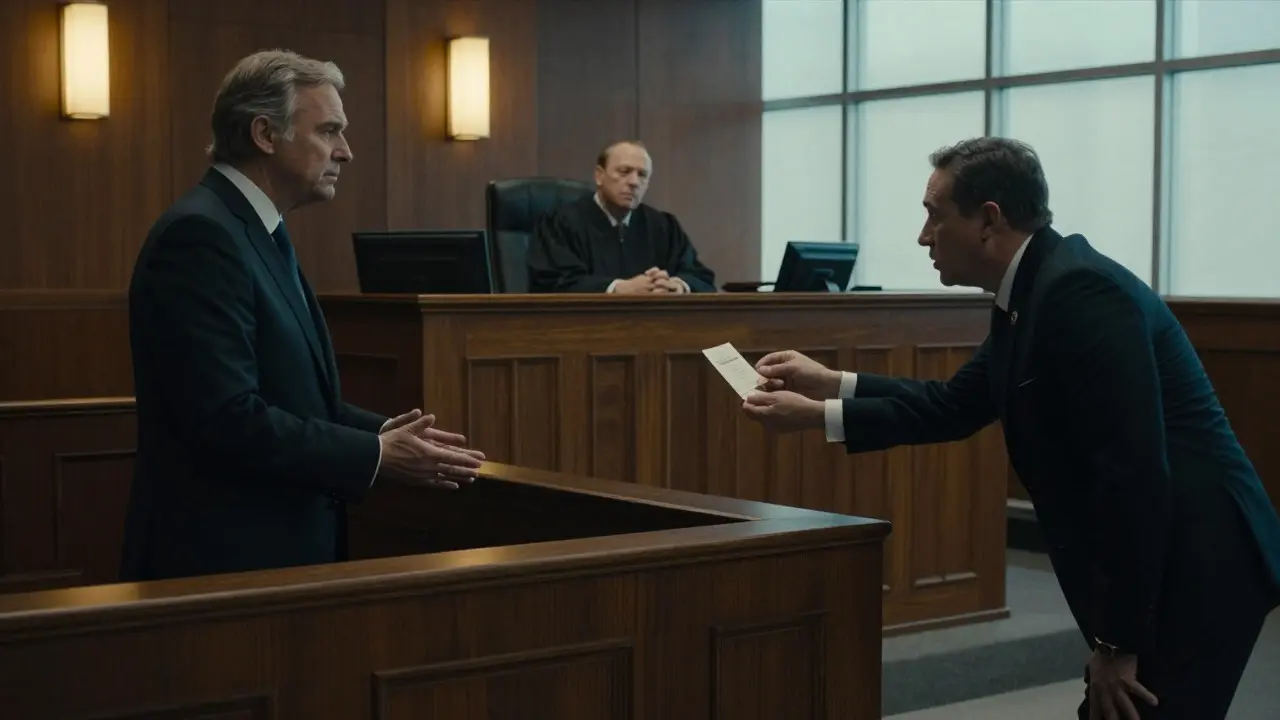
Witness testimony can often bridge small gaps. If a detective testifies, "I kept the bag in my locked car trunk from 8 PM to 10 PM," that can explain a missing log entry. The credibility of the witness matters here. If the officer has a history of sloppy records, the judge might discount their testimony. If they’re meticulous, the gap might be forgiven.
However, large gaps or unexplained movements are harder to fix. The earlier you catch a mistake, the easier it is to correct. If you notice a missing signature during the pre-trial review, contact the person involved immediately to get a sworn affidavit explaining the oversight. Waiting until trial day to discover the problem puts you in a reactive, weak position.
Preparing for Trial: The Final Check
Before the big day, run a final audit. Go through every piece of evidence listed in your discovery packet. Verify that each item has a complete log from collection to current status. Check for:
- Illegible handwriting (get clarifications now).
- Missing dates or times.
- Inconsistent names (e.g., "J. Doe" vs. "John Doe").
- Unsealed containers.
It sounds tedious, but it’s the difference between a smooth trial and a chaotic one. Defense attorneys love to pick apart messy files. Give them nothing to work with.
Frequently Asked Questions
Is chain of custody required for all types of evidence?
Yes, for any physical or digital evidence intended to be used in court. While testimonial evidence (like witness statements) doesn't require a physical chain, tangible items like weapons, drugs, blood samples, and electronic devices must have a documented trail to be admissible.
What happens if the chain of custody is broken?
The judge has discretion. If the break is minor and explained by credible testimony, the evidence may still be admitted. If the break is significant or suggests tampering, the judge may exclude the evidence entirely, potentially weakening the prosecution's case.
Who is responsible for maintaining the chain of custody?
Everyone who touches the evidence. This includes first responders, detectives, lab technicians, evidence clerks, and prosecutors. Each person is responsible for documenting their interaction accurately before passing the item to the next person.
Can digital evidence be admitted without a traditional paper log?
Yes, provided there is a reliable digital audit trail. Many modern forensic tools automatically generate logs with timestamps and user IDs. These digital records are generally accepted if they can be verified and shown to be tamper-proof.
How long must chain of custody records be kept?
Retention periods vary by jurisdiction and type of case. Generally, records are kept for the duration of the case plus several years after final appeal. Some states require permanent retention for capital cases. Always check local statute of limitations and department policy.