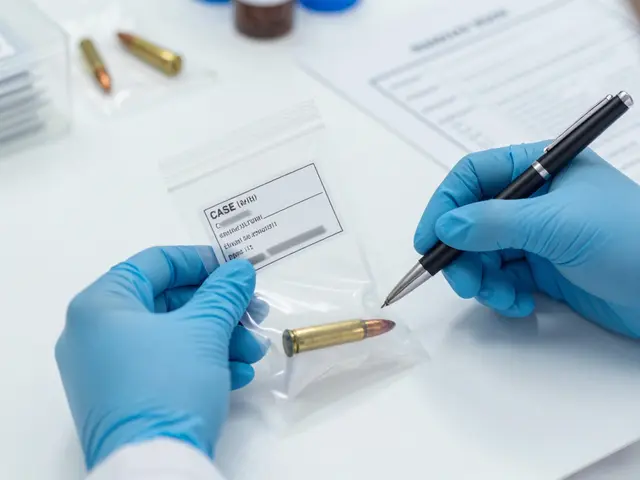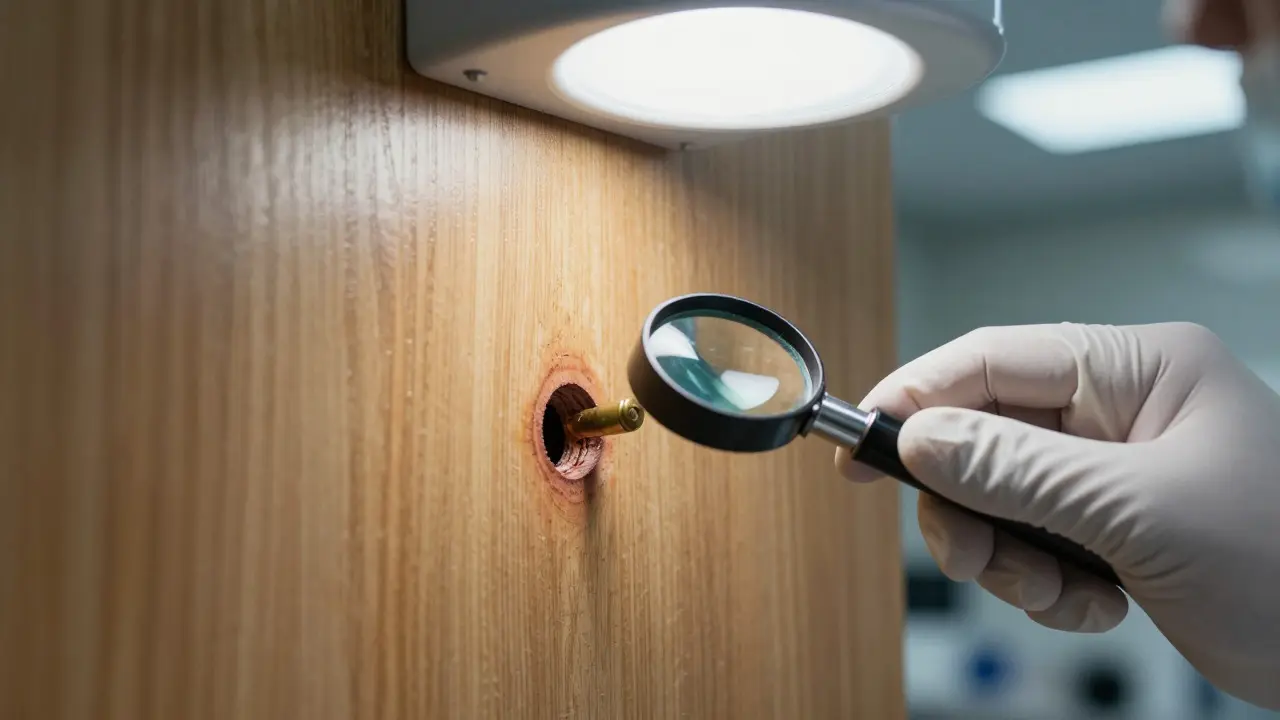
Imagine you’re standing in a crime scene lab, staring at a bullet hole in a door. The entry wound looks clean. No soot. No stippling. You might assume the shooter was far away. But what if they were just two feet closer than you think? That small difference changes everything about the case. Determining the muzzle-to-target distance isn’t just a guess; it’s a critical part of forensic ballistics that helps investigators reconstruct exactly where the shooter stood.
This measurement tells us how far the gun barrel was from the target when the trigger was pulled. It helps distinguish between a contact shot, a close-range shot, and a distant shot. Each category has different physical signatures left on the victim or object. If you get this wrong, you might misinterpret the entire sequence of events. Did the suspect aim directly at the face from across the room? Or did they press the muzzle against the skin? The answer lies in the microscopic details we can measure and analyze.
Why Muzzle Distance Matters in Forensics
In criminal investigations, the position of the shooter relative to the victim is often the key to solving the case. A short-range shot suggests a personal conflict or an ambush. A long-range shot implies a sniper scenario or a drive-by shooting. By calculating the distance, forensic examiners can verify witness statements. If a witness says they heard one shot from outside the window, but the GSR pattern indicates a close-range shot, the statement becomes questionable.
Furthermore, this analysis helps determine intent. In self-defense cases, the distance can prove whether the suspect had time to react or if the shot was sudden and unexpected. For example, a contact shot on the back of the head often indicates a surprise attack, while a chest wound at ten feet might suggest a confrontation. The data doesn’t lie, but only if you know how to read it.
The Three Categories of Firearm Distance
Forensic scientists generally classify muzzle-to-target distances into three main groups: contact, close range, and distant range. Understanding these categories helps you quickly identify the type of shot based on initial visual inspection before running any tests.
- Contact Shots: The muzzle is pressed directly against the target surface. This creates a specific pattern of gas burns and soot deposition right inside the wound channel.
- Close Range Shots: The muzzle is within a few inches to a few feet (typically under 18 inches for handguns). You will see clear evidence of powder tattooing or stippling around the entry wound.
- Distant Range Shots: The muzzle is far enough away that unburned powder particles do not reach the target. The entry wound is usually clean, with no soot or stippling visible to the naked eye.
These categories aren't arbitrary. They are based on the physics of how propellant gases and particles travel after leaving the barrel. As the distance increases, the energy dissipates, and the particles spread out. At a certain point, they simply don't have enough force to penetrate the skin or leave a mark.
Gunshot Residue (GSR) Analysis
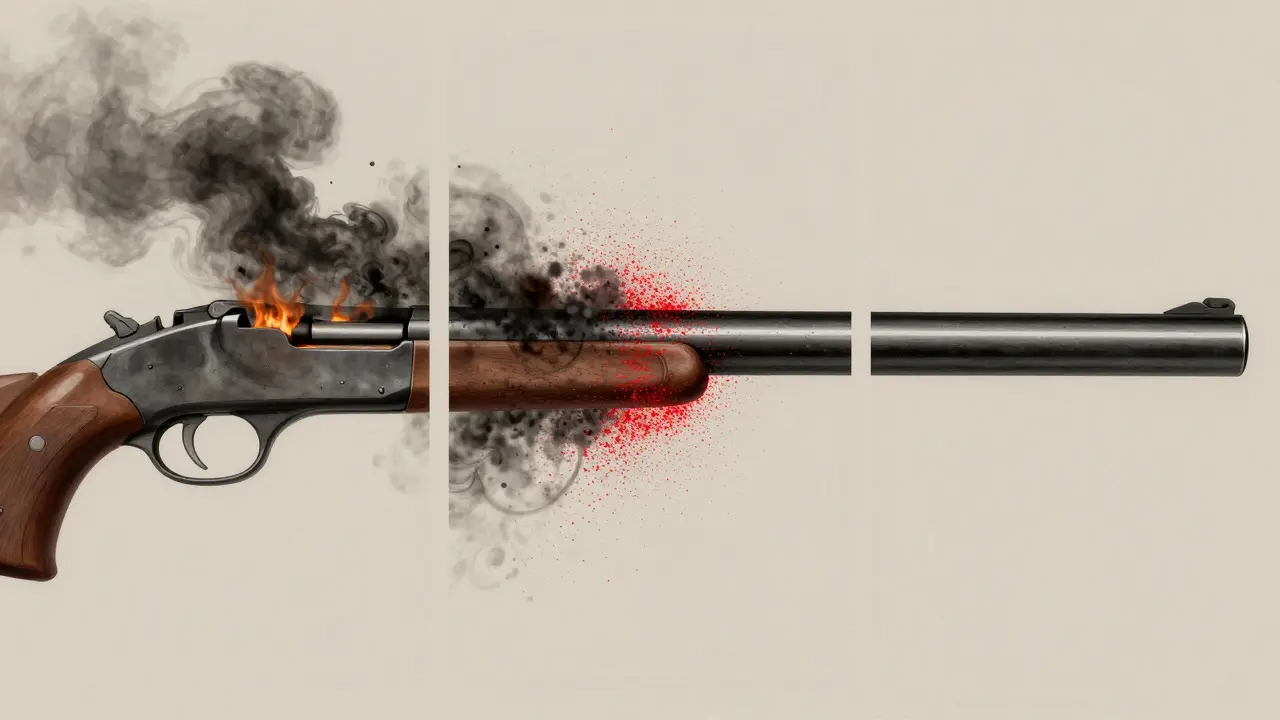
One of the most reliable ways to estimate distance is through Gunshot Residue analysis. GSR consists of tiny particles of lead, barium, antimony, and other metals that come from the primer and bullet jacket. When a gun fires, these particles fly out of the muzzle along with the bullet.
Forensic labs use Scanning Electron Microscopy with Energy Dispersive X-ray Spectroscopy (SEM-EDS) to detect these particles. Here is how it works in practice:
- Collect swabs from the area around the entry wound.
- Examine the swabs under a microscope.
- Count the number of GSR particles per square centimeter.
- Compare this density to known standards from test firings.
The closer the shot, the higher the density of GSR particles. A contact shot might have hundreds of particles per square centimeter. A shot from six inches away might have fifty. From two feet away, you might find fewer than ten. By plotting this data, you can create a curve that estimates the exact distance. However, wind, clothing, and angle of fire can affect the results, so experienced examiners always account for these variables.
Wound Morphology and Visual Signs
Before you even touch a microscope, your eyes can tell you a lot. The appearance of the entry wound provides immediate clues about the firing distance.
| Distance Category | Soot Deposition | Powder Stippling | GSR Density | Typical Appearance |
|---|---|---|---|---|
| Contact | Heavy, inside wound | None visible externally | Very High | Tear-shaped wound, blackened edges |
| Close Range (< 6") | Visible ring around wound | Distinct, dense dots | High | Clean center, dirty halo |
| Mid Range (6" - 18") | Faint or absent | Sparse, fading dots | Moderate | Light stippling, minimal soot |
| Distant (> 18") | Absent | Absent | Low or Absent | Clean circular entry |
Stippling, also known as tattooing, happens when individual grains of unburned powder hit the skin with enough force to break the epidermis. These look like tiny red or black dots. The further away the shot, the more spread out these dots become until they disappear entirely. Soot, on the other hand, is composed of carbon particles. It stains the skin or clothing but doesn't penetrate as deeply as powder grains. So, if you see a black ring around a wound, you know the shot was close. If you see red dots, it was even closer.
Factors That Complicate Distance Estimation
Real-world scenarios are rarely perfect. Several factors can mess up your distance calculations. Clothing is the biggest variable. If the victim was wearing a thick wool sweater, the powder grains might stop in the fabric and never reach the skin. This can make a close-range shot look like a distant one because there is no stippling on the body itself. You would need to examine the clothing fibers separately to find the GSR trapped in the weave.
Angle of incidence also plays a role. A perpendicular shot deposits GSR in a tight cluster. An oblique shot spreads the particles over a larger area, lowering the density per square inch. This can lead to an overestimation of the distance if you don't correct for the angle. Additionally, environmental conditions like wind can blow GSR away from the impact zone, reducing the count. Always document the scene thoroughly to note any air currents or barriers between the shooter and the target.

Practical Steps for Examiners
When you are tasked with determining muzzle-to-target distance, follow this systematic approach to ensure accuracy:
- Document Visually: Take high-resolution photos of the entry wound and surrounding area. Note any soot, stippling, or abrasion rings.
- Measure the Area: Use a calibrated scale to measure the diameter of the soot ring and the distribution of stippling dots.
- Collect Samples: Swab the wound margins and surrounding skin for GSR. Also collect samples from clothing if present.
- Run Lab Tests: Use SEM-EDS to quantify GSR particle density. Compare the results to standard curves generated from test shots with the same firearm and ammunition.
- Correlate Data: Combine the visual signs, GSR density, and wound morphology to form a conclusion. Do not rely on just one method.
Remember, no single piece of evidence is absolute. The strength of your opinion comes from the convergence of multiple lines of evidence. If the GSR density suggests 4 inches, but the stippling pattern suggests 6 inches, you need to investigate why. Was the victim moving? Was there wind? Addressing these discrepancies makes your report more credible in court.
Common Mistakes to Avoid
Even experienced examiners can make errors. One common mistake is assuming that the absence of soot means a distant shot. Sometimes, modern ammunition produces very little soot, making it hard to see visually. Always check for GSR microscopically. Another error is ignoring the clothing layer. If you only look at the skin and miss the powder trapped in the shirt, you might underestimate the proximity of the shot.
Also, be careful with interpreting stippling on non-human targets. On bone or metal, the effects of powder impact are different than on soft tissue. Bone can absorb some energy, changing the pattern of damage. Always tailor your interpretation to the specific material of the target. Finally, keep your notes detailed. If you forget to mention that the victim was wearing a jacket, a defense attorney might challenge your findings later.
Frequently Asked Questions
What is the maximum distance for a close-range gunshot?
Generally, close-range shots are defined as those fired from less than 18 inches (45 cm) away for most handgun calibers. However, this can vary depending on the specific ammunition and firearm. Some high-pressure rounds may show stippling at slightly greater distances, while low-pressure rounds may lose their effect sooner.
Can you determine distance from a bullet hole in a car window?
Yes, but it is more complex than human tissue. Glass shatters differently, and soot may spread due to heat. Examiners look for the concentration of GSR on the glass fragments and the pattern of cracks. The center of the crack pattern usually indicates the point of impact, and the density of residue around it helps estimate distance.
Does the type of bullet affect distance estimation?
Absolutely. Different bullets produce different amounts of GSR and soot. Full-metal-jacket bullets tend to produce cleaner shots with less residue than lead round-nose bullets. Hollow points may fragment, scattering particles differently. Always compare your findings to test shots using the same type of ammunition.
How does clothing impact GSR detection?
Clothing acts as a filter. Thick fabrics can trap GSR particles, preventing them from reaching the skin. This can result in a lower GSR count on the body than expected for a close-range shot. To get an accurate reading, examiners must analyze both the skin and the clothing fibers separately.
Is muzzle-to-target distance the same as range?
In forensic terms, they are often used interchangeably, but "range" is a broader term that can refer to the total distance from shooter to target. "Muzzle-to-target distance" specifically refers to the distance from the front of the gun barrel to the point of impact. This distinction is important because the length of the barrel affects how far the gases travel before hitting the target.