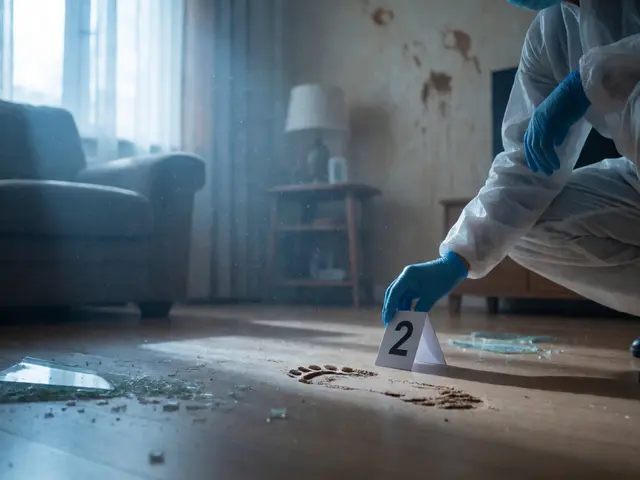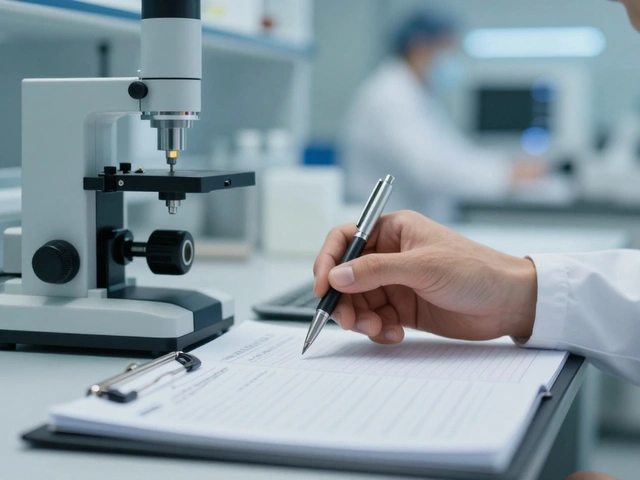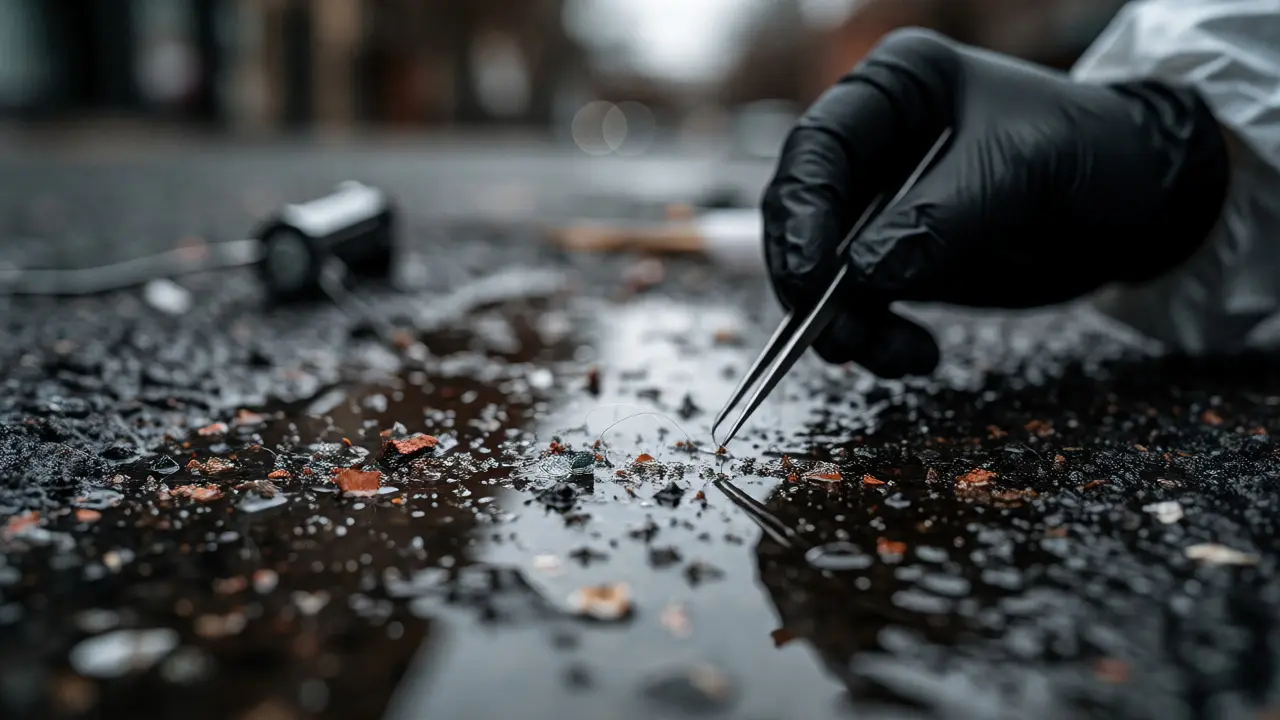
Imagine you’re a detective in Portland, Oregon. You have three burglary scenes within a two-mile radius. No fingerprints. No DNA on the obvious touch points. Just a smattering of glass fragments, paint chips, and synthetic fibers scattered across the asphalt. To the untrained eye, these are just debris. To a forensic examiner trained in case linkage, they are a map.
Case linkage is the process of determining whether multiple crimes were committed by the same offender or group based on physical evidence. It’s not about identifying who did it-that’s identification. It’s about grouping events to reveal patterns that single-scene analysis misses. When we talk about trace material patterning, we’re talking about using the rare, unique, or class-characteristic properties of small materials to connect these dots. This isn’t CSI magic; it’s rigorous statistical probability and careful observation.
The Core Concept: Why Trace Evidence Links Cases
You might ask, "Why bother with dust and dirt when we have DNA?" The answer lies in transfer dynamics. DNA tells you who was there. Trace evidence often tells you what happened and how objects interacted. If a suspect’s shoe sole has a specific pattern of dried mud containing pollen from a rare plant found only at one crime scene, that’s a link. But case linkage goes further. It looks for consistency across scenes.
Consider a serial arsonist. He uses a specific brand of lighter fluid and leaves behind a distinct type of charred wood fragment due to his method of ignition. Finding this same combination at Scene A, Scene B, and Scene C allows investigators to link the cases before an arrest is made. This grouping changes investigative strategy. Instead of treating each fire as an isolated incident, police can pool resources, share intelligence, and look for a common geographic profile.
This approach relies on the principle that while many people might own a pair of Nike sneakers, far fewer will have the exact combination of wear patterns, soil composition, and fiber transfers seen at multiple linked scenes. The power comes from the intersection of different trace types.
Types of Trace Materials Used in Linkage
Not all trace evidence is created equal for linkage purposes. Some materials are too common (like cotton fibers) to provide strong links unless analyzed with extreme precision. Others are highly discriminative. Here’s what works best:
- Glass Fragments: Glass is brittle and shatters into unique shapes. More importantly, its refractive index and density vary by manufacturer and production batch. If a burglar breaks a window at three different houses, and the glass fragments recovered from his clothing match the refractive indices of all three windows, you have a strong link.
- Paint Chips: Layer structure is key here. Cars have primer, base coat, and clear coat. A hit-and-run driver who hits three parked cars will likely pick up layers from each. Matching the sequence and chemical composition of these layers links the vehicle to the incidents.
- Synthetic Fibers: While millions of people wear polyester, the cross-section shape, dye composition, and manufacturing defects make specific batches distinguishable. Finding the same rare carpet fiber in the trunk of a suspect’s car and at three separate robbery scenes suggests the thief used the same vehicle repeatedly.
- Soil and Pollen: Geology doesn’t lie. Soil contains minerals, organic matter, and micro-fossils. Pollen grains are species-specific. A suspect walking through a wetland area picks up microscopic markers that stay on their shoes. If those markers appear at multiple crime scenes located near similar wetlands, it supports a geographic link.
The Methodology: From Collection to Statistical Weight
How do examiners actually build this link? It starts long before the lab bench. Proper collection is critical. If you bag a shirt in plastic, moisture builds up, mold grows, and your trace evidence degrades. Paper bags are standard for breathable items. For shoes, you want to preserve the sole integrity without brushing off the loose particulate matter.
In the lab, the process involves three main steps:
- Examination and Separation: Technicians use stereomicroscopes to locate particles. They don’t just grab everything; they target areas likely to hold transferred material, like collar points, cuffs, and shoe treads.
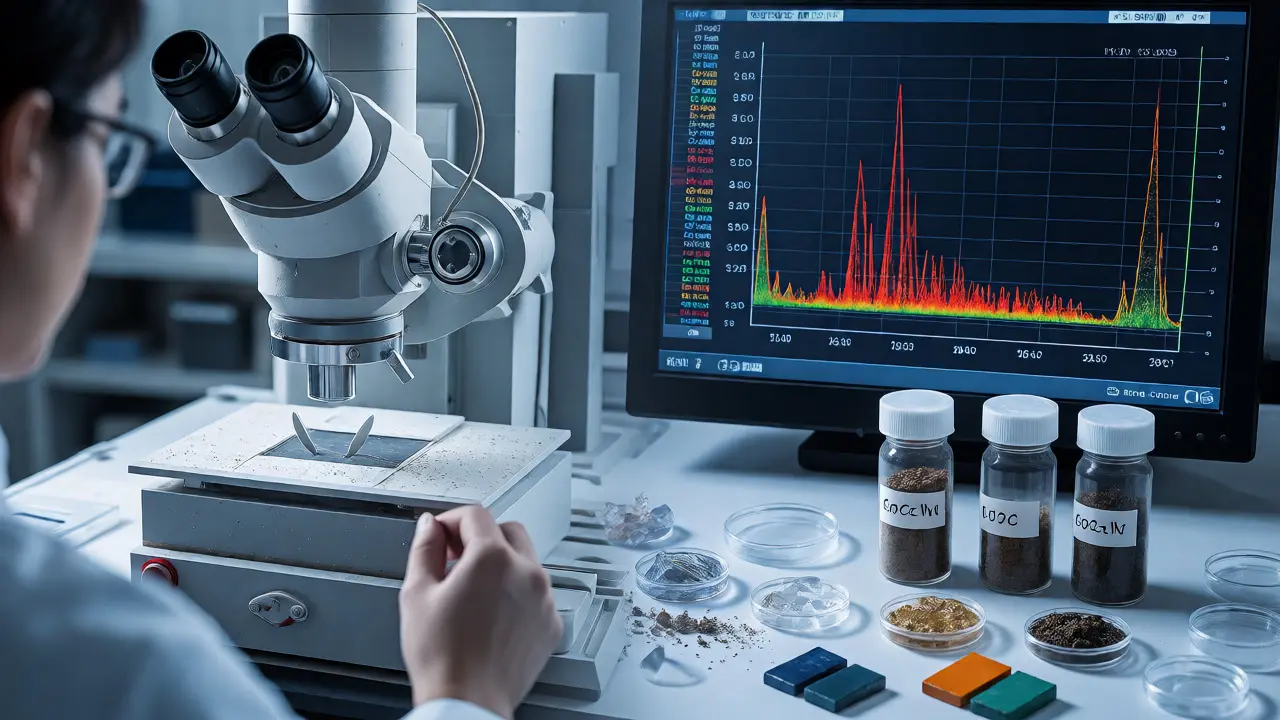
- Instrumental Analysis: This is where the heavy lifting happens. Instruments like the Scanning Electron Microscope (SEM) coupled with Energy Dispersive X-ray Spectroscopy (EDS) allow analysts to see the elemental composition of a fiber or particle. Fourier Transform Infrared Spectroscopy (FTIR) identifies polymers in plastics and paints. These tools provide objective data, not just visual guesses.
- Comparison and Evaluation: The analyst compares the unknown samples from the suspect against known samples from the crime scenes. They aren’t looking for a perfect match-physical reality rarely offers that. They are looking for consistency. Does the unknown sample fall within the range of variation expected for the known source?
The final step is assigning weight. Did the finding support the hypothesis that the suspect visited the scenes? Or was it neutral? If the soil found on the suspect’s boots matches the unique clay composition of a construction site where two burglaries occurred, but nowhere else in the city, that’s high-value evidence.
Statistical Probability and the Prosecutor’s Fallacy
This is where things get tricky, and where many investigations stumble. Humans are bad at intuiting probability. If a fiber is found in 10% of the population, does that mean there’s a 90% chance it came from the suspect? No. That’s the prosecutor’s fallacy.
Forensic scientists use likelihood ratios (LRs) to communicate strength. An LR greater than 1 supports the prosecution’s proposition (the suspect left the evidence). An LR less than 1 supports the defense (the suspect didn’t leave it). An LR of 1 means the evidence is neutral.
For example, if a specific glass fragment has a refractive index found in only 1 out of 1,000 sources in the database, the LR might be 1,000. This means the evidence is 1,000 times more probable if the suspect broke the window than if he didn’t. However, context matters. If the suspect lives next door to the broken window, the prior probability of him being there is already high. The glass adds little new information. But if he lives ten miles away, the glass becomes crucial.
When linking cases, you multiply these probabilities. If Scene A provides an LR of 100, and Scene B provides an independent LR of 50, the combined support for linkage increases significantly. But beware of dependency errors. If the same glass pane broke at both scenes, the evidence isn’t independent. You can’t double-count the same source.
Challenges and Limitations in Case Linkage
Trace evidence is fragile. Contamination is the enemy. If a first responder steps on a glass shard and kicks it toward another piece, you’ve altered the spatial relationship. If a lab technician touches a fiber with sweaty fingers, you’ve introduced human skin cells that might confuse DNA analysis later.
Another challenge is background noise. Everyone carries trace material everywhere. We walk on soil, sit on furniture, and wear clothes that shed fibers. Distinguishing between incidental transfer and significant contact requires experience. A few blue nylon fibers in a car are meaningless. Hundreds of them, embedded in the seat crevices, matching a specific jacket worn by a victim, tell a story.
There’s also the issue of database limitations. Not every paint chip or fiber type is cataloged. Analysts rely on reference collections. If a rare polymer isn’t in the library, you might identify it as “unknown” rather than linking it to a specific product line. This creates blind spots.

Real-World Application: A Hypothetical Scenario
Let’s ground this in reality. Suppose three vandalism incidents occur in Portland’s Pearl District over a weekend. Graffiti artists spray-paint murals on abandoned buildings. Police catch a suspect, Alex, with spray cans in his backpack. But no witnesses saw him painting.
Investigators collect paint overspray from the walls at all three sites. They also scrape paint from Alex’s jeans and shoes. Lab analysis reveals that the aerosol paint used at all three sites shares a unique chemical signature-a specific mix of pigments and propellants found in a limited-edition brand sold only at one local store. Furthermore, the droplet size distribution (how the paint atomized) matches the nozzle type on the cans in Alex’s bag.
While the paint alone doesn’t prove Alex sprayed the wall (he could have bought the cans), the combination of the unique pigment mix, the nozzle wear pattern, and the presence of drywall dust from the interior of the abandoned buildings on his shoes creates a compelling case for linkage. It ties Alex to all three scenes, suggesting he wasn’t just passing by but actively working at each location.
Best Practices for Investigators and Lawyers
If you’re involved in a case relying on trace linkage, keep these tips in mind:
- Collect Early: Trace evidence disappears quickly. Rain washes away soil. Wind blows away fibers. Get the samples before the elements degrade them.
- Control Samples: Always take control samples from the crime scene and the suspect’s environment. You need to know what “normal” looks like for that location to spot anomalies.
- Ask About Persistence: How long does this material stick around? Paint chips might last weeks. Pollen might vanish in hours. Understanding persistence helps interpret negative results (i.e., why wasn’t it found?).
- Challenge the Statistics: Don’t accept “it matches” at face value. Ask for the error rate. Ask for the frequency of occurrence in the general population. A good expert will explain the uncertainty.
| Material Type | Differentiation Power | Persistence | Common Pitfalls |
|---|---|---|---|
| Glass | High (Refractive Index/Density) | Medium (Fragments persist) | Cross-contamination from other broken windows nearby |
| Paint | Very High (Layer Structure) | High (Hardens and sticks) | Similar formulations across different brands |
| Fibers | Low to Medium (Class characteristics) | Medium (Sheds over time) | Ubiquity of common synthetics (polyester/cotton) |
| Soil/Pollen | High (Geographic specificity) | Low (Washes away easily) | Wind dispersal mixing soils from distant locations |
Key Takeaways
- Case linkage groups crimes based on physical evidence, not necessarily identity.
- Trace materials like glass, paint, and soil offer unique signatures that can connect disparate scenes.
- Statistical evaluation via likelihood ratios prevents overstatement of evidence.
- Proper collection and contamination control are prerequisites for valid linkage.
- Context is king; a match means little without considering background prevalence and alternative explanations.
Can trace evidence alone convict someone?
Rarely. Trace evidence usually serves as corroborating evidence. It strengthens the narrative built by witness testimony, video surveillance, or digital footprints. Standing alone, it might prove proximity or contact, but proving intent and action typically requires additional context.
What is the difference between individual and class characteristics?
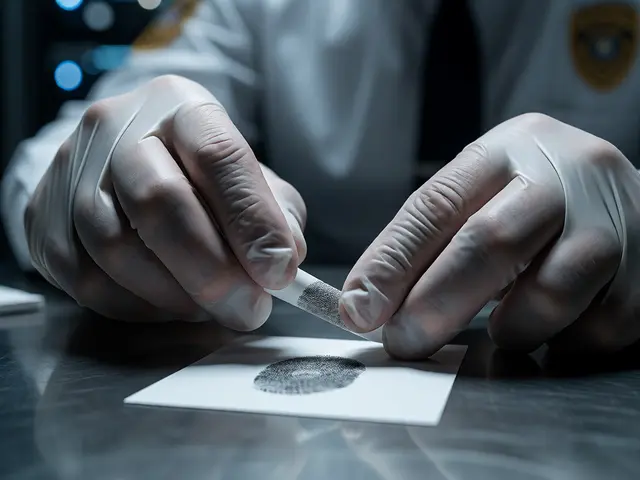
Individual characteristics narrow evidence down to a single source (like a fingerprint ridge detail or a broken glass fracture match). Class characteristics narrow it down to a group (like a specific brand of tire tread or a generic fiber type). Case linkage often relies on combining multiple class characteristics to achieve a level of certainty close to individualization.
How long does trace evidence last on clothing?
It varies wildly. Heavy materials like glass shards or large paint chips can last days or weeks if the clothing isn’t washed. Lighter materials like pollen or fine dust may disappear after a few hours of movement or exposure to wind. Washing clothes immediately removes most trace evidence, which is why securing garments early is vital.
Does weather affect case linkage using trace materials?
Yes, significantly. Rain washes away soil and pollen. Wind scatters light fibers and dust. Extreme heat can alter the chemical composition of some plastics or paints. Investigators must account for weather conditions between the time of the crime and the time of collection to interpret missing evidence correctly.
What instruments are used to analyze trace evidence?
Common instruments include Stereomicroscopes for initial sorting, Gas Chromatography-Mass Spectrometry (GC-MS) for chemical identification of paints and fluids, Fourier Transform Infrared Spectroscopy (FTIR) for polymers, and Scanning Electron Microscopes (SEM) for detailed morphological and elemental analysis.