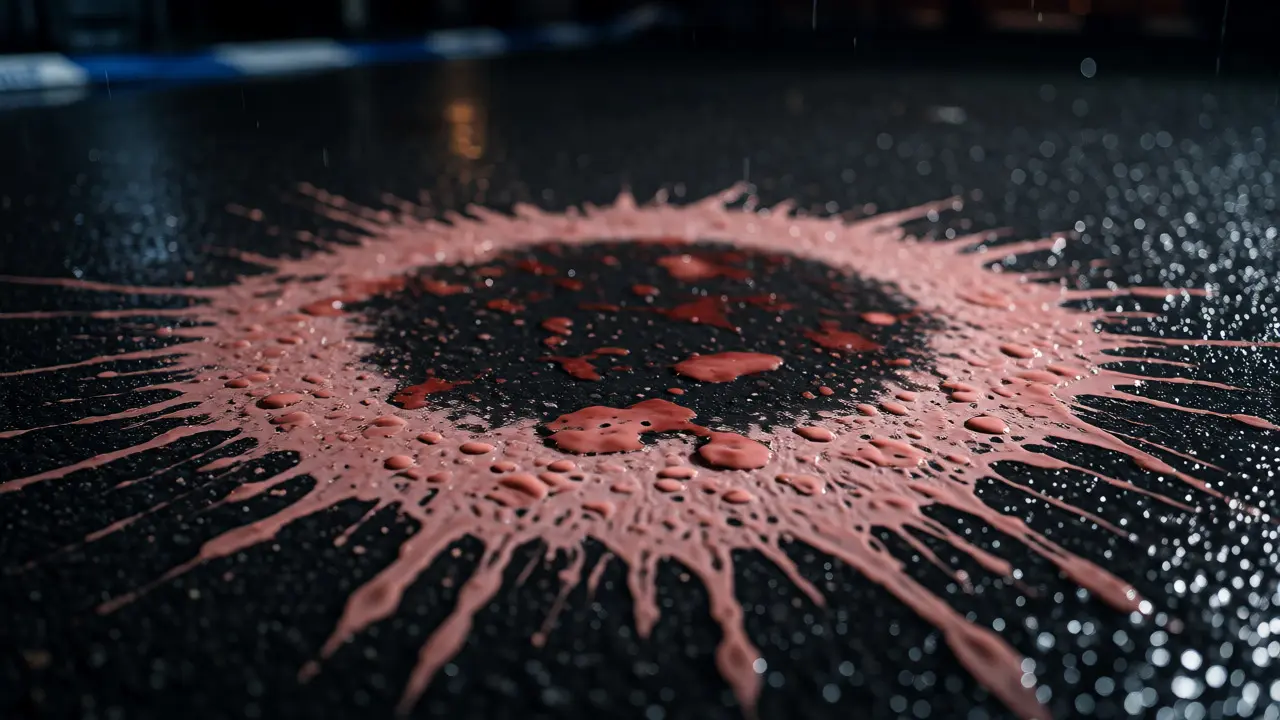
You walk into a crime scene after a heavy downpour. The floor is slick, the air smells like wet concrete, and the most critical piece of evidence-a pool of blood-looks nothing like it did an hour ago. It’s spread out, faded, and mixed with puddles. Did someone mop? Did the roof leak? Or was it just the weather? This is the nightmare scenario for any investigator dealing with bloodstain pattern analysis (BPA). Understanding how external liquids interact with biological fluids isn't just academic; it determines whether you find the point of origin or chase a ghost.
Blood dilution changes everything. It alters viscosity, color, and the physical behavior of droplets upon impact. When water, rain, or household cleaners hit fresh blood, they don't just wash it away-they transform it. A high-velocity spatter might look like a low-velocity drip if diluted enough. A clean wipe might look like a drag mark. If you ignore the chemistry of this interaction, your reconstruction will be wrong. Let's break down exactly what happens when rain, tap water, and common cleaning agents meet blood, and how you can spot the difference in the field.
The Physics of Diluted Blood vs. Pure Blood
Pure blood is a complex suspension. It has red blood cells, plasma, platelets, and proteins. This gives it specific rheological properties-it flows differently than water. It clots. It has surface tension that allows droplets to hold their shape longer before breaking apart. When you introduce a foreign liquid, you change these properties instantly.
Water is the most common contaminant. It lowers the viscosity of blood, making it runnier. More importantly, it breaks down the clotting mechanism. Hemoglobin, the protein responsible for oxygen transport and the red color, is soluble in water. When water mixes with blood, hemoglobin leaches out, turning clear water pink or brownish-red. This diffusion creates a "halo" effect around stains. In pure blood stains, edges are sharp because the fluid holds together. In diluted stains, the edges feather out as the water carries pigment into the fibers of carpet or porous wood.
Rain adds another layer of complexity. Rainwater isn't pure H2O; it contains atmospheric particulates, pollutants, and varying pH levels depending on location. But the mechanical force of falling raindrops is often more significant than its chemical composition. A raindrop hitting a blood stain acts like a projectile. It causes secondary spatter. You might see small satellite droplets radiating from a main pool, but unlike impact spatter from a blunt object, these patterns are irregular and directional based on wind and drop size.
Rain Exposure: Outdoor Crime Scenes
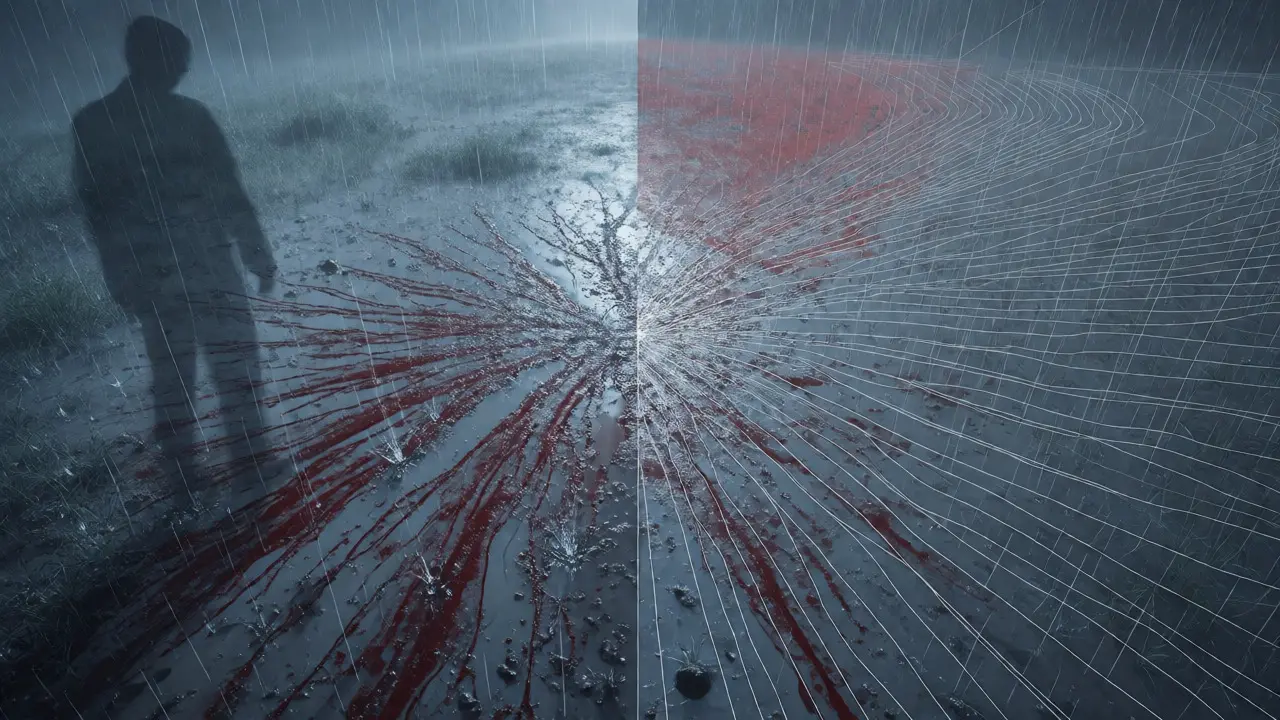
If you're working outside, rain is your biggest enemy. But it also leaves distinct signatures. Heavy rain doesn't just dilute; it displaces. Large volumes of water move blood across surfaces. On non-porous surfaces like asphalt or tile, rain creates runoff channels. The blood doesn't stay where it fell; it travels downhill. This means the location of the stain may not match the location of the injury. Always look uphill from the stain to find the true source.
On porous surfaces like grass or dirt, rain causes absorption. The blood sinks deeper into the soil, mixing with mud. Visual identification becomes difficult. However, the pattern of displacement can still tell a story. If the rain was steady, the blood spreads evenly. If it was a sudden burst, you'll see crater-like depressions where large drops hit, pushing blood outward in radial patterns. These craters are key indicators of exposure time and intensity.
Temperature matters here too. Cold rain slows down enzymatic activity in blood, potentially preserving DNA longer than warm conditions. But cold also increases viscosity slightly, which might counteract some dilution effects initially. Once the mixture warms up, though, the flow dynamics change rapidly. Investigators need to document the temperature at the scene immediately, as it affects how quickly the blood-air interface stabilizes or degrades.
Tap Water and Household Contamination
Indoor scenes present different challenges. Tap water is treated with chlorine and other chemicals. While these additives usually don't alter the visual appearance of blood significantly in short bursts, they do affect long-term preservation. Chlorine can degrade DNA over time, so if you suspect a perpetrator tried to clean up with a hose, prioritize swabbing areas where the concentration of bleach or chlorine is highest.
When someone tries to clean a spill with a bucket and rag, they create smear patterns. Unlike natural drying, which leaves a hard crust, wet cleaning smears the blood across fibers. If the cloth was dirty, you might see cross-contamination. If the cloth was soaked, you'll see a gradient of color-dark in the center where the initial contact happened, fading to light pink at the edges where the excess water pushed the pigment further out.
A common mistake is assuming all smears are intentional wipes. Sometimes, foot traffic through a puddle of diluted blood creates transfer stains. These look different from hand wipes. Foot transfers show tread patterns or shoe prints filled with blood residue. Hand wipes are broader and lack defined texture. Look for the directionality of the streaks. Wipes usually follow the motion of the arm or leg, while foot transfers follow the gait cycle.
Cleaning Agents: Bleach, Ammonia, and Enzymes
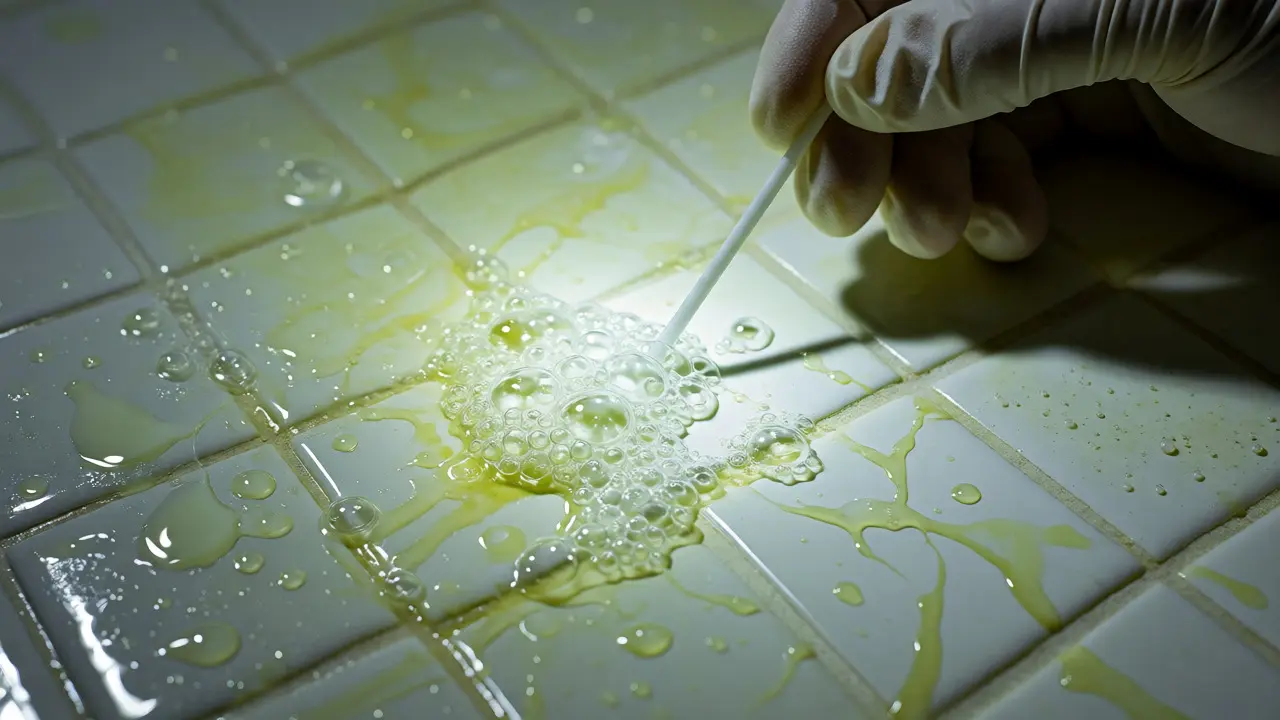
Perpetrators rarely use plain water. They reach for what's under the sink. Each agent reacts differently with blood, leaving unique forensic fingerprints.
| Agent Type | Visual Change | DNA Impact | Detection Method |
|---|---|---|---|
| Bleach (Sodium Hypochlorite) | Turns blood pale yellow or greenish-brown; destroys red pigment | High degradation risk; denatures proteins | Luminol (may inhibit); Kastle-Meyer test |
| Ammonia | Lightens color; may cause foaming if mixed with bleach | Moderate degradation; alkaline environment harms DNA | Chemical presumptive tests |
| Enzyme Cleaners | No immediate color change; breaks down proteins invisibly | Significant breakdown; enzymes digest DNA strands | UV Light; Advanced DNA extraction |
| Hydrogen Peroxide | Fizzing reaction; bleaches color white/pale | Oxidative stress damages DNA bases | Observation of effervescence |
Bleach is the most notorious. Sodium hypochlorite oxidizes hemoglobin, stripping it of its red color. A massive amount of blood can turn nearly invisible to the naked eye after thorough bleaching. However, Luminol still reacts with the iron in hemoglobin, even if the color is gone. But here's the catch: excessive bleach can inhibit the Luminol reaction itself. If you spray Luminol on a heavily bleached area and get no glow, don't assume there was no blood. Assume the bleach masked it. Use alternative methods like acid phosphatase tests or direct DNA sampling.
Enzyme cleaners are tricky because they work silently. They break down proteins into smaller peptides and amino acids. There's no dramatic color shift. The blood simply ceases to be recognizable as blood. Standard presumptive tests might fail because the target molecule (hemoglobin) is fragmented. For enzyme-cleaned scenes, rely on UV light to detect fluorescence differences between cleaned and uncleaned surfaces, or go straight to PCR-based DNA analysis, which can often recover profiles from degraded samples.
Distinguishing Natural Drying from Artificial Dilution
Natural drying follows predictable rules. Blood dries from the outside in, creating a dark rim and lighter center. Cracks form as the volume shrinks. Diluted blood behaves differently. Because water evaporates faster than blood components, the drying process accelerates. You might see smaller, finer cracks. Or, if the dilution is extreme, the stain might not crack at all, instead leaving a thin, translucent film.
Look for the "coffee ring" effect. As water evaporates from the edge of a drop, it pulls solutes toward the perimeter. In pure blood, this creates a dense ring. In diluted blood, the ring is fainter and wider. If you see a wide, faint halo around a central stain, suspect water addition. Conversely, if the stain is uniform in density without a distinct rim, it might have been blotted or wiped while wet.
Another clue is pooling shape. Gravity pulls diluted blood more aggressively due to lower viscosity. Pools become flatter and cover larger areas than pure blood pools of the same volume. If a pool looks unexpectedly wide for the amount of fluid estimated, consider dilution from rain or leakage.
Field Investigation Checklist for Diluted Stains
When you encounter suspicious wet spots, follow this protocol to preserve integrity:
- Document Temperature and Humidity: Record ambient conditions. High humidity slows evaporation, keeping stains wet longer. Low humidity accelerates drying, potentially locking in dilution patterns.
- Photograph Before Sampling: Take wide shots and macro close-ups. Capture the feathering edges and color gradients. Use a scale bar.
- Test for Runoff: Check surrounding areas for directional trails. Does the stain lead to a drain? A doorway? A window?
- Smell Test: Can you smell bleach, ammonia, or soap? This hints at the cleaning agent used.
- Collect Multiple Samples: Swab the center, the edge, and the runoff trail. Compare results to identify gradients.
- Note Surface Porosity: Absorbent materials hide dilution effects better than non-porous ones. Adjust your interpretation accordingly.
Remember, context is king. A single stain tells you little. A pattern of stains, combined with environmental data, tells a story. If the floor is dry everywhere except one patch, that patch wasn't rained on. If the whole room is damp, rain likely entered. Cross-reference with witness statements about windows being open or leaks reported prior to the incident.
Lab Analysis: Confirming Dilution
Back in the lab, technicians can confirm dilution through spectroscopy. Mass spectrometry can detect ratios of blood components versus water contaminants. If the ratio of sodium to potassium is skewed, it suggests external salt introduction (like sweat or seawater). If chloride levels are unusually high, it points to tap water or saline solution.
DNA quantification also reveals clues. Highly diluted samples yield less total DNA per unit area. If two adjacent stains have vastly different DNA yields despite similar visual sizes, the smaller-yield stain was likely diluted. This helps reconstruct the sequence of events. Was the blood washed first, then stepped on? Or stepped on, then washed? The order affects DNA distribution and degradation.
Finally, microscopic examination can reveal foreign particles. Pollen grains suggest outdoor rain exposure. Carpet fibers trapped in the stain indicate indoor scrubbing. Soap scum residues point to detergent use. These micro-details provide the final confirmation needed to build a solid case theory.
Does rain destroy DNA in bloodstains?
Rain does not necessarily destroy DNA, but it degrades it. Water causes hydrolysis, breaking DNA strands into smaller fragments. Additionally, microbial activity increases in wet environments, consuming organic material. However, if the blood dries quickly after rain stops, or if it seeps into protected crevices, viable DNA profiles can often still be recovered using sensitive PCR techniques.
Can bleach completely remove blood evidence?
Bleach removes the visible color by oxidizing hemoglobin, but it rarely removes all trace evidence. Iron atoms remain, allowing Luminol or similar chemiluminescent tests to still react, although strong bleach concentrations can sometimes inhibit these reactions. Microscopic traces and degraded DNA often persist even after rigorous cleaning.
How does water affect bloodstain pattern analysis?
Water reduces blood viscosity, causing stains to spread farther and flatten out. It creates feathered edges and halos as pigments diffuse into porous surfaces. This can mimic low-velocity impacts or make high-velocity spatter appear as drips. Investigators must account for this by looking for runoff directions and checking for environmental sources of water.
What is the coffee ring effect in bloodstains?
The coffee ring effect occurs when a droplet dries, causing solutes to migrate to the edge as the liquid evaporates. In bloodstains, this creates a darker rim around a lighter center. In diluted blood, this ring is often fainter and wider because the water carries the pigment further out before evaporating.
Do enzyme cleaners leave detectable traces?
Enzyme cleaners break down proteins, making standard presumptive tests less effective. They don't leave obvious visual traces like bleach discoloration. Detection requires advanced methods like UV light inspection to see fluorescence differences or direct DNA sequencing, which can sometimes distinguish between native blood proteins and residual enzyme compounds.