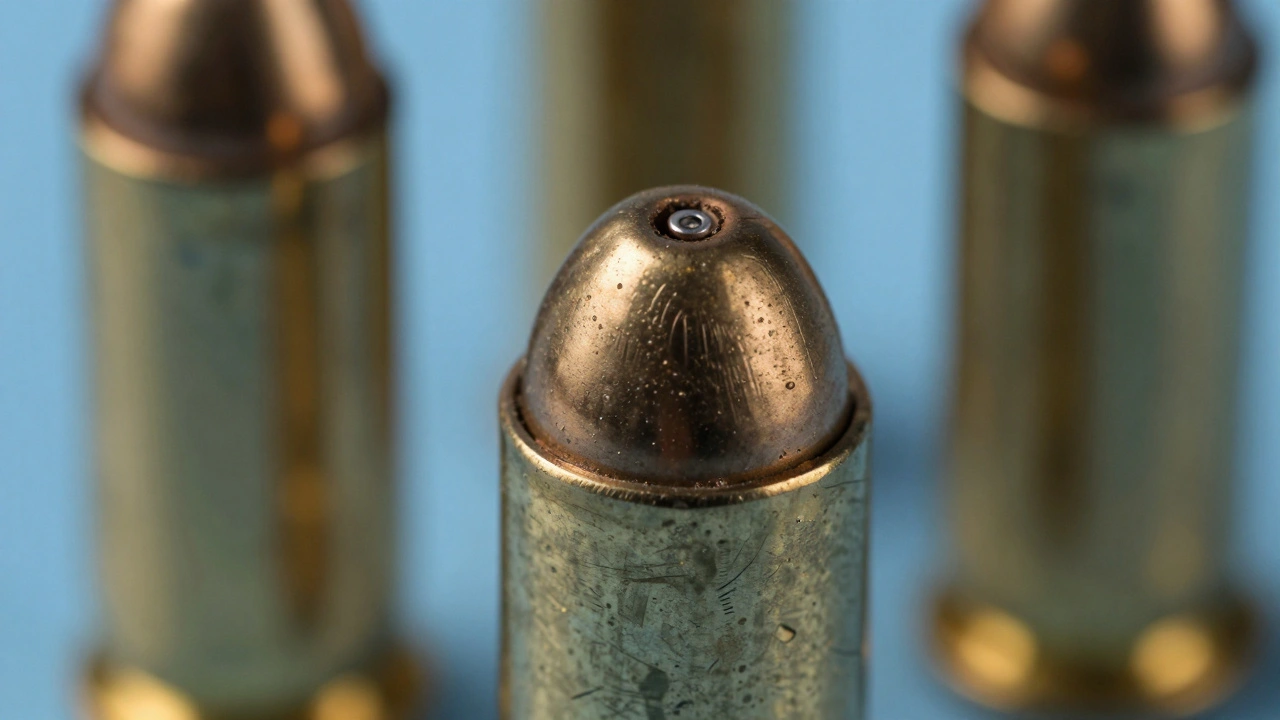
Every bullet fired tells a story hidden in microscopic grooves no one can see with the naked eye. When investigators recover spent casings at a crime scene, they're walking through a digital library that connects weapons to criminals across state lines. Today, automated systems process thousands of images in hours instead of weeks. You might wonder how technology transformed cold cases into hot leads. The answer lies in modern ballistic database systems that revolutionized forensic science forever.
Quick Summary
Ballistic fingerprinting creates unique identifiers from gun-fired bullets similar to human fingerprints. Automated databases like IBIS link evidence across jurisdictions in real time. These systems generate 6.23x more investigative hits than manual comparison methods ever could. Technology captures three-dimensional surface patterns invisible to human eyes. Experts still verify matches under microscopes before submitting evidence to court.
The Science Behind Ballistic Fingerprinting
| Ballistic Processes | |
|---|---|
| Mark Type | Barrel rifling, firing pin impressions, breechface markings |
| Detection Method | High-resolution digital imaging, mathematical signature assignment |
| Database Size | Millions of cartridge cases and bullets nationwide |
| Match Time | Hours instead of weeks compared to manual search |
Imagine finding a single puzzle piece in a room filled with identical boxes. Without computer assistance, you'd never know which box belongs to that piece. Manual comparison required examiners staring through microscopes for months comparing one casing against another. Now digital systems scan millions of records in minutes. The difference isn't just speed-it's solving cases that would otherwise stay cold forever.
Major Database Systems in Use
Law enforcement relies on two primary systems managing ballistic data across America. Understanding their differences helps clarify why certain regions outperform others in connecting crimes.
The Integrated Ballistics Identification System
IBIS is an automated ballistics imaging and analysis system developed initially by Canadian company Visionics. Integrated Ballistics Identification System was first acquired by government agencies in 1993 for federal testing. Crime labs now use IBIS workstations at multiple facilities across the country. The workflow operates like this: technicians place recovered evidence under specialized cameras. Software generates both 2D and 3D digital models of each cartridge case. Mathematical algorithms analyze surface geometry looking for matching features within the entire network database. Each image receives its own unique mathematical signature representing microscopic details visible only through instrumentation. Once uploaded, IBIS compares new images against all previous entries stored in regional networks. Possible matches appear as potential hits ranked by confidence level. The system suggests only a handful of candidates even when searching millions of records. Examiners then conduct traditional microscopic verification confirming whether actual matches exist physically between items.NIBIN: The National Network
NIBIN is the National Integrated Ballistic Information Network managed by the Bureau of Alcohol, Tobacco, Firearms and Explosives. It serves as the national infrastructure connecting local law enforcement labs sharing ballistic intelligence across jurisdiction boundaries. Unlike standalone databases serving single cities, NIBIN enables inter-agency collaboration at unprecedented scale. When Chicago uploads evidence showing distinctive striation patterns, Miami immediately gains access to those signatures. Federal, state, and local teams share intelligence without requiring direct coordination. The Bureau of Alcohol, Tobacco, Firearms and Explosives oversees equipment distribution ensuring consistency across participating laboratories nationwide. This architecture supports what experts call "cold hit" generation. Cold hits occur when current evidence links to unrelated historical investigations. A bullet found today might match casings from five years ago in three separate states. Those connections wouldn't surface without centralized networking enabled by systems like NIBIN connecting geographic regions previously working isolation.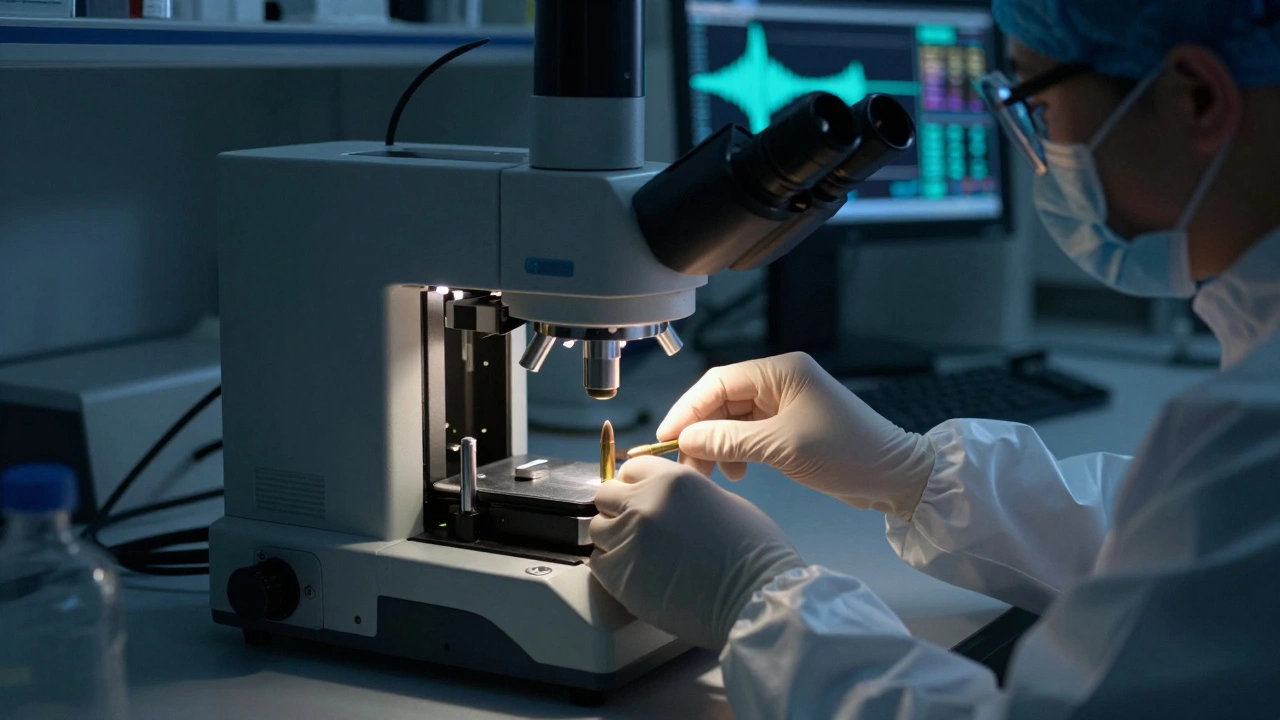
Processing Evidence Through Automated Systems
The journey from crime scene to courtroom requires multiple stages of analysis before results become admissible evidence. Understanding this pipeline reveals why automation fundamentally transformed forensic capabilities.
- Criminalists collect spent cartridge cases during initial scene processing
- Technicians transport evidence to accredited firearms examination laboratories
- Examiners photograph items using IBIS-compatible cameras capturing three-dimensional depth maps
- Software assigns mathematical signatures representing ridge patterns, striations, and surface topology
- Databases run algorithmic searches comparing incoming evidence against archived records
- Systems generate candidate match lists ranked by similarity scores
- Human experts verify suggested matches through side-by-side microscopic comparison
- Investigators receive formal reports linking weapons across investigations or locations
Evidence Quality and Match Verification
Not all recovered ammunition creates usable records for database searches. Surface condition determines whether samples qualify for automated analysis.
Cartridge cases found outdoors show significant degradation compared to indoor shootings. Moisture, soil contact, and weather exposure corrode surfaces hiding distinguishing features. Indoor scenes preserve pristine detail enabling optimal digital capture quality. Some casings retrieved from water remain too damaged producing unreliable comparisons regardless of available technology. Microscopic imperfections distinguish individual firearms. Firing pins leave unique impression marks on primer pockets. Breechfaces imprint characteristic patterns from hammer impacts during discharge cycles. These combined features constitute the complete ballistic signature analyzed by automated systems.Experts maintain final authority on whether matches represent true positives. Computer suggestions function only as investigative leads requiring human confirmation through traditional comparison microscopy. Courts demand scientific validation beyond automated scoring alone establishing reliable evidentiary foundations.

Real-World Impact Numbers
Data proves these systems deliver measurable benefits beyond theoretical advantages. Research quantifies operational improvements generated through implementation.
Studies analyzing IBIS deployment demonstrated statistically significant increases in investigative productivity. One evaluation showed monthly cold hits increased by 6.23 times following system integration within the targeted Ballistics Unit. Previously closed cases reopened when new matches emerged from routine database searches. Officers discovered active shooters possessing weapons already linked to unsolved homicides through ballistic record matches. Jurisdictions implementing comprehensive programs reported higher conviction rates for gun violence charges. Prosecutors presented clearer timelines connecting suspects to multiple criminal incidents separated by months or years. Juries understood stronger causal relationships between defendant actions and discovered physical evidence.| Aspect | Manual Search | Automated Database |
|---|---|---|
| Search Volume | Individual lab inventory only | Nationwide network access |
| Time to Results | Weeks to months | Hours to days |
| Cold Hit Rate | Rare occurrences | Frequent discovery |
| Inter-Agency Sharing | Requires formal cooperation agreements | Instantaneous access |
Policy Debates and Legal Questions
Technology advances raise fundamental questions about privacy rights versus public safety requirements. Proposed legislation sparked ongoing debate regarding database scope limitations.
Following the Washington D.C. sniper attacks in 2002, lawmakers proposed mandatory registration of all newly manufactured firearms. Bills would require manufacturers submit ballistic test-firing images directly to federal authorities before commercial distribution. Approximately $20 million funding allocation planned for initial implementation phase covering equipment costs and personnel training expenses. Critics argue such approaches burden law-abiding citizens with intrusive surveillance requirements. Current voluntary programs target crime scene evidence exclusively. Expanding scope to include all legally purchased handguns represents philosophical shift toward presumptive guilt rather than innocence protection principles. Manufacturers maintain serial number records required since the 1968 Gun Control Act mandated federal documentation practices. Supporters counter that pre-crime databases enhance deterrence capabilities significantly. Knowing automatic tracing exists may discourage illegal modification attempts or straw purchases funneling weapons into criminal markets. The debate continues balancing technological capability against constitutional protections regarding individual liberty preservation.Future Developments: Microstamping Technology
Innovation extends beyond database architecture toward manufacturing modifications itself. Microstamping introduces direct identification coding embedded in firearm components.
This controversial technique involves etching microscopic laser codes onto firing pins or breechblock surfaces. Each code transfers onto cartridge primers during normal firing operations. Investigators can read serial number information directly from collected evidence without extensive laboratory processing procedures. Proponents emphasize immediate suspect identification eliminating lengthy cross-reference searches entirely. Opponents warn accuracy claims exceed currently demonstrated performance levels. Field testing shows inconsistent transfer rates depending on ammunition types and environmental conditions affecting reliability assessments.California enacted microstamping requirements starting in 2013 targeting imported semi-automatic center-fire rifles. Manufacturers faced compliance deadlines despite technical challenges meeting specifications consistently. Several lawsuits challenged enforceability arguments raising complex litigation pathways ahead.
Trends point toward hybrid approaches combining automated databases with emerging forensic methodologies. Artificial intelligence machine learning models improve detection sensitivity identifying subtle patterns humans overlook completely. Cloud computing architectures enable instant scaling handling growing dataset volumes efficiently.
What makes ballistic marks unique enough for identification?
Manufacturing processes create random microscopic imperfections in barrels. Rifling grooves, chamber dimensions, and breechface surfaces develop unique characteristics during production. Each gun wears differently based on usage patterns creating evolving signatures over time. These variations produce consistent yet distinct markings transferred onto ammunition during firing.
Can IBIS identify any type of firearm?
IBIS primarily analyzes rifled firearms leaving spiral striations on projectiles. Smooth-bore weapons like shotguns produce fewer distinguishing marks making identification more challenging. Handgun cartridges generally yield superior results due to confined pressures forcing precise barrel engagement during discharge events.
How long does ballistic matching take?
Initial database queries complete within hours after image upload. Automatic screening narrows millions of records to small candidate pools instantly. Human verification requires additional days completing microscope comparisons validating software suggestions. Complete forensic reports typically emerge within one week under normal workload conditions.
What happens when a system finds a match?
Investigative officers receive formal hit notifications containing location details linking current evidence to prior cases. Crime analysts review associated investigation files identifying potential suspects or patterns. Field agents may initiate warrants requesting arrest authorization or further questioning pending judicial approval based on accumulated evidence strength.
Do defense attorneys challenge ballistic evidence frequently?
Experienced counsel regularly requests independent expert examination verifying official findings. Standard practice involves obtaining fresh photographs from defense specialists examining same physical specimens. Courts generally accept scientifically validated comparative microscopy methods supported by peer-reviewed research demonstrating reliability thresholds exceeding acceptable error margins.
How many cartridge cases exist in NIBIN?
Participating laboratories collectively maintain several million digitized records spanning decades of submissions. Database size grows continuously as new evidence enters system workflows regularly. Larger networks improve probability generating meaningful matches across wider geographic coverage areas enhancing overall investigative effectiveness nationwide.