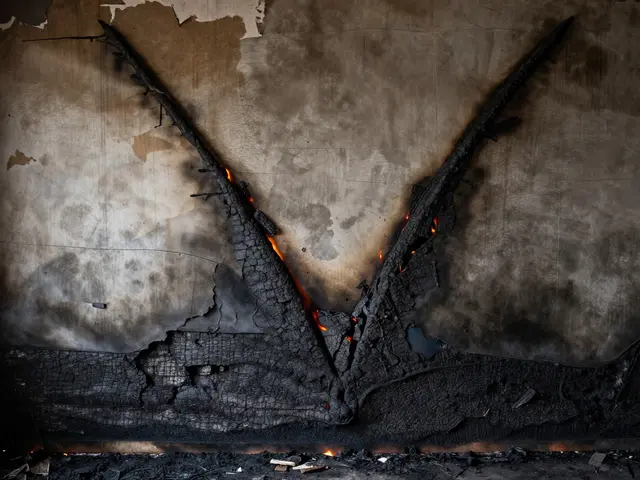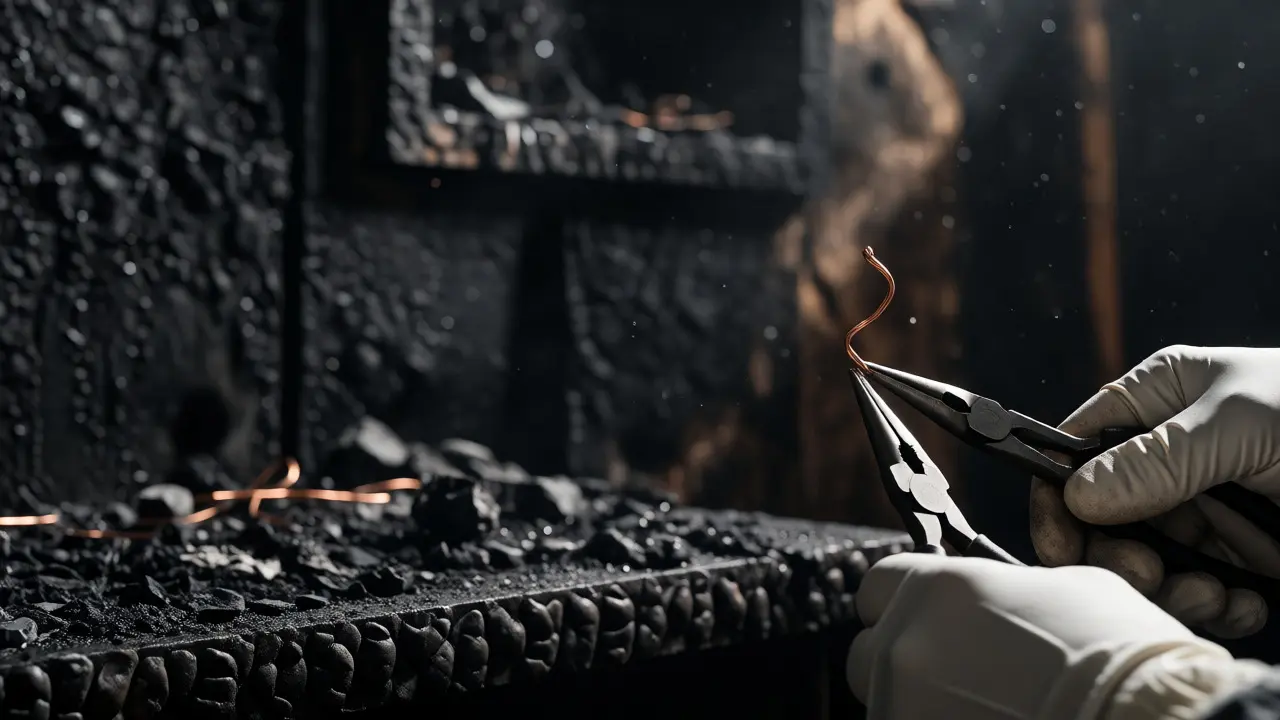
You walk into a charred room. The walls are black, the furniture is ash, and the smell of burnt plastic hangs heavy in the air. Your job? Figure out if this was an accident, a natural event, or someone trying to hide something. Most people think fire investigators just look for accelerants like gasoline. But often, the biggest clue isn't what was added to the fire-it's what happened inside the wires before it started. This is where arc mapping comes in.
Arc mapping sounds technical, but it’s basically reading the story written on melted metal. When electricity jumps across a gap-creating an arc-it leaves specific physical scars on copper and aluminum conductors. These scars tell you exactly when the wire broke, how much current was flowing, and whether the fire started because of the wire or destroyed the wire. If you get this wrong, you might blame a short circuit for an arson case, or worse, miss a dangerous wiring fault that could burn down another house tomorrow.
What Is Arc Mapping Really?
Arc mapping is the forensic technique of analyzing electrical conductor damage to determine the sequence of events during a fire. It relies on one core principle: electricity behaves differently depending on its environment. A live wire carrying normal load current looks different from a wire that arced after insulation burned away. It also looks different from a wire that was cut by a firefighter’s axe or melted by external heat.
The goal isn’t just to find "burnt wires." Every fire has burnt wires. The goal is to distinguish between three scenarios:
- Pre-fire arcing: The electrical fault caused the fire.
- Post-fire arcing: The fire destroyed the insulation, causing secondary arcs that didn’t start the blaze.
- Mechanical damage: Something physically cut or crushed the wire, unrelated to electrical fault.
Without arc mapping, these three look identical to the untrained eye. With it, you can pinpoint the origin of the fire with surprising precision.
The Science Behind the Scars
To understand arc mapping, you have to understand what an electrical arc actually is. An arc is a high-temperature plasma discharge. It’s not just a spark; it’s a sustained flow of electrons through ionized air or gas. Temperatures can exceed 3,000°C (5,400°F). That’s hot enough to melt copper instantly.
When an arc occurs, it doesn’t just burn the surface. It vaporizes the metal at the point of contact. This creates distinct patterns known as arc marks. There are two main types you’ll encounter in the field:
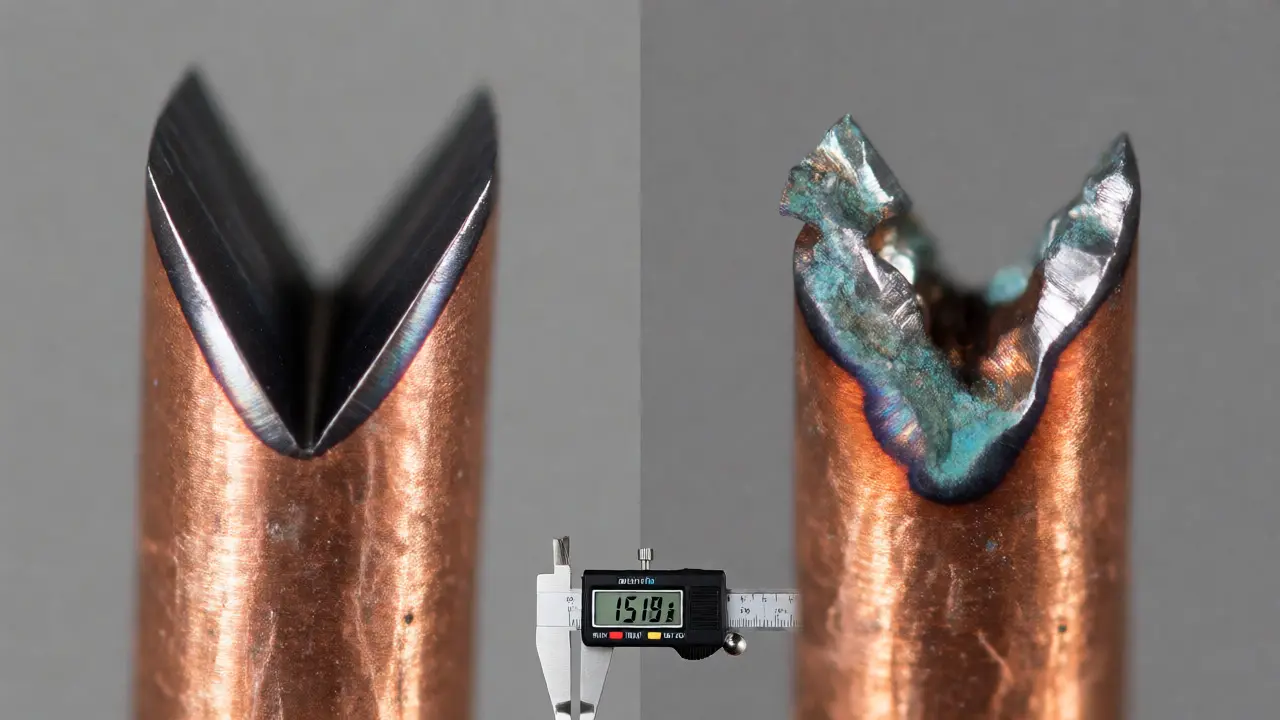
- V-shaped notches: These occur when a single conductor breaks while energized. The arc forms at the break point, eating away the metal symmetrically. The width and depth of the notch correlate with the current magnitude. Higher amps mean wider, deeper craters.
- Cupping or cratering: This happens when multiple strands of a stranded wire fuse together due to intense localized heat. The ends curl inward, resembling a cup. This usually indicates a sustained arc rather than a momentary flicker.
Here’s the tricky part: external fire heat can also melt copper. So how do you know if the melt came from an internal electrical arc or an external flame? You look at the shape and the oxidation color.
| Feature | Electrical Arc Mark | External Fire Melt |
|---|---|---|
| Shape | Sharp, V-shaped or rounded crater with smooth interior | Irregular, jagged edges; often elongated |
| Oxidation Color | Dark brown/black oxide layer directly under the melt zone | Greenish-blue verdigris (copper carbonate) over larger area |
| Location | At points of mechanical stress or insulation breach | Along entire length exposed to direct flame |
| Microstructure | Dendritic crystal growth visible under microscope | Glassy or amorphous structure |
If you see green copper salts all over the wire, that’s likely post-fire exposure to moisture and heat. If you see a clean, sharp crater with dark oxide underneath, you’re looking at a pre-fire or early-fire electrical event.
Step-by-Step Field Methodology
So, you’re on scene. How do you actually perform arc mapping without ruining the evidence? Follow this workflow.
1. Secure the Area and Document Visually
Before touching anything, photograph every wire segment. Use a scale ruler in your shots. Note the position relative to walls, outlets, and appliances. Why? Because once you move a wire, you lose context. Arc mapping isn’t just about the mark; it’s about where the mark is located in the circuit.
2. Identify Potential Origin Zones
Use standard fire pattern analysis (V-patterns, pour patterns) to narrow down the area of origin. Focus your electrical examination there. Don’t map every wire in the house-focus on the circuits feeding the suspected ignition source.
3. Careful Removal
This is where novices fail. Do not pull wires taut. Do not twist them. Use needle-nose pliers to gently lift segments. If a wire is brittle, support it with cardboard or foam. Mechanical handling can create false arc marks or destroy existing ones. Label each segment immediately with its location (e.g., "Bedroom North Wall, Outlet #3").
4. Macroscopic Examination
Bring a portable stereo microscope (at least 10x-40x magnification) to the scene or lab. Look for the characteristics mentioned earlier. Check for strand fusion. Check for bead formation. Beads are tiny droplets of solidified copper that form when molten metal drips off a wire. They are strong indicators of high-current arcing.
5. Microscopic Analysis (If Needed)
For complex cases, send samples to a lab. Metallurgists will use scanning electron microscopy (SEM) to analyze the crystal structure. Dendritic structures confirm rapid cooling typical of electrical arcs. Glassy structures suggest slower cooling from external fire.
Common Pitfalls and False Positives
Even experienced investigators get tripped up here. Here are the most common mistakes:
- The "Short Circuit" Myth: Many believe any short circuit causes a fire. In reality, most branch-circuit short circuits trip the breaker instantly. For a fire to start, the arc must sustain long enough to ignite nearby combustibles. This usually requires high resistance (like a loose connection) or a failure to trip (broken breaker).
- Secondary Arcing: As flames consume insulation, adjacent wires touch and arc. These secondary arcs happen *after* the fire is already big. They don’t prove the electrical system failed first. You must trace the circuit back to see if the primary fault exists upstream.
- Mechanical Damage Confusion: Falling debris, collapsing ceilings, or even rats chewing wires can mimic arc marks. Always check for signs of crushing or slicing. Arc marks melt; mechanical damage cuts or crushes.
Remember, correlation is not causation. Just because you find an arc mark near the origin doesn’t mean it started the fire. You need to rule out other ignition sources first.
Legal Standards and Best Practices
If you’re testifying in court, you need to stick to recognized standards. The primary guideline is NFPA 921, Guide for Fire and Explosion Investigations. NFPA 921 explicitly states that electrical arcing should be considered only after other potential ignition sources are ruled out. It also warns against relying solely on arc marks without considering the entire electrical system condition.
Another key standard is NFPA 70E, Standard for Electrical Safety in the Workplace, which helps contextualize the type of equipment and expected fault currents. However, for fire cause determination, NFPA 921 is your bible.
Juries love simple explanations. Avoid saying, "The dendritic microstructure indicates rapid quenching." Instead, say, "The way the metal cooled shows us it melted from the inside out, caused by electricity jumping across a gap, not by the surrounding flames." Keep it clear, keep it visual.
Case Study: The Phantom Short Circuit
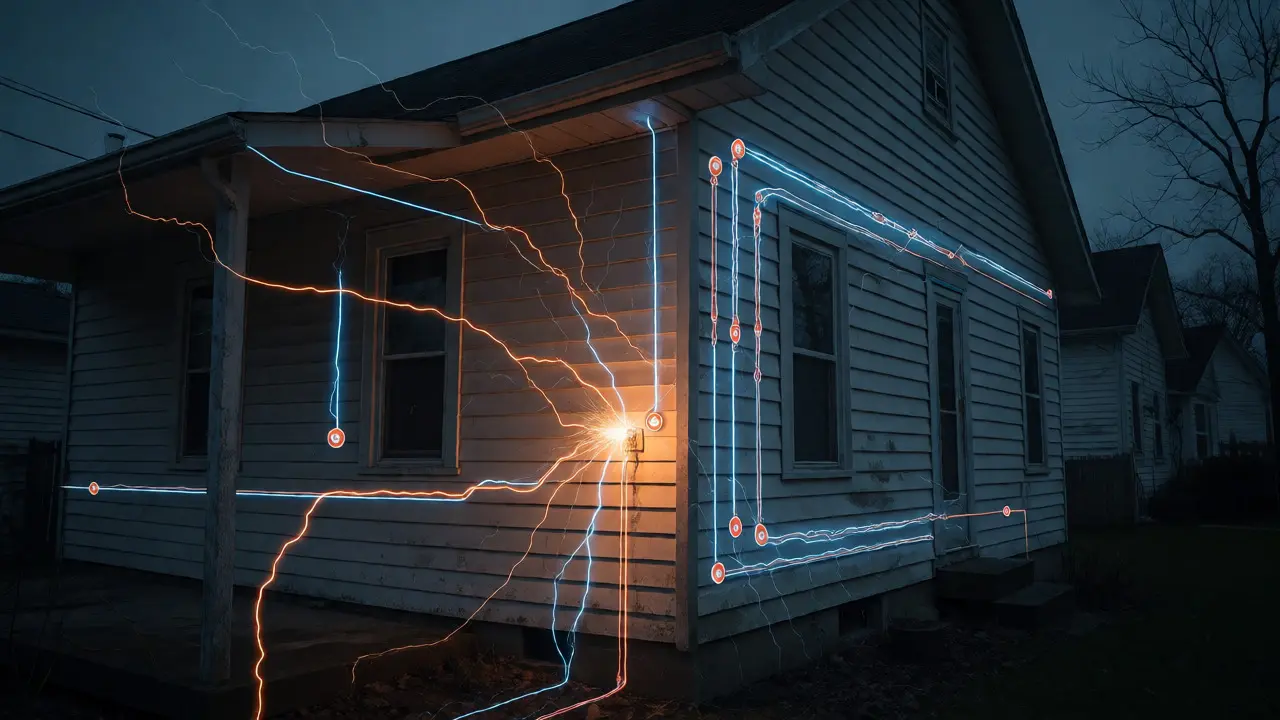
Consider a recent case in a suburban home. The homeowner claimed his electric space heater fell over and caught fire. The insurance company argued it was an electrical fault in the wall outlet. The investigator found arc marks on the outlet’s internal contacts.
At first glance, it looked like the outlet failed. But arc mapping revealed more. The arc marks were shallow and irregular, consistent with low-current arcing after the plastic housing had already melted. Crucially, there were no beads on the supply wires leading to the outlet. If the outlet had failed catastrophically, we’d expect high-current signatures.
Further inspection showed the space heater’s cord had been pinched behind the unit, creating a high-resistance path. The pinch point generated heat over time, eventually igniting the carpet. The outlet arcing was secondary. Without careful arc mapping, the homeowner would have been blamed for a faulty appliance he didn’t own, or the insurer would have paid for a non-existent wiring defect.
Tools of the Trade
You don’t need a million-dollar lab to start arc mapping, but you do need the right basics:
- Stereo Microscope: Portable units with LED lighting are essential. Look for models with adjustable focus and at least 20x magnification.
- Calipers: To measure the diameter of arc craters and compare them to wire gauge.
- Reference Charts: Carry images of known arc marks vs. melt patterns. Visual comparison speeds up decision-making.
- Sample Bags: Anti-static bags prevent contamination. Label everything clearly.
Investing in good optics pays off. Cheap binoculars distort colors and shapes, leading to misidentification.
Why This Matters Beyond Arson
While arc mapping is crucial for distinguishing accidental fires from arson, its value extends to prevention. By identifying recurring arc patterns, inspectors can spot aging wiring, loose connections, or overloaded circuits before they become disasters. It’s not just about assigning blame after the fact; it’s about understanding energy release mechanisms to improve building codes and safety practices.
Think of it as listening to the last words of the electrical system. If you learn to hear them, you can save lives and money.
Can all electrical shorts cause fires?
No. Most modern electrical systems have breakers or fuses designed to interrupt current flow quickly during a short circuit. A fire typically requires a sustained arc, which happens when the protection device fails, the resistance is too high for the breaker to trip quickly, or the arc occurs in a location with abundant fuel nearby.
How do you distinguish between a pre-fire arc and a post-fire arc?
Pre-fire arcs often show deep, well-defined craters with characteristic oxidation layers and sometimes metallic beads indicating high current. Post-fire arcs tend to be shallower, less defined, and may appear along lengths of wire where insulation was consumed by external flame. Microscopic analysis of crystal structure can also help differentiate rapid cooling (electrical) from slow cooling (external fire).
Is arc mapping used in criminal cases?
Yes, frequently. In arson investigations, proving that an electrical fault caused the fire can exonerate suspects accused of intentional ignition. Conversely, ruling out electrical causes strengthens the case for arson. Courts rely on certified investigators who follow NFPA 921 guidelines to present this evidence.
What tools are needed for basic arc mapping?
Basic arc mapping requires a portable stereo microscope (10x-40x), calipers for measurement, reference charts comparing arc marks to melt patterns, and proper sample collection materials like anti-static bags and labels. Advanced analysis may require scanning electron microscopy (SEM) in a laboratory setting.
Can mechanical damage look like an arc mark?
Yes, falling debris or cutting tools can damage wires. However, mechanical damage typically shows crushing, slicing, or tearing rather than melting. Arc marks involve vaporization and re-solidification of metal, creating craters or beads, whereas mechanical damage preserves the original metal structure but distorts its shape.