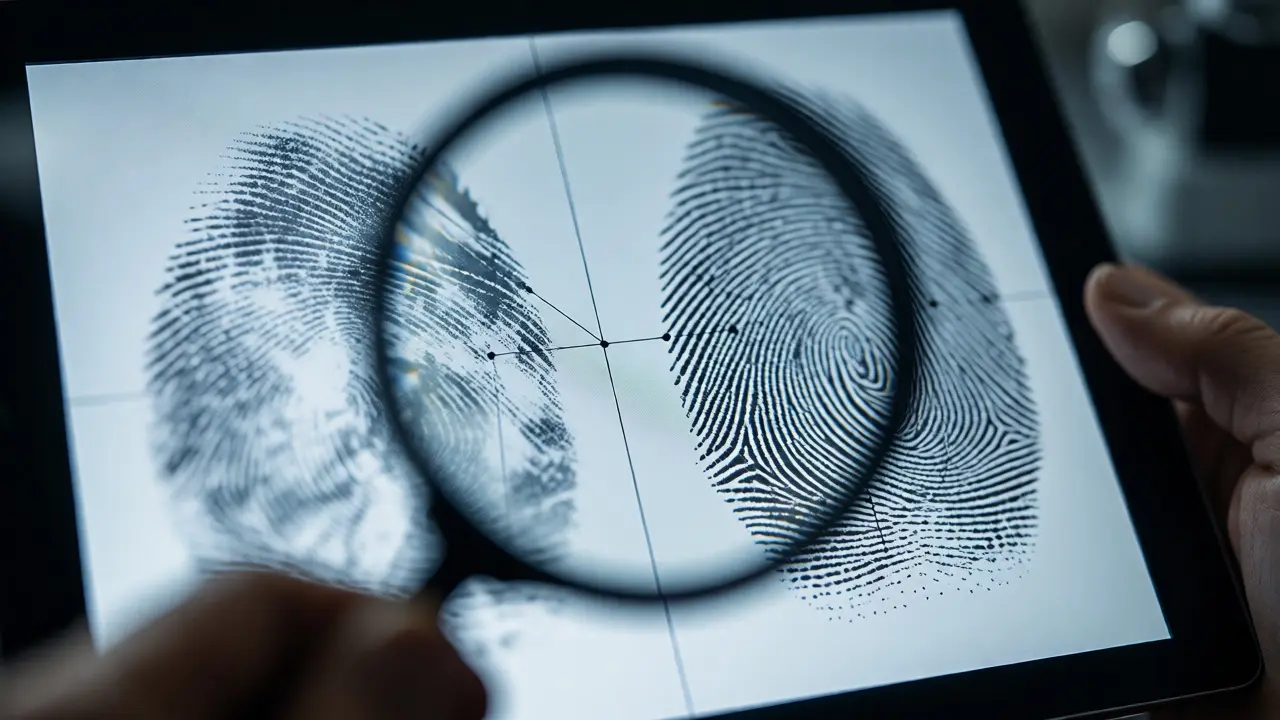
You just ran a latent print through the Automated Fingerprint Identification System (AFIS). The machine spat back a list of ten candidates. The top hit has a high score. Your gut says it’s a match. But here is the hard truth: AFIS doesn’t make identifications. It makes suggestions. If you skip the human confirmation step, you’re not doing science-you’re guessing with confidence. And in court, that guess can cost someone their freedom.
Most errors in fingerprint analysis don’t happen because the technology fails. They happen because analysts rush the AFIS candidate review process or let cognitive bias take the wheel. You see a high score, you want to close the case, and you unconsciously look only for features that agree with the computer. This article breaks down exactly how to conduct a rigorous human confirmation procedure so your conclusions stand up to scrutiny, peer review, and cross-examination.
Why Machines Can’t Close the Case
An AFIS (Automated Fingerprint Identification System) uses algorithms to compare minutiae points-ridge endings, bifurcations, and dots. It calculates a similarity score based on geometric relationships. That’s it. It doesn’t understand skin elasticity, pressure distortion, or substrate quality. It doesn’t know if the suspect wore gloves or if the print was lifted from a humid window.
When an analyst relies solely on the AFIS score, they commit a fundamental error: equating correlation with causation. A high score means the patterns are similar, not identical. The human eye and brain are required to interpret the context. This is why the FBI’s Scientific Working Group on Friction Ridge Analysis, Study and Technology (SWGFAST) mandates that all identifications must be made by a qualified examiner, not a database.
The ACE-V Framework: Your Roadmap to Confirmation
You’ve heard of ACE-V (Analysis, Comparison, Evaluation, Verification). It’s the gold standard for friction ridge examination. But many analysts treat it as a checklist rather than a dynamic workflow. Here’s how to apply it specifically during the human confirmation phase.
- Analysis: Before you even look at the AFIS candidates, analyze the latent print alone. Document its quality, clarity, and available detail. If the latent is poor, note that. Do not let the known print influence this stage. This prevents "targeted searching," where you only look for details that match the suspect.
- Comparison: Now, overlay the latent against the candidate. Look for sequence, relationship, and orientation of minutiae. Don’t just count points. Ask: Does the flow of ridges match? Are the pores consistent? Is the distortion explainable?
- Evaluation: Form a conclusion. Is it individualization (identification), exclusion, inconclusive, or unable to determine? Be honest about limitations. If you have six matching points but three conflicting ones, that’s not a clean match.
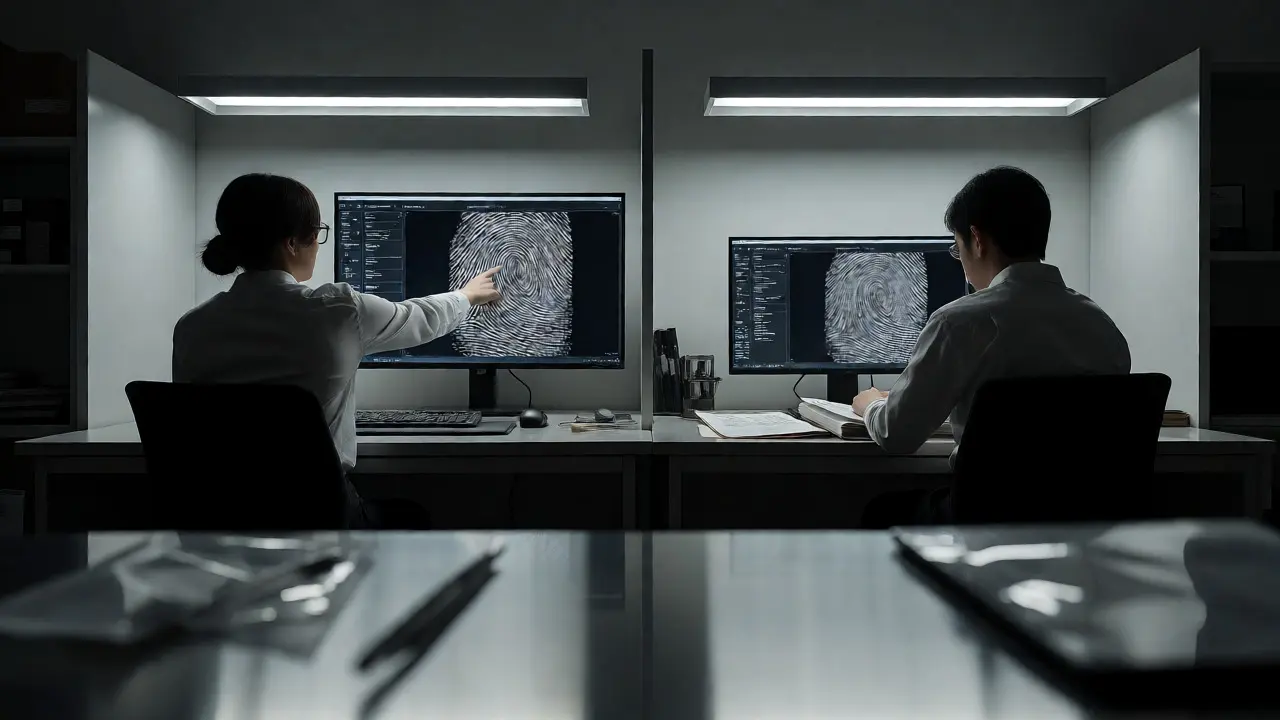
- Verification: Have a second qualified examiner review your work. Ideally, they should be blind to your initial conclusion to avoid confirmation bias.
Avoiding Cognitive Bias in Candidate Selection
Bias is the silent killer in forensics. When you receive an AFIS hit list, you might subconsciously favor the candidate whose name matches a suspect already in custody. This is called contextual bias. To combat it, use a strict procedural shield.
First, review the top five candidates without looking at the names or demographic data attached to them. Focus purely on the image comparison. Second, document any discrepancies immediately. If a candidate has a missing finger in the known record but the latent shows a full hand, flag it. Third, consider alternative explanations. Could the "match" be a coincidental similarity due to low-quality imagery? Studies suggest that false positives increase significantly when latent prints contain fewer than 10-15 clear minutiae points.
| Pitfall | Description | Mitigation Strategy |
|---|---|---|
| Score Dependency | Relying on the AFIS numerical score as proof of identity. | Treat score as a ranking tool only; visual comparison is mandatory. |
| Confirmation Bias | Seeing only what confirms the suspected match. | Actively search for disqualifying features before confirming. |
| Overlooking Distortion | Ignoring non-linear distortion caused by pressure or surface. | Use distortion mapping techniques to account for warping. |
| Premature Closure | Stopping analysis after finding a few matching points. | Continue comparing until all available detail is exhausted. |

The Role of Quality Control and Documentation
Your notes are your defense. In modern labs, digital annotation tools allow you to mark corresponding minutiae directly on the images. Use them. Every point you claim matches needs a marker. Every discrepancy needs a note explaining why it doesn’t disqualify the match (e.g., "minor ridge ending obscured by smudging").
Documentation serves two purposes: it aids the verifier and protects you legally. If you conclude "Identification," your report must state the basis for that conclusion. Did you find 12 consecutive matching minutiae? Was there agreement in pore structure? Vague statements like "the prints appear to match" will get torn apart by defense attorneys. Specificity builds credibility.
When to Say "Inconclusive"
There is no shame in an inconclusive result. In fact, it’s often the most scientifically accurate outcome. If the latent print lacks sufficient detail for a reliable comparison, say so. Forcing a match on a partial print with ambiguous features is dangerous. Remember, the goal isn’t to solve the case at all costs; it’s to provide accurate evidence.
Consider the scenario: You have a partial thumbprint with seven visible minutiae. The AFIS top hit shares these seven. However, the surrounding area is smudged, and the known print has additional unique scars not present in the latent. Is it enough? Many jurisdictions require more than just a minimum number of points-they require sufficiency of detail. If you can’t explain the discrepancies, hold off. Request better exemplars or wait for additional evidence.
Practical Steps for Daily Workflow
To streamline your fingerprint analysis workflow, adopt this routine:
- Pre-Review Prep: Ensure the latent image is enhanced properly. Adjust contrast and brightness to reveal ridge edges clearly.
- Independent Analysis: Mark minutiae on the latent print independently. Save this layer separately.
- Candidate Screening: Review the top 3-5 candidates visually. Eliminate obvious mismatches quickly.
- Detailed Comparison: Perform a side-by-side comparison using overlay software. Annotate agreements and disagreements.
- Self-Critique: Step away for 10 minutes. Return with fresh eyes. Ask yourself: "What would prove this is NOT a match?"
- Verification Submission: Submit to a peer with a complete documentation package, including your independent analysis layer.
Legal Implications of Poor Procedure
Courtrooms are increasingly skeptical of forensic evidence. The Daubert standard requires that scientific methods be testable, peer-reviewed, and generally accepted. If your lab doesn’t follow strict human confirmation protocols, your testimony may be excluded. Defense experts will ask: "Did you consider other candidates? Did you check for distortion? Was your verifier blind?" If you can’t answer these questions confidently, your identification loses weight.
In recent years, several high-profile exonerations involved flawed fingerprint comparisons. While rare, these cases highlight the importance of robust procedures. By adhering to strict ACE-V guidelines, you align your practice with best standards and protect the integrity of the justice system.
Can AFIS scores ever be trusted without human review?
No. AFIS scores indicate statistical similarity, not identity. Algorithms can be fooled by common patterns or low-quality images. Human expertise is required to interpret the context and verify the physical characteristics of the ridges.
How many matching minutiae points are needed for identification?
There is no universal minimum number. Some agencies use a threshold (like 8-12 points), but modern best practices emphasize "sufficiency of detail." This means having enough clear, unambiguous features to rule out coincidence, regardless of the specific count.
What is the difference between 'exclusion' and 'inconclusive'?
Exclusion means you found definite differences that prevent the prints from being from the same source. Inconclusive means the latent print lacks sufficient detail to make either an identification or an exclusion decision. One is a definitive 'no,' the other is a 'we don't know yet.'
Should the verifier know my initial conclusion?
Ideally, no. Blind verification reduces confirmation bias. If the verifier knows you think it's a match, they may unconsciously overlook discrepancies. Best practice is to submit the latent and candidate prints without revealing your preliminary finding.
How do I handle distorted latent prints?
Distortion is normal. Look for non-linear warping. Use techniques like elastic deformation models to mentally adjust the latent print. If the distortion explains the apparent mismatches, you can still proceed with identification, provided the underlying pattern sequence remains intact.