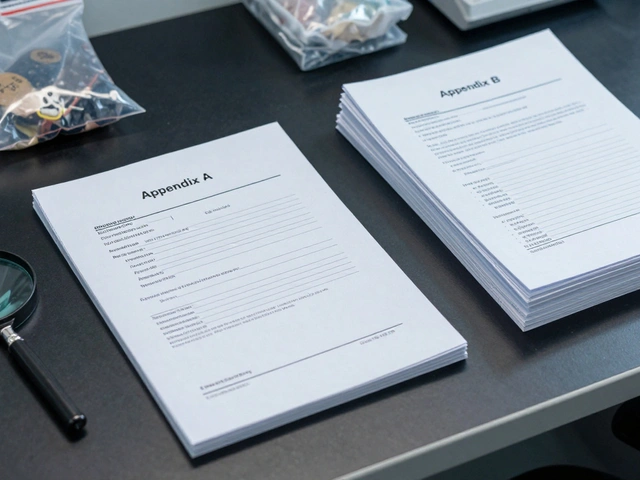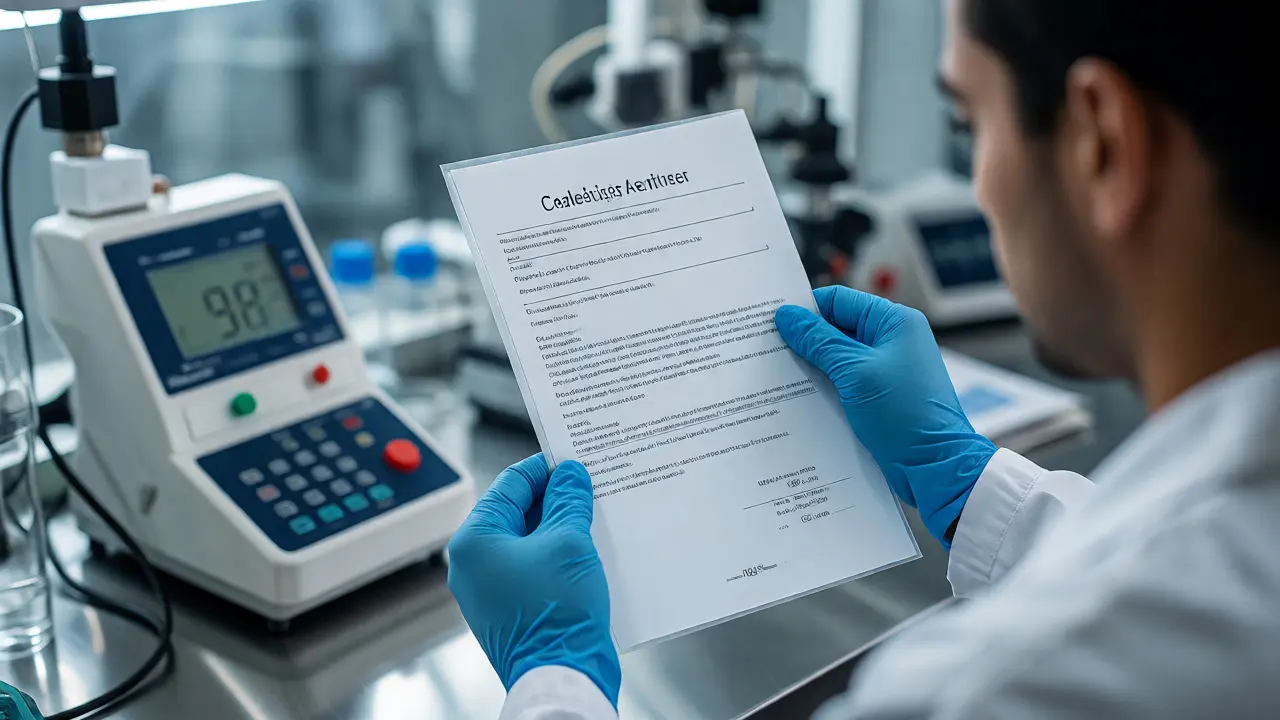
You just got the audit report back. Everything looks green until you hit the section on external providers. The auditor flagged your calibration certificates because they couldn't verify if the service provider was actually competent to do the work. It’s a common headache. You spent months getting your internal processes tight, only to lose points because you didn’t vet the company that calibrated your pH meter or sold you the pipette tips.
This isn't just about paperwork. If your vendor sends you bad reagents or calibrates your equipment incorrectly, your test results are wrong. Period. And if your results are wrong, your lab accreditation is at risk. Vendor Qualification is the process of verifying that your suppliers and service providers meet specific quality standards before you buy from them. It’s your first line of defense against faulty data.
Why Vendor Qualification Matters for Accreditation
Most labs operate under standards like ISO/IEC 17025. This international standard explicitly requires labs to ensure that externally provided products and services affect the quality of their testing and calibration activities. It’s not optional. Auditors don’t care if you liked the sales rep’s coffee; they care if you have documented evidence that the vendor can deliver what they promised.
Think about it this way: if you use a thermometer that hasn’t been calibrated correctly, every temperature reading in your lab is suspect. If you buy contaminated water for your HPLC system, your chromatograms will be noisy and unreliable. The responsibility for the final result stays with you, the lab. You can’t blame the vendor in front of an auditor unless you had a robust qualification process in place beforehand.
There’s also the financial angle. Switching vendors mid-project is expensive. Re-running tests because a batch of media failed sterility checks costs time and money. Proper qualification upfront saves you from these downstream disasters. It builds trust in your supply chain.
Categorizing Your Vendors: Not All Are Equal
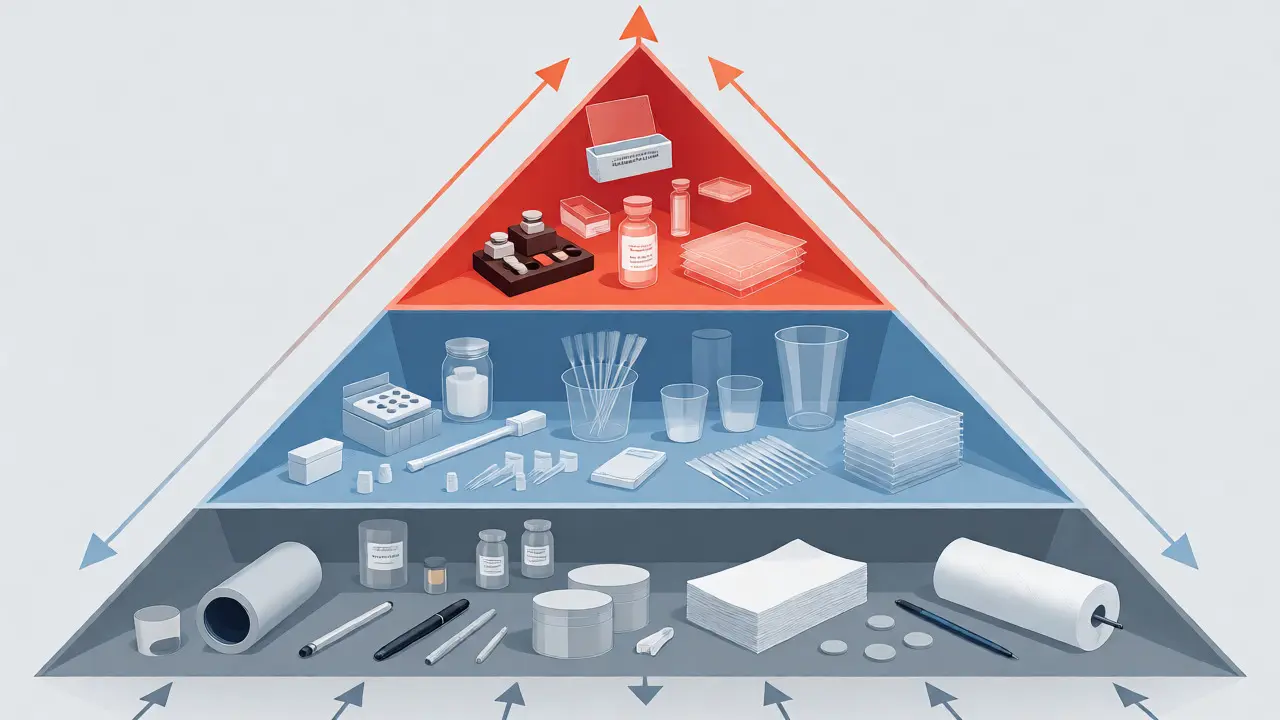
One mistake many lab managers make is treating every supplier the same. You don’t need to send a full questionnaire to the company that sells you paper towels. But you absolutely need to scrutinize the one providing reference standards. To keep things manageable, categorize your vendors based on risk.
- Critical Suppliers: These provide items directly impacting test results. Think calibration services, reference materials, culture media, and key reagents. If these fail, your data fails. These require deep due diligence.
- Major Suppliers: They provide essential consumables or equipment maintenance. Examples include pipette tips, general glassware, or HVAC maintenance for the lab environment. A failure here might disrupt workflow but won’t necessarily invalidate historical data immediately.
- Minor Suppliers: General office supplies, janitorial services, or non-critical packaging. A simple purchase order check or a basic certificate of compliance is usually enough.
By sorting vendors into these buckets, you allocate your quality assurance resources where they matter most. You spend less time chasing down invoices for pens and more time reviewing calibration certificates for your balances.
The Evaluation Process: What to Ask
So, how do you actually qualify a critical vendor? It starts with asking the right questions. Don’t just rely on their marketing brochure. You need objective evidence of competence.
For Calibration Services, ask for their scope of accreditation. Are they accredited by a recognized body like A2LA (American Association for Laboratory Accreditation) or ANAB? Check the dates. Is the accreditation current? Look at the uncertainty values in their reports. Do they meet your tolerance limits? If they can’t provide a traceable certificate linked to national standards like NIST, walk away.
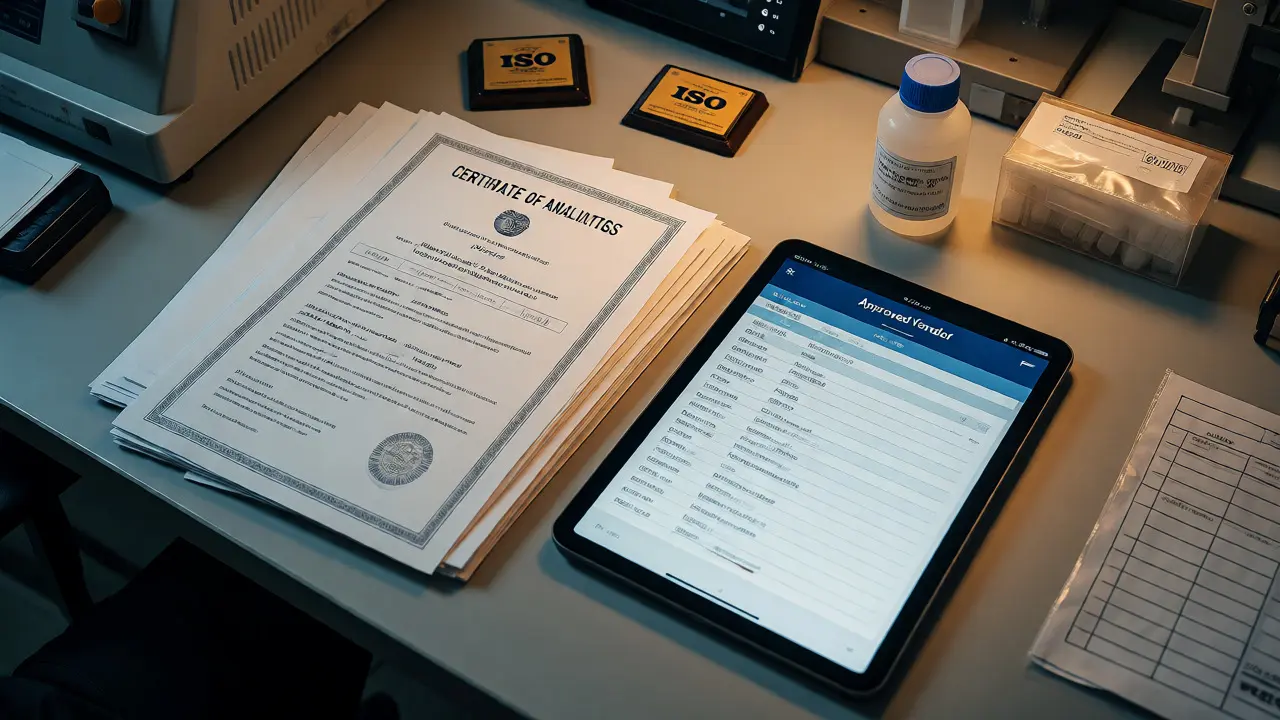
For Consumables and Supplies, request Certificates of Analysis (CoA) or Certificates of Compliance (CoC). For sterile items, ask about their sterilization method-gamma irradiation or ethylene oxide-and their validation records. For chemical reagents, check purity grades and lot-specific testing data. If they claim ISO 9001 certification, ask for a copy of the actual certificate and verify its validity on the registrar’s website.
| Criterion | Calibration Provider | Reagent Supplier | Equipment Manufacturer |
|---|---|---|---|
| Accreditation | ISO/IEC 17025 required | ISO 9001 preferred | ISO 9001 preferred |
| Traceability | NIST or equivalent link | Lot number traceability | Serial number tracking |
| Documentation | Calibration Certificate | Certificate of Analysis | User Manual & Warranty |
| On-site Audit | Recommended for high volume | Questionnaire sufficient | Factory audit if custom |
Documenting the Approval
Once you’ve reviewed the documents and decided the vendor is good to go, you need to formalize it. Create an Approved Vendor List (AVL). This is a living document. It should list the vendor name, contact info, scope of approval (what exactly are they approved to provide?), and the date of last review.
Keep all supporting evidence in a vendor file. This includes emails, questionnaires, certificates, and notes from phone calls. If an auditor asks, "How did you know this calibration company was qualified?" you shouldn’t be digging through a shared drive. You should pull up a single folder with clear, dated proof.
Remember, qualification isn't a one-time event. Set a schedule for re-evaluation. Critical vendors might need an annual review. Minor ones could be every three years. During these reviews, look at performance history. Did they miss delivery deadlines? Were there any complaints from your staff about product quality? Use this data to decide if they stay on the AVL or get demoted.
Handling Non-Conforming Deliveries
Even with great qualification, things go wrong. Maybe a shipment arrives damaged. Maybe a lot of media fails your internal QC check. When this happens, don’t just toss it aside. Document the non-conformance. Notify the vendor. Ask for a corrective action plan.
If a vendor repeatedly delivers sub-par goods, put them on probation. Limit their scope. Maybe they’re still approved for plasticware but not for sterile filters. If they don’t improve, remove them from the AVL. Having a clear procedure for handling failures shows auditors that you’re proactive, not passive.
Also, consider backup vendors. Relying on a single source for critical reagents is risky. If that one supplier has a factory fire or a shipping strike, your lab stops. Qualify at least two sources for anything vital. Test the second source thoroughly before switching over completely.
Common Pitfalls to Avoid
Here are a few traps I see labs fall into when managing vendors. First, assuming brand name equals quality. Just because it’s a big-name supplier doesn’t mean they’re accredited for the specific calibration you need. Always check the scope.
Second, ignoring indirect suppliers. Who supplies the raw materials to your reagent manufacturer? Usually, you don’t need to know, but if your reagent fails, knowing who made the precursor chemicals can help troubleshoot. Keep some visibility into the deeper supply chain if possible.
Third, forgetting about software and IT services. If you use cloud-based LIMS (Laboratory Information Management System), your IT vendor is part of your quality system. Ensure they have data security protocols and uptime guarantees. A server outage during a busy week can compromise sample integrity if refrigerators aren’t monitored properly.
Do I need to qualify every single supplier?
No, you don't need to apply the same level of scrutiny to everyone. Focus your rigorous qualification efforts on suppliers whose products or services directly impact the accuracy and reliability of your test results. For low-risk items like office supplies, a basic purchase order verification is often sufficient.
What is the difference between ISO 9001 and ISO 17025 for vendors?
ISO 9001 certifies a company's overall quality management system, ensuring they have consistent processes. ISO 17025 specifically certifies technical competence to perform specific tests or calibrations. For calibration services, ISO 17025 accreditation is much stronger evidence of capability than ISO 9001 alone.
How often should I re-qualify my critical vendors?
Annual reviews are standard practice for critical vendors. However, you should also trigger an immediate review if there is a significant change in their ownership, location, or if you experience repeated non-conformances with their deliveries.
Can I use a vendor without an on-site audit?
Yes, especially for remote or large-scale suppliers. Instead of an on-site visit, you can use detailed questionnaires, review their quality manuals, check their accreditation certificates, and analyze their performance history. On-site audits are typically reserved for local partners or when documentation raises red flags.
What if my calibration provider loses their accreditation?
If a provider loses accreditation, any calibrations performed after that date may not be accepted by auditors. You should monitor their status regularly. If it lapses, switch to another accredited provider immediately and assess whether previous calibrations remain valid based on the timeline of the lapse.