Imagine standing in a crime scene where the walls are splattered with red. To an untrained eye, it’s just a mess. But to a forensic expert, every drop tells a story about force, direction, and timing. The key to unlocking that story is velocity classification. This method categorizes bloodstains based on the energy transferred to the blood at the moment of impact. It’s not magic; it’s physics applied to biology. Understanding whether a stain was created by low, medium, or high velocity helps investigators reconstruct events that witnesses might miss or misremember.
The core principle is simple: the faster the blood moves when it hits a surface, the smaller and more numerous the resulting droplets become. Low-velocity impacts produce large, round drops. High-velocity impacts shatter the blood into a fine mist. By measuring these stains, experts can estimate the force involved. This article breaks down how this classification works, what each category looks like, and why it matters in real-world investigations.
How Velocity Defines Bloodstain Morphology
Blood behaves differently depending on its speed. When a drop falls from a height, gravity accelerates it. If it hits a surface gently, it retains much of its original shape. However, if it hits hard, the kinetic energy overcomes the surface tension of the blood, causing it to break apart. This phenomenon is known as secondary spatter. The size of the primary drop before impact also plays a role, but velocity is the dominant factor in determining the final pattern.
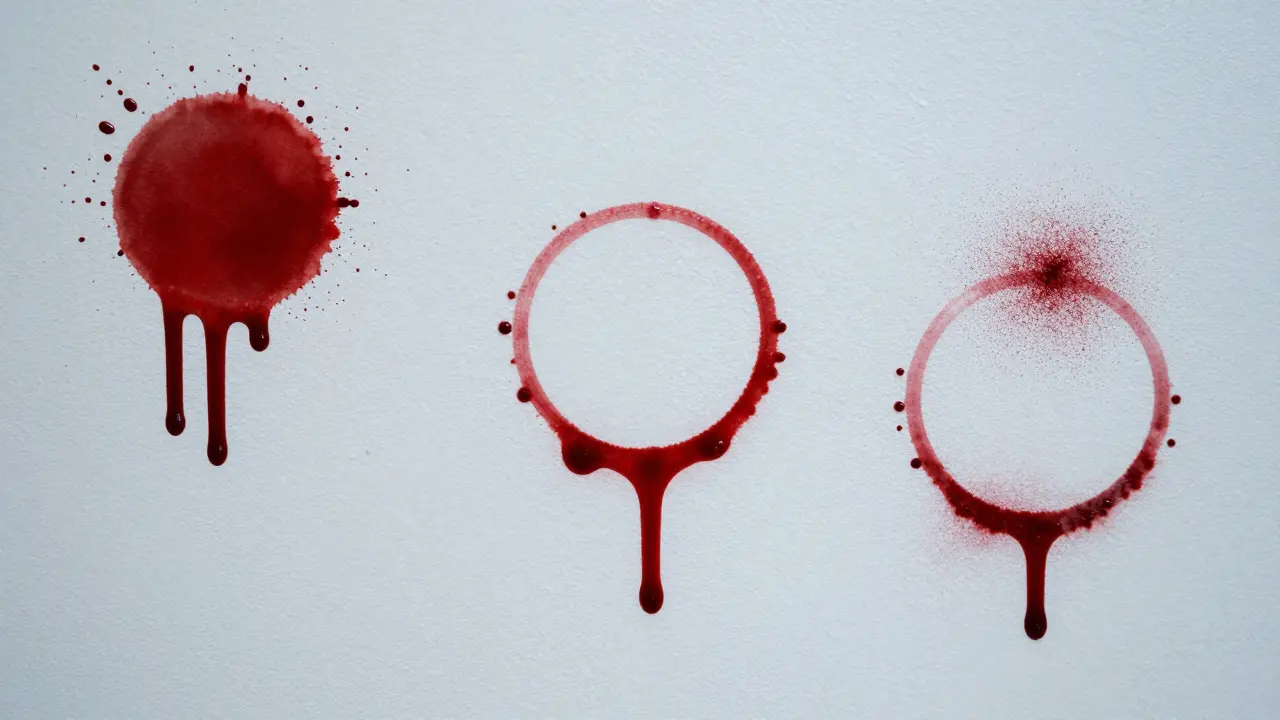
Experts measure the diameter of the stains to classify them. Generally, stains larger than 4 mm are considered low velocity. Stains between 1 mm and 4 mm fall into the medium range. Anything smaller than 1 mm is classified as high velocity. These ranges are guidelines, not absolute laws, because factors like surface texture, angle of impact, and blood viscosity can influence the result. Still, they provide a reliable framework for initial assessment.
Low-Velocity Bloodstains: Gravity and Drip
Low-velocity bloodstains are patterns created by blood moving at speeds less than 5 feet per second, typically resulting from passive dripping or light tapping. These are the most common types found in scenes involving wounds that have stopped bleeding or where blood has pooled and then dripped. Think of a wound on a leg that oozes slowly onto the floor. The drops form under gravity alone. They are usually round, uniform in size, and often appear as isolated drops or small clusters.
In many cases, low-velocity patterns help establish the position of a victim after the main event. For example, if a person bled out while lying on the ground, the drip trail will show their location. Investigators look for the origin of these drips to determine if the body was moved. Since the force is minimal, there is little distortion. The edges of the stains are smooth, and they lack the satellite droplets seen in higher-energy impacts. This makes them easy to identify but also less informative about the specific mechanism of injury compared to other types.
Medium-Velocity Bloodstains: Blows and Beating
Medium-velocity bloodstains are patterns generated by impacts between 5 and 25 feet per second, commonly associated with blunt force trauma such as punches or blows with tools. This category covers a wide range of scenarios. A punch to the face, a hit with a baseball bat, or even a slap can create medium-velocity spatter. The blood is ejected with enough force to break into smaller droplets, but not so much that it atomizes completely. The resulting stains are irregular in shape, often elongated, and may have tails pointing away from the source.
One distinctive feature of medium-velocity patterns is the presence of voids. If an object, like a piece of clothing or furniture, was present during the impact, it blocks the blood, creating empty spaces in the pattern. These voids help investigators map the position of objects relative to the victim. The density of the stains increases with the force of the blow. A light tap produces fewer, larger drops, while a heavy strike creates a dense cloud of smaller droplets. Analyzing the distribution helps estimate the number of blows and their intensity.
High-Velocity Bloodstains: Gunshots and Rapid Motion
High-velocity bloodstains are fine mist patterns caused by impacts exceeding 25 feet per second, typical of gunshot wounds or high-speed vehicle accidents. This is the most dramatic type of spatter. When a bullet passes through tissue, it creates a temporary cavity that expands rapidly, ejecting blood at extreme speeds. The result is a fine spray of tiny droplets, often less than 0.5 mm in diameter. These stains look like a mist or fog on surfaces. They cover a wide area and can be difficult to distinguish from background noise without careful examination.
High-velocity patterns are crucial in gunshot cases. They help confirm the entry and exit wounds. The pattern radiates outward from the point of impact. If the shooter fired from a distance, the spatter will be widespread. If close-range, the pattern is concentrated. Additionally, high-velocity spatter often contains debris, such as skin fragments or clothing fibers, which can be analyzed for DNA or fiber evidence. Because the droplets are so small, they settle quickly, making it easier to determine the directionality of the shot. This precision allows experts to triangulate the shooter's position with remarkable accuracy.
Comparing the Three Categories
To make sense of these distinctions, let’s look at them side by side. Each category has distinct characteristics that help differentiate them in the field. The table below summarizes the key differences in size, cause, and appearance.
| Feature | Low Velocity | Medium Velocity | High Velocity |
|---|---|---|---|
| Droplet Size | > 4 mm | 1 - 4 mm | < 1 mm |
| Typical Cause | Dripping, passive flow | Blunt force, beating | Gunshot, explosion |
| Shape | Round, uniform | Irregular, elongated | Fine mist, circular |
| Directionality | Downward (gravity) | Radial from impact | Radial, wide spread |
| Common Context | Post-mortem movement | Assault, struggle | Ballistics, crash |
This comparison highlights why context matters. A small stain isn't always high velocity; it could be a low-velocity drop that fell from a great height and broke apart. Conversely, a large stain might be medium velocity if the blood was viscous or the surface was textured. Always consider the environment alongside the measurements.
Practical Application in Crime Scene Investigation
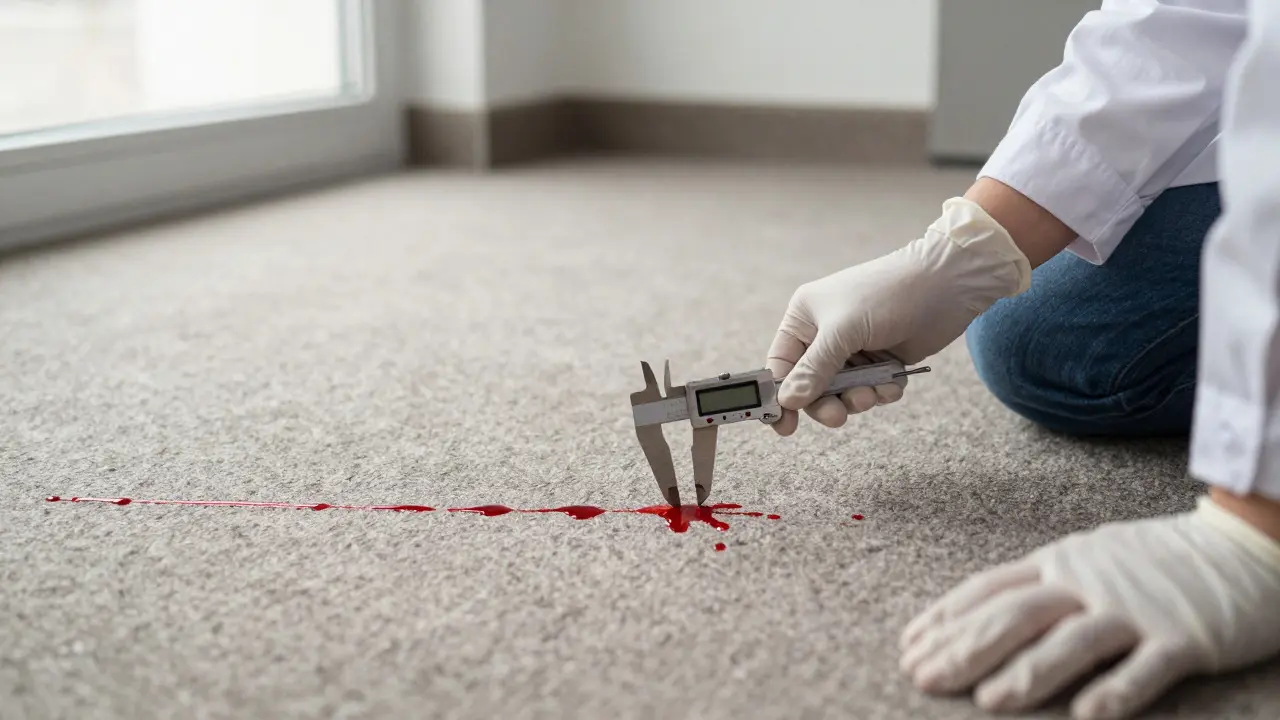
Applying velocity classification requires more than just measuring stains. Investigators must document the scene thoroughly. Photos should include scale bars to ensure accurate size determination. Video recordings help capture the three-dimensional nature of the spatter. Once the data is collected, analysts use geometric principles to find the area of convergence. This is the point in space where all the lines of trajectory intersect. From there, they calculate the area of origin, which indicates where the blood was when it was projected.
For low-velocity patterns, the focus is on establishing timeline and movement. Did the victim bleed while standing? While sitting? The drip trails provide answers. For medium-velocity patterns, the goal is to understand the dynamics of the assault. How many blows were delivered? What was the weapon? The density and spread of the stains offer clues. For high-velocity patterns, the priority is confirming ballistics facts. Where was the shooter? Was there a ricochet? The fine mist provides the data needed to answer these questions.
It’s important to remember that no single stain tells the whole story. Patterns overlap. A single event can produce multiple velocity classes. For instance, a gunshot might create high-velocity spatter from the wound, medium-velocity spatter from the recoil hitting nearby objects, and low-velocity drips from the victim falling. Integrating all these elements gives a complete picture. This holistic approach prevents misinterpretation and strengthens the evidentiary value of the analysis.
Challenges and Limitations
Despite its utility, velocity classification has limitations. Surface texture significantly affects stain morphology. Porous surfaces like carpet absorb blood, changing the apparent size and shape. Smooth surfaces like glass preserve the details better. Angle of impact also distorts the shape, making elongated stains that might mimic higher velocities. Analysts must account for these variables to avoid errors.
Environmental factors play a role too. Wind in outdoor scenes can disperse high-velocity spatter, altering the pattern. Temperature affects blood viscosity, which in turn influences how it breaks apart. Humidity can cause evaporation, shrinking the stains over time. These factors require careful consideration during documentation and analysis. Ignoring them can lead to incorrect conclusions about the force involved.
Another challenge is the subjective nature of some assessments. While size measurements are objective, interpreting the cause can be subjective. Two experts might disagree on whether a particular pattern fits medium or high velocity, especially in borderline cases. Standardized protocols and peer review help mitigate this risk. Training and experience are critical for accurate classification. Continuous education ensures that analysts stay current with best practices and new research findings.
Frequently Asked Questions
What is the exact velocity threshold for high-velocity bloodstains?
High-velocity bloodstains are generally defined as those produced by impacts greater than 25 feet per second (approximately 7.6 meters per second). This speed is typically associated with gunshot wounds or high-speed mechanical forces. However, the exact threshold can vary slightly depending on the specific conditions of the impact and the properties of the blood.
Can low-velocity bloodstains indicate the direction of movement?
Yes, low-velocity patterns, particularly drip trails, can indicate the path of a bleeding individual. By analyzing the sequence and spacing of the drops, investigators can infer the direction and speed of movement. However, because these stains are primarily influenced by gravity, they provide less information about the force of impact compared to medium or high-velocity patterns.
How does surface texture affect bloodstain classification?
Surface texture significantly impacts stain morphology. Rough or porous surfaces can absorb blood, reducing the visible size and altering the shape. Smooth, non-porous surfaces preserve the true dimensions of the droplets. Analysts must adjust their interpretations based on the surface type to accurately classify the velocity. For example, a stain on carpet may appear smaller than the same impact on tile.
Are velocity classifications always definitive in court?
While widely accepted, velocity classifications are part of a broader analysis. They provide strong supportive evidence but are rarely used in isolation. Courts consider them alongside other forensic findings, witness testimony, and physical evidence. The reliability depends on proper documentation, expert qualification, and adherence to standardized methods. When presented correctly, they carry significant weight in reconstructing events.
What tools are used to measure bloodstain velocity?
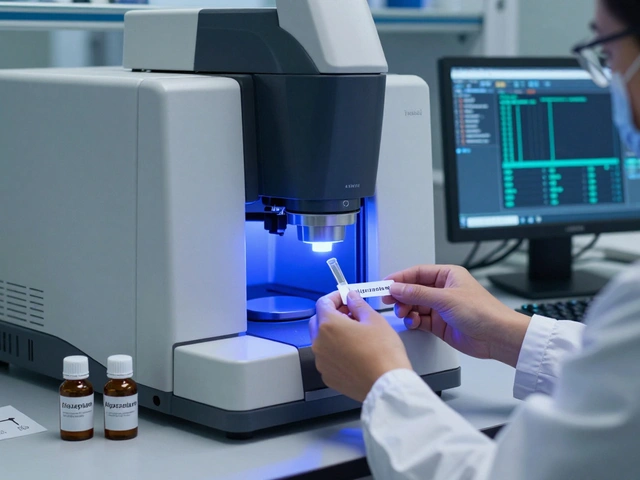
Direct measurement of velocity is rare in post-event analysis. Instead, experts use calipers or digital imaging software to measure stain diameters. They apply established formulas and empirical data to estimate the velocity. Tools like laser rangefinders help determine distances for trajectory calculations. Microscopes may be used to examine fine details in high-velocity spatter. The combination of these tools allows for accurate reconstruction without needing to measure speed directly.