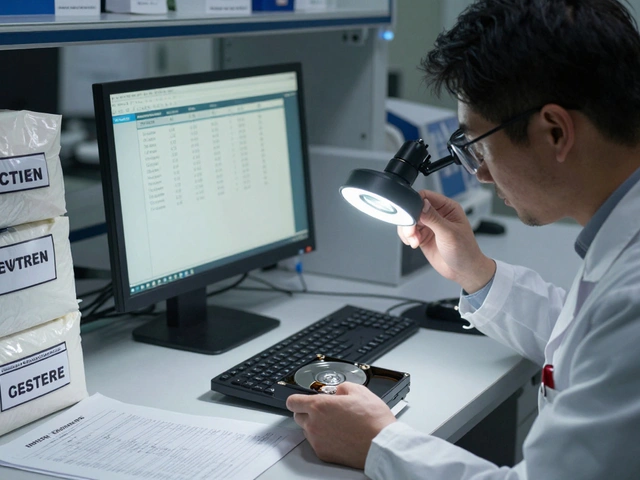
Imagine standing in a courtroom. The judge looks at you, the jury leans forward, and the defense attorney asks, "Doctor, what does this mean?" You have a stack of chromatograms, mass spectra, and concentration values in your hand. But if you start talking about retention times or ion suppression, you’ve already lost them. Toxicology is complex science, but toxicology reporting isn’t just about data-it’s about translation.
Most people outside the lab don’t care that you used liquid chromatography-tandem mass spectrometry (LC-MS/MS). They care about one thing: Did the substance cause the impairment or death? Your job is to build a bridge between the chemical reality and the human story. If your report reads like a textbook chapter on pharmacokinetics, it fails its primary purpose. It needs to read like a narrative that makes sense to someone who has never pipetted a solution in their life.
The Audience Gap
You’re not writing for other toxicologists. You’re writing for attorneys, judges, juries, and sometimes family members. These are non-scientists. Their baseline knowledge might be limited to pop culture references or basic high school biology. When they hear "nanograms per milliliter," their eyes glaze over. When they see "half-life," they assume it means the drug is gone after two hours, which is rarely true.
The biggest mistake experts make is assuming competence. Just because a lawyer has handled ten DUI cases doesn’t mean they understand how ethanol metabolism works. In fact, many legal professionals rely on outdated myths. They think coffee sobers you up. They think breathalyzers measure blood alcohol directly (they don’t; they estimate it from alveolar air). Your report must correct these misconceptions without sounding condescending.
Consider the difference between these two statements:
- Scientific: "The subject exhibited a blood ethanol concentration of 0.15% w/v, consistent with significant central nervous system depression."
- Narrative: "At the time of testing, the driver had consumed enough alcohol to impair judgment and reaction time significantly. This level is well above the legal limit of 0.08%, indicating substantial intoxication."
The second version answers the question the jury actually asked. It connects the number to the behavior.
Structure That Tells a Story
A good toxicology report follows a logical flow that mirrors how a layperson processes information. Start with the conclusion, then explain the evidence. Don’t bury the lead. Many reports fail because the critical finding is hidden on page four, while pages one through three detail sample collection protocols nobody cares about.
Use the "Inverted Pyramid" approach often taught in journalism. Here’s how it applies to Toxicology Reporting:
- The Bottom Line Up Front (BLUF): State the primary finding immediately. Was the person impaired? Was the drug present? What was the likely source?
- The Context: Explain the circumstances. Who collected the sample? When? How was it stored? This builds credibility.
- The Evidence: Present the data clearly. Use tables instead of dense paragraphs. Highlight key numbers.
- The Interpretation: Connect the dots. Why does this data matter? What do similar levels typically look like in real-world scenarios?
- The Limitations: Be honest about what you don’t know. Science has uncertainty. Acknowledging it makes you more trustworthy, not less.
This structure respects the reader’s time and cognitive load. It guides them from "What happened?" to "Why should I believe you?" to "How sure are you?"
Mastering Plain Language
Jargon is the enemy of clarity. But avoiding jargon doesn’t mean dumbing down the science. It means choosing words that carry precise meaning without requiring a dictionary. Instead of saying "post-mortem redistribution," say "how drugs move in the body after death." Instead of "analytical sensitivity," say "how small an amount we can detect."
Here are some common toxicology terms and how to translate them for a general audience:
| Scientific Term | Plain English Translation | Why It Matters |
|---|---|---|
| Bioavailability | How much of the drug actually gets into the bloodstream | Explains why taking a pill feels different than injecting it. |
| Half-Life | Time it takes for half the drug to leave the body | Helps explain how long effects last, but note it's not linear. |
| Metabolite | A byproduct created when the body breaks down a drug | Proves the person ingested the drug, even if the parent drug is gone. |
| Therapeutic Range | The typical dose range for a patient | Helps distinguish between medical use and abuse. |
| Chromatogram | A graph showing the separation of chemicals | The visual proof that specific substances were identified. |
Notice how the translations focus on function rather than mechanism. Non-scientists care about outcomes, not molecular interactions. Keep your sentences short. Active voice is stronger and clearer. "We detected morphine" is better than "Morphine was detected by us." It’s direct and accountable.

Visuals Are Your Best Friend
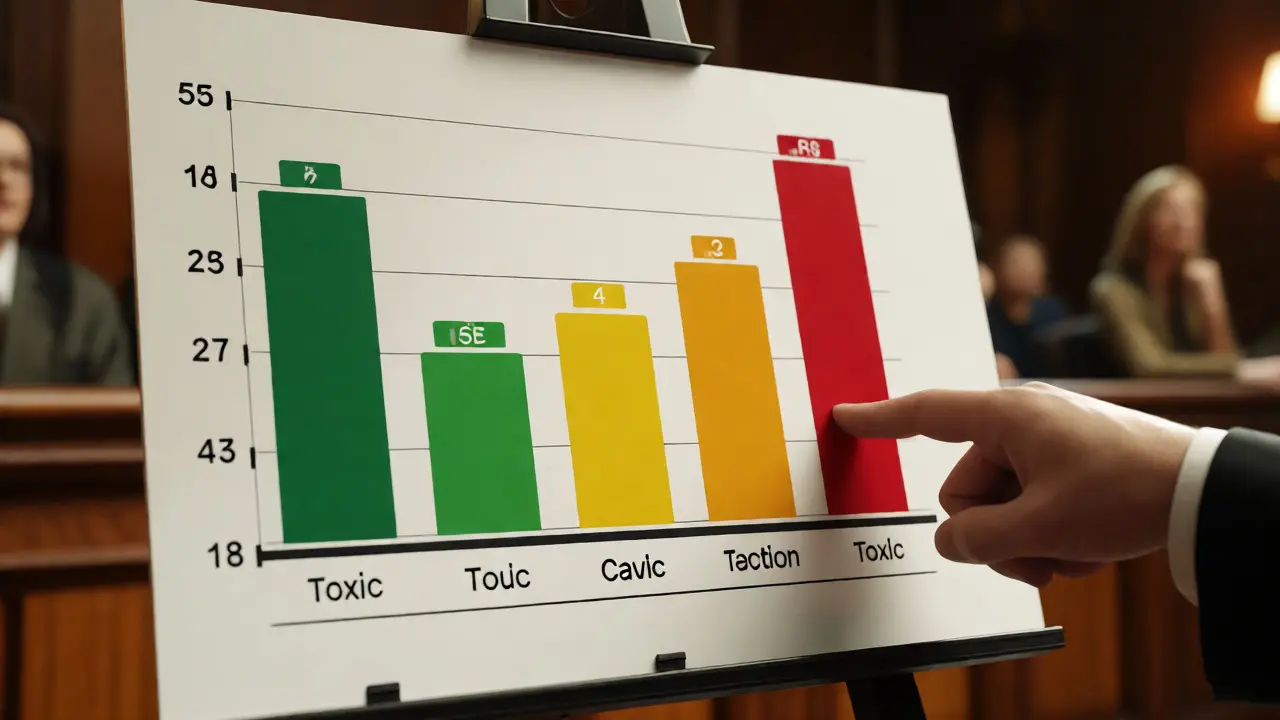
A picture is worth a thousand words, especially when those words are "concentration curves." Jurors remember images far better than text. If you include a graph, label it simply. Don’t use axis titles like "Log C vs Time." Use "Amount of Drug in Blood Over Time."
Color coding helps too. Use red for toxic levels, green for therapeutic levels, and yellow for cautionary zones. But be careful-don’t oversimplify. A simple bar chart comparing the defendant’s level to the average user’s level can be devastatingly effective in court. It provides immediate context. Without it, 100 ng/mL means nothing to a juror. With it, they see it’s twice the average.
When presenting chromatograms, zoom in on the relevant peaks. Annotate them with plain labels. Point out the internal standard so they understand quality control. Show them where the blank sample sits to prove there was no contamination. These visual cues answer questions before they’re asked.
Handling Uncertainty with Confidence
Science is rarely black and white. Toxicology involves estimates, assumptions, and variables. If you claim absolute certainty, a skilled cross-examination will tear you apart. Instead, frame your uncertainty as part of the scientific process.
Use phrases like "consistent with," "suggests," or "highly probable." Explain why you can’t be 100% certain. Maybe the sample degraded. Maybe the timing of ingestion is unknown. By explaining the limits of your analysis, you show expertise. You demonstrate that you understand the boundaries of your field.
For example, if post-mortem blood levels are unreliable due to redistribution, say so. "After death, drugs can shift from tissues back into the blood, making exact levels hard to pin down. However, the presence of [Drug X] confirms recent exposure." This honesty builds trust. Judges respect experts who admit what they don’t know.
The Expert Witness Testimony Angle
Your written report is often the script for your oral testimony. If the report is confusing, your testimony will be shaky. Practice reading your report aloud. Does it sound natural? Can you explain each section in under thirty seconds? If not, rewrite it.
Anticipate the tough questions. Lawyers will ask about false positives, cross-reactivity, and lab errors. Address these in the report proactively. Include a section on "Quality Assurance." Briefly describe your accreditation, proficiency testing, and chain of custody. This pre-empts attacks on your methodology.
Remember, you are an educator first, scientist second. Your goal is to help the trier of fact reach a just decision based on accurate science. If they misunderstand your data, justice suffers. Clear narratives prevent misinterpretation. They ensure that the science serves the law, not the other way around.
Common Pitfalls to Avoid
Even experienced toxicologists fall into traps. Here are the most frequent ones:
- Overloading Data: Dumping raw data tables into the main text. Move detailed appendices to the end.
- Assuming Knowledge: Using acronyms like LOD, LOQ, or QC without defining them.
- Vague Conclusions: Saying "results are inconclusive" without explaining why or what would be needed to clarify them.
- Ignoring Context: Failing to mention prescription history or co-ingestants that affect interpretation.
- Tone Issues: Sounding defensive or arrogant. Stay neutral and helpful.
Fixing these issues takes effort, but it pays off in credibility and impact. A clear report reduces litigation risk. It speeds up trials. It helps clients understand their case. Ultimately, it elevates the profession.
Why is plain language important in toxicology reports?
Plain language ensures that judges, juries, and attorneys-who are not scientists-can accurately understand the findings. Misinterpretation of technical jargon can lead to incorrect legal decisions. Clear communication builds trust and ensures the science is applied correctly in court.
Should I include all my raw data in the main report?
No. The main report should contain only essential data and interpretations. Detailed raw data, such as full chromatograms or calibration curves, belongs in appendices. This keeps the narrative focused and readable for non-experts.
How do I handle conflicting results in a report?
Acknowledge the conflict openly. Explain possible reasons for the discrepancy, such as sample degradation, interference, or analytical limitations. Provide your best professional opinion based on the weight of evidence, and state your confidence level clearly.
What is the best way to explain 'half-life' to a jury?
Explain that half-life is the time it takes for the body to eliminate half of the drug. Emphasize that it takes several half-lives to fully clear a substance. Use analogies, like draining a bathtub, to illustrate that elimination slows down over time rather than stopping abruptly.
Do visuals really make a difference in toxicology testimony?
Yes, visuals significantly enhance comprehension. Jurors retain visual information better than spoken or written text. Simple graphs comparing drug levels to known ranges provide immediate context and help jurors grasp the significance of numerical data quickly.