
Most people imagine an online predator as a shadowy figure lurking in dark corners of the internet. The reality is far more unsettling because it is often banal. Predators operate on mainstream social media, gaming platforms, and messaging apps-places where millions of children play, learn, and socialize every day. They do not look like monsters; they look like peers, mentors, or friendly strangers. Understanding online predator profiling is the systematic analysis of behavioral patterns used by adults to manipulate minors for sexual exploitation via digital channels requires moving past stereotypes and examining the specific, staged tactics these offenders use to build trust, isolate victims, and enforce silence.
This isn't about catching a single type of criminal. It is about recognizing a process. Whether you are a parent, educator, or law enforcement professional, identifying the mechanics of grooming allows you to spot the warning signs before abuse occurs. The following breakdown covers the psychological stages, digital behaviors, and forensic indicators that define modern online exploitation.
The Anatomy of Digital Grooming
Grooming is not an impulsive act. It is a calculated, multi-stage process designed to desensitize a victim and secure their compliance while avoiding detection. Psychologist Dr. Elizabeth Jeglic and criminological models based on Anna C. Salter’s work outline five distinct stages that apply to both offline and online interactions.
- Victim Selection: Predators scan for vulnerability. They target youth who appear lonely, lack parental supervision, or have mental health challenges. In digital spaces, this looks like predators joining chats in games with low player counts or commenting on posts from isolated teens.
- Gaining Access and Isolation: The offender moves the interaction from public to private. This might mean shifting from a group chat in a video game to a direct message, then to a separate messaging app like Discord or Snapchat. The goal is to remove witnesses.
- Building Trust: Through flattery, shared interests, and emotional support, the predator positions themselves as the only person who "understands" the child. This creates an emotional dependency that makes disclosure difficult.
- Desensitization: Conversations gradually shift from innocent topics to sexual ones. Jokes become risqué, then explicit. The predator tests boundaries with sexualized language or images to see how the child reacts.
- Post-Abuse Maintenance: Once exploitation begins, the predator uses threats, shame, or blackmail to keep the child silent. They may claim the relationship was mutual or threaten to expose explicit content to family and friends.
Recognizing these stages helps distinguish between normal teenage exploration and predatory manipulation. Normal peer interactions rarely involve rapid escalation into secrecy or sexual pressure.
The 7 P’s of Online Grooming
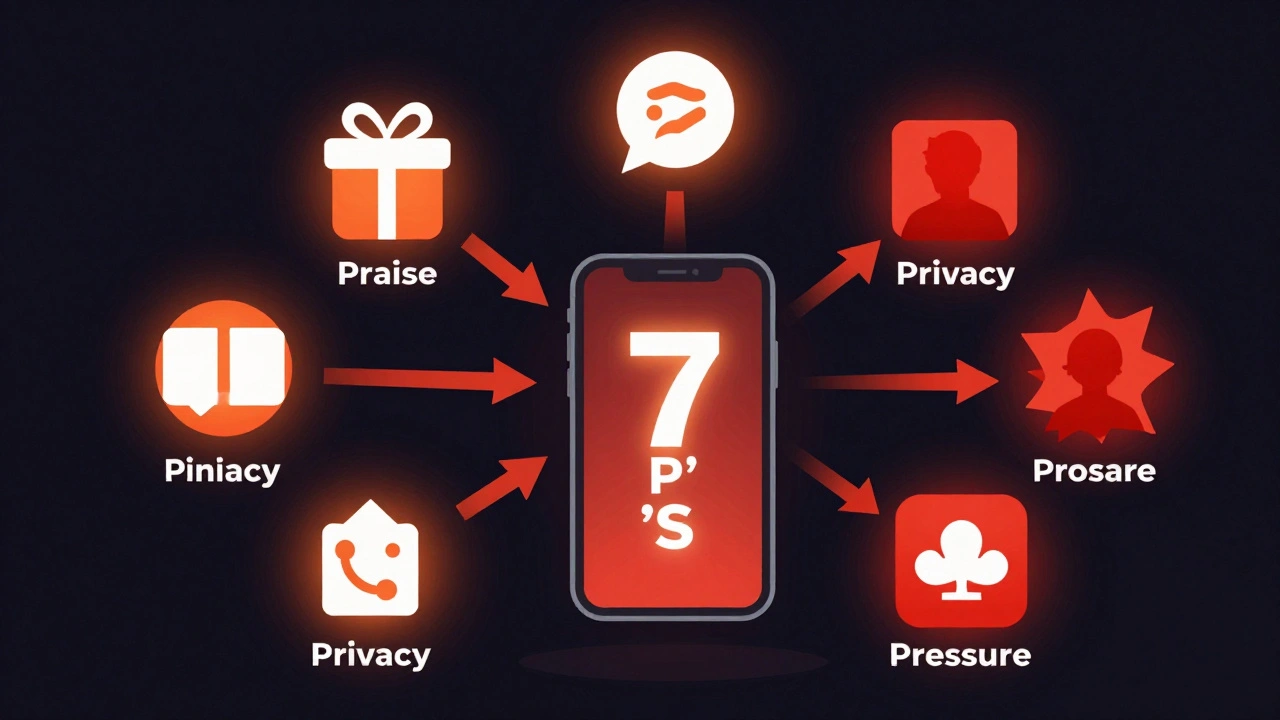
To make these abstract stages actionable, the Child Rescue Coalition (CRC) developed the "7 P’s" model. This framework maps directly to observable digital behaviors that parents and investigators can monitor.
| Tactic | Digital Behavior Example | Red Flag Indicator |
|---|---|---|
| Praise | Excessive compliments on appearance or maturity. | Stranger calling a minor "gorgeous" or "mature for your age" early in conversation. |
| Precocious Conversation | Probing questions about relationships, sex, or body image. | Asking "Do you have a boyfriend?" or "Have you ever kissed anyone?" within days of contact. |
| Photo Sharing | Sending nude images first to test reaction, then requesting reciprocation. | Child suddenly hiding screen or deleting photo history after chatting with unknown contacts. |
| Privacy | Requests to keep chats secret, delete messages, or move off-platform. | Use of disappearing message features exclusively with one contact; refusal to let parents see chat logs. |
| Pressure | Blackmail, sextortion, or threats of exposure. | Sudden anxiety when receiving notifications; demands for money or more explicit images under threat. |
| Presents | Digital gifts (Robux, V-Bucks) or physical packages. | Unexplained deliveries, gift cards, or sudden increases in in-game currency without a clear source. |
| Pulling Away | Emotional withdrawal to punish non-compliance or enforce possessiveness. | Child becomes withdrawn or upset after being told they cannot go online; claims they are "breaking up" with an online friend. |
These tactics are not always used in order, but they form a recognizable pattern. For instance, a predator might use Praise to gain access, then Privacy to isolate the child, followed by Pressure to extract images. Tracking these behaviors provides a concrete basis for intervention.
Digital Forensics and Behavioral Analysis
In a forensic context, profiling involves analyzing communication metadata and content structure. Investigators look for specific linguistic markers and platform migration patterns.
- Language Escalation: Thematic analyses of grooming chats show a consistent progression from neutral to sexual vocabulary. Algorithms can flag rapid transitions in topic complexity, such as moving from school talk to sexual acts within a short timeframe.
- Platform Hopping: Predators often initiate contact on high-traffic platforms (TikTok, Instagram) where anonymity is easier, then migrate to encrypted or ephemeral apps (Telegram, Snapchat) to evade monitoring. This migration itself is a significant risk indicator.
- Image Exchange Patterns: The request for self-generated sexual imagery (SGSI) is a critical milestone. Forensic examiners note that predators often send their own explicit images first to lower inhibitions, creating a false sense of reciprocity.
- Time-Based Anomalies: Chats occurring late at night or during school hours may indicate isolation tactics or attempts to avoid parental oversight.
Law enforcement agencies use these patterns to build cases. Under U.S. federal law and many state statutes, engaging in sexually explicit conversations with a minor is a crime in itself, regardless of whether physical contact occurs. This means that the digital trail-the messages, the timestamps, the IP addresses-is often the primary evidence.
Identifying Victim-Side Red Flags
Profiling isn't just about the predator; it's also about recognizing changes in the victim's behavior. Children undergoing grooming often exhibit subtle shifts that signal distress.
Watch for these signs:
- Increased Secrecy: Switching screens, closing windows, or using passwords on devices previously left open.
- Unexplained Gifts: New clothing, electronics, or gaming currency that the child cannot explain.
- Sexualized Language: Using terms or phrases inappropriate for their developmental stage, often mimicking the predator's language.
- Isolation: Withdrawing from friends and family, preferring online interaction over real-world socializing.
- Mental Health Decline: Sudden anxiety, depression, or sleep disturbances linked to device usage.
One or two of these signs might be normal adolescent behavior. However, a cluster of indicators-especially when combined with unexplained digital activity-warrants immediate attention.

Reporting and Intervention Strategies
If you suspect grooming, time is critical. Do not confront the predator directly, as this may lead them to destroy evidence or escalate threats. Instead, follow these steps:
- Preserve Evidence: Take screenshots of conversations, profile pages, and any exchanged images. Do not delete messages, even if they are disturbing.
- Report to Platforms: Use the built-in reporting tools on social media and gaming sites to flag the account and content.
- Contact NCMEC: Report the incident to the National Center for Missing and Exploited Children is a U.S.-based nonprofit organization that leads efforts to end child sexual exploitation through its CyberTipline reporting system. Their CyberTipline receives millions of reports annually and works directly with law enforcement worldwide.
- Seek Professional Support: Connect with counselors specializing in child trauma. Organizations like Thorn provide resources for families navigating the aftermath of exploitation.
Education is the best defense. Teach children to recognize the 7 P’s and emphasize that no adult should ask them to keep secrets, share intimate images, or move conversations to private channels. Open dialogue reduces the power of shame and fear, which predators rely on to maintain control.
Conclusion
Online predator profiling reveals that grooming is a methodical process, not a random event. By understanding the stages of manipulation, the specific digital tactics used, and the behavioral red flags in victims, we can intervene earlier and more effectively. The tools exist-from forensic analysis to public education-but they require vigilance. Protecting children online starts with recognizing that danger often hides behind familiarity, and that silence is the predator's greatest ally.
What is the most common way online predators find victims?
Predators typically find victims on mainstream platforms where children congregate, such as social media sites (Instagram, TikTok), gaming platforms (Roblox, Fortnite), and messaging apps. They cast a wide net, targeting vulnerable individuals who appear lonely or unsupervised, rather than seeking out specific "types" of children.
How long does the grooming process usually take?
There is no fixed timeline. Grooming can occur rapidly over days or weeks, especially in high-intensity digital environments, or it can unfold slowly over months. The speed often depends on the victim's vulnerability and the predator's urgency, but the core stages of trust-building and desensitization remain consistent.
Is it illegal for an adult to chat with a minor online?
Not all chatting is illegal, but sexually explicit conversations with a minor are crimes in many jurisdictions, including under U.S. federal law. Additionally, soliciting sexual images, engaging in sextortion, or traveling to meet a minor for sexual purposes are serious felonies. The intent and nature of the communication determine legality.
What should I do if my child has sent a nude image to a stranger?
Stay calm and avoid blaming the child. Preserve all evidence by taking screenshots. Report the incident immediately to the National Center for Missing and Exploited Children (NCMEC) via their CyberTipline. Seek support from a counselor specializing in child trauma to help the child cope with potential shame or blackmail threats.
Can AI detect online grooming automatically?
Yes, increasingly so. Tech companies and law enforcement use machine learning algorithms to flag suspicious patterns, such as rapid escalation to sexual topics, requests for secrecy, or known hashes of child sexual abuse material (CSAM). However, AI is a tool for triage; human review is still essential to confirm context and ensure accuracy.