You find a body. The police tape is up, the scene is quiet, and everyone is looking at you. Your job isn't just to identify who died; it's to answer the question that makes or breaks the investigation: when did they die? This timeframe is known as the postmortem interval (PMI). It’s not just a number for the paperwork-it determines if the suspect has an alibi, if the victim was alive when the fire started, or if this is a cold case from last week or last year. But here’s the catch: there is no single switch that flips off at death. Decomposition is messy, variable, and heavily influenced by the environment. If you’re relying on one method, you’re guessing. To get a reliable PMI, you need to triangulate data from biology, chemistry, and entomology.
Why "Exact Time" Is a Myth in Forensic Science
Let’s be real: TV shows lie to us. When a detective says, "He died between 9:00 and 9:15 PM," that’s dramatic fiction. In reality, forensic pathologists provide windows, often ranging from hours to days. Why? Because death triggers a cascade of biological processes that don’t follow a strict clock. They follow thermodynamics, bacterial activity, and insect life cycles. A body cooling in a freezer behaves differently than one left in a humid Portland summer. Your goal isn't precision to the minute; it's narrowing the window enough to make investigative decisions meaningful. Think of PMI estimation as building a confidence interval, not pinpointing a dot on a timeline.
| Factor | Impact on PMI Estimation | Direction of Error |
|---|---|---|
| Ambient Temperature | High temps accelerate decomposition and cooling. | Can underestimate PMI if ignored. |
| Body Position | Exposure to air vs. contact with surfaces affects heat loss. | Variable; requires correction factors. |
| Clothing/Insulation | Traps heat, slowing algor mortis. | Overestimates time since death. |
| Body Mass | Larger bodies retain heat longer due to lower surface-area-to-volume ratio. | Underestimates PMI if using standard nomograms. |
The Early Signs: Algor, Livor, and Rigor Mortis
In the first 24 to 48 hours, your best friends are the three classic signs of death. These are physical changes that occur predictably, though not perfectly. Let’s break them down because getting these wrong leads to massive errors later.
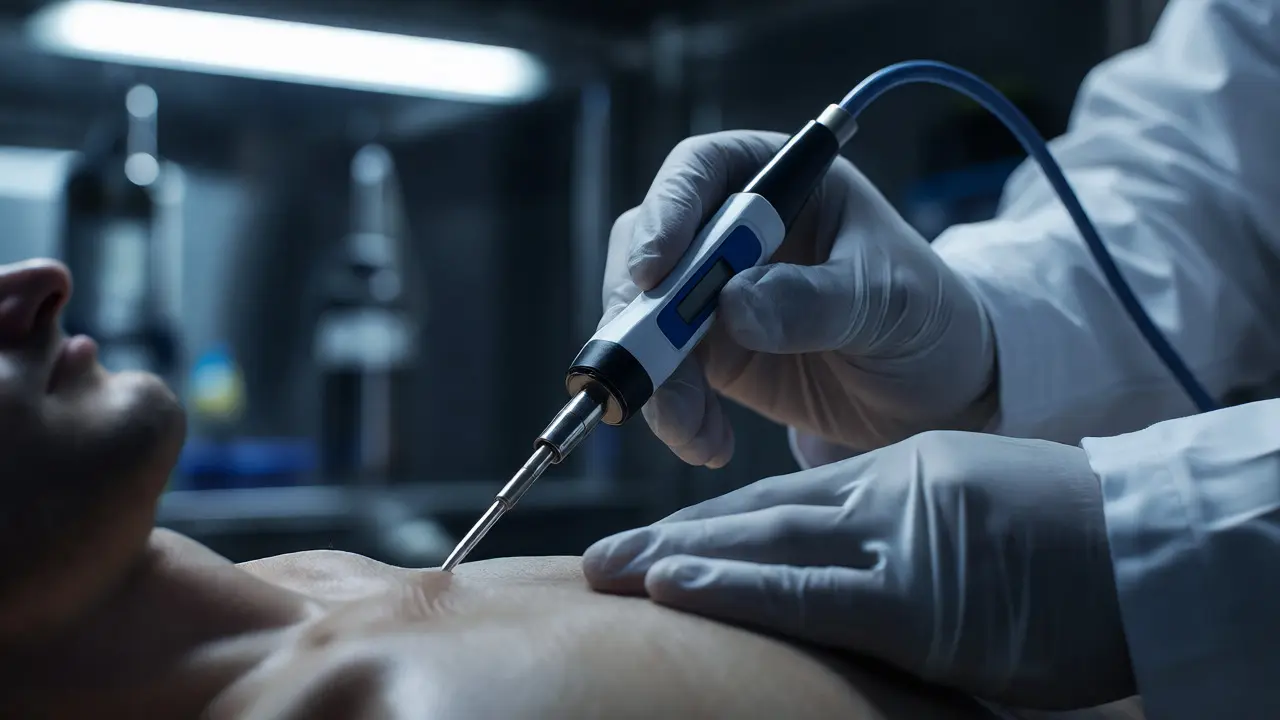
Algor Mortis is the fancy term for body cooling. After death, the body stops generating heat and begins to equilibrate with the environment. You might think you can just use Newton’s Law of Cooling, but human bodies aren't simple metal spheres. We have fat, muscle, blood flow remnants, and clothing. A common rule of thumb taught in intro classes is a drop of 1.5°F per hour, but that’s wildly inaccurate for most scenarios. In practice, you measure rectal temperature and compare it to ambient temperature. If the room is 70°F and the body is 90°F, you know death wasn't recent. But remember: if the body was found in a hot car, cooling slows dramatically. Always record the ambient temperature at the exact location where the body was found, not where it ended up after being moved.
Next is Livor Mortis, or lividity. Gravity pulls blood into the lowest parts of the body once the heart stops pumping. Initially, this is blanchable-press on the skin, and the redness disappears. That means death occurred within the last 6-12 hours. Once the blood settles and clots, it becomes fixed. Fixed livor usually sets in around 8-12 hours post-mortem, though this varies with body mass and temperature. If you see fixed livor on the back of a body found face-down, someone moved the body after death. This tells you two things: the PMI is likely over 12 hours, and the crime scene has been altered.
Then there’s Rigor Mortis. This is the stiffening of muscles due to chemical changes in ATP depletion. It starts small-in the jaw and eyelids-and spreads downward. Full rigor typically peaks around 12 hours and lasts until about 36-48 hours, when decomposition breaks down the tissues and the body goes limp again. Be careful here. Stress, exercise before death, and low temperatures can speed up or delay rigor. A person who ran a marathon before dying might enter rigor faster. Don't rely on rigor alone; use it to corroborate what algor and livor are telling you.
The Biological Clock: Vitreous Humor Chemistry
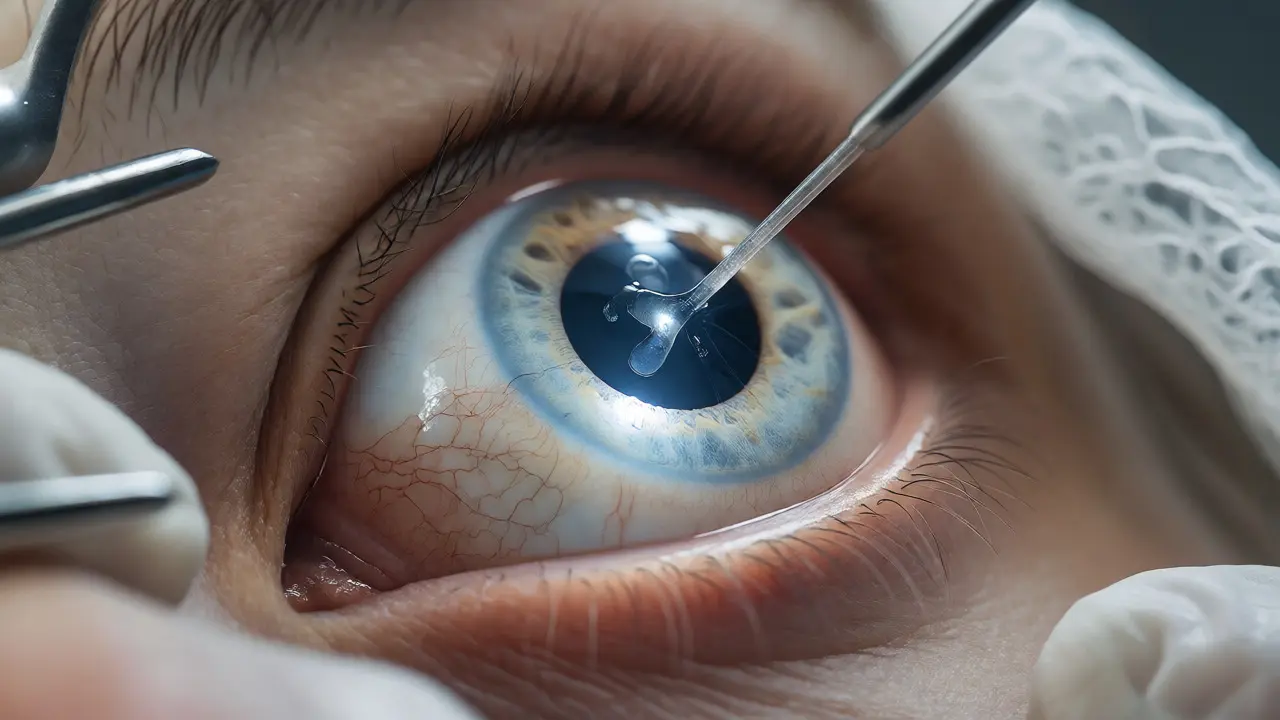
When the early signs fade or become ambiguous, you look inside the eye. The vitreous humor is the gel-like substance behind the lens. It’s protected from rapid environmental changes, making it a stable reservoir for electrolytes. Specifically, we look at potassium levels. After death, cells leak their contents. Potassium accumulates in the vitreous humor at a relatively steady rate. By measuring potassium concentration and knowing the ambient temperature, you can estimate PMI with reasonable accuracy up to 72 hours.
This method works best in temperate climates. Extreme heat accelerates the leakage, skewing results. Also, contamination matters. If the eye was damaged or exposed to rain, the sample is compromised. Always take samples from both eyes and average them if possible. While this doesn't give you a timestamp like a digital watch, it provides a solid scientific anchor when physical signs are confusing.
Entomology: Reading the Insect Timeline
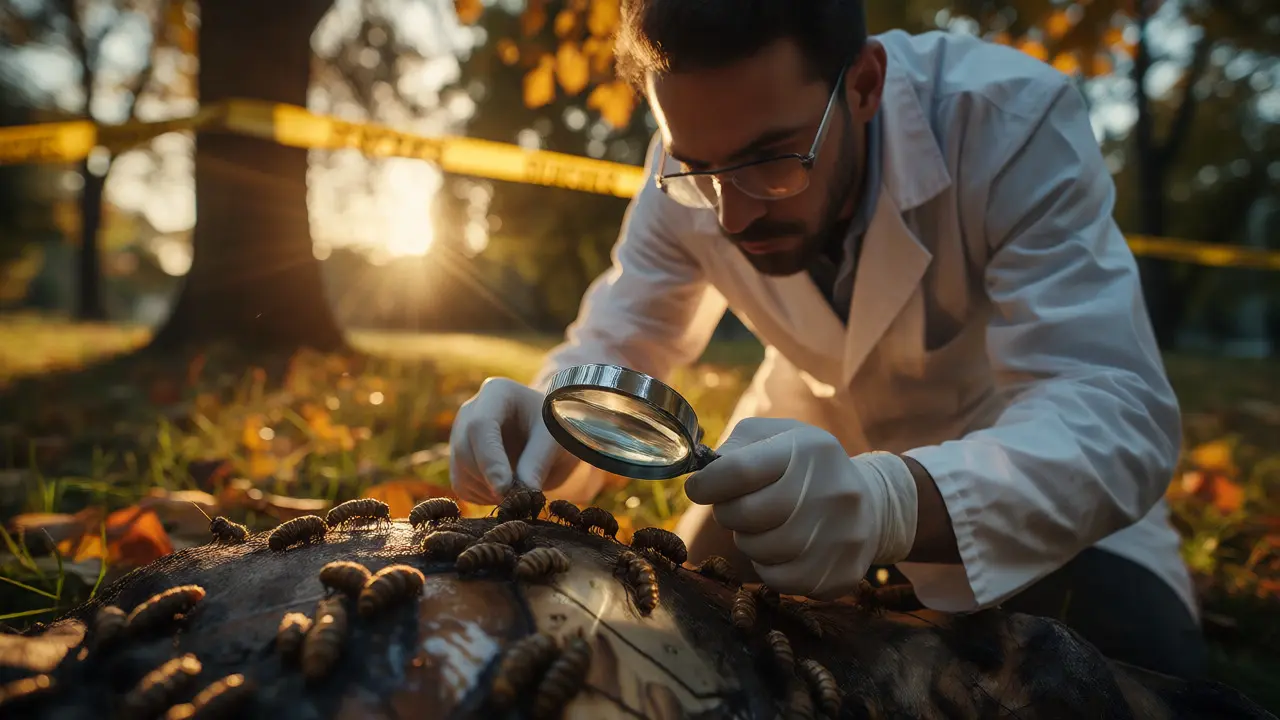
If the body is beyond 48 hours, insects become your primary witnesses. Blowflies are often the first to arrive, sometimes within minutes of death. They lay eggs in natural openings-eyes, nose, mouth. From those eggs hatch larvae (maggots), which feed, grow, and eventually pupate. Each stage of development takes a specific amount of thermal energy, measured in Accumulated Degree Hours (ADH).
Here’s how you use it: collect maggots from the body and determine their species and developmental stage. Then, gather weather data for the area since the estimated time of death. Calculate the ADH required for those maggots to reach their current size. If the weather was unusually cold, the bugs grew slower, meaning the body has been dead longer than the maggot size suggests. Conversely, hot weather speeds up growth. Forensic entomologists can narrow PMI windows significantly, even in advanced decomposition stages. Just remember: different species arrive at different times. Blowflies come first; beetles come later to eat the dried remains. Identifying the species correctly is critical.
Advanced Decomposition and Environmental Context
Beyond a few days, the body enters active decay. Bacteria from the gut break down tissues, releasing gases and fluids. This stage is highly variable. A body submerged in water decomposes differently than one buried in soil. Water cools the body and limits oxygen, slowing aerobic bacteria but allowing anaerobic ones to thrive. Burial protects against scavengers and insects but introduces soil microbes and moisture issues.
You must also consider scavenging. Dogs, coyotes, and birds can scatter remains, making it hard to assess decomposition uniformly. If you see gnaw marks, note them-they indicate the body was accessible to animals, which implies it wasn't sealed in a basement or trunk. Additionally, adipocere formation (soapification) can preserve bodies in wet environments, creating a waxy substance that halts further decay. Finding adipocere suggests the body has been in a moist environment for weeks or months.
Putting It All Together: Triangulation Strategy
No single method gives you the answer. You combine them. Start with the scene: ambient temp, humidity, wind. Check the body: temperature, livor, rigor. Sample the vitreous if available. Collect insects if present. Look for clues in the stomach contents-undigested food can place death within 2-4 hours of the last meal, if you know when that meal was eaten.
For example, imagine a body found in a park in September. Ambient temp is 65°F. Algor suggests 12 hours. Livor is fixed, suggesting >12 hours. Rigor is complete, suggesting 12-24 hours. Maggots are in the second instar stage, requiring 24 hours of warmth. Stomach contents show partially digested pizza, and the family reported he ate pizza at 8 PM. Triangulating this, you conclude death occurred shortly after 8 PM, roughly 16-20 hours prior. Notice how each piece supports the others. If one contradicted the rest, you’d re-evaluate-maybe the body was moved from a colder location, altering the cooling rate.
How accurate is postmortem interval estimation?
Accuracy depends on the time elapsed and methods used. For the first 24 hours, combining algor, livor, and rigor can narrow the window to ±2-4 hours. Beyond that, using entomology and vitreous humor chemistry can narrow it to ±12-24 hours. Without context, estimates can vary by days.
Does clothing affect body cooling rates?
Yes, significantly. Clothing acts as insulation, trapping heat and slowing algor mortis. A body wrapped in a blanket may cool much slower than a naked one. Always account for clothing layers when calculating cooling curves.
What is the role of stomach contents in PMI?
Stomach contents help establish a relative timeline based on digestion rates. Solid foods take 2-4 hours to leave the stomach. If undigested food is found, death likely occurred within that window after eating. Liquids empty faster, so they are less reliable.
Can drugs affect rigor mortis?
Yes. Drugs that cause convulsions or high stress before death deplete ATP rapidly, accelerating rigor mortis. Conversely, sedatives might delay its onset. Always review toxicology reports alongside physical findings.
How does temperature influence insect development?
Insects develop based on accumulated heat, not just time. Warmer temperatures speed up larval growth, while cold slows it. Forensic entomologists use Accumulated Degree Hours (ADH) to adjust for local weather conditions when estimating PMI.