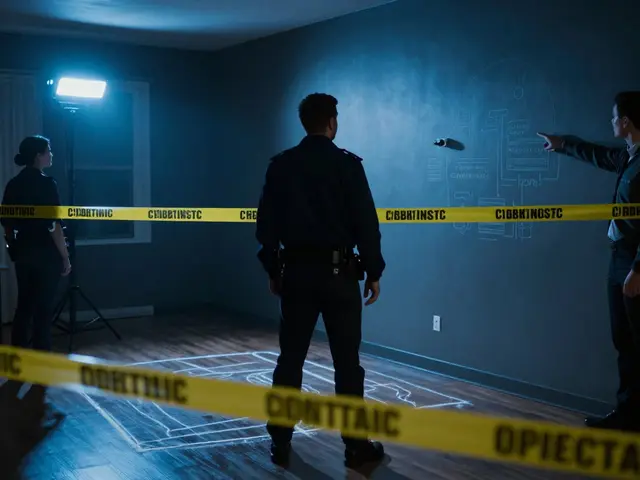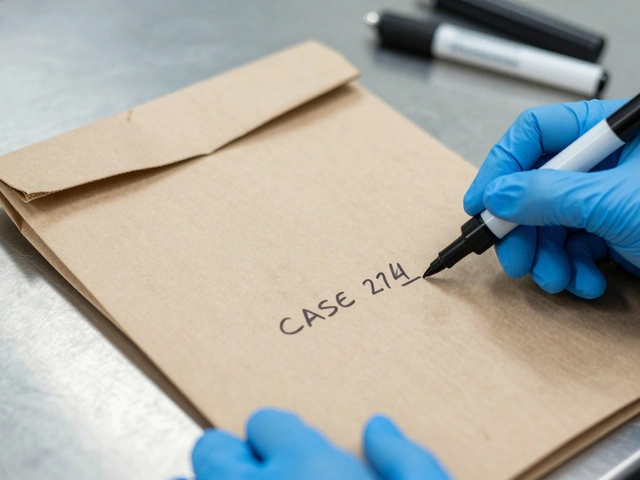
Imagine a jury hearing the defense attorney argue that your blood sample was swapped in the dark. It sounds like a plot from a crime thriller, but it happens more often than you’d think. The culprit isn’t always a corrupt officer; sometimes it’s a sticky label that peeled off, a temperature spike in a poorly ventilated closet, or a logbook entry made three days late. When Evidence Integrity is the state of physical proof remaining unchanged and authentic from collection to court presentation, the storage facility is the silent guardian. If the room fails, the case often does too. The core problem isn’t just about keeping things safe from thieves. It’s about preserving the scientific validity of the item. A DNA swab left in a humid environment degrades. A digital hard drive stored near a strong magnetic field loses data. These aren’t hypotheticals; they are documented causes for suppressed evidence in appellate courts. To prevent this, you need a system where every variable is controlled, documented, and auditable. ### Key Takeaways
- Chain of Custody relies on unbroken documentation and physical security, not just locked doors.
- Environmental controls (temperature and humidity) are critical for biological and chemical evidence.
- Digital evidence requires isolation from electromagnetic interference and specific media handling protocols.
- Regular audits and standardized logging software reduce human error by up to 40% compared to paper logs.
- Facility layout should separate volatile, hazardous, and routine items to minimize cross-contamination risks.
The Physical Foundation: Security and Access Control
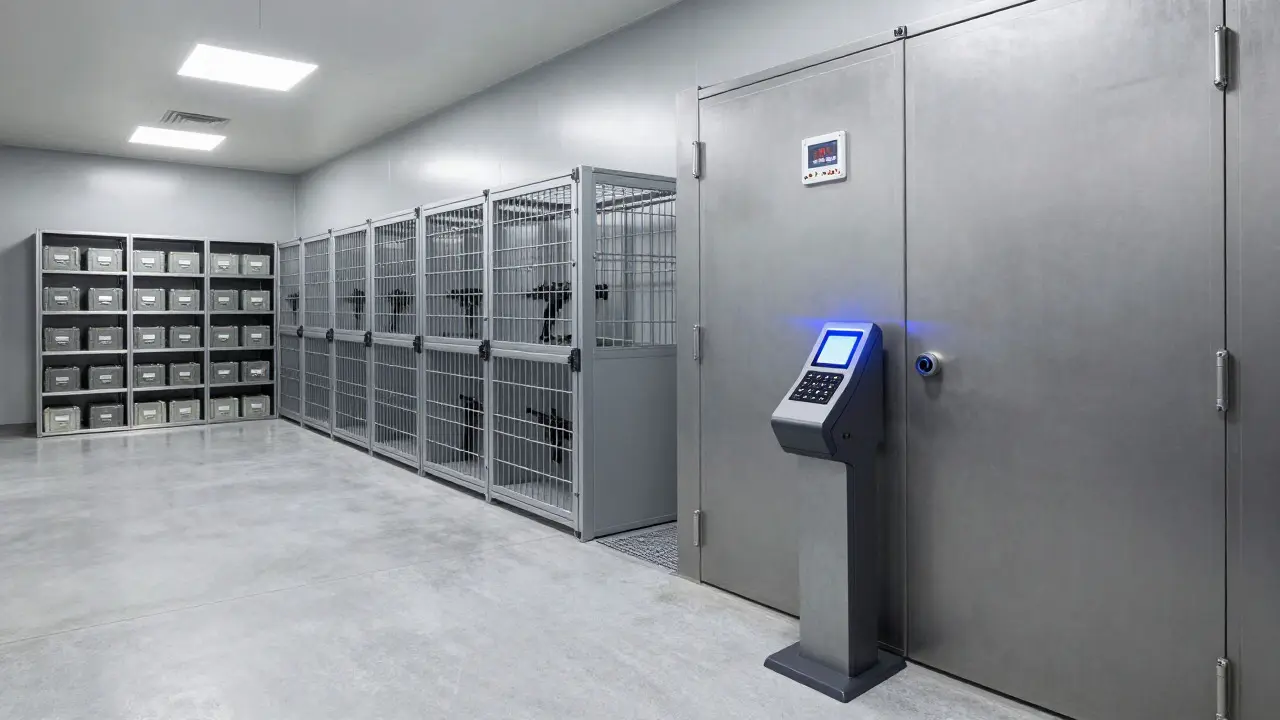
Security starts before anyone walks through the door. The Evidence Storage Facility is a dedicated space designed to preserve the legal and scientific value of seized items. It must be distinct from general office spaces. Why? Because foot traffic brings risk. Every person who enters is a potential link in the Chain of Custody that tracks the transfer and location of evidence throughout its lifecycle.
You need layered access control. First, there’s the perimeter: a keypad or biometric scanner at the main entrance. This creates a digital timestamp of who entered and when. Second, internal zones. High-value items like cash, jewelry, or firearms shouldn’t sit next to trash bags of drug paraphernalia. Use separate cages or rooms with individual locks. If an investigator needs to retrieve a single item, they shouldn’t have to open fifty other boxes. This reduces the chance of accidental damage or misplacement.
Lighting matters more than people realize. You need bright, consistent lighting without UV exposure. UV light can degrade certain dyes and plastics over time, altering the appearance of clothing or documents. Standard LED fixtures with color temperatures around 4000K provide neutral white light that doesn’t shift colors. Avoid fluorescent bulbs if possible, as their flicker can affect sensitive digital displays during inspection and may contain mercury, which is a hazard if a bulb breaks near delicate items.
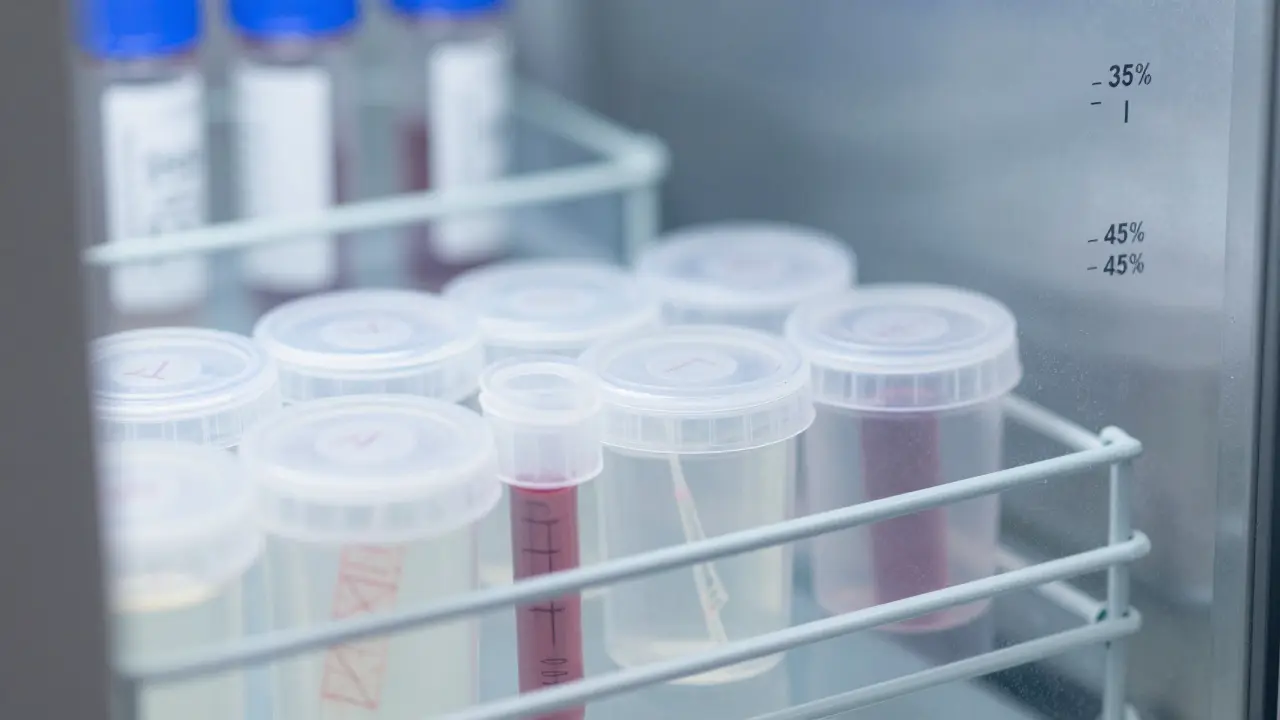
This is where most small facilities fail. They treat evidence storage like a warehouse. But a warehouse stores bricks; an evidence room stores life stories. Biological evidence is the most fragile. DNA, RNA, and proteins break down when exposed to heat and moisture. For long-term storage of biological samples, aim for a stable temperature between 68°F and 72°F (20°C-22°C) and relative humidity between 35% and 45%.
Why these numbers? Higher humidity promotes mold growth on paper documents and accelerates oxidation on metals. Lower humidity can cause paper to become brittle. Consistency is key. Sudden swings are worse than slightly off-target steady states. Install digital hygrometers and thermometers in multiple locations within the room. Don’t rely on a single sensor. If one breaks, you might not know until the evidence is already compromised.
For chemical evidence, like drugs or toxicology samples, volatility is the enemy. Some substances evaporate easily. Store them in sealed containers rated for vapor containment. If you’re storing flammable liquids, follow OSHA guidelines for secondary containment basins. This isn’t just about safety; it’s about preventing contamination of other items. A spill of acetone can dissolve labels on neighboring boxes, breaking the chain of custody visually if not physically.
Digital evidence has changed the game. You don’t just store phones; you store terabytes of data on drives, servers, and cloud snapshots. The biggest threat here isn’t theft; it’s alteration. Even turning a phone on can change file timestamps. Therefore, digital evidence requires a unique storage protocol.
Use Faraday bags or cases for mobile devices. These shield the device from radio waves, preventing remote wiping or data sync. Once inside, the device is effectively offline. For larger drives, use write-blockers to ensure no data is added or removed during examination. Store these items away from strong magnetic fields. Keep them at least six feet away from large speakers, MRI machines, or industrial motors.
Power is another factor. Unstable power can corrupt SSDs. Use uninterruptible power supplies (UPS) for any active preservation equipment. If you’re imaging data, do it in a controlled area with minimal static electricity. Anti-static mats and wrist straps are non-negotiable. A single static discharge can fry a circuit board, rendering weeks of investigation useless.
The best physical security means nothing if the paperwork is sloppy. The Chain of Custody Form is a legal document recording every person who handled evidence and the reason for transfer. It must be filled out immediately upon receipt. No exceptions. If you pick up a bag from a scene, log it before you leave the vehicle.
Common errors include:
Your facility layout dictates your efficiency. A common mistake is mixing intake, storage, and retrieval in one chaotic space. Create a clear flow. Entry → Intake/Logging → Storage → Retrieval → Exit. One-way traffic prevents bottlenecks and reduces the chance of two officers crossing paths with different items, causing confusion.
Labeling is part of the workflow. Use standardized barcodes or QR codes. Each code should link directly to the database entry. If a box falls, the barcode survives longer than a paper label. Apply labels to the top and sides of containers. Use waterproof, tamper-evident tape. If someone opens a box, the tape should show signs of breaking. This provides visual proof that the seal was intact since the last check-in.
Consider the weight distribution. Heavy items go on lower shelves. Light, fragile items go higher. Use shelving units rated for the load. Overloaded shelves sag, potentially crushing items below or tipping over. In a seismic zone like Portland, Oregon, secure all shelving to the wall. An earthquake shouldn’t turn your evidence room into a pinball table.
You can’t manage what you don’t measure. Conduct random spot checks monthly. Pick five random items and verify their physical condition against the database record. Check the seals, the labels, and the environmental logs. If you find a discrepancy, investigate immediately. Was it a logging error? A broken seal? A temperature spike?
Keep a log of these audits. Trends will emerge. Maybe one section of the room consistently has higher humidity. Maybe one officer frequently makes logging errors. Address the root cause, not just the symptom. Training is crucial. New staff should shadow experienced personnel for at least two weeks before handling evidence alone. Certification programs from bodies like the International Association for Identification (IAI) provide structured learning paths that cover both technical and legal aspects.
Even well-intentioned teams make mistakes. Here are the top three traps that compromise integrity:
If you’re managing an evidence room, start with an audit today. Walk through your space with a checklist. Note every environmental reading, every broken seal, and every ambiguous label. Fix the easy wins first: replace damaged lights, tighten loose shelves, and update your labeling templates. Then, look at your technology. Is your current logging method prone to error? If so, evaluate digital property management systems. The investment pays off in reduced litigation risk and faster case resolution.
Finally, train your team. Hold a quarterly workshop on chain of custody best practices. Share recent case examples where poor storage led to dismissed charges. Make it real for them. When everyone understands that their job isn’t just "storing stuff" but "preserving justice," the culture shifts. And that cultural shift is the strongest barrier against evidence integrity failures.
Retention periods vary by jurisdiction and case type. Generally, hold evidence until the statute of limitations expires plus any appeal period. For serious felonies, this can be decades. Consult local statutes and department policy. Digital evidence may require longer retention due to evolving forensic capabilities. They are often used interchangeably, but strictly speaking, the chain of evidence refers to the physical item itself, while the chain of custody refers to the documentation and procedural steps tracking that item. Both must be flawless for the evidence to be admissible. Only for very short periods and low-risk items. Regular closets lack climate control, dedicated security, and proper ventilation. Long-term storage in such areas increases the risk of degradation and unauthorized access, making the evidence vulnerable to challenge in court. Perishable evidence, like fresh food or plants, should be photographed and video-recorded immediately. Then, process it quickly for sampling or testing. If long-term storage is needed, freeze it in labeled, sealed containers. Document the freezing process to prove no contamination occurred. A Faraday bag is a conductive pouch that blocks electromagnetic signals. It prevents wireless communication from digital devices like phones or tablets. This stops remote wiping, data syncing, or location tracking, preserving the data exactly as it was at the time of seizure.Environmental Controls: Temperature and Humidity
Digital Evidence: The Invisible Threats
Documentation and the Chain of Custody
Digital logging systems solve many of these issues. Modern property room software allows barcode scanning. When an item is checked in, the system records the user ID, time, and location automatically. When it’s checked out, it prompts for the purpose and expected return date. This creates an immutable audit trail. Courts view digital trails more favorably than handwritten logs because they are harder to alter without leaving a trace.
Layout and Workflow Efficiency

Auditing and Continuous Improvement
Evidence Type
Primary Risk
Temperature/Humidity
Special Handling
Biological (DNA/Blood)
Degradation/Mold
68-72°F / 35-45% RH
Paper packaging, desiccants, cool storage
Digital (Phones/Drives)
Data Alteration/EMF
Standard Office
Faraday bags, anti-static mats, write-blockers
Firearms
Rust/Misfire
Low Humidity <40%
Unloaded, trigger guard covers, separate cage
Chemical (Drugs)
Evaporation/Reaction
Cool/Dark
Sealed glass/plastic, secondary containment
Documents
Fading/Tears
Stable Temp/Low Light
Acid-free folders, flat storage
Common Pitfalls to Avoid
Next Steps for Your Facility
How long should evidence be kept?
What is the difference between chain of custody and chain of evidence?
Can I store evidence in a regular office closet?
How do I handle perishable evidence?
What is a Faraday bag and why is it needed?