You’ve probably seen those little plastic cups flying around after a shotgun blast. To the average person, they’re just litter on the driveway. But to a forensic ballistics expert, that tiny piece of plastic is a goldmine of evidence. It’s called a shotgun wad, and it holds clues about where the shot came from, who fired it, and even when the ammunition was made.
Think of it like finding a receipt in your pocket. The receipt doesn’t tell you what you bought, but it tells you which store you visited, what time you were there, and sometimes exactly which register rang up your purchase. Shotgun wads work similarly. They aren’t just generic fillers; they are engineered components with specific design features, material compositions, and manufacturing marks that can link a crime scene to a specific box of shells.
Why Plastic Wads Matter More Than You Think
For decades, shotgun shells used cardboard or felt wads. These materials degraded quickly, especially if left outdoors. If a shooting happened in the rain, those old-school wads would turn into mush within hours. Today, almost all modern ammunition uses plastic wads. This shift changed everything for investigators.
Plastic wads are durable. They survive weather, rough handling, and time. A wad found three weeks after a drive-by shooting can still be analyzed just as effectively as one collected immediately. This durability gives investigators a longer window to solve cases.
But durability isn’t the only reason these wads are valuable. Manufacturers compete on performance. To make their shells shoot better, they tweak the shape of the wad, the type of plastic, and the way the pellets are held together. These tweaks create unique signatures. When you collect wads at a scene, you’re collecting a fingerprint of the manufacturer’s current production run.
The Anatomy of a Shotgun Wad
To understand how we identify sources, you first need to know what you’re looking at. A standard modern wad isn’t a single solid block. It’s usually a multi-part system designed to do several jobs at once:
- The Cup: This part separates the powder from the shot. It seals the gas behind the shot column so nothing escapes backward.
- The Petals (or Skirt): These flexible fingers collapse down over the pellets as the shot leaves the barrel. They keep the shot tight and prevent the plastic cup from scattering wildly.
- The Cushion: Some wads have a soft foam or rubber insert between the cup and the petals to protect the lead or steel pellets from deforming under pressure.
Each of these parts offers different investigative clues. The cup often has mold numbers. The petals might have specific ribbing patterns. The cushion material might be a proprietary blend unique to one brand. By examining each part separately, experts can narrow down possibilities significantly.
Reading the Mold Marks: The Manufacturer’s Signature
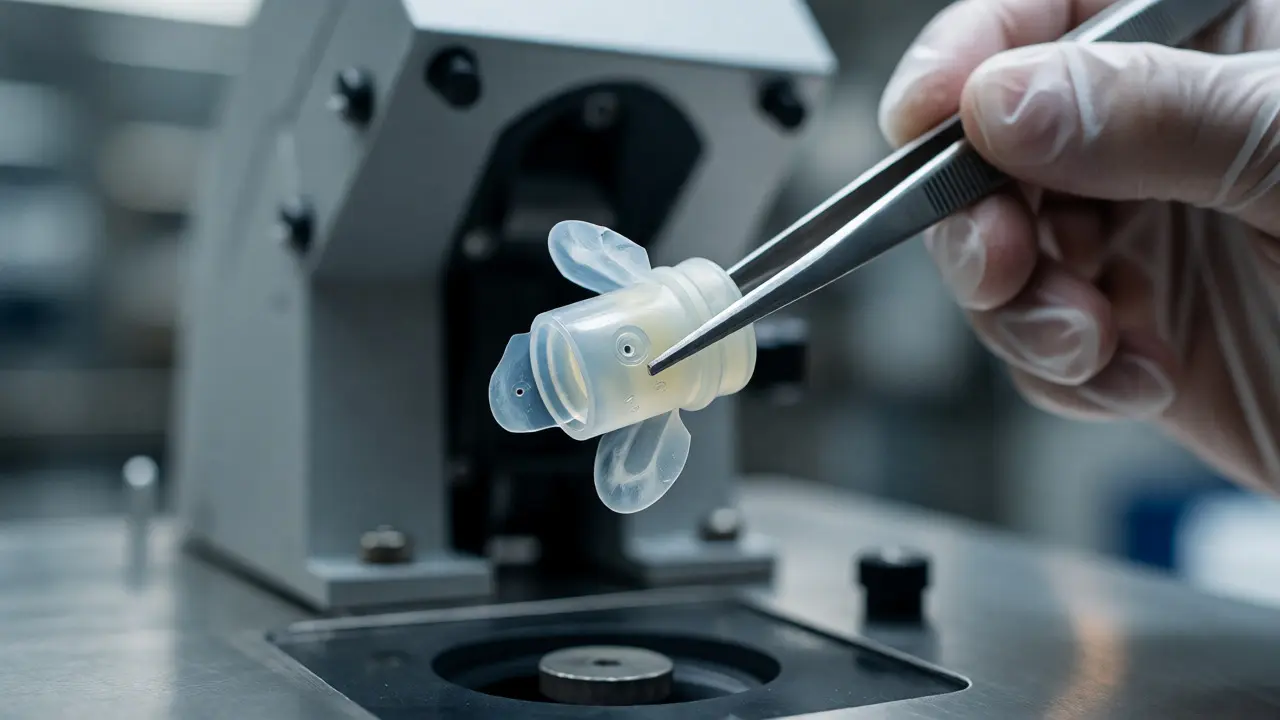
If you pick up a shotgun wad and look closely, you’ll likely see tiny numbers or letters molded into the plastic. These aren’t random scratches. They are mold cavity identifiers. Every factory uses multiple molds to produce millions of wads per day. Each mold cavity has a unique ID stamped into it during manufacturing.
Why does this matter? Because manufacturers rotate molds. If a mold wears out, it gets replaced. If a company changes its supplier, the mold IDs change. Forensic databases track these IDs over time. If you find a wad with mold ID “42B” and know that Remington used that specific ID only between March 2019 and August 2020, you’ve just placed a timeline on the ammunition.
This technique works best with major brands like Remington, Winchester, Federal, and Fiocchi. Smaller, boutique ammo makers might not use distinct mold IDs, or they might buy their wads from a third-party supplier. In those cases, the mold mark might point to the wad manufacturer rather than the shell loader. That’s still useful-it narrows the field-but it requires more digging.
Material Composition: Chemical Fingerprinting
Not all plastics are created equal. The most common material for wads is polyethylene, but there are dozens of variations. High-density polyethylene (HDPE) feels stiff. Low-density polyethylene (LDPE) feels waxy and flexible. Some premium shells use copolymers that offer specific elasticity or heat resistance.
Laboratories use techniques like Fourier-transform infrared spectroscopy (FTIR) to analyze the chemical makeup of a wad. FTIR shines infrared light on the sample and measures how it absorbs the energy. Different polymers absorb light differently, creating a spectral signature. It’s like a barcode for molecules.
Here’s where it gets interesting. Two shells might look identical to the naked eye-same color, same size, same brand logo. But if one uses a virgin polymer and the other uses recycled plastic, their FTIR spectra will differ slightly. Recycled plastic often contains trace additives or degradation products that show up clearly under lab analysis. This allows experts to distinguish between batches that otherwise seem identical.
Design Variations and Brand Specifics
Every major ammunition company has its own design philosophy. Let’s look at a few real-world examples:
| Brand | Wad Type | Distinctive Feature | Investigative Value |
|---|---|---|---|
| Remington | Power Piston | Rigid piston with thick skirt | Highly distinctive silhouette; easy to identify by shape alone. |
| Winchester | Super-X | Flexible petals with deep ribs | Petal count and rib depth vary by gauge and load weight. |
| Federal | Flite Control | Banded pellet design (no traditional wad) | Lack of wad fragments suggests specific high-end target loads. |
| Fiocchi | Standard Plastic | Thin, lightweight construction | Often lacks deep mold marks; relies more on material analysis. |
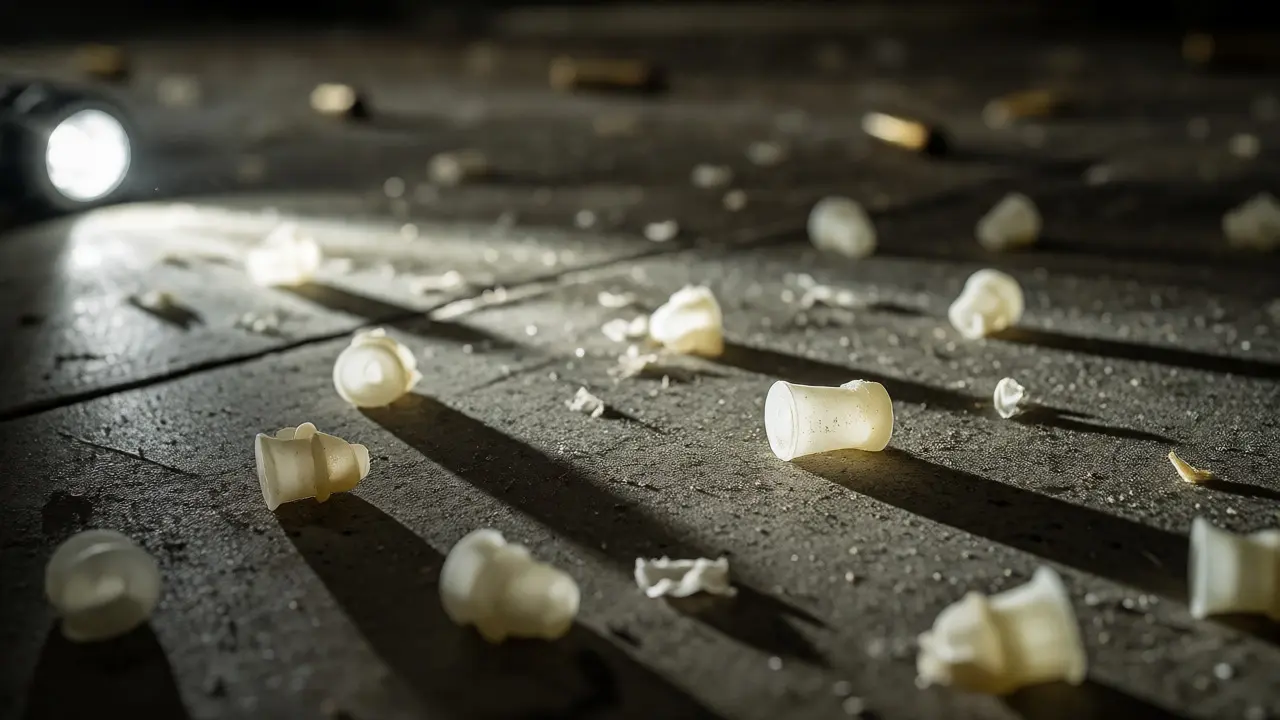
Notice how Remington’s Power Piston wads are instantly recognizable. Their rigid structure means they don’t collapse fully, leaving a distinct footprint on the ground. If you find a wad that looks like a small plastic thimble, chances are high it came from a Remington shell. Conversely, Winchester Super-X wads tend to shred more because their petals are thinner and more flexible. Finding shredded petals versus an intact cup helps determine both the brand and the distance of the shot.
Collecting and Preserving Evidence
So, you’re the first officer on the scene. What do you do? First, don’t step on them. Plastic wads are small, often camouflaged by dirt or grass. Use a flashlight at a low angle to spot shadows cast by the wads.
Once you spot one, wear gloves. Why? Because oils from your hands can contaminate the surface, potentially interfering with later chemical tests. Pick it up carefully. If it’s broken, try to collect all pieces. Sometimes, two halves of a wad fit back together like a puzzle. If they match, you know they came from the same shot string.
Place each wad in a separate paper envelope. Do not use plastic bags. Trapped moisture in plastic can promote mold growth or cause certain plastics to degrade faster over long storage periods. Label the envelope with the exact location where it was found. Distance and direction relative to the shooter matter. Wads travel differently depending on wind and velocity. Mapping their spread pattern can help reconstruct the firing position.
Limitations and Pitfalls
No forensic tool is perfect, and wad examination has limits. One big issue is contamination. If a shooting happens in a busy area, stray wads from previous events could mix with fresh ones. Always check for weathering. Fresh wads are bright and clean. Old ones are faded, brittle, or covered in mud. Document the condition of every piece.
Another challenge is generic ammunition. Many stores sell house-brand shells that are actually loaded by larger companies. For example, a store’s “private label” 12-gauge birdshot might be manufactured by Federal. Without knowing the specific contract details, you might misidentify the source. This is why cross-referencing with local sales records is crucial. Did the suspect buy bulk packs of that brand recently?
Finally, remember that wads prove association, not identity. Finding a Remington wad at a scene links the event to Remington ammunition. It doesn’t prove John Doe owns a box of Remington. However, if John Doe’s trash contains empty boxes of the same lot number, and his gun fires the same gauge, the circumstantial case becomes much stronger.
Putting It All Together
Shotgun wad examination is a blend of visual inspection, chemical analysis, and database matching. It turns trash into testimony. Next time you see a plastic cup on the pavement, look closer. It might just hold the key to solving a mystery.
Can shotgun wads be reused?
No, shotgun wads are single-use components. Once fired, the plastic undergoes stress and deformation. Even if they look intact, the structural integrity is compromised, making them unreliable for reloading. Reloaders always use new wads for each shell assembly.
How far do shotgun wads typically travel?
The distance varies widely based on choke, load, and wind. Lighter wads may travel 20-30 yards, while heavier or aerodynamic designs can go 50 yards or more. Investigators usually search a radius of up to 100 yards to ensure they capture the full pattern.
Do biodegradable wads affect forensic analysis?
Yes. Biodegradable wads break down faster in environmental conditions. They may lose their mold markings or crumble before collection. Analysts must act quickly when dealing with scenes involving eco-friendly ammunition, as the evidence window shrinks significantly compared to traditional plastic.
What is the difference between a wad and a sabot?
A wad is used in shotshells to separate powder from pellets and protect the bore. A sabot is a specialized carrier used in rifled barrels for slugs. Sabots split apart after exiting the barrel to release the slug. While both are plastic components, their shapes and functions are distinct enough that experts rarely confuse them.
Can mold numbers be faked?
It is theoretically possible but highly unlikely in practice. Manufacturing molds are expensive and complex. Counterfeiters usually focus on the entire cartridge casing rather than individual internal components. Furthermore, the combination of mold marks, material composition, and dimensional measurements makes faking a convincing wad difficult and costly.