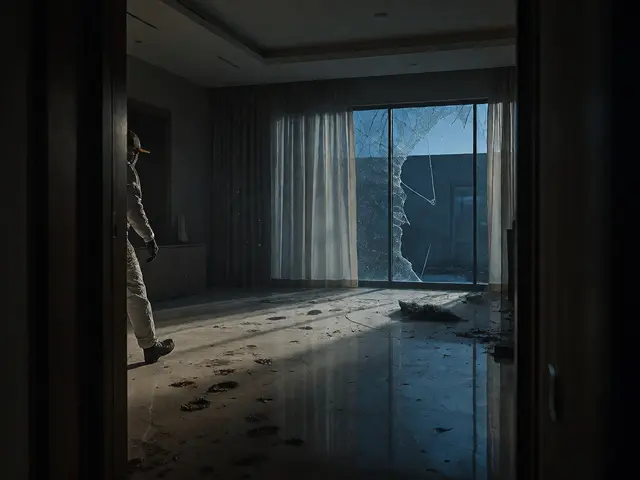
You walk into a room. The layout tells you more than the fingerprints on the glass. In sexual offense cases, the "how" often matters more than the "who." Why did the offender take that specific item? Why was the victim positioned that way? These aren't random acts of chaos; they are messages. They reveal the internal script running in the perpetrator's mind. If you want to build an accurate profile, you have to look past the violence and look at the fantasy.
Paraphilia is a pattern of intense and recurrent sexual arousal from objects, situations, or individuals that may cause distress or impairment. It’s not just about having a kink. It’s about rigidity. When a paraphilia drives a crime, it dictates the behavior. The offender isn’t just trying to hurt someone; they are trying to complete a ritual. This distinction changes everything for investigators. You stop looking for a motive like money or anger, and start looking for a psychological need.
The Difference Between Fantasy and Compulsion
Most people have fantasies. But for many sexual offenders, fantasy becomes a blueprint. The gap between a daydream and a committed act is often bridged by opportunity and disinhibition. However, when we talk about escalation, we’re talking about tolerance. Just like a drug addict needs more of the substance to get high, a paraphiliac often needs more intensity, more risk, or more novelty to achieve the same level of arousal. This is the engine that drives serial offending.
Think about it this way: if the first crime involved a simple grab, the second might involve a weapon. The third might involve binding. The fourth might involve torture. Each step up is an attempt to recapture the rush that the previous act no longer provided. Recognizing this trajectory helps profilers predict what the next crime will look like before it even happens.
Mapping the Escalation Ladder
Escalation isn't always linear, but it usually follows a pattern of increasing complexity and danger. We can break this down into stages that help categorize the offender’s current state.
- Experimentation: The offender tests boundaries. Often low-risk, such as voyeurism or minor touching. They are checking if their fantasy works in reality.
- Repetition: The act is repeated with similar parameters. The offender gains confidence. They start selecting victims who fit their specific type.
- Modification: Small changes occur. Maybe they add a prop, change the location, or alter the sequence of events. This signals that the original stimulus is fading.
- Crisis: The offender loses control. Violence increases. The time between offenses (the cooling-off period) shrinks. This is the most dangerous phase because the offender is desperate to recapture the feeling.
If you see a crime scene where the offender spent twenty minutes arranging the victim’s hair after death, you’re likely dealing with a disorganized or mixed offender who is deeply embedded in their fantasy world. If the body was dumped quickly and roughly, the focus might be more on the act itself rather than the ritual.
Common Paraphilic Patterns in Crime Scenes
Not all paraphilias manifest the same way. Some leave distinct markers. Let’s look at three common types that frequently appear in forensic profiles.
| Paraphilia Type | Primary Arousal Source | Crime Scene Indicator | Victim Relationship |
|---|---|---|---|
| Voyeurism | Watching without consent | No physical contact; hidden vantage points; photos taken | Stranger or acquaintance unaware of presence |
| Exhibitionism | Being seen | Sudden appearance; public setting; quick escape | Stranger in public space |
| Fetishism | Inanimate object | Specific clothing removed or damaged; object left behind | Object is central; victim is secondary |
| Sadomasochism | Pain/power exchange | Bondage; specific injury patterns; consensual-looking setup | Often known or selected for compliance |
Fetishism is particularly tricky. An offender might steal only one shoe from each victim. To a layperson, this looks like robbery gone wrong. To a profiler, it’s a signature. The shoe isn’t valuable for its resale price; it’s valuable because it carries the scent or the shape of the victim. The theft is part of the sexual gratification.

The Role of Cognitive Distortion
How does someone justify these actions? Cognitive distortions. These are mental shortcuts that allow the offender to ignore moral implications. Common examples include "minimization" (it wasn’t that bad) or "entitlement" (I deserve this). During interviews, listen for these phrases. If a suspect says, "She led me on," they are using distortion to shift blame. This protects their ego and allows them to continue offending without feeling guilt.
Profilers use these distortions to predict interview responses. If you know the offender uses minimization, don’t ask "Did you hurt her?" Ask "How much did she struggle?" The answer will reveal their perception of the event, which is often skewed toward their own comfort.
Tactical vs. Organized: Where Does Fantasy Fit?
The old FBI dichotomy of organized vs. disorganized is useful, but incomplete when paraphilias are involved. A highly intelligent, organized offender can still be driven by chaotic, rigid fantasies. For example, a surgeon might commit crimes with surgical precision (organized) but require a very specific, bizarre ritual involving medical tools (paraphilic).
Look for the "signature" versus the "staging." Staging is what the offender wants you to see-maybe they moved the body to make it look like a burglary. Signature is what they *need* to do to satisfy the fantasy-maybe they posed the body in a specific way. Signature behaviors rarely change because they are tied to the core paraphilia. Staging behaviors change to confuse police. If you find a consistent pose across multiple scenes, you’ve found the signature. That’s your anchor.

Predicting Future Behavior
Can we predict the next move? Partially. By analyzing the escalation rate, we can estimate the time window. If the interval between crimes has dropped from six months to two weeks, the offender is in crisis. They are losing control. Expect the next crime to happen soon, possibly closer to home, and with higher violence.
Also, consider the victim selection. Has the type changed? If the offender started targeting young women and now targets older women, has the fantasy shifted? Or is the pool of available victims drying up? Sometimes, escalation isn’t about wanting more pain; it’s about taking risks because the easy targets are gone. This suggests the offender is becoming bolder, potentially operating in daylight or entering homes while others are present.
Practical Application for Investigators
So, how do you use this? First, document everything. Not just DNA and fibers, but the emotional context. Did the offender speak during the assault? What words did they use? Were there apologies? Threats? These verbal cues are windows into the paraphilia.
Second, look for the "missing pieces." In fetishistic crimes, something is always missing or added. A piece of jewelry, a strand of hair, a note. If you can’t explain why an item was taken, assume it has symbolic value. Third, map the geography. Paraphiliacs often have a "comfort zone." They feel safe near their home or work. As they escalate, they might venture further out, but the center of gravity remains. Plotting the crime scenes on a map often reveals a circle around a residence or workplace.
Finally, remember that profiling is probabilistic, not deterministic. We deal in likelihoods. A paraphilic drive makes certain behaviors more probable, but it doesn’t guarantee them. Context matters. Stressors like job loss, relationship breakdown, or substance abuse can trigger rapid escalation. Keep an eye on the life stressors of suspects, not just their history.
What is the difference between MO and signature in sexual offenses?
MO (Modus Operandi) is the method used to commit the crime and capture the victim. It is functional and can change as the offender learns. Signature is the unnecessary action done to satisfy an emotional or psychological need. It is ritualistic and tends to remain stable over time because it is tied to the underlying paraphilia.
Do all sexual offenders have a paraphilia?
No. Many sexual offenses are motivated by power, anger, or situational factors rather than a specific paraphilic interest. However, understanding paraphilias helps distinguish between opportunistic crimes and those driven by deep-seated psychological rituals, which aids in predicting recurrence and escalation.
How does escalation typically manifest in serial offenders?
Escalation usually manifests as increased violence, shorter intervals between offenses, increased risk-taking (such as attacking strangers instead of acquaintances), and greater complexity in the crime scene rituals. The offender seeks higher levels of stimulation to achieve the same psychological payoff.
Can paraphilias be treated to prevent reoffending?
Yes, cognitive-behavioral therapy and pharmacological interventions can manage paraphilic urges. Treatment focuses on reducing compulsive behaviors and correcting cognitive distortions. While it may not eliminate the paraphilia, it can significantly reduce the likelihood of acting on it, especially when combined with strict monitoring and lifestyle management.
Why is victim selection important in profiling?
Victim selection reflects the offender’s fantasy template. Changes in victim type can indicate shifts in the paraphilia, availability issues, or escalating desperation. Consistency in victim demographics suggests a rigid fantasy, while variation may suggest opportunism or a broadening of the offender’s criteria due to increased confidence or risk tolerance.