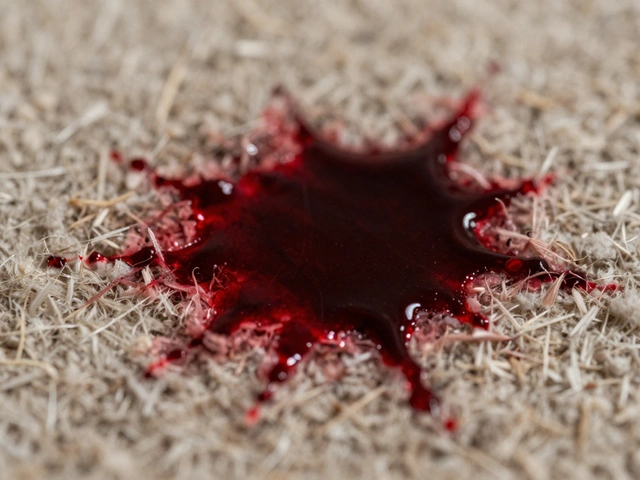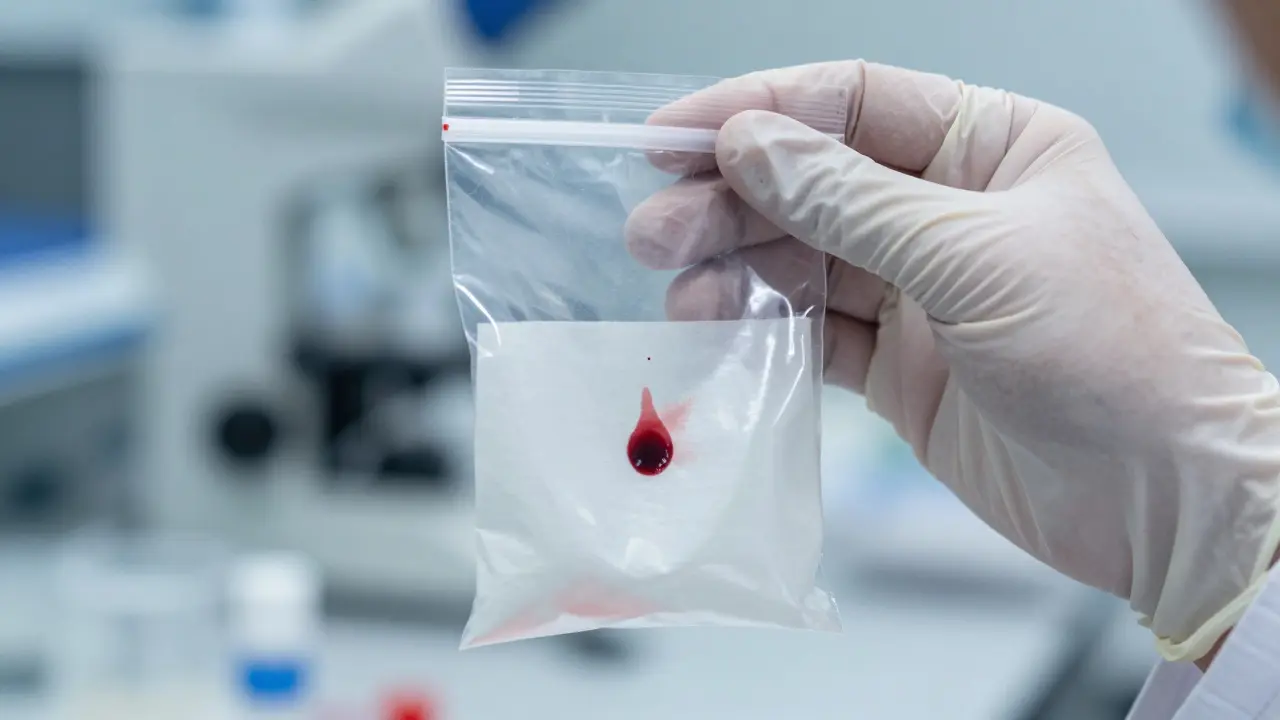
Imagine finding a single drop of blood on a crime scene. To most people, it looks like nothing more than a stain. But to a forensic scientist, that tiny spot holds enough genetic material to identify a suspect with near-certainty. The magic behind this identification is PCR amplification, a technique that takes microscopic amounts of DNA and multiplies them into millions of copies, making analysis possible.
In forensic labs, time and sample quality are often against you. Evidence might be degraded by heat, moisture, or age. PCR solves this by focusing on specific short regions of DNA, known as Short Tandem Repeats (STRs), and copying them repeatedly. This process turns a 'cold' case into a solvable one, allowing investigators to match evidence from a crime scene to a suspect’s profile in the Combined DNA Index System (CODIS).
The Core Mechanics of Polymerase Chain Reaction
Polymerase Chain Reaction is a laboratory method used to amplify a specific segment of DNA through repeated cycles of heating and cooling. It was developed in 1983 by Kary Mullis, who later won the Nobel Prize for this invention. The process relies on three main components: the template DNA, primers, and a heat-stable enzyme called Taq polymerase.
The cycle itself is straightforward but precise. It consists of three distinct steps repeated 25 to 35 times:
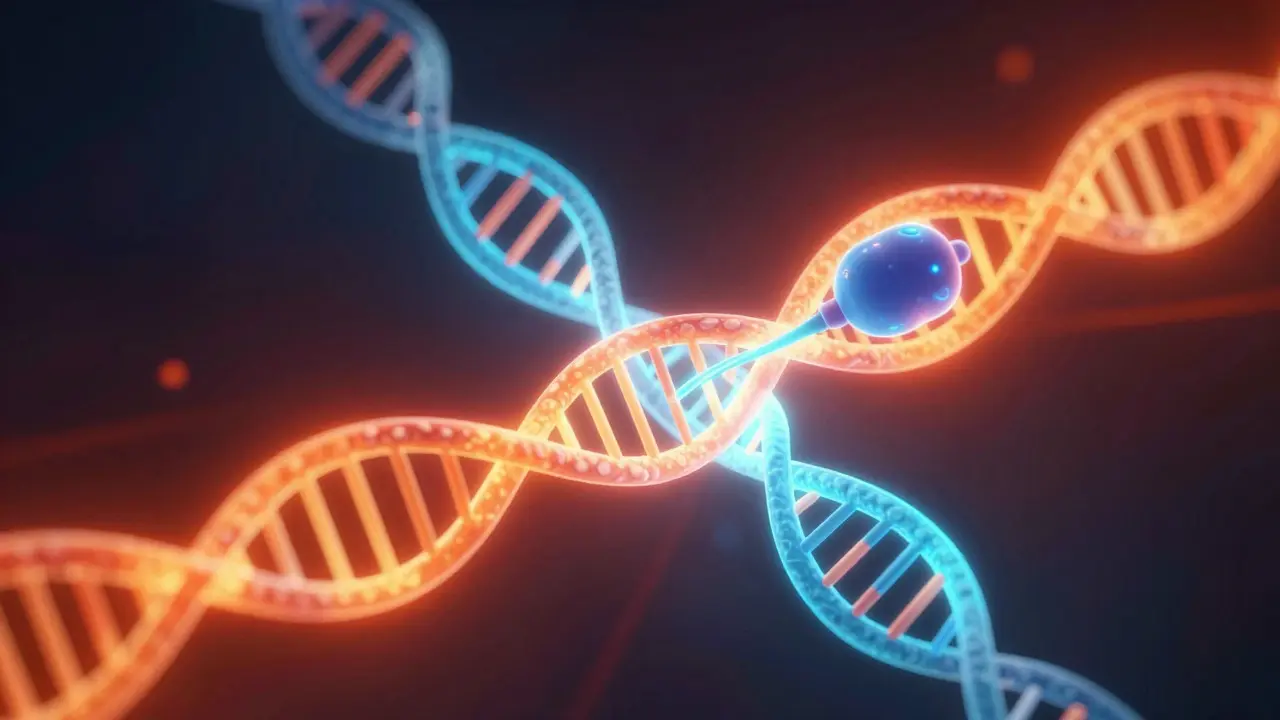
- Denaturation: The temperature rises to about 94-98°C. This breaks the hydrogen bonds holding the two strands of the DNA double helix together, separating them into single strands.
- Annealing: The temperature drops to around 50-65°C. Short sequences of DNA called primers bind to the target region. These primers define exactly which part of the genome gets copied.
- Extension: The temperature increases to 72°C. Taq polymerase attaches to the primers and builds new complementary strands, effectively doubling the amount of target DNA.
After just 30 cycles, you have over a billion copies of the original sequence. In forensics, this exponential growth is critical because it allows scientists to work with samples that contain only nanograms of DNA, sometimes as little as 50 picograms.
Why STRs Are the Gold Standard in Forensics
Not all DNA is created equal when it comes to identification. Forensic scientists focus on non-coding regions of the genome called Short Tandem Repeats (STRs). These are short sequences of 2-6 base pairs that repeat consecutively. For example, a sequence like AGAT might repeat 12 times in one person and 14 times in another.
The variation in the number of repeats between individuals makes STRs highly discriminatory. The FBI uses a core set of 20 STR loci for CODIS entries. Because these regions are non-coding, mutations here rarely affect an organism's health, meaning they remain stable across generations but vary significantly between unrelated individuals.
Compared to older methods like RFLP (Restriction Fragment Length Polymorphism), which required large, intact DNA fragments, STR analysis works well with degraded samples. This is why PCR-based STR profiling replaced RFLP in the early 1990s, revolutionizing how cold cases are handled today.
Challenges in Degraded and Mixed Samples
Real-world evidence is rarely perfect. A body found in a river or a weapon left in the rain exposes DNA to hydrolysis and oxidation. When DNA degrades, long fragments break into shorter pieces. If the target STR region is too far from the primer binding site, the fragment may not survive the denaturation step.
To combat this, forensic labs use mini-STR kits. These kits target shorter amplicons (the copied DNA segments), usually under 100 base pairs. This ensures that even heavily degraded samples yield usable data. However, there is a trade-off: shorter fragments can reduce the power of discrimination slightly compared to longer ones, so labs must balance sensitivity with specificity.
Mixed samples present another layer of complexity. If a hair shaft contains DNA from both the victim and the perpetrator, the resulting electropherogram will show overlapping peaks. Modern software uses probabilistic genotyping models to deconvolute these mixtures, estimating the contribution of each individual based on peak heights and allele frequencies in the population database.
From Lab Bench to Courtroom: Quality Control
For DNA evidence to hold up in court, the lab must prove that the results are accurate and reproducible. This is where strict quality control comes in. Every batch of PCR runs includes internal controls:
- Positive Controls: Known DNA samples added to ensure the reaction works.
- Negative Controls: Empty tubes to detect contamination.
- Size Standards: Ladders of known DNA lengths to calibrate the capillary electrophoresis instrument.
Laboratories also track the Limit of Detection (LOD) and Limit of Quantitation (LOQ). The LOD is the lowest amount of DNA that can be detected, while the LOQ is the lowest amount that can be quantified reliably. If a sample falls below the LOQ, the lab might report a 'partial profile' rather than a full match, which changes how the jury interprets the evidence.
| Feature | RFLP Analysis | PCR-STR Analysis |
|---|---|---|
| DNA Quantity Required | High (micrograms) | Low (nanograms/picograms) |
| DNA Integrity Requirement | Must be intact and long | Works with degraded fragments |
| Time to Complete | Weeks | Hours to days |
| Discriminatory Power | Moderate | Very High (20+ loci) |
The Future: NGS and Beyond PCR
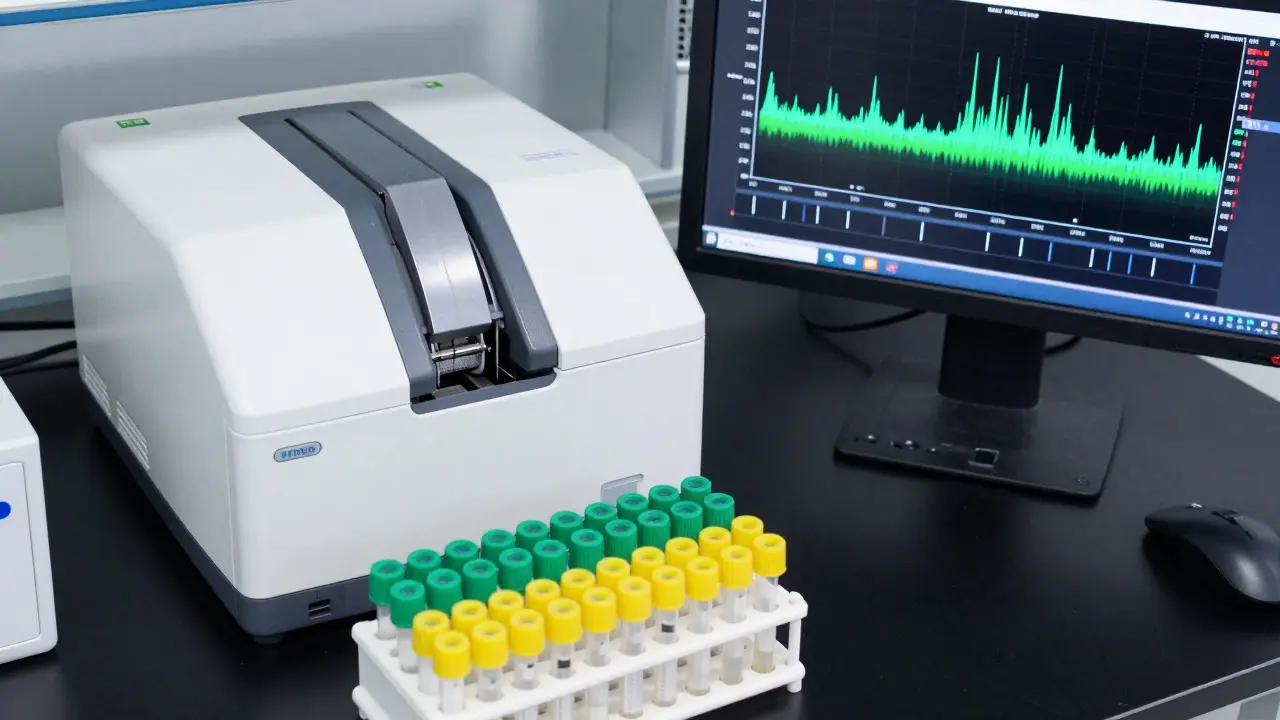
While PCR remains the backbone of forensic DNA analysis, Next-Generation Sequencing (NGS) is gaining traction. Unlike traditional capillary electrophoresis, which measures fragment length, NGS reads the actual nucleotide sequence. This allows for the detection of Single Nucleotide Polymorphisms (SNPs) alongside STRs.
SNP panels are particularly useful for very low-level DNA or highly degraded samples where STRs fail. They can also provide additional information, such as ancestry estimation or phenotype prediction (like eye color), though these traits are still probabilistic rather than definitive. As costs decrease and throughput increases, we expect to see a hybrid approach where PCR is used for initial screening and NGS for complex casework.
Frequently Asked Questions
How much DNA is needed for PCR amplification?
Modern forensic PCR kits can work with as little as 50-100 picograms of DNA. This is roughly equivalent to the DNA found in a few cells. However, the reliability of the profile decreases as the quantity drops below the limit of quantitation.
What is the difference between PCR and sequencing?
PCR amplifies a specific DNA segment to create many copies, but it doesn't necessarily read the sequence. Traditional forensic PCR uses capillary electrophoresis to measure the length of the amplified fragments. Sequencing, on the other hand, determines the exact order of bases (A, T, C, G) within those fragments.
Can PCR detect contamination?
PCR itself does not detect contamination; in fact, its high sensitivity makes contamination a major risk. Labs use negative controls (empty tubes run through the same process) to check for stray DNA. If a negative control shows peaks, the entire batch is usually invalidated.
Why is Taq polymerase used instead of human DNA polymerase?
Human DNA polymerase denatures (loses function) at high temperatures. Since PCR requires heating to 94-98°C during every cycle, a heat-stable enzyme is necessary. Taq polymerase, derived from the thermophilic bacterium Thermus aquaticus, remains active at these temperatures, eliminating the need to add fresh enzyme after each cycle.
How long does a standard forensic PCR test take?
The actual PCR reaction takes about 3-4 hours. Including DNA extraction, quantification, and capillary electrophoresis, the total turnaround time in a busy lab is typically 1-3 business days, though backlogs can extend this.