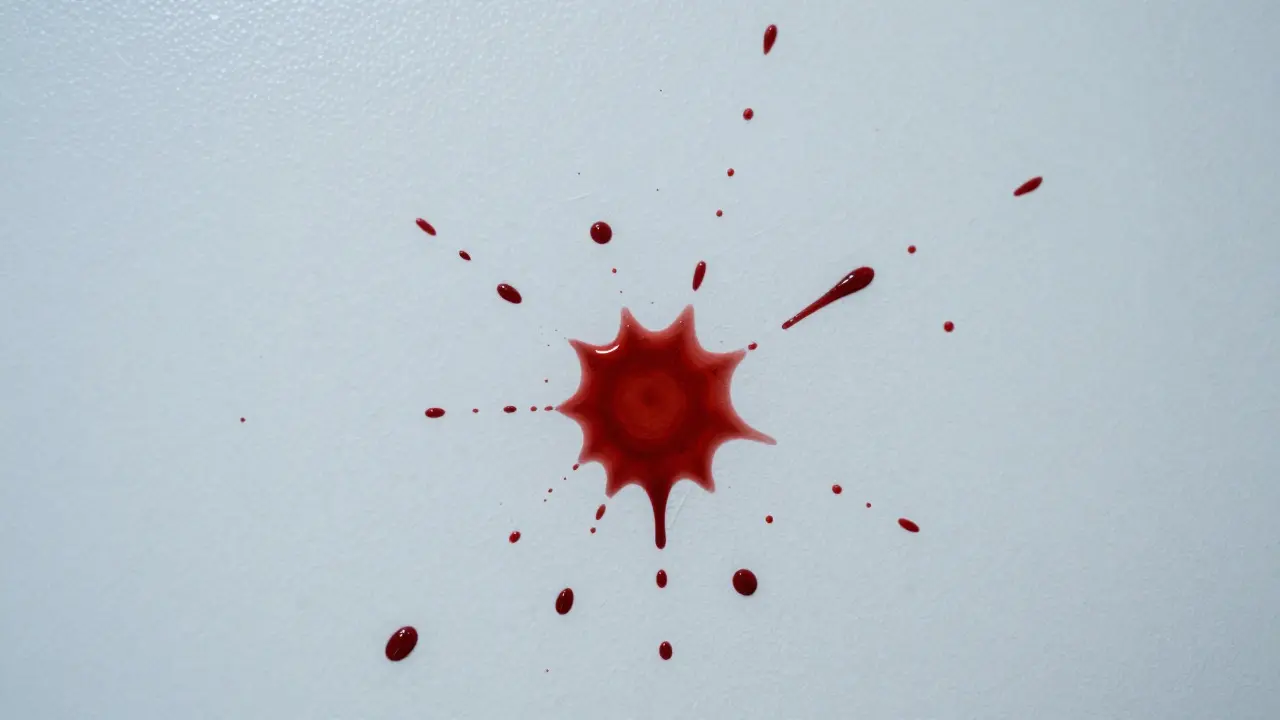
When a heavy object strikes the head, the blood doesn't just drip; it explodes. The resulting spray of droplets, known as medium-velocity spatter, is a specific type of bloodstain pattern created when blood is subjected to forces between 12 and 25 feet per second. This distinct signature helps forensic investigators reconstruct violent events with surprising accuracy. Unlike passive drips or high-pressure arterial spurts, this pattern tells a story of significant kinetic energy meeting soft tissue.
Understanding these patterns is critical for anyone involved in crime scene investigation. It bridges the gap between raw physical evidence and the narrative of how a victim was injured. By analyzing the size, shape, and distribution of these droplets, experts can determine the type of weapon used, the direction of the blow, and even the number of impacts. It’s not magic; it’s physics applied to biology.
Defining the Velocity Spectrum
To understand medium-velocity spatter, you first need to grasp where it sits in the broader spectrum of bloodstain dynamics. Blood behaves differently depending on how much energy hits it. Forensic scientists generally categorize impact spatter into three distinct velocity ranges:
- Low-Velocity Spatter: Created by forces less than 12 feet per second (fps). Think of a drop falling from a standing person or a slow leak. Droplets are typically larger, often exceeding 4mm in diameter.
- Medium-Velocity Spatter: Generated by forces between 12 and 25 fps. This is the sweet spot for most blunt force injuries, such as punches, kicks, or blows from hammers and bats. Droplets usually range from 1mm to 4mm.
- High-Velocity Spatter: Produced by forces greater than 25 fps. Common in gunshot wounds or high-speed mechanical failures. These droplets are microscopic, often less than 0.5mm, creating a fine mist-like appearance.
The distinction matters because each velocity range implies a different mechanism of injury. If you see a wall covered in tiny specks, you’re likely looking at a firearm discharge. If you see large, irregular splotches, it might be a passive drip. But that chaotic mix of 1mm to 3mm droplets? That screams blunt force trauma.
The Physics of Impact Spatter
So, what exactly happens when a baseball bat connects with a skull? The impact creates a wound that disrupts the vascular system. The pressure inside the damaged vessels, combined with the external force of the blow, ejects blood fragments into the air. The speed of this ejection determines the final size of the droplet upon landing.
Air resistance plays a crucial role here. As blood droplets travel through the air, they decelerate. Larger droplets retain momentum better but are heavier, while smaller droplets are more susceptible to wind and turbulence. In a controlled indoor environment, medium-velocity spatter tends to form relatively predictable patterns around the point of impact. However, if the victim moves after the initial strike, the pattern becomes more complex, potentially showing multiple directions of travel.
It’s also worth noting that the consistency of the blood matters. Fresh, oxygenated blood has lower viscosity than deoxygenated venous blood. This means arterial bleeds can sometimes produce slightly finer spatter than venous bleeds under similar force, though blunt force trauma usually involves mixed vascular damage, making the pattern a composite of both types.
Identifying Blunt Force Trauma Signatures
Not all medium-velocity spatter comes from blunt force. A vigorous coughing fit or a fall from a low height can create similar droplet sizes. So, how do investigators isolate the signature of a beating? They look for context and clustering.
Blunt force trauma often results in impact spatter clusters. Each strike creates a new burst of droplets. If a suspect hit a victim three times with a hammer, you might see three distinct areas of concentrated spatter on nearby walls or surfaces. These clusters often radiate outward from a common origin point. By drawing lines tangent to the long axis of elongated droplets, investigators can triangulate back to the source-the approximate location of the victim's head at the moment of impact.
Additionally, the presence of voids or missing areas in the spatter pattern can indicate objects that were present during the event. A chair leg blocking the spray will leave a clean rectangle on the wall behind it. This "negative space" is just as valuable as the blood itself, helping to reconstruct the room layout at the time of the incident.
Weapon-Specific Pattern Variations
Different weapons impart different energies and surface areas, leading to subtle variations in the spatter profile. While all blunt instruments fall under the medium-velocity umbrella, the details can help narrow down the tool used.
| Weapon Type | Typical Impact Energy | Droplet Size Range | Pattern Distribution | Common Associated Injuries |
|---|---|---|---|---|
| Fist/Punch | Lower end of medium range | 1.5mm - 4mm | Localized, often single cluster | Soft tissue bruising, minor lacerations |
| Baseball Bat | Mid-range | 1mm - 3mm | Broad, radial spray | Skull fractures, deep contusions |
| Hammer | Higher end of medium range | 0.8mm - 2.5mm | Concentrated, high density | Cranial deformation, penetrating wounds |
| Heavy Object (e.g., Pipe) | Variable, often higher | 0.5mm - 2mm | Mixed, may approach high-velocity | Severe traumatic brain injury |
Notice the trend: harder, denser tools tend to produce smaller, more numerous droplets because they transfer energy more efficiently into the tissue. A punch might result in fewer, larger drops, while a hammer strike could create a dense cloud of finer particles. Of course, individual variation, clothing, and hair thickness can all modify these patterns, so no two scenes are identical.
Environmental Factors and Pattern Degradation
Bloodstain pattern analysis isn’t done in a vacuum. Real-world environments introduce noise into the data. Rain, cleaning attempts, and secondary movement can all distort the original pattern.
If it rained shortly after the incident, raindrops hitting existing spatter can create "satellite" droplets-tiny splashes around the main stain. This can mimic the look of additional impacts. Investigators must distinguish between true impact spatter and environmental artifacts. Similarly, if someone wiped the area with a towel, they might leave a smear that obscures the directional tails of the droplets, making origin point calculation difficult.
Secondary transfer is another major pitfall. If a bloody hand touches a wall, it leaves a palm print, not spatter. But if that hand then brushes against a shirt, it transfers blood in a linear streak. Distinguishing primary spatter (blood hitting a surface directly) from secondary transfer (blood moving from one object to another) requires careful observation of edge characteristics. Primary spatter usually has crisp edges, while transferred blood often appears blurred or smeared.

Practical Application in Case Reconstruction
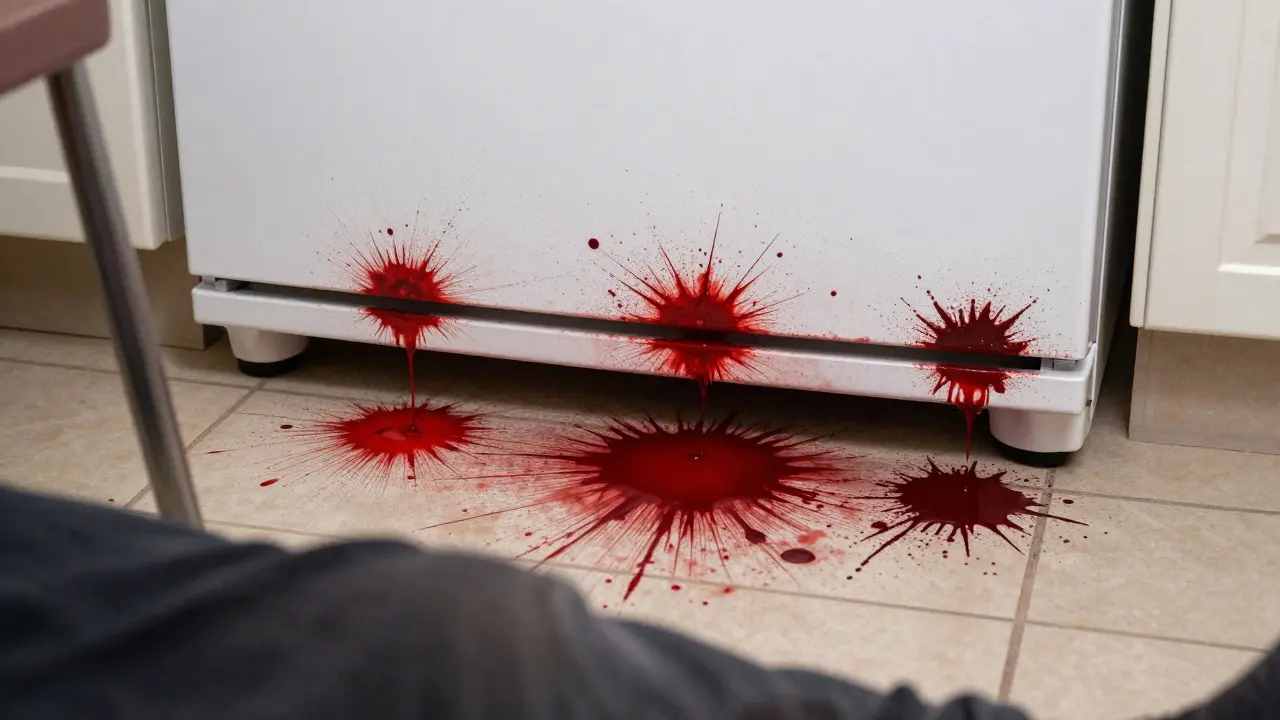
How does this theory translate to solving a case? Let’s say investigators find a body in a kitchen. There’s a pool of blood under the torso, but the wall behind the fridge is covered in medium-velocity spatter. The droplets are elongated, pointing toward the floor. By measuring the angle of these stains, an expert can calculate the height at which the head was located when the blow landed. If the calculated height matches the victim’s seated position, it suggests the attack happened while the victim was sitting. If it matches standing height, the victim was upright.
This detail can contradict or support witness statements. Maybe a witness claims the victim was lying down, but the spatter says otherwise. Or perhaps the spatter shows two distinct clusters on opposite sides of the room, indicating the victim moved between strikes. Each piece of data adds a layer to the reconstruction, turning static stains into a dynamic timeline of events.
Common Pitfalls in Analysis
Even experienced analysts make mistakes. One common error is assuming all small droplets are high-velocity. Remember, the boundary between medium and high velocity is fuzzy. A very hard punch can produce droplets as small as 0.5mm, blurring the line. Always consider the context of the entire scene, not just isolated stains.
Another pitfall is ignoring the substrate. Blood looks different on carpet than on tile. On porous surfaces like wood or drywall, droplets absorb and spread, losing their directional tails. This makes it harder to determine the angle of impact. On non-porous surfaces like glass or metal, the droplets remain intact, preserving crucial geometric information. Always document the surface type before interpreting the pattern.
Finally, avoid confirmation bias. Don’t look for evidence that supports your initial hypothesis. Look for evidence that challenges it. If the spatter doesn’t match the reported weapon, question the report. Science demands objectivity, and bloodstain patterns are unforgiving of preconceived notions.
Frequently Asked Questions
What is the average size of medium-velocity spatter droplets?
Medium-velocity spatter droplets typically range from 1 millimeter to 4 millimeters in diameter. This size range corresponds to blood ejected at speeds between 12 and 25 feet per second, commonly associated with blunt force injuries like punches or blows from tools.
Can medium-velocity spatter be distinguished from high-velocity spatter?
Yes, primarily by droplet size and distribution. Medium-velocity spatter consists of visible droplets (1-4mm), while high-velocity spatter creates a fine mist of microscopic droplets (less than 0.5mm). High-velocity patterns often appear as a widespread, uniform cloud, whereas medium-velocity patterns show distinct clusters and directional tails.
Does the type of weapon affect the spatter pattern?
Absolutely. Harder, denser weapons like hammers transfer more energy, often producing smaller, more numerous droplets. Softer impacts like punches may result in fewer, larger droplets. The surface area of the weapon also influences the spread; a broad bat creates a wider spray than a narrow pipe.
How do environmental factors alter bloodstain patterns?
Rain, wind, and cleaning can distort patterns. Raindrops can create satellite droplets, mimicking additional impacts. Porous surfaces absorb blood, hiding directional cues, while non-porous surfaces preserve them. Secondary movement of victims or objects can also scatter spatter, complicating origin point calculations.
What is the role of voids in spatter analysis?
Voids are areas free of spatter where an object blocked the blood spray. These negative spaces help investigators reconstruct the room layout at the time of the incident, identifying where furniture, doors, or other objects were positioned relative to the impact site.