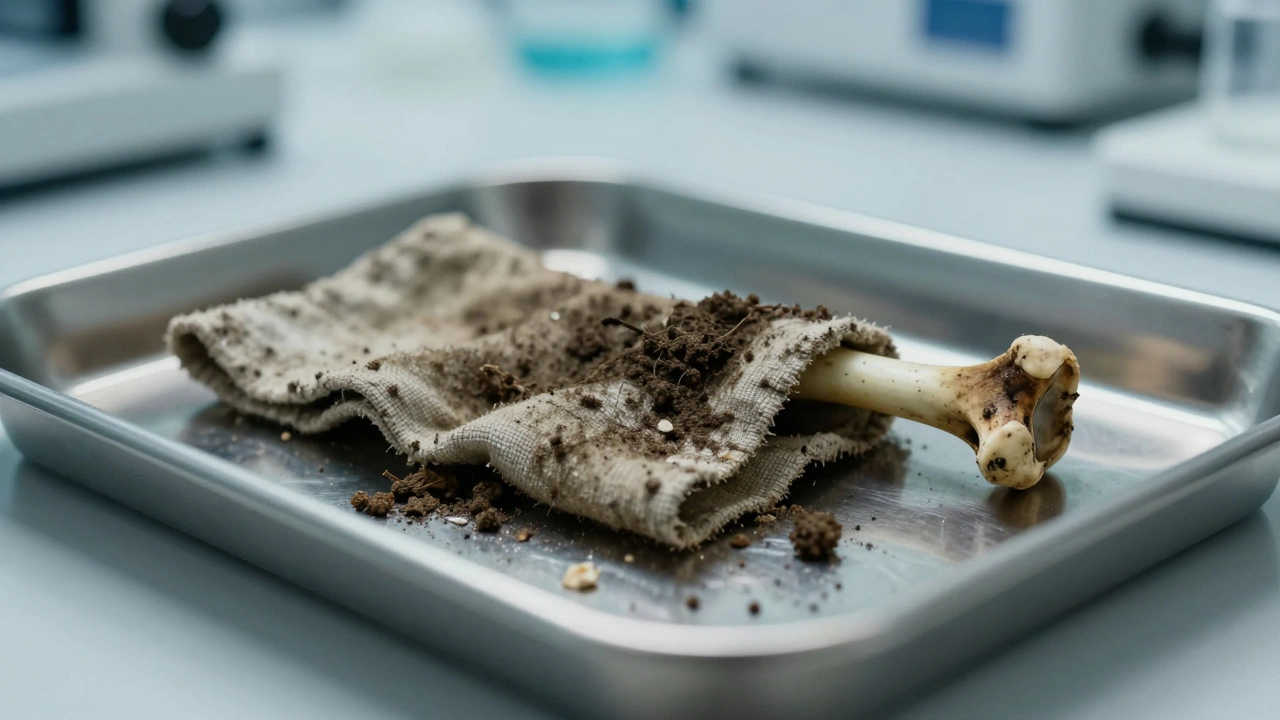
Imagine spending weeks collecting a critical piece of evidence from a crime scene-perhaps a soil-stained garment or a weathered bone-only to find that your lab results come back empty. You know the DNA is there, but the machine says otherwise. This isn't usually a case of missing genetic material; it's more likely a case of PCR Inhibition. In the world of forensic science, some of the most valuable samples are also the most "dirty," containing chemical compounds that effectively shut down the amplification process.
When you're dealing with PCR Inhibition is a phenomenon where non-template substances in a biological sample interfere with the DNA polymerase enzyme, preventing the successful replication of target DNA sequences. Essentially, the "molecular photocopier" gets jammed by contaminants. This leads to false negatives, reduced sensitivity, or delayed cycles in quantitative PCR, which can jeopardize an entire investigation.
Common Culprits: Where Do Inhibitors Come From?
Inhibitors aren't just random accidents; they are often inherent to the environment where the evidence was found. Depending on the sample matrix, you'll run into different chemical enemies. For instance, if you're processing soil samples, you're fighting Humic Acid is a complex organic molecule found in soil and peat that acts as a potent inhibitor by interfering with the DNA polymerase enzyme. Along with fulvic acids, these substances are notorious for ruining forensic profiles from buried evidence.
Blood is another paradox; while it's the primary source of DNA, it contains its own inhibitors. Hemoglobin and haematin can reduce the activity of the polymerase, making the reaction sluggish or completely inert. Then there are the more obscure ones: plant-derived polysaccharides like dextran sulfate or phenolic compounds that cross-link RNA and DNA, making them nearly impossible to isolate properly. Even fecal samples introduce proteinases that can literally chew up the DNA polymerase before it has a chance to work.
| Inhibitor Entity | Common Source | Primary Effect |
|---|---|---|
| Humic Acid | Soil, Peat, Dirt | Directly binds to polymerase or interferes with DNA |
| Hemoglobin/Haematin | Blood Samples | Reduces enzyme activity and amplification efficiency |
| Tannic Acids | Plants, Bark, Soil | Depletes Magnesium (Mg2+) cofactors |
| Polysaccharides | Plants, Feces | Hampers nucleic acid recovery and resuspension |
| Proteinases | Fecal Samples | Degrades the DNA polymerase enzyme itself |
The Mechanics of the "Jam": How It Actually Happens
To fix the problem, you have to understand how the sabotage occurs. Most inhibitors target one of three things: the enzyme, the cofactors, or the template DNA.
Many DNA polymerases have a strict diet; they require Magnesium (Mg2+) is an essential divalent cation cofactor required by DNA polymerase to catalyze the addition of nucleotides to the growing DNA strand. Chelating agents, like tannic acids, act like sponges that soak up the magnesium. Without it, the polymerase is basically a car without fuel. Other inhibitors, like high concentrations of calcium, simply trick the enzyme into binding the wrong ion, stalling the process.
In some cases, the inhibitor attacks the DNA template itself, making it impossible for the primers to bind. Or, as is the case with certain proteins in fecal matter, the inhibitors act as enzymes themselves, breaking down the very polymerase you just added to the tube. If you're using qPCR is a quantitative real-time polymerase chain reaction method that monitors DNA amplification as it happens using fluorescent dyes. you might notice this as a delayed "Cq" value or a weirdly flat amplification curve.
Detection Strategies: Knowing You Have a Problem
The scariest part of PCR inhibition is that it can look exactly like a sample that simply has very little DNA. How do you tell the difference? You use controls.
One of the most reliable methods is the Internal Amplification Control (IAC). You spike in a known amount of a non-target DNA fragment (like a synthetic gblock or a specific bacterial sequence) that isn't present in the original sample. If the target DNA fails to amplify but the IAC also shows a delayed or missing signal, you've got a clear case of inhibition. If the IAC amplifies perfectly but your target doesn't, you likely just have a very low-copy sample.
Kinetic Outlier Detection (KOD) is another pro move. By analyzing the shape of the amplification curve in real-time, you can spot "outliers" that behave differently than expected, signaling that something in the chemistry is fighting the reaction.

Overcoming Inhibition: The Toolkit
Once you've identified inhibition, you have several paths to victory. The first is the "brute force" method: dilution. By diluting your template, you lower the concentration of the inhibitor to a level the enzyme can handle. The trade-off? You also dilute your precious DNA, which can kill your sensitivity. In forensics, where you might only have a few cells, this is often a last resort.
A better approach involves facilitators. Bovine Serum Albumin (BSA) is a protein from cow blood plasma that binds to and neutralizes various PCR inhibitors, preventing them from interfering with the polymerase. BSA is like a decoy; it attracts the inhibitors and binds them, leaving the DNA polymerase free to do its job. Adding 10 μg of BSA can sometimes allow a reaction to proceed even when humic substances are present at three times the usual limit.
Other protein facilitators include gp32, a single-stranded DNA-binding protein from the T4 bacteriophage, which helps protect the template and the enzyme. Some labs even use simple skim milk powder to achieve a similar neutralizing effect.
If proteins aren't enough, try polymer-based facilitators like Polyethylene Glycol (PEG). PEG is particularly effective at relieving inhibition caused by plant polysaccharides or fecal contaminants.
Advanced Cleanup and Polymerase Selection
Sometimes, the inhibitors are too stubborn for additives, and you need to physically remove them. Silica-column purification is the industry standard, but for heavy soil contamination, you might need Inhibitor Removal Technology (IRT). This often involves specialized buffers or magnetic bead separation, which can pull the DNA away from the humic acids more efficiently than a standard spin column.
You can also swap your "engine." Not all DNA Polymerase is the enzyme responsible for synthesizing new strands of DNA by adding nucleotides to a template strand during PCR. is created equal. Some modern polymerases are engineered via mutagenesis to be "inhibitor-resistant." Using a blend of complementary polymerases or a "hot-start" version can increase specificity and prevent the formation of primer-dimers, which often get mistaken for inhibition effects.
For those using qPCR, remember that some inhibitors don't stop the DNA from copying-they just stop the light from shining. This is fluorescence quenching. In these cases, hydrolysis probes (like TaqMan) are much more reliable than generic dsDNA-binding dyes, as they are less susceptible to the quenching effects of blood or soil.
Practical Implementation: Choosing Your Strategy
The strategy you choose should depend on your sample type. For bone or soil, BSA and facilitator combinations usually work wonders, meaning you can keep your sample concentrated and avoid dilution. However, hair and fecal extracts are more stubborn. In those cases, you'll likely need a combination of high-end extraction kits, a touch of PEG, and a strategic 1:10 dilution to get a clean result.
Does dilution always work for PCR inhibition?
Dilution is a highly effective way to lower the concentration of inhibitors to a non-interfering level. However, it is a double-edged sword because it simultaneously reduces the amount of target DNA. In forensic cases with limited biological material, this can lead to a loss of sensitivity and potential false negatives.
Why is BSA so effective against humic acid?
Bovine Serum Albumin (BSA) acts as a sacrificial binding agent. It has a high affinity for many inhibitory molecules, including humic acids. By binding to these inhibitors, BSA prevents them from attaching to the DNA polymerase or the DNA template, effectively "clearing the path" for the enzyme.
What is the difference between an internal control and a positive control?
A positive control is a separate tube with known DNA to prove the PCR master mix works. An Internal Amplification Control (IAC) is added directly into the sample tube. If the positive control works but the IAC fails, you know the problem is specifically inside your sample (i.e., inhibition), not a general failure of the reagents.
Can I use the same strategy for all forensic samples?
No. Different matrices have different inhibitors. Soil requires humic acid removal (IRT), blood may require specific polymerase adjustments, and fecal samples often need proteinase inhibitors or PEG. A tailored approach based on the sample source is essential for maximum recovery.
How does magnesium depletion cause PCR failure?
DNA polymerase requires Mg2+ ions as a cofactor to function. Certain inhibitors, such as tannic acids, act as chelators that bind to magnesium ions, making them unavailable to the enzyme. Without these ions, the polymerase cannot catalyze the addition of nucleotides, and the reaction stalls.
Next Steps for the Lab
If you're consistently hitting a wall with inhibited samples, start by auditing your extraction process. Switching to magnetic bead-based separation often yields cleaner DNA than traditional columns. Next, experiment with a titration of BSA-don't just add a pinch; test different concentrations to find the sweet spot for your specific inhibitor profile.
For the most challenging cases, consider a multi-stage cleanup: a preliminary silica extraction followed by a secondary purification using ethanol precipitation. By combining robust extraction, the right polymerase, and targeted facilitators, you can turn a "blank" result into a usable genetic profile.