You find a single strand of hair on a pillowcase at a crime scene. It looks like just another piece of debris, maybe from the victim or the suspect. But that tiny fragment holds a genetic secret. The real question isn't whether you can get DNA from it-it's which type of DNA you'll get, and what that tells you about who left it there. This is where hair root analysis becomes critical for investigators.
Not all hair samples are created equal. A hair with a bulbous root attached gives you one set of options; a shed hair without a root gives you another. Understanding the difference between Nuclear DNA (nuDNA) and Mitochondrial DNA (mtDNA) determines whether you can identify a specific individual or merely place them within a maternal lineage. For forensic scientists, this distinction is the difference between a smoking gun and a circumstantial clue.
The Anatomy of Evidence: Why the Root Matters
To understand why we choose one DNA type over another, you have to look at the hair itself. Hair consists of two main parts: the shaft and the root. The shaft is mostly dead keratin cells packed tightly together. The root, specifically the follicular tag, contains living cellular material.
When a hair falls out naturally during the telogen phase of growth, it often sheds without a significant amount of cellular tissue attached. These hairs are poor candidates for nuclear DNA testing because the nucleus degrades as the cell dies. However, if a hair is forcibly removed-say, pulled out during a struggle-the follicular sheath remains intact. This sheath is rich in nucleated cells, making it a goldmine for high-quality genetic data.
This physical state dictates the analytical path. If you have a root with visible follicular tissue, you aim for nuclear DNA. If you only have a shaft, or a root that has degraded, you pivot to mitochondrial DNA. It’s not a preference; it’s a necessity driven by biology.
Nuclear DNA: The Individual Identifier
Nuclear DNA is found in the nucleus of every cell in your body. It comes equally from both parents, combining half from your mother and half from your father. In forensics, we analyze specific regions called Short Tandem Repeats (STRs). These STRs are highly variable among unrelated individuals.
Why do labs prefer nuDNA when possible? Because it offers a unique profile. When you match a full nuclear DNA profile from a hair root to a suspect, the probability of a random match is astronomically low-often less than one in several billion. This allows forensic experts to say, "This hair belongs to John Doe," with near-certainty.
But here’s the catch: nuclear DNA is fragile. It requires intact nuclei. As hair ages or is exposed to environmental stressors like sunlight, heat, or humidity, the nuclear genome breaks down into tiny fragments. Once the strands become too short, standard PCR amplification fails. You simply cannot read the code. That’s when you need a backup plan.
Mitochondrial DNA: The Maternal Lineage Tracker
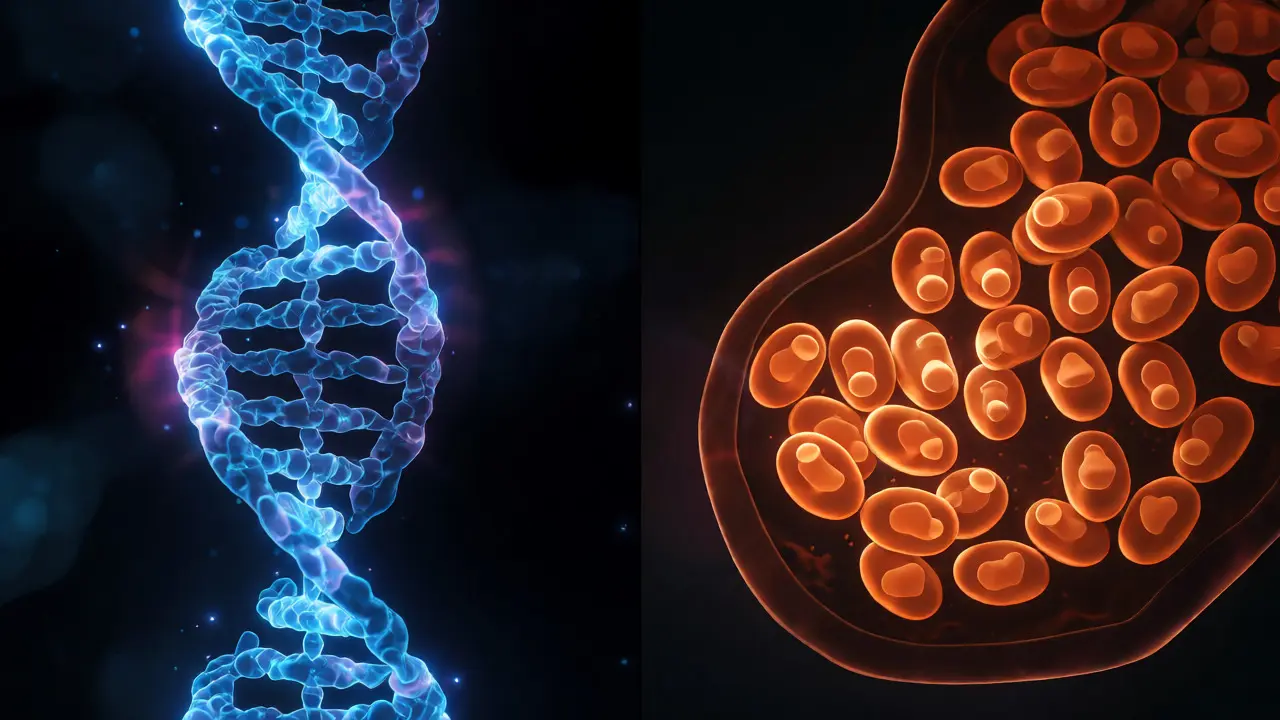
If nuclear DNA is the fingerprint, Mitochondrial DNA is the family crest. Located in the mitochondria-the energy powerhouses of the cell-mtDNA is inherited exclusively from the mother. Your mother got hers from her mother, and so on back through time. This means you share the same mtDNA sequence as your siblings, your mother, your maternal grandmother, and any other relative connected through an unbroken female line.
Why does this matter for hair? Because each cell contains hundreds to thousands of mitochondria, whereas it only has one nucleus. This abundance makes mtDNA incredibly resilient. Even in old, degraded hair shafts where nuclear DNA has vanished, mtDNA often survives. It’s tougher, more stable, and easier to recover from compromised samples.
However, resilience comes at the cost of specificity. Since mtDNA doesn’t change much between maternal relatives, it can’t distinguish between you and your sister. It can tell you that a hair came from someone in the Smith maternal line, but it can’t pinpoint which Smith. It’s class evidence, not individualizing evidence.
| Feature | Nuclear DNA (nuDNA) | Mitochondrial DNA (mtDNA) |
|---|---|---|
| Location | Cell Nucleus | Mitochondria |
| Inheritance | Biparental (Mother + Father) | Maternal Only |
| Copy Number | 2 copies per cell | 100-10,000 copies per cell |
| Durability | Low (degrades quickly) | High (survives degradation) |
| Individualization | Unique to individual (except identical twins) | Shared among maternal relatives |
| Best Use Case | Fresh hair with intact root | Aged, shed, or damaged hair shaft |
Choosing the Right Path: Decision Logic for Investigators
So, how do you decide which test to run? It starts with visual inspection under a microscope. Forensic examiners look for the presence of a follicular tag. If the root is dark and bulbous with visible tissue, you send it for nuclear DNA typing. This is your first choice because of its higher discriminatory power.
If the hair is light-colored, brittle, or lacks a root entirely, you skip nuclear testing. Attempting nuDNA on a shaft-only sample usually yields no results and wastes valuable lab resources. Instead, you proceed directly to mitochondrial sequencing. This involves analyzing the hypervariable regions (HV1 and HV2) of the mtDNA control region. These regions mutate frequently enough to provide some differentiation between unrelated people, but not enough to separate close maternal relatives.
There’s also a hybrid approach. In cases involving cold cases or mass disasters, labs might use next-generation sequencing (NGS). Modern NGS techniques can sometimes recover partial nuclear profiles from degraded samples that were previously considered hopeless. But even then, mtDNA remains the reliable fallback when everything else fails.
Real-World Application: Solving Cases with Limited Evidence
Consider a burglary case where a suspect denies being at the scene. Police find three hairs on the broken window frame. One has a root; two are shafts. The lab extracts nuclear DNA from the rooted hair. It matches the suspect perfectly. Case closed? Not quite. Defense attorneys might argue contamination. So, the lab sequences mtDNA from the two shafts. Both match the suspect’s maternal haplotype. Now you have corroborating evidence from multiple samples, strengthening the link despite the lack of individualizing data from the shafts.
Conversely, think of an unidentified skeletal remain found in the woods. The bones are old, and the hair is gone. But perhaps a tuft of hair was preserved in a hat or clothing nearby. No roots remain. Nuclear DNA is impossible. Scientists extract mtDNA and compare it to missing persons databases. They find a match with a woman reported missing five years ago. While mtDNA can’t prove it’s her versus her sister, combined with anthropological data (age, sex, stature), it provides a strong lead for further investigation.
Common Pitfalls and Contamination Risks
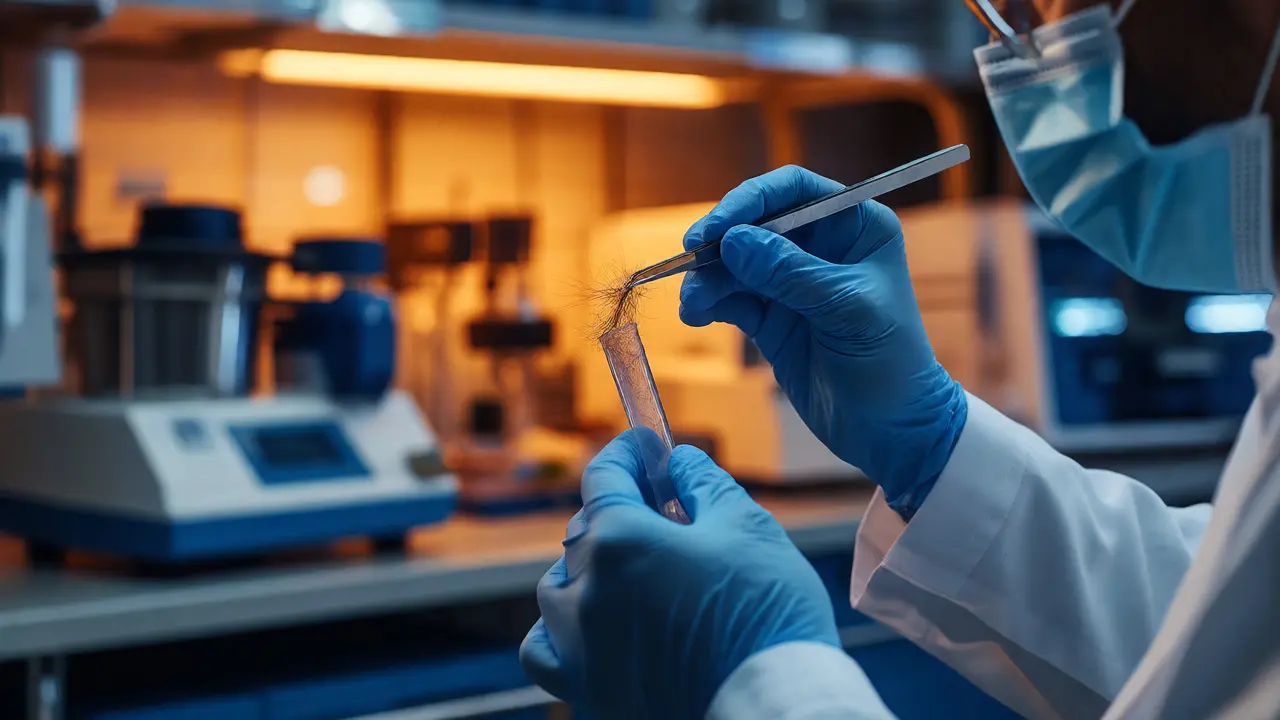
Hair evidence is notorious for contamination. Because mtDNA is abundant, it’s easy to pick up background DNA from handlers. If you touch a hair sample without gloves, your own mtDNA could overwhelm the trace evidence. Labs follow strict protocols: wearing masks, using UV irradiation to degrade stray DNA, and processing samples in clean rooms.
Another pitfall is mixed sources. If a hair is handled by multiple people before collection, you might get a mixture of mtDNA sequences. Interpreting mixtures is complex. Unlike nuclear DNA, where you see clear alleles, mtDNA shows heteroplasmy (multiple variants at the same position) or overlapping peaks. Experts must carefully deconvolute these signals to determine if they represent one person with natural variation or multiple contributors.
Also, remember that identical twins share both nuclear and mitochondrial DNA. If a suspect has an identical twin, neither nuDNA nor mtDNA can distinguish between them. In such rare cases, you need additional evidence, like fingerprints or eyewitness testimony, to break the tie.
Future Trends: Beyond Traditional Typing
The field is evolving rapidly. Single-cell nuclear DNA analysis is becoming feasible, allowing scientists to pull nuDNA from individual cells in a hair root even if the overall sample is degraded. Additionally, whole-genome sequencing of mtDNA provides more data points than traditional HV1/HV2 analysis, increasing the resolution of maternal lineage matching.
Phenotyping is another frontier. Can we predict hair color from DNA? Yes. By analyzing genes like MC1R, scientists can predict whether a person likely had red, blonde, brown, or black hair. This helps narrow down suspects when no reference samples exist. Imagine finding a hair at a scene and generating a composite sketch based solely on genetic markers. We’re getting closer to that reality.
For now, though, the classic dichotomy stands: use nuclear DNA for precision when the root is present; use mitochondrial DNA for persistence when the sample is poor. Knowing which tool to grab saves time, money, and potentially solves the case.
Can you get nuclear DNA from a hair without a root?
Generally, no. Hair shafts consist primarily of dead keratinized cells that lack nuclei. Without a nucleus, there is no nuclear DNA to analyze. However, advanced techniques like next-generation sequencing can sometimes detect trace amounts of nuclear DNA in shafts, but success rates are low compared to rooted samples.
How long can mitochondrial DNA survive in hair?
Mitochondrial DNA is highly durable due to its protective location within the mitochondria and its circular structure. It can survive for decades, and in optimal conditions (cool, dry environments), even centuries. Ancient human remains have yielded mtDNA after thousands of years, whereas nuclear DNA typically degrades within decades unless preserved exceptionally well.
Does mitochondrial DNA prove identity?
No, it does not prove individual identity. Because mtDNA is inherited maternally, all relatives on the maternal side share the same sequence. It can exclude a suspect if their maternal lineage doesn't match, but it cannot uniquely identify one person over their mother, sisters, or maternal cousins. It serves as class evidence rather than individualizing evidence.
What is the follicular tag?
The follicular tag is the sheath of connective tissue and epithelial cells that attaches to the root of a hair when it is forcibly pulled from the scalp. This tissue contains live nuclei, making it the primary source of nuclear DNA in hair evidence. Its presence indicates the hair was removed violently, which can be relevant to reconstructing events at a crime scene.
Can identical twins be distinguished by hair DNA?
Standard forensic DNA testing cannot distinguish between identical twins because they share nearly identical nuclear and mitochondrial DNA. To differentiate them, investigators rely on other forms of evidence such as fingerprints, dental records, or somatic mutations that may occur after birth, though detecting the latter requires specialized deep sequencing.