When a body hits the morgue table and the cause of death is unclear, the clock starts ticking. The medical examiner needs answers fast, but they need them to be bulletproof. If the defense attorney finds a single flaw in the data, the case collapses. This is where Gas Chromatography-Mass Spectrometry, or GC-MS, steps in as the undisputed referee. It isn't just a test; it's the legal bedrock for identifying drugs in human tissue.
You might wonder why we don't just use rapid immunoassay strips like those found at home. Those strips tell you if something is *present*, but they rarely tell you exactly *what* it is. A positive strip for opioids could mean morphine, codeine, or even a false positive from poppy seeds. GC-MS separates the molecules physically and then identifies them by their unique molecular fingerprint. In the eyes of a court, that distinction is everything.
How the Machine Actually Works
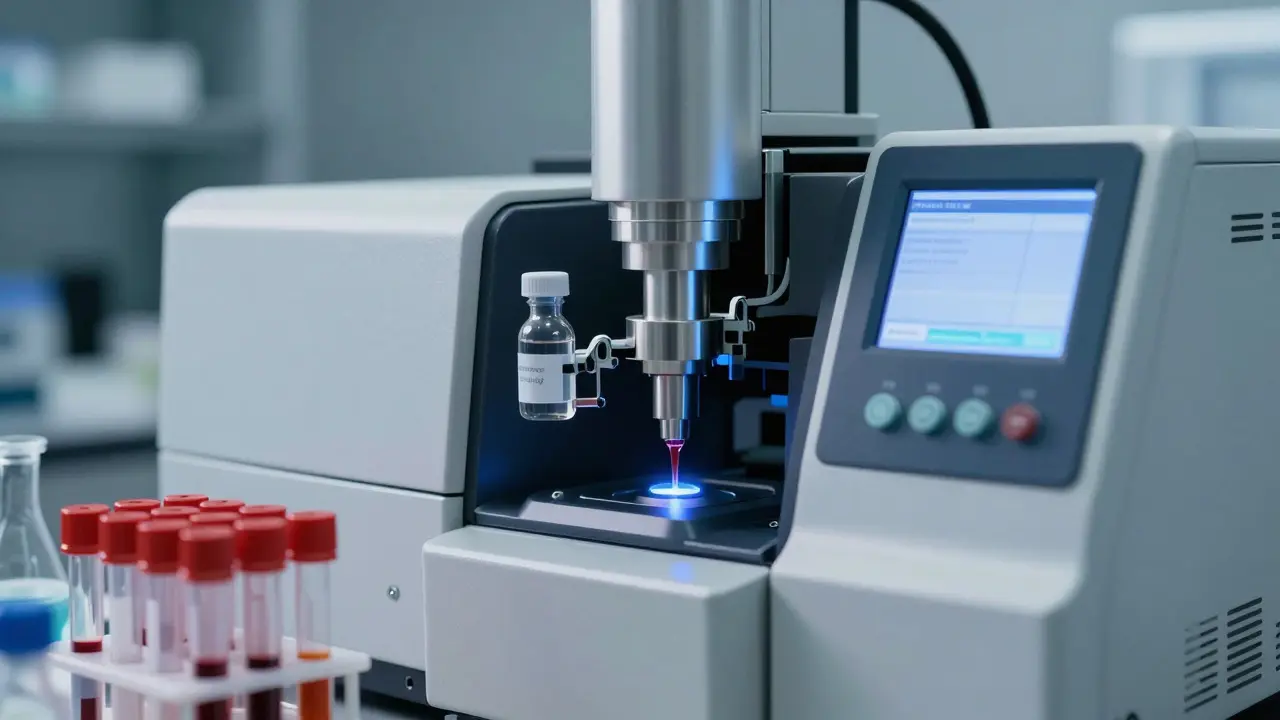
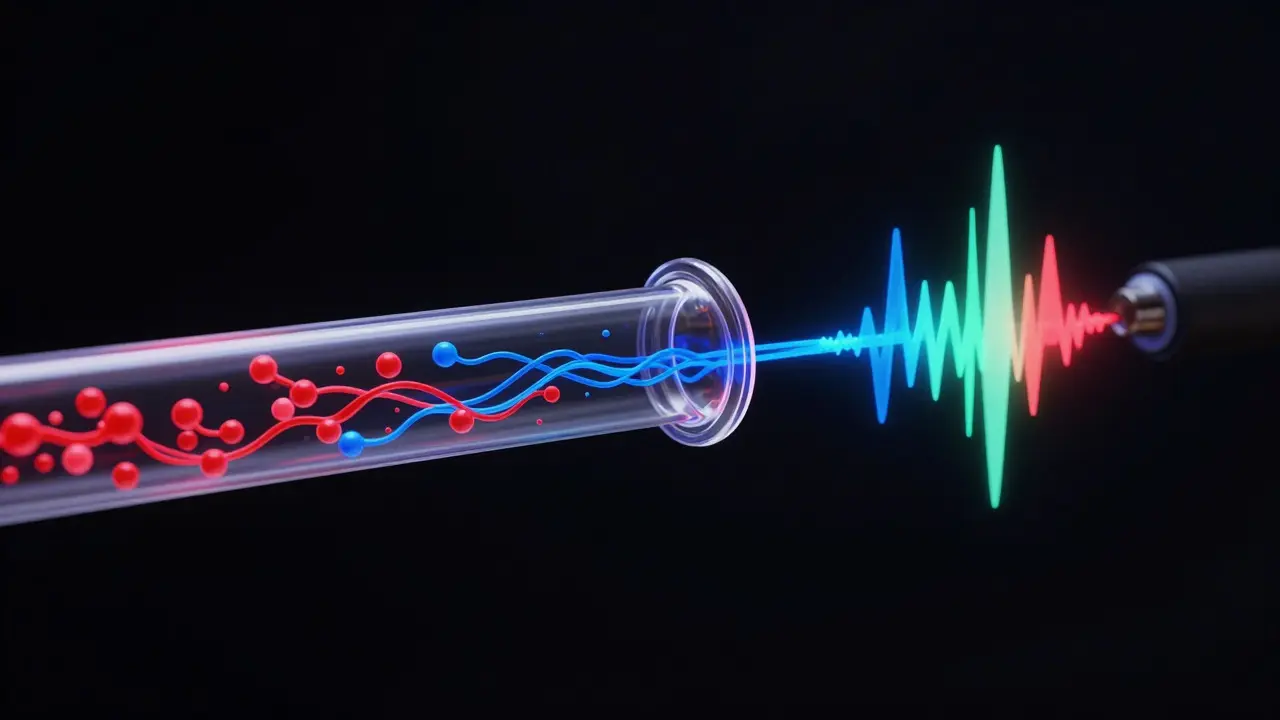
To understand why GC-MS is so reliable, you have to look at its two distinct stages. First, there is the gas chromatography (GC) part. Imagine a long, coiled tube packed with a special stationary phase. You inject your liquid sample, and a carrier gas pushes the mixture through this tube. Different compounds interact differently with the tube's lining. Some stick longer, some move faster. By the time they exit the other end, the complex soup of blood or urine has been separated into individual, pure components. Each compound exits at a specific time, known as its retention time.
But separation alone isn't enough for identification. That’s where the mass spectrometer (MS) takes over. As each compound leaves the GC column, it enters the MS chamber where it gets bombarded with electrons. This shatters the molecules into fragments. The machine measures the mass-to-charge ratio of these fragments. The resulting pattern is a bar chart called a mass spectrum. This chart is as unique to a molecule as a fingerprint is to a person. If you run a certified standard of cocaine through the machine, you get a specific set of peaks. If the unknown sample produces the same peaks at the same retention times, you have a match.
The Critical Role of Sample Preparation
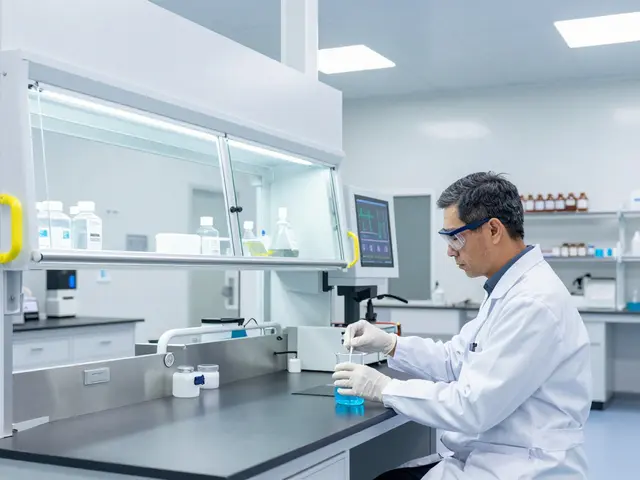
Here is a secret that many people miss: the quality of the result depends less on the million-dollar instrument and more on what you do before the sample ever touches it. Biological matrices like blood, urine, and hair are messy. They contain proteins, salts, lipids, and water that can clog the GC column or ionize poorly in the MS. So, lab technicians perform extraction.
Common techniques include liquid-liquid extraction (LLE) and solid-phase extraction (SPE). In LLE, you shake the biological fluid with an organic solvent. The drugs dissolve in the solvent, while the proteins stay in the aqueous layer. You separate them, evaporate the solvent, and re-dissolve the residue in a small volume. It sounds simple, but every step introduces potential loss or contamination. If you lose 10% of the drug during extraction, your concentration report will be wrong. This is why labs use internal standards-known amounts of similar compounds added at the start-to correct for any losses during processing.
Why Courts Trust GC-MS Over Other Methods
Let's compare GC-MS to its main competitor in modern labs: Liquid Chromatography-Tandem Mass Spectrometry (LC-MS/MS). LC-MS/MS is incredibly powerful for large, non-volatile molecules like peptides or certain synthetic cannabinoids that don't vaporize well in GC. However, GC-MS remains the gold standard for volatile and semi-volatile substances, which make up the vast majority of classic drugs of abuse: alcohol, benzodiazepines, opioids, amphetamines, and barbiturates.
| Feature | GC-MS | LC-MS/MS |
|---|---|---|
| Best For | Volatile/Semi-volatile drugs (Alcohol, Opioids) | Polar/Large molecules (Peptides, Metabolites) |
| Legal Precedent | Extensive, decades of case law | Growing, but newer in some jurisdictions |
| Sample Prep Complexity | High (Extraction required) | Moderate (Often direct injection possible) |
| Cost per Run | Lower consumable cost | Higher column/solvent costs |
The "gold standard" label comes from decades of validation. When a lab says a driver had 0.08% BAC (blood alcohol concentration), they used GC-FID or GC-MS. When they say a patient died of heroin overdose, they confirmed the presence of 6-monoacetylmorphine via GC-MS. The method has been scrutinized by scientists, lawyers, and juries for over fifty years. Few techniques have survived that level of cross-examination without losing credibility.
Challenges and Limitations
No tool is perfect. GC-MS struggles with thermally unstable compounds. If a molecule breaks down when heated above 300°C, it won't survive the GC oven. This is why new drugs of abuse, like some novel psychoactive substances, often require derivatization-a chemical modification to make them stable-or switching to LC-MS. Additionally, GC-MS requires a relatively clean sample. High lipid content in post-mortem blood can interfere with the analysis, requiring extra cleanup steps that increase turnaround time.
There is also the issue of quantification accuracy. While qualitative identification (yes/no) is highly robust, precise quantification (how much?) is harder. Matrix effects can suppress or enhance the signal of the analyte. Labs must validate their methods rigorously, using spiked samples at various concentrations to ensure linearity and precision. If the validation fails, the data is useless in court.
Practical Implications for Case Investigators
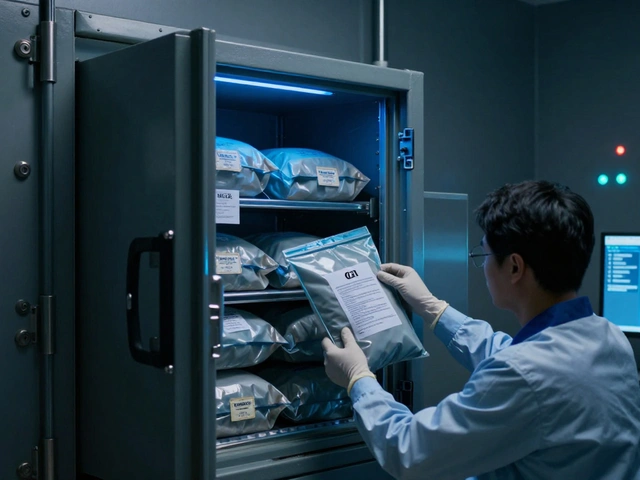
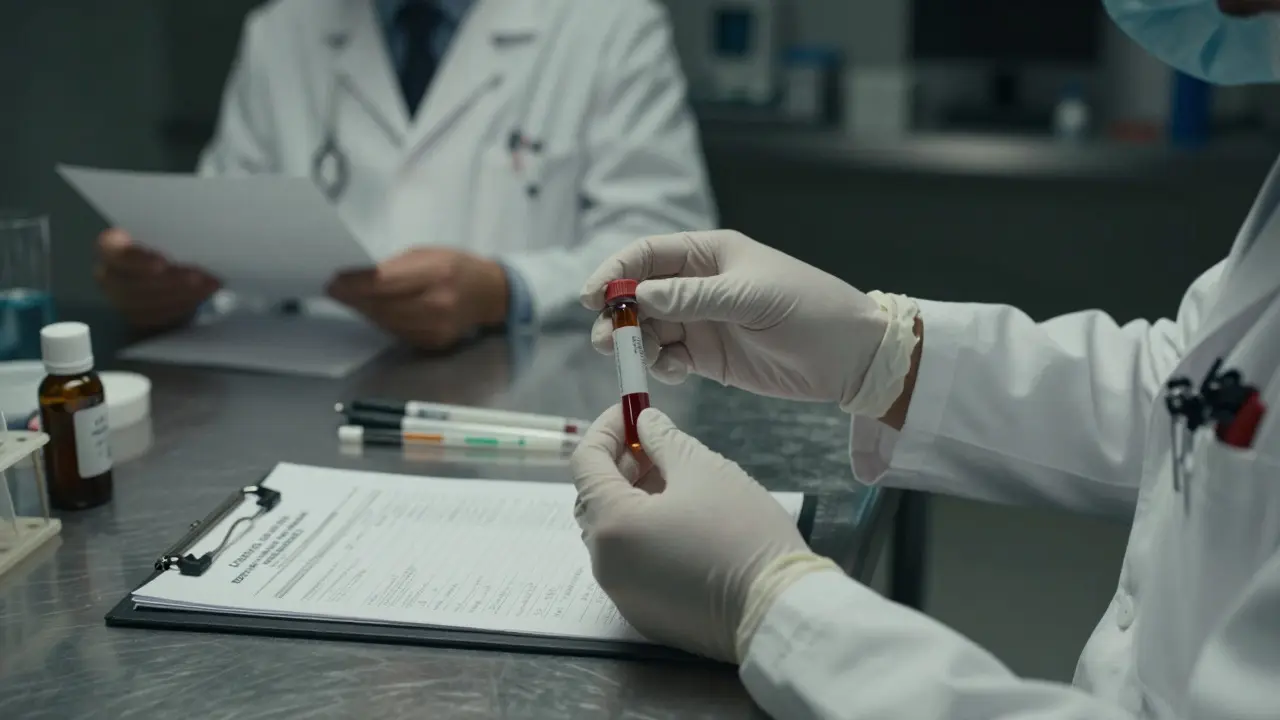
If you are working in law enforcement or medical examination, understanding the workflow helps you manage expectations. You cannot expect results in hours. From receipt of the specimen to final signed report, the process typically takes 5 to 14 days. This includes chain of custody checks, initial screening, confirmatory testing, peer review, and documentation. Rushing this process invites challenges. Ensure your samples are collected correctly-using proper tubes, avoiding hemolysis, and maintaining temperature control. A compromised sample can render even the best GC-MS data inadmissible because the integrity of the input was questioned.
Furthermore, always request the full metabolite profile, not just the parent drug. Detecting only methamphetamine tells you little about recent use versus chronic use. Seeing amphetamine and methylphenidate metabolites gives a clearer timeline. Ask the lab to include impurities if relevant, such as adulterants in seized street drugs. This contextual data strengthens the narrative of the case far beyond a simple positive/negative flag.
Frequently Asked Questions
Is GC-MS better than LC-MS for all drug tests?
No. GC-MS is superior for volatile and semi-volatile compounds like alcohol and traditional opioids. LC-MS is better for polar, large, or thermally unstable molecules like peptides and some new designer drugs. Most modern forensic labs use both technologies complementarily.
How accurate is GC-MS in detecting trace amounts of drugs?
GC-MS can detect concentrations in the nanogram-per-milliliter range, depending on the specific analyte and extraction efficiency. However, detection limit is not the same as quantitation limit. Reliable quantification usually requires higher concentrations to ensure statistical confidence in the reported value.
Can GC-MS distinguish between natural and synthetic drugs?
Yes, often. Synthetic drugs may have different impurity profiles or isotopic ratios compared to naturally derived ones. While GC-MS primarily identifies the core structure, high-resolution variants or coupled techniques can reveal subtle differences in purity and adulterants that indicate origin.
What happens if a sample degrades before GC-MS analysis?
Degradation can lead to false negatives or inaccurate quantification. Volatile compounds like alcohol can evaporate if the container isn't sealed properly. Proteins can clot and trap drugs. Proper storage at -20°C or lower and timely processing are critical to preserving sample integrity for accurate GC-MS results.
Why is GC-MS still called the 'Gold Standard' despite newer tech?
It retains the title due to its extensive history of legal acceptance, rigorous validation protocols, and unmatched specificity for common drugs of abuse. Newer technologies are excellent, but they lack the decades of case law precedent that GC-MS enjoys, making it the safest choice for definitive legal evidence.