A messy forensic report can sink a solid investigation before it even reaches the courtroom. You might have the perfect DNA match or a flawless ballistics trace, but if the document looks like a college draft with missing headers and inconsistent fonts, the defense attorney will find a way to exploit that disorganization. In the world of forensic reporting is the formal documentation of scientific evidence collected, analyzed, and interpreted in criminal investigations, clarity isn't just about aesthetics; it's about credibility.
Standardization ensures that every examiner tells the same story in the same structure, regardless of which lab they work for. When you open a report from a state lab in Oregon versus one from a federal facility in Virginia, the layout should feel familiar. This consistency helps judges, attorneys, and expert witnesses navigate complex data quickly. If you are writing these reports or reviewing them, understanding the pillars of professional appearance is critical for maintaining the chain of custody and ensuring legal admissibility.
Why Structure Matters More Than Content
You might think that the raw data is the most important part of a forensic document. While true, the structure determines how easily that data is understood. A well-structured report guides the reader through the logic of the analysis. It starts with the case information, moves to the evidence description, details the methods used, presents the results, and ends with the conclusion. This linear flow mirrors the scientific method and makes it easier for non-scientists, like jurors, to follow along.
Consider the difference between a dense wall of text and a structured table. If you list ten different bloodstain patterns in a paragraph, the reader has to parse each sentence individually. But if you present those patterns in a standardized table with columns for 'Location,' 'Pattern Type,' and 'Interpretation,' the information becomes instantly accessible. This is why organizations like the International Organization for Standardization (ISO) is a global network of national standards bodies that develops international standards push for uniform templates in laboratory testing. They recognize that human error often comes not from bad science, but from poor communication.
The Core Components of a Standardized Report
Every professional forensic report follows a specific skeleton. Deviating from this skeleton without a valid reason raises red flags during peer review. Here are the essential sections you must include:
- Case Information: Case number, agency name, requesting officer, date of receipt, and date of completion. This section anchors the report to the specific legal matter.
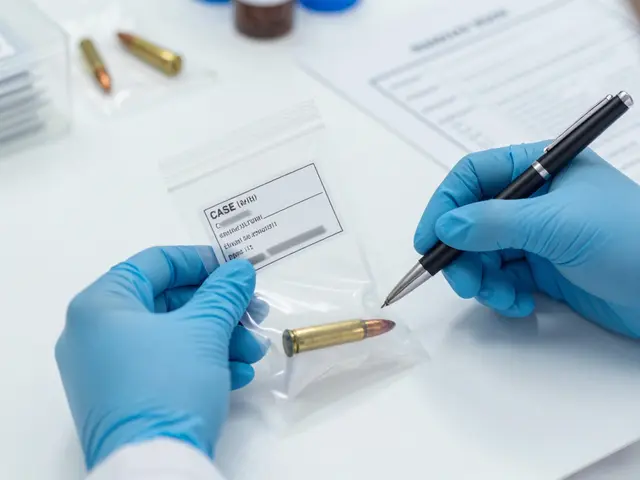
- Evidence Description: A detailed account of the physical evidence as received. Include condition upon arrival, packaging integrity, and any discrepancies noted at intake.
- Methods Used: A clear explanation of the techniques applied. Did you use Gas Chromatography-Mass Spectrometry (GC-MS) or Thin-Layer Chromatography? Specify the instrument model and software version if relevant.
- Results: The raw data. This section should be objective. No opinions here, just facts. Numbers, images, and statistical values belong here.
- Conclusion/Opinion: This is where the examiner interprets the results. Use cautious language. Instead of saying "This paint chip came from the suspect's car," say "The paint chip is consistent with the paint from the suspect's vehicle."
- Certification: The examiner's signature, title, license number, and a statement confirming the accuracy of the findings.
Notice how the distinction between 'Results' and 'Conclusion' is vital. Mixing them up is a common pitfall. If you interpret data in the results section, you blur the line between observation and opinion, which can lead to challenges under the Daubert standard in court.
Visual Clarity and Professional Appearance
Professional appearance isn't about using fancy fonts or adding decorative borders. It's about readability and consistency. Think of your report as a product. The customer is the court system. If the product is hard to read, they will reject it.
Start with typography. Stick to standard, sans-serif fonts like Arial or Calibri, or serif fonts like Times New Roman, depending on your agency's style guide. Keep the font size between 10pt and 12pt. Line spacing should be 1.15 or 1.5 to give the eye room to breathe. Margins should be at least 1 inch on all sides to allow for binding and filing.
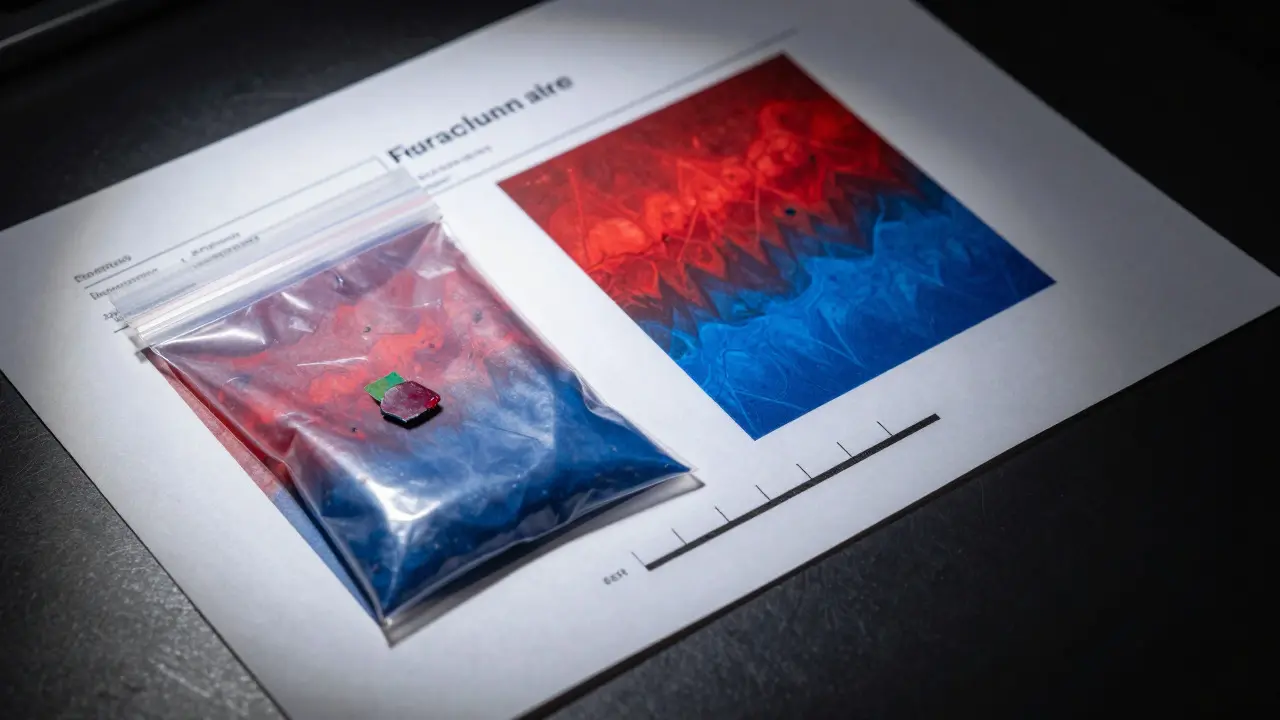
Images are another critical component. Whether it's a crime scene photo or a microscopic image of fibers, quality matters. Low-resolution images look unprofessional and can obscure details. Always include a scale bar in microscopy images so the viewer knows the actual size of the object. Label every figure clearly. Figure 1, Figure 2, etc., with captions that explain exactly what is being shown. Never leave an image unlabeled. An unexplained photo is an invitation for confusion.
| Element | Draft Version | Final Standardized Version |
|---|---|---|
| Font | Mixed styles (Comic Sans, Courier) | Uniform font (e.g., Arial 11pt) |
| Headings | Underlined text or bold only | Hierarchical numbered headings (1.0, 1.1) |
| Images | Pasted screenshots without labels | High-res images with captions and scale bars |
| Data Presentation | Long paragraphs of numbers | Structured tables with units specified |
| Signatures | Handwritten scribbles | Digital signatures with timestamp and ID |
Consistency Across Multiple Examiners
In large laboratories, multiple examiners may work on the same case. One might handle the toxicology, while another handles the serology. Their individual reports need to merge into a cohesive narrative. This is where standardization shines. If the toxicologist uses "mg/dL" for concentration and the serologist uses "ng/mL" without conversion notes, the final report becomes confusing.
Establish a shared glossary within your department. Define terms like "qualitative" versus "quantitative" clearly. Ensure that everyone uses the same abbreviations. For example, don't switch between "DNA" and "deoxyribonucleic acid" randomly. Pick one for the body text and stick to it, unless defined otherwise. This reduces cognitive load for the reader and minimizes the risk of misinterpretation.
Also, pay attention to unit consistency. If you report weight in grams in one section and ounces in another, you introduce unnecessary friction. Choose metric or imperial based on your jurisdiction's norms, but stay consistent throughout the document. In the US, both are often used, but mixing them within a single data set is a no-go.
Common Pitfalls That Undermine Credibility
Even experienced professionals make formatting errors that hurt their credibility. Here are the most common ones to avoid:
- Inconsistent Date Formats: Using MM/DD/YYYY in one place and DD-MM-YYYY in another can cause massive confusion, especially in international cases. Stick to ISO 8601 (YYYY-MM-DD) if possible, or strictly adhere to your local standard.
- Missing Units: Reporting a value of "45" without specifying if it's milligrams, nanograms, or parts per million renders the data useless. Always attach units to numerical data.
- Overuse of Jargon: While the audience includes experts, they also include judges and juries. Avoid acronyms without first defining them. If you use "LC-MS/MS," write out "Liquid Chromatography-Tandem Mass Spectrometry" the first time it appears.
- Poor Page Numbering: Unnumbered pages make referencing specific findings difficult. Use continuous page numbering across the entire report, including appendices.
Another subtle issue is the handling of corrections. If you make a typo in a draft, don't just white-out or overwrite it. Use tracked changes in digital drafts. In final printed reports, corrections should be made with a single line through the error, signed and dated by the corrector. This maintains transparency and shows that the correction was intentional and authorized.

Digital Tools and Automation
Manual formatting is time-consuming and prone to error. Modern Laboratory Information Management Systems (LIMS) help automate much of this process. These systems generate report templates automatically, pulling data directly from instruments. This ensures that the data in the report matches the raw data files exactly, reducing transcription errors.
However, automation isn't a cure-all. You still need to review the generated text. Sometimes, the auto-generated conclusion might be too broad or too narrow. Your role shifts from typist to editor. You verify that the automated summary aligns with your professional judgment. Tools like Adobe Acrobat Pro or Microsoft Word’s track changes feature are invaluable for the final polish. They allow you to collaborate with colleagues, gather feedback, and ensure every detail is correct before submission.
Best Practices for Review and Approval
Before a report leaves the lab, it should undergo a peer review. A second qualified examiner checks the calculations, verifies the methodology, and reviews the formatting. This step catches errors that the original author might miss due to familiarity bias.
Create a simple checklist for reviewers. Does the report include all required sections? Are all images labeled? Are units consistent? Is the conclusion supported by the results? By making the review process systematic, you reduce the variability in report quality. It turns a subjective check into an objective audit.
Finally, remember that the report is a living document until it is submitted to the court. Once submitted, any changes require a supplemental report or an addendum. Plan your workflow accordingly. Allow enough time for drafting, reviewing, and correcting. Rushing the formatting stage is the fastest way to introduce errors that could delay a trial.
Frequently Asked Questions
What is the most common formatting error in forensic reports?
Inconsistent units of measurement are the most frequent error. For example, switching between milligrams and micrograms without clear labeling leads to misinterpretation of data magnitude.
Should forensic reports use active or passive voice?
Passive voice is traditionally preferred in scientific writing to emphasize the action rather than the actor (e.g., "The sample was heated" instead of "I heated the sample"). However, clarity is paramount. If passive voice makes a sentence convoluted, active voice is acceptable.
How detailed should the 'Methods' section be?
It should be detailed enough for another qualified examiner to replicate the test. Include instrument models, software versions, reagent lot numbers, and specific parameters like temperature or time settings. Reference validated protocols by name and version.
Is it okay to use color in forensic reports?
Yes, but sparingly. Color can be useful in charts or microscopic images to highlight features. However, ensure that the report remains readable in black and white, as many courtrooms and printers may not support color output. Avoid relying solely on color to convey meaning.
What file format is best for submitting electronic reports?
PDF/A is the recommended standard for long-term archiving and submission. It preserves formatting and fonts regardless of the software used to open the file. Avoid sending editable Word documents unless specifically requested, as they can be altered accidentally.