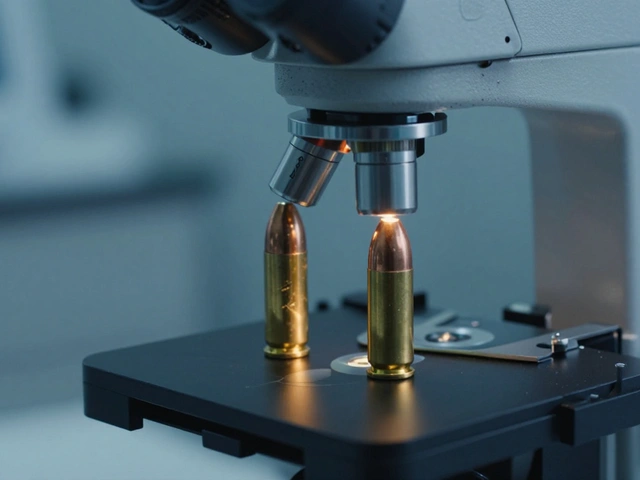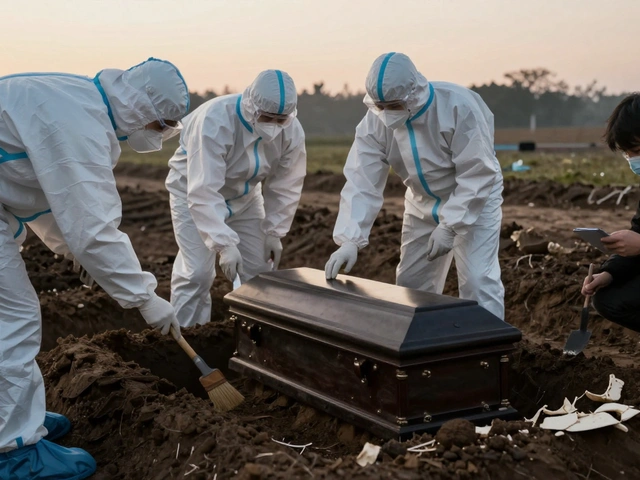
Imagine walking into a crime lab in 2026 and seeing robots sorting evidence while AI algorithms flag potential matches before a human even touches the sample. It sounds like sci-fi, but it’s becoming reality. The problem? Most lab managers are still trying to meet standards written for a world of paper logs and manual microscopy. If you’re running a forensic laboratory or aiming for accreditation under updated ISO/IEC 17025 guidelines, you know the pressure is mounting. Clients don’t just want accurate results anymore; they want transparency, speed, and data integrity that stands up in court.
You might be wondering if your current quality management system (QMS) can handle what’s coming. The short answer is probably not, unless you start adapting now. This isn’t about chasing shiny new tech trends. It’s about survival. Courts are increasingly challenging how data is handled, especially with digital evidence. Accreditation bodies are tightening their grip on how labs prove their competence. Ignoring these shifts means risking your credibility-and your contract renewals.
The Shift from Paper to Digital Integrity
For decades, the backbone of lab compliance was the paper trail. You wrote it down, signed it, and filed it. Today, that model is crumbling under the weight of data volume. Modern digital forensics tools generate terabytes of metadata that need to be tracked automatically. Manual entry introduces error rates that no amount of double-checking can fully eliminate.
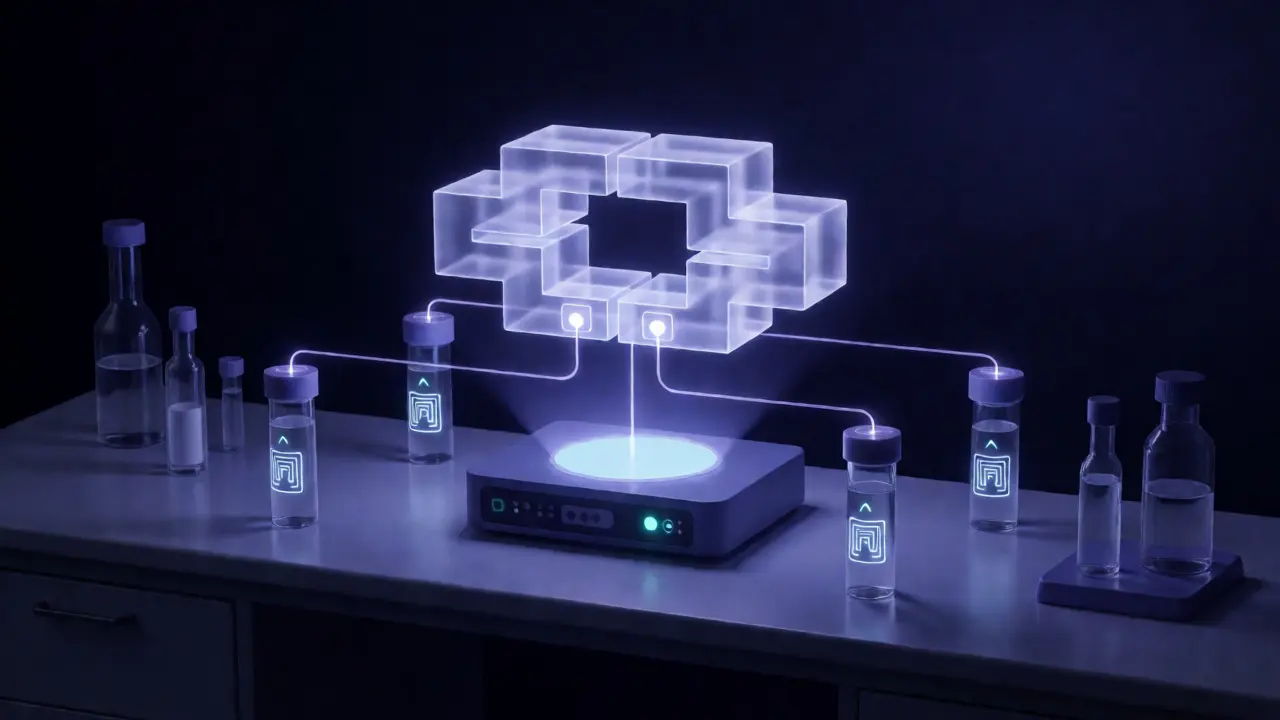
What does this mean for you? It means your LIMS (Laboratory Information Management System) needs to do more than store records. It needs to ensure chain-of-custody integrity in real-time. Think about blockchain technology. It’s not just for cryptocurrency anymore. Labs are testing distributed ledgers to create immutable records of who accessed an evidence file and when. If a defense attorney asks, "Who touched this DNA sequence?" you shouldn't have to dig through three months of emails. Your system should provide an unalterable audit log instantly.
- Automated Chain-of-Custody: Use RFID tags linked directly to your LIMS to track physical samples without human intervention.
- Immutable Logs: Implement write-once-read-many (WORM) storage for critical audit trails.
- Data Provenance: Every algorithmic decision must be traceable back to its input data source.
AI and Algorithm Validation: The New Proficiency Testing
Artificial Intelligence is creeping into every corner of forensic science, from facial recognition to toxicology screening. But here’s the catch: courts hate black boxes. If you use an AI tool to match a suspect to a surveillance video, you need to prove that tool works reliably. Traditional proficiency testing-where you analyze a known sample-doesn’t cut it for software.
You need to validate your algorithms. This is where many labs stumble. They buy a fancy piece of software, assume it’s validated because the vendor says so, and then get blindsided during an audit. Under emerging standards, the burden of proof lies with the lab. You must demonstrate that your software performs consistently across different datasets and conditions.
| Feature | Traditional Validation | Emerging AI-Driven Validation |
|---|---|---|
| Scope | Single instrument or method | Algorithm performance across varied datasets |
| Frequency | Annual or per batch | Continuous monitoring and re-training checks |
| Evidence | Control charts and proficiency test scores | Confusion matrices, false positive/negative rates, bias audits |
| Auditor Focus | Did the tech follow SOPs? | Is the code version-controlled and documented? |
Notice the shift in auditor focus. They aren’t just checking if you followed the rules; they’re checking if your tools are fair and accurate. Bias in forensic algorithms is a hot topic. If your facial recognition software has higher error rates for certain demographics, you need to disclose that. Hiding it could lead to mistrials.
Environmental Controls and Sustainability
We often think of forensics as sterile, isolated environments. But external factors matter more than ever. Climate change is affecting temperature and humidity stability in older facilities. More importantly, clients are asking about the environmental footprint of your operations. It’s not just about being "green"; it’s about cost efficiency and regulatory alignment.
New requirements are pushing labs to reduce hazardous waste generation. Solvents used in drug analysis are expensive to dispose of. Switching to micro-extraction techniques can cut solvent use by 90%. It also reduces exposure risks for your staff. When auditors visit, they’ll look at your waste manifests. If you’re generating excessive chemical waste, it signals inefficiency in your methods.
Energy consumption is another metric gaining traction. High-throughput sequencers and mass spectrometers draw significant power. Smart building integrations can optimize energy use during peak hours. This isn’t just good PR; it lowers operational costs, allowing you to reinvest in better equipment.
Personnel Competence in a Hybrid World
Your staff needs to be part scientist, part IT specialist. The traditional forensic analyst role is evolving. You can’t just hire someone with a chemistry degree and expect them to manage cloud-based data pipelines. Training programs need to reflect this hybrid nature.
Competence assessments are changing too. Instead of just watching a technician pipette a solution, assessors want to see how they troubleshoot a software glitch or interpret a complex statistical output. Soft skills are becoming hard requirements. Can your analyst explain a complex finding to a jury without using jargon? That’s a critical competency now.
Consider implementing continuous professional development (CPD) plans that include digital literacy modules. Partner with local universities to offer courses on data science basics. It keeps your team sharp and shows accreditation bodies that you’re investing in future-proof skills.

Interoperability and Data Sharing Standards
Labs don’t operate in silos anymore. Police departments, hospitals, and other agencies need to exchange data seamlessly. Proprietary formats are a nightmare for integration. Emerging standards push for open data formats like JSON or XML for exchanging case information.
If your lab uses a proprietary database that only exports PDF reports, you’re falling behind. Interoperability allows for faster turnaround times. Imagine sending a digital fingerprint card directly to a national database without manual re-entry. That saves hours per case. It also reduces transcription errors.
Check your current data export capabilities. Are they compatible with major law enforcement systems? If not, budget for middleware solutions or API integrations. This technical debt will only grow if ignored.
Preparing for the Next Audit Cycle
So, how do you prepare? Start with a gap analysis against the latest draft revisions of ISO/IEC 17025. Look specifically at clauses related to risk management and impartiality. These areas are receiving increased scrutiny.
Risk management isn’t just about safety hazards anymore. It includes cybersecurity threats. A ransomware attack on your LIMS can halt investigations for weeks. Do you have a disaster recovery plan tested regularly? Auditors will ask for proof of successful restoration tests, not just a binder full of policies.
Impartiality is getting tighter too. Conflicts of interest extend beyond financial ties. If your lab is owned by a private security firm, how do you prove independence from police interests? Documented governance structures help here. Clear lines of authority and independent oversight committees reassure auditors.
Key Takeaways for Lab Managers
- Digital First: Move away from paper trails. Invest in LIMS with robust audit trails and interoperability features.
- Validate Algorithms: Treat software like instruments. Validate, monitor, and document performance metrics.
- Embrace Transparency: Disclose limitations of AI tools and biases in data interpretation.
- Upskill Staff: Blend scientific expertise with digital literacy and communication skills.
- Plan for Cybersecurity: Treat data breaches as a primary risk category in your QMS.
Do I need to replace my entire LIMS to meet new standards?
Not necessarily. Many existing LIMS platforms offer plugins or updates that add blockchain-style logging or improved API connectivity. Assess your current system's capability to integrate with modern standards before considering a full replacement. Often, middleware can bridge the gap between legacy systems and new requirements.
How strict are courts regarding AI-generated forensic evidence?
Courts are cautious but increasingly accepting, provided there is rigorous validation. Judges often require expert testimony explaining the algorithm's logic and error rates. If you can demonstrate that your AI tool has been validated against known standards and has transparent error reporting, admissibility becomes much easier to secure.
What is the biggest mistake labs make with digital chain-of-custody?
The biggest mistake is assuming digital logs are infallible. Labs often fail to restrict access rights properly, allowing multiple users to edit records without clear attribution. Ensure your system enforces unique user IDs and timestamps every action. Regularly review access logs to detect unauthorized changes.
Are sustainability initiatives mandatory for accreditation?
While not always a direct clause in ISO/IEC 17025, sustainability impacts resource availability and operational continuity, which are part of the broader quality management context. Some regional accreditation bodies are beginning to include environmental impact as part of their holistic assessment criteria, especially for government-funded labs.
How often should I validate my forensic software?
Validation should occur upon initial implementation, after any major update, and periodically based on usage patterns. For high-risk applications, continuous monitoring is recommended. Keep detailed records of each validation event, including the dataset used and the specific metrics evaluated, to satisfy auditor inquiries.