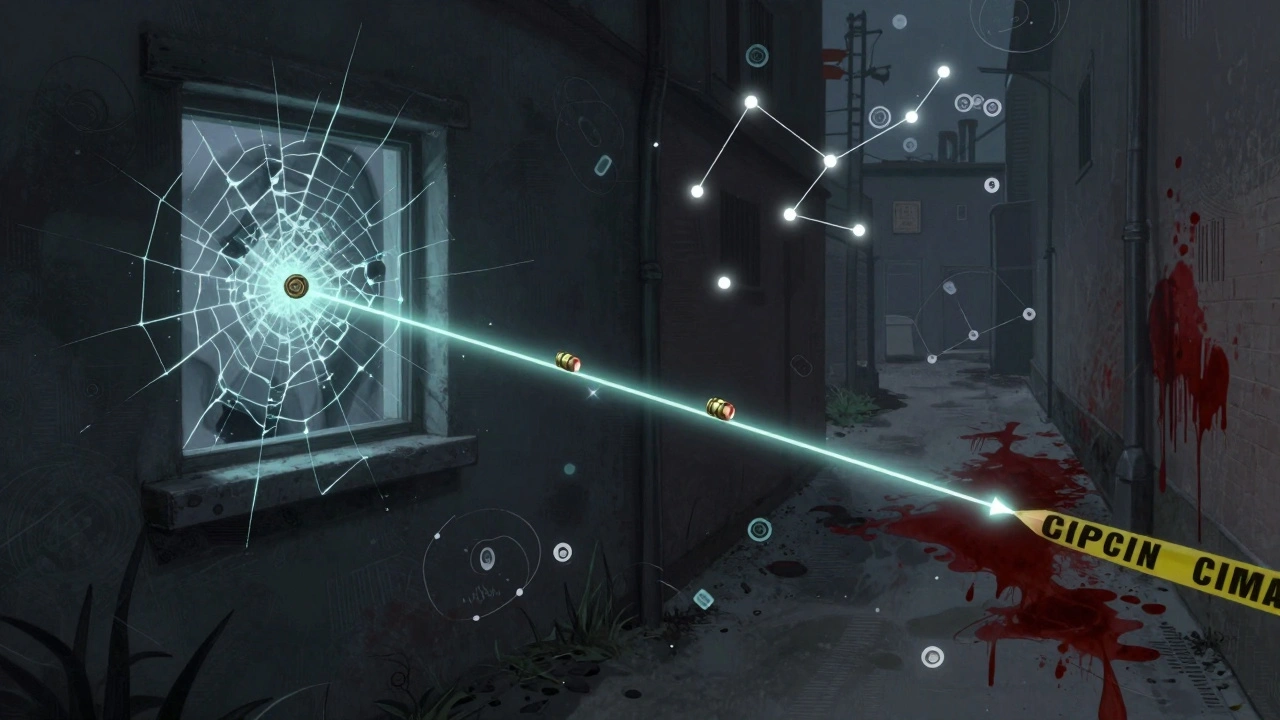
When a gun is fired, it doesn’t just shoot a bullet-it leaves behind a fingerprint. Not the kind you wipe off a doorknob, but a microscopic signature carved into metal by the inner workings of the firearm itself. This is the heart of firearms examination: turning spent bullets and shell casings into evidence that can link a weapon to a crime. It’s not guesswork. It’s science built on decades of forensic rigor, precise tools, and strict protocols.
What Makes Each Firearm Unique?
Every gun has a barrel, and inside that barrel are grooves-called rifling-that twist the bullet as it leaves the chamber. This spin stabilizes the bullet in flight. But here’s the key: no two barrels are exactly alike. Even two guns made on the same assembly line will have tiny variations in the shape, depth, and angle of those grooves. When a bullet is fired, it scrapes against those grooves, picking up unique impressions. Think of it like a tire tread leaving marks on wet pavement-only these marks are smaller than a human hair. These markings fall into two categories: class characteristics and individual characteristics. Class characteristics are shared by all guns of the same model and manufacturer-like the number of grooves or the direction of the twist (right or left). But individual characteristics? Those are the random nicks, scratches, and wear patterns that only that one gun has. These are what let an examiner say, "This bullet came from this specific firearm."How Evidence Is Collected and Preserved
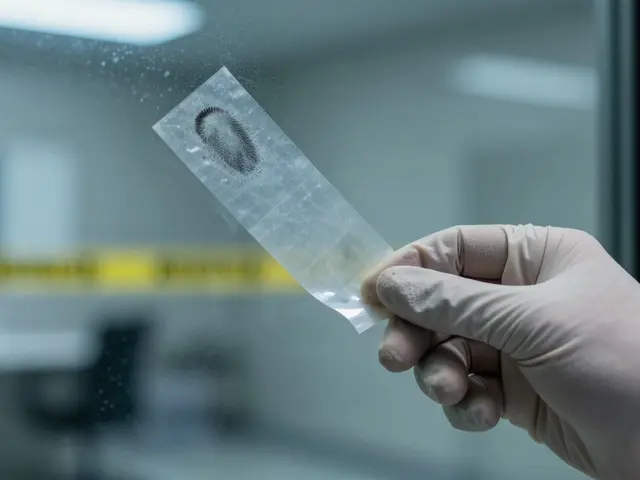
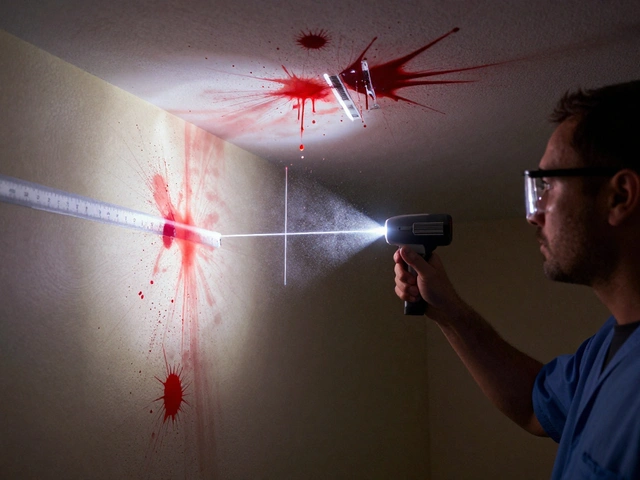
It’s not enough to just pick up a bullet from a wall. If you tug on it with bare hands, you risk smearing fingerprints, contaminating DNA, or worst of all-scratching the surface and wiping away the very markings that could identify the gun. That’s why evidence collection follows strict rules. Bullets lodged in drywall, furniture, or clothing are often extracted by cutting out the entire section and sending it to the lab. Cartridge cases found at a scene are placed in paper envelopes-not plastic-because moisture can corrode the metal and blur the firing pin impressions. Firearms themselves are secured in a way that prevents accidental discharge and avoids contact with the barrel or trigger. Chain of custody is non-negotiable. Every person who handles the evidence must sign a log. No exceptions.The Tools of the Trade
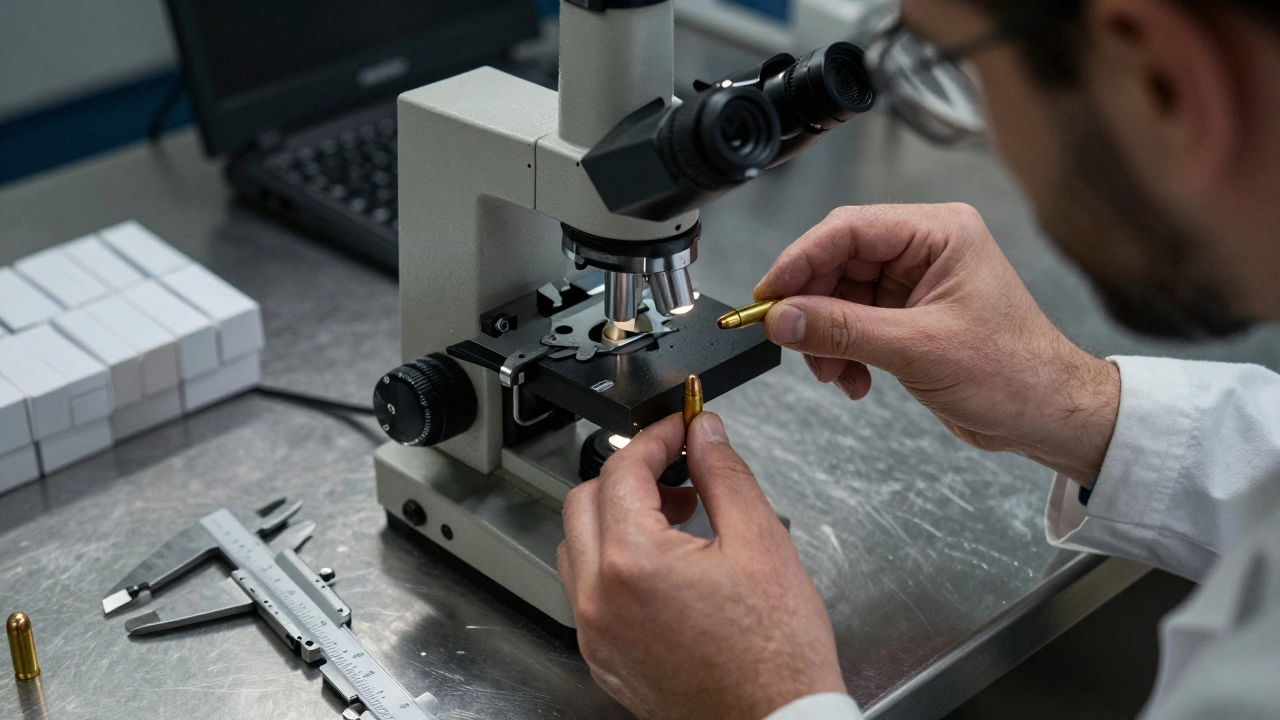
Forensic labs don’t use ordinary microscopes. They use comparison microscopes-specialized instruments that let examiners view two items side by side in perfect alignment. One side shows the evidence bullet from the crime scene. The other shows a test-fired bullet from the suspect gun. The examiner scrolls through both, looking for matching striations, indentations, and ridge patterns. Other essential tools include:- Calipers and digital scales to measure bullet diameter and weight
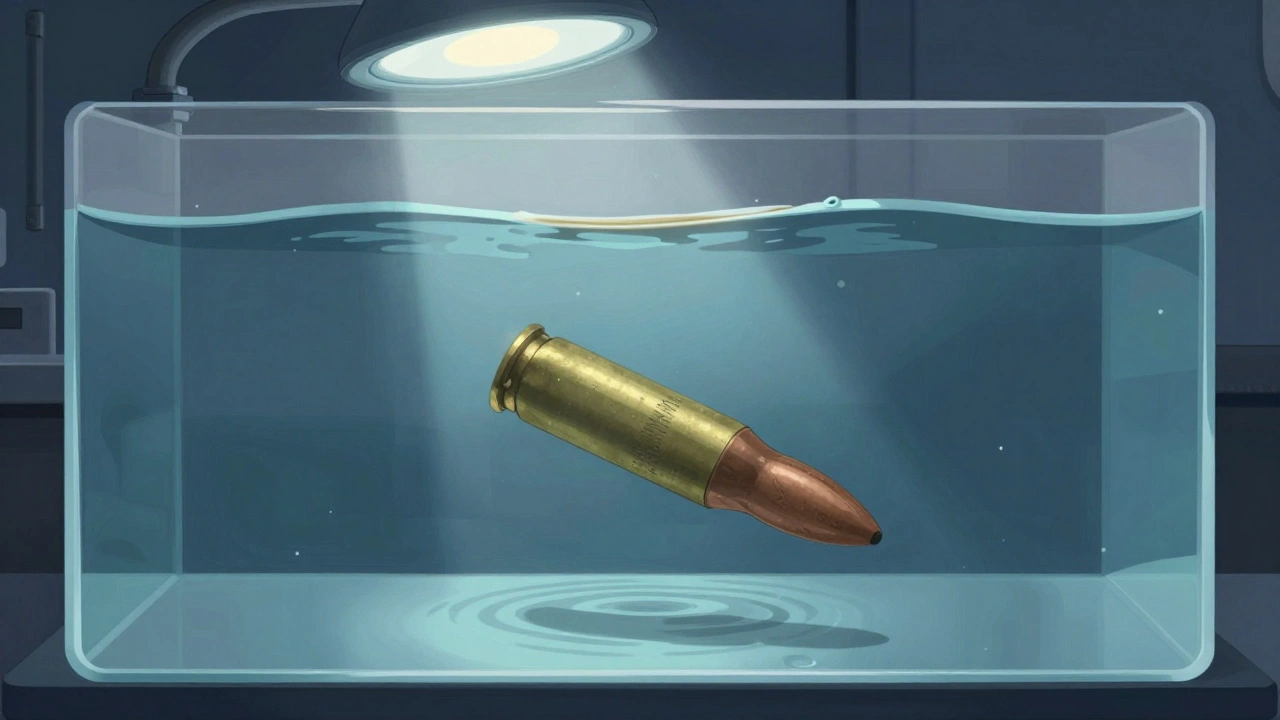
- Water recovery tanks to safely fire test rounds without damaging the lab
- Trigger pull gauges to measure how much force is needed to fire the weapon
- Specialized lighting and magnifiers to detect tool marks on firing pins and extractors
Testing the Firearm: How It’s Done
You can’t just look at a gun and say, "This fired that bullet." You have to test it. That means firing it-safely and under controlled conditions. Most labs use a water tank, about 10 feet long and filled with distilled water. The gun is mounted securely, and a test round is fired into the tank. The water slows the bullet down without distorting its surface. The recovered bullet and cartridge case are then preserved for comparison. Before firing, examiners check:- Whether the firearm cycles properly in semi-auto or full-auto mode
- If the safety mechanisms work as designed
- Whether there are obstructions in the barrel
- Any signs of modification or damage that could alter performance
Shotguns and Special Cases
Shotguns don’t have rifling. So how do examiners match them? They look at the wad and the pattern of shot pellets. Each shotgun has a unique choke-tapered constriction at the muzzle-that affects how the shot spreads. The wad, which separates the powder from the pellets, can leave distinct impressions from the barrel’s interior. These can be matched to test-fired wads. Also, shot pellets can show signs of deformation from the barrel’s interior. Even without rifling, the internal surface of a shotgun barrel can have unique imperfections. These are rare, but when they occur, they can be powerful evidence.Connecting Multiple Crimes
One of the most powerful uses of firearms examination is linking multiple crime scenes. If two different shootings produce bullets with identical microscopic markings, it’s highly likely the same gun was used in both. This is how serial shooters are sometimes caught-through a match between a bullet from a robbery and one from a homicide months earlier. Examiners maintain databases of fired cartridge cases and bullets from past cases. While there’s no national database like CODIS for DNA, many state and federal labs share comparison results. A match between a cartridge case from a 2024 burglary and one from a 2026 shooting can reopen cold cases.Training and Certification
You can’t just walk into a forensic lab and start comparing bullets. Firearms examiners undergo years of training. Most start with a background in criminal justice or forensic science, then complete a formal apprenticeship under a certified examiner. They study:- Every type of firearm-from antique revolvers to modern AR-15s
- How different manufacturers produce barrels and extractors
- The physics of bullet deformation and powder residue
- Legal standards for courtroom testimony