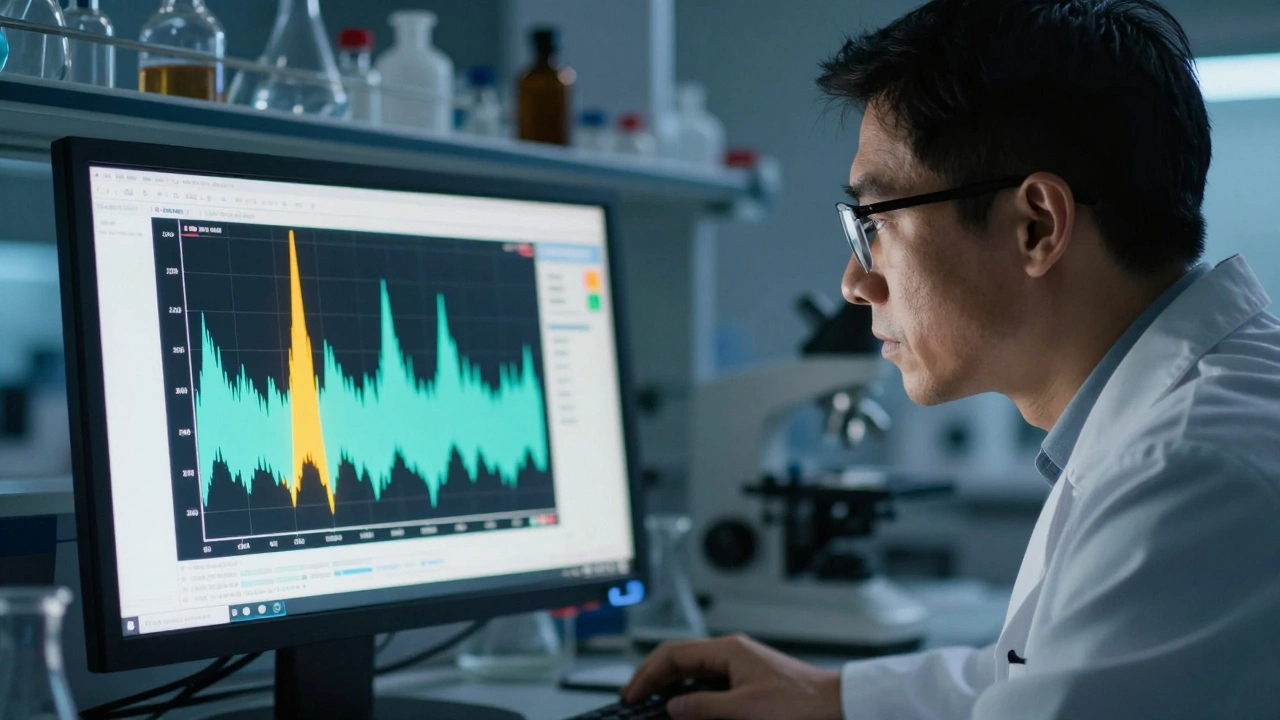
Imagine a forensic chemist staring at a screen where a chemical peak doesn't match anything in the system. In the world of synthetic drugs, this is a common nightmare. Every time a lab thinks it has a handle on the current street drugs, a chemist in a clandestine lab tweaks a molecule, and suddenly, a new analog appears that is invisible to traditional scanners. This is why opioid analog libraries is a critical forensic infrastructure consisting of searchable databases of chemical fingerprints and spectral signatures used to identify synthetic opioids and their derivatives. If these libraries aren't updated in real-time, the tools we use to save lives and solve crimes become obsolete.
The Struggle with Static Databases
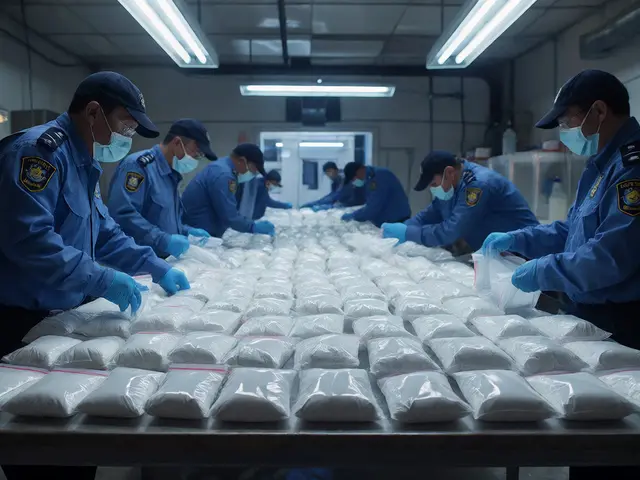
For years, drug detection relied on a simple "lock and key" mechanism. A machine would take a sample, create a chemical fingerprint, and compare it to a built-in reference library. If the fingerprint matched a known entry, you had your answer. The problem? This method is purely reactive. For a substance to be identified, it first has to be synthesized, seized, analyzed by a specialist, and then manually entered into the database.
This creates a massive window of vulnerability. We are seeing thousands of potential fentanyl analogs-chemical cousins of fentanyl that are often more potent and just as deadly. Forensic chemists often run into compounds that aren't commercially available as reference standards, meaning there is no "gold standard" to upload to the library. This gap can leave law enforcement and health officials blind for months or even years while a new analog spreads through a community.
The Gold Standard: NIST Mass Spectral Library
When it comes to high-level identification, most labs look to the NIST Mass Spectral Library. Managed by the National Institute of Standards and Technology, this is one of the most comprehensive tools available. It doesn't just track opioids; it's a massive map of chemical identities. In a major 2020 update, NIST added over 14,000 metabolites, including 40 new fentanyl analogs and various synthetic cathinones and amphetamines.
To give you an idea of the scale, that specific update included 6,000 human metabolites, 8,000 plant metabolites, and 2,000 specific drugs. By expanding the library this way, NIST helps researchers identify not just the drug itself, but the metabolites left behind in a patient's system, which is vital for medical toxicology and environmental studies.
| Feature | Traditional Library-Based | Algorithmic/Classifier-Based |
|---|---|---|
| Matching Method | Exact match to reference spectrum | Structural similarity and patterns |
| Detection of New Analogs | Requires prior database entry | Can detect unknown variants |
| Update Speed | Slow (manual entry) | Fast (pattern-based) |
| Accuracy | Very High (for knowns) | High (for class identification) |
Moving Beyond the Match: Hybrid Search and Classifiers
Because the "arms race" between clandestine chemists and forensic labs is so intense, the industry is shifting toward algorithmic detection. Instead of asking, "Does this match Substance X?", these systems ask, "Does this look like a member of the fentanyl family?"
NIST stepped into this gap in 2018 by developing a hybrid search algorithm. This allows a chemist to analyze a compound that isn't in the database and still get a result showing all the chemicals with similar structures. It's the difference between searching for a specific person's name and searching for everyone who looks like them. Similarly, the MX908 instrument uses a Fentanyl Analog Classifier that can detect over 2,000 analogs without needing a specific reference spectrum for every single one.
Take the case of ortho-methylfentanyl. When the Center for Forensic Science Research and Education (CFSRE) issued an alert about its rise in Canada and the US in late 2024, traditional libraries were lagging. However, an algorithmic classifier would have flagged it as a fentanyl analog immediately, providing actionable intelligence long before the formal database update arrived.
Collaborative Intelligence and the NPS Data Hub
Data silos are the enemy of public health. If a lab in Germany finds a new variant, a lab in Oregon needs to know about it instantly. This is the driving force behind the NPS Data Hub. Launched as a collaboration between NIST, the DEA, and the German Federal Criminal Police Office (BKA), this platform focuses on Novel Psychoactive Substances (NPS).
What makes the NPS Data Hub different is its flexibility. Most databases only care about mass spectrometry, but the Hub allows users to share data from various techniques, such as Nuclear Magnetic Resonance (NMR) and Raman spectroscopy. This is crucial because some analogs are so chemically similar that they look identical under one test but are clearly different under another. By allowing both curated and preliminary data, the Hub lets labs track the movement of new drugs in real-time, even before the evidence meets the rigid standards required for a courtroom.
The Technical Backbone: Mass Spectrometry and Field Tools
The actual heavy lifting of these libraries happens through chromatographic methods. Most labs use Gas Chromatography-Mass Spectrometry (GC-MS) or Liquid Chromatography-Tandem Mass Spectrometry (LC-MS/MS). Both are incredibly powerful but are entirely dependent on the quality of the reference libraries they are plugged into.
There is a move toward high-resolution mass spectrometry using Orbitrap or time-of-flight technologies. These can potentially identify unknown compounds without needing a reference standard at all by calculating the exact mass of the molecule. However, these machines are expensive and bulky, meaning they stay in the lab and don't help the officer on the street.
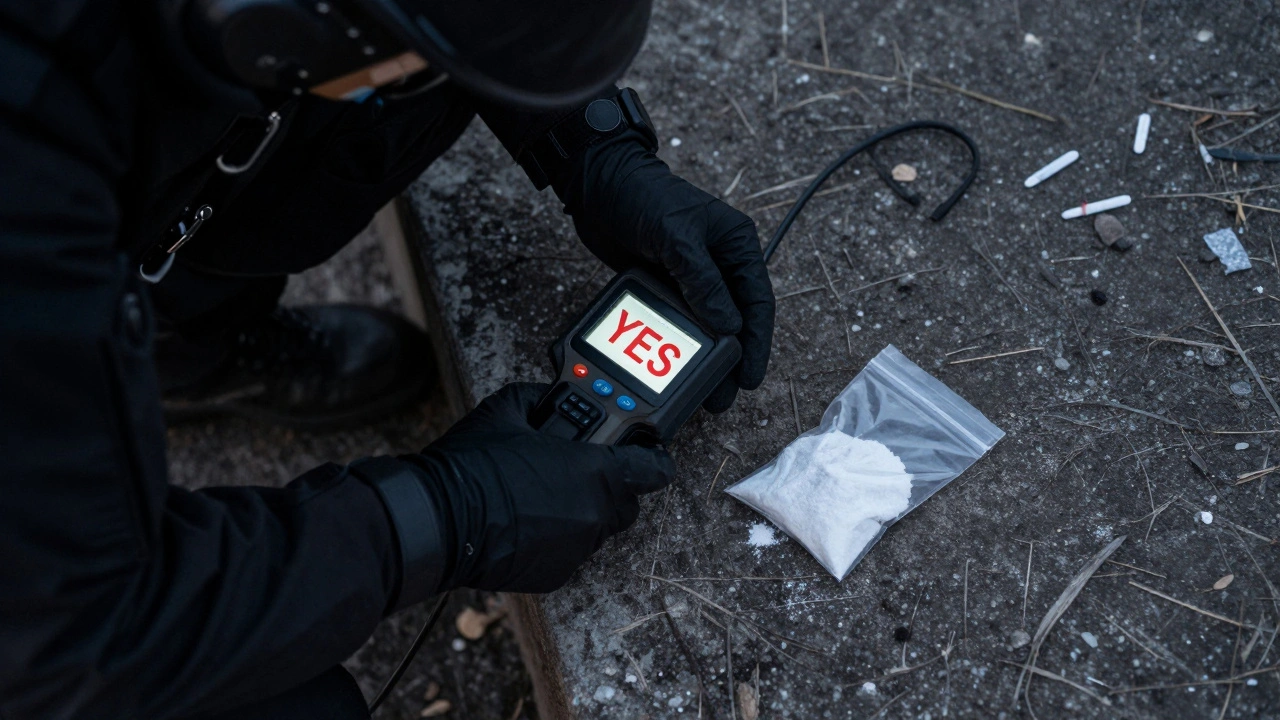
This is where field-portable spectroscopic methods come in. First responders need to know if a powder is a lethal opioid before they touch it. The challenge here is translating complex spectral data into a simple "Yes/No" for a non-scientist. These portable tools rely on condensed versions of these libraries and sophisticated algorithms to filter out the noise of complex mixtures often found in street samples.
Community Contributions and Resource Gaps
Government agencies aren't the only players. Private entities like Cayman Chemical provide essential forensic and toxicology reference standards. By offering free resources for the screening of unknown substances, they help fill the gaps when government procurement is too slow to keep up with the street.
Despite these efforts, the gap between the lab and the field remains a primary concern. While a high-end lab might have the tools to identify a brand-new analog in a day, a field operator might be relying on a database that hasn't been updated in six months. Closing this loop-moving the discovery from the lab to the portable device-is the next great challenge in drug analysis.
Why can't we just add every possible opioid analog to the library?
It's mathematically impossible. There are thousands of potential variations of fentanyl and its cousins. To add a substance to a traditional library, chemists first need a physical reference standard of that pure drug to analyze and create a fingerprint. Many of these analogs are created in secret labs and aren't available for purchase by forensic labs, meaning there is no sample to analyze and no fingerprint to upload.
What is the difference between a library match and an algorithmic classification?
A library match is like a fingerprint check; it tells you exactly who the suspect is because it matches a known record. An algorithmic classification is more like a description; it tells you the suspect is "a 6-foot tall man with red hair." It might not tell you the exact name of the analog, but it tells you with high certainty that the substance belongs to the opioid family and is likely dangerous.
How does the NPS Data Hub help if the data is only "preliminary"?
In public health, speed beats perfection. Preliminary data allows labs to warn other agencies that a new compound is appearing in the wild. While this data might not be strong enough to hold up in a criminal trial, it is more than enough to trigger a public health alert or warn first responders about a new potency level in their area.
Can field-portable devices be fooled by complex mixtures?
Yes, they can. Street drugs are rarely pure; they are often mixed with cutting agents or other drugs like xylazine. This creates "noise" in the spectral data. Modern field tools use advanced algorithms to peel back these layers, but there is always a risk of a false negative if the opioid concentration is too low or the cutting agent is too dominant.
Which mass spectrometry method is best for detecting new analogs?
High-resolution mass spectrometry (like Orbitrap or time-of-flight) is the most powerful for unknowns because it can determine the precise molecular formula without needing a reference standard. However, for routine, high-volume testing, LC-MS/MS is the workhorse of the industry due to its speed and sensitivity.
Next Steps for Lab Managers
If you are managing a forensic or toxicology lab, the first step is auditing your current software versions. Ensure your mass spectrometry software is pulling the latest updates from the NIST library. Beyond that, consider transitioning to a hybrid search workflow where you don't just rely on exact matches but also use structural similarity searches to flag potential new analogs.
For those in the field, prioritize the procurement of devices with class-based classifiers rather than simple library-based scanners. This ensures that your team is protected from a new, lethal analog even if it hasn't been officially "named" and added to a database yet.