You spend three years in a cell for a crime you didn't commit. Your alibi was shaky, your memory of that night is foggy, and the jury believed the eyewitness who pointed at you with 90% confidence. Then, a new test comes back. It’s not just "inconclusive" or "matches the suspect." It excludes you completely. That single line of data can unlock the door to freedom.
This isn't rare fiction. Since 1989, forensic DNA has exonerated over 375 people in the United States alone, according to the Innocence Project. Many served decades behind bars. The technology that catches criminals also frees them, but only if it's applied correctly, interpreted without bias, and pursued when the system fails.
The Science Behind Exoneration
To understand how DNA clears someone, you have to know what we're actually looking at. We aren't sequencing the entire human genome-that would take too long and cost too much for most cases. Instead, labs use Short Tandem Repeat (STR) analysis. Think of STRs as genetic barcodes. They are specific regions on chromosomes where short sequences of DNA repeat themselves. The number of repeats varies wildly between individuals.
A standard CODIS (Combined DNA Index System) profile looks at 20 core STR loci. If your profile matches the evidence at all 20 spots, the probability of a random match is roughly one in trillions. But here’s the kicker for exoneration: if even one locus mismatches significantly, you are excluded. You cannot be the source of that biological material. This binary nature-match or no match-is powerful because it doesn't rely on subjective interpretation like fingerprinting sometimes does.
| Evidence Type | Error Rate | Role in Wrongful Convictions | DNA Impact |
|---|---|---|---|
| Eyewitness Identification | High | Present in ~69% of DNA exonerations | Directly contradicts ID |
| False Confessions | Moderate | Present in ~28% of DNA exonerations | Proves physical impossibility |
| Forensic Hair/Microscopy | Variable | Often overstated in trials | Provides definitive exclusion |
| DNA Profiling | <1% | Gold standard for identification | Serves as the ground truth |
Why Old Cases Get Reopened
If you were convicted in 1995, your case might have relied on blood typing or microscopic hair comparison. These methods are probabilistic, not deterministic. A hair under a microscope might look identical to yours, but it doesn't mean it came from your head. Modern mitochondrial DNA (mtDNA) testing can now analyze hair shafts that lack nuclear DNA, providing a maternal lineage match. While less discriminating than nuclear DNA, mtDNA can still exclude a suspect if the maternal lines don't match.
Post-conviction access to evidence is the biggest hurdle. Police and prosecutors often resist releasing old swabs, citing chain-of-custody issues or budget constraints. However, many states now have post-conviction DNA testing laws. In Oregon, for example, statutes allow prisoners to petition for testing if the results could prove innocence by clear and convincing evidence. Without this legal pathway, the science sits idle while innocent people wait.
The Role of the Innocence Project
Organizations like the Innocence Project play a critical role. They aren't just lawyers; they are investigators who dig through dusty archives to find biological samples that were never tested. Often, the sample exists-it’s a cigarette butt, a bite mark cast, or semen stains on clothing-but it was deemed irrelevant at trial because the defense strategy focused on an alibi rather than physical evidence.
These groups fund the testing when public defenders' offices run out of money. They also handle the complex paperwork required to get judges to agree to reopen sealed evidence. It’s slow work. A typical case takes two to four years from intake to final exoneration. But the payoff is life-altering.

Pitfalls: When DNA Doesn't Clear You
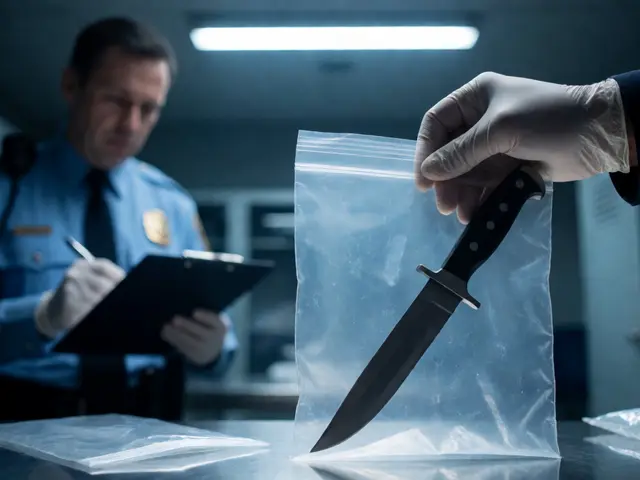
Just because DNA wasn't found doesn't mean you're guilty, and just because it was found doesn't always mean you committed the crime. Context matters. If your DNA is on a knife, did you hold it during dinner last week, or did you stab someone? Touch DNA transfers easily. People shed skin cells constantly. Handshakes, handling objects, and even breathing can deposit genetic material.
Conversely, the absence of DNA isn't proof of innocence. If the perpetrator wore gloves, there might be no touch DNA. If the evidence degraded due to heat or moisture, the sample might be unrecoverable. In these scenarios, exoneration requires more than just a negative result; it requires re-evaluating the other evidence that led to the conviction.
How to Pursue Post-Conviction Testing
If you or someone you know is seeking exoneration, here is the practical path forward:
- Locate Biological Evidence: Identify items collected at the scene that likely contain bodily fluids or touch DNA. Clothing, weapons, and sexual assault kits are prime candidates.
- Check Chain of Custody: Ensure the evidence hasn't been contaminated or lost. Poor storage conditions can degrade DNA beyond recovery.
- File a Motion for Testing: Most jurisdictions require a formal request showing that DNA testing could produce new evidence of innocence.
- Secure Funding: Private labs charge $500-$2,000 per sample. Non-profits like the Innocence Network often cover these costs for qualifying cases.
- Interpret Results Carefully: An exclusionary result must be paired with a motion to vacate the conviction based on actual innocence.

Real-World Impact: The Case of Kirk Bloodsworth
Kirk Bloodsworth became the first person in the U.S. to be exonerated by DNA testing in 1993. He spent nine years in prison, including time on death row, for the rape and murder of a nine-year-old girl. Witnesses identified him, and he was convicted. Years later, a lawyer discovered that biological evidence had been preserved. DNA testing proved another man committed the crime. Bloodsworth’s case highlighted two major flaws: unreliable eyewitness testimony and the failure to test available evidence promptly.
Today, his story drives policy changes requiring better eyewitness identification protocols and mandatory DNA preservation laws in many states. It reminds us that justice isn't static; it evolves with technology.
Frequently Asked Questions
Can DNA testing overturn a guilty plea?
Yes, but it is harder. Defendants who plead guilty waive certain rights, including the right to appeal factual guilt. However, many states allow post-conviction DNA testing even after a guilty plea if the defendant claims actual innocence. The burden of proof is higher, requiring clear and convincing evidence that no reasonable fact-finder would have convicted had the DNA results been known.
What happens to the real perpetrator after an exoneration?
Ideally, police investigate the new lead. Sometimes the true perpetrator is already in the CODIS database due to prior arrests. Other times, they may be unknown. Exoneration triggers a review of cold cases linked to the same offender, potentially solving multiple crimes. However, statutes of limitations may prevent prosecution if too much time has passed.
Is DNA evidence infallible?
No method is perfect. Human error, contamination, and mixtures can complicate results. For example, if a sample contains DNA from multiple people, separating profiles becomes difficult. Labs follow strict accreditation standards (like ISO 17025) to minimize errors, but mistakes happen. Expert testimony is crucial to explain limitations and confidence intervals to juries and judges.
How long does the exoneration process take?
It varies widely. Finding evidence might take months. Legal motions can drag on for years. Lab testing itself is fast (weeks), but court hearings, appeals, and prosecutorial reviews add significant time. On average, it takes several years from the start of investigation to official release. Some cases resolve faster if prosecutors agree quickly.
Do all states have laws allowing post-conviction DNA testing?
Most do, but the rules differ. Some states require unanimous consent from prosecutors, others allow judicial discretion. Federal law provides a baseline, but state statutes govern most criminal cases. Always check local jurisdiction requirements. Organizations like the Innocence Project maintain up-to-date maps of state-specific laws and resources.