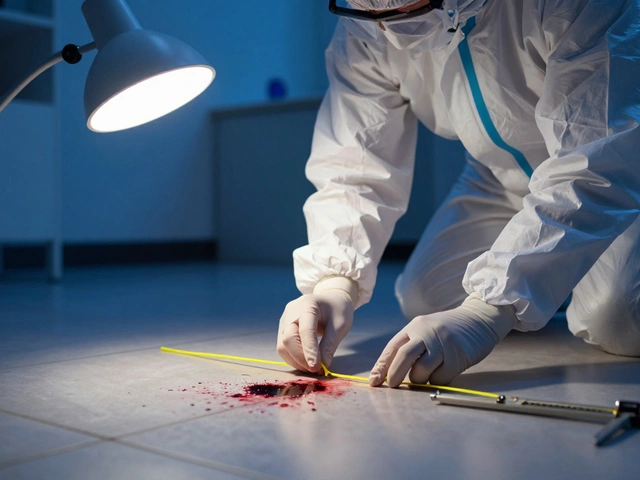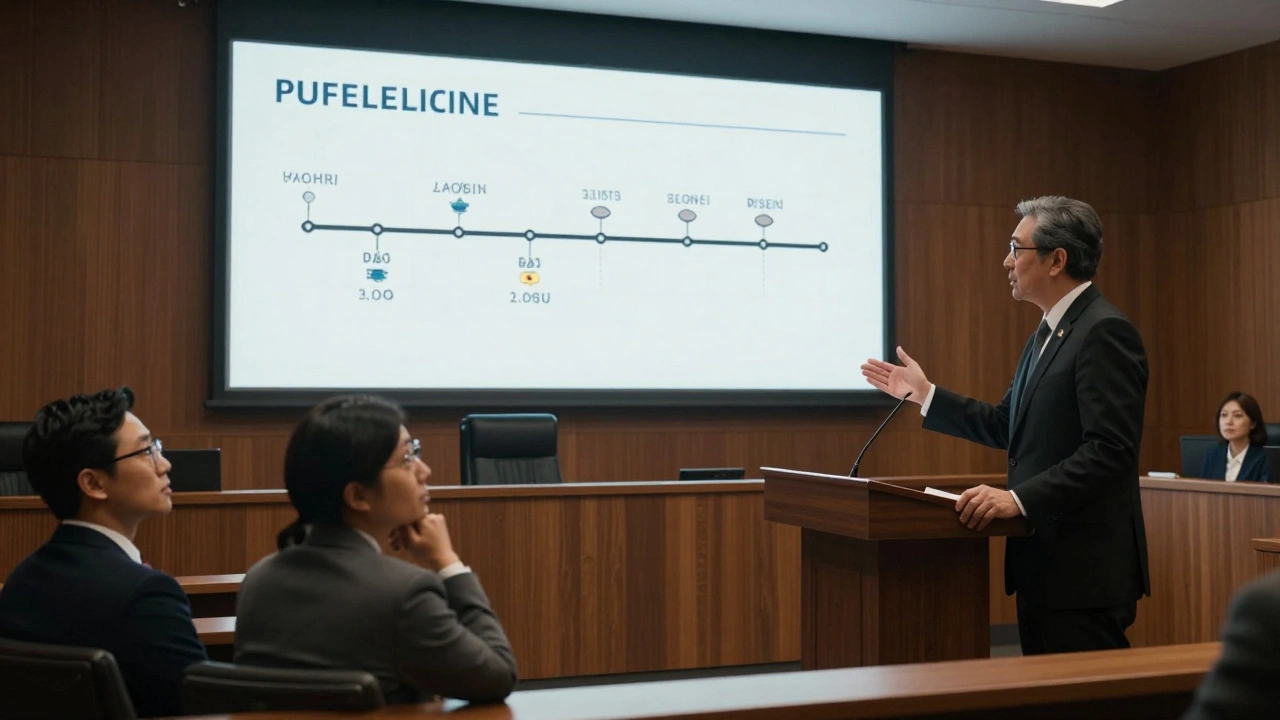
Imagine standing in a courtroom. You have the facts on your side, but the jury looks bored. Then you pull out a simple chart or a 3D model that makes the complex clear. Suddenly, their eyes light up. This is the power of demonstrative evidence. It is not just about looking cool; it is about winning by making the truth undeniable.
But here is the catch: judges are wary. They know that a flashy animation can sway a jury more than cold hard facts. That is why there are strict legal limits. If you get the foundation wrong, your exhibit gets thrown out-and maybe so does your credibility. Let’s break down how to use charts, models, and summaries without crossing the line.
What Exactly Is Demonstrative Evidence?
First, we need to clear up a common confusion. Not everything shown in court is "evidence" in the technical sense. We usually split visual aids into three buckets:
- Substantive (Real) Evidence: The actual object involved in the case, like the murder weapon or the broken contract. This has independent probative value.
- Demonstrative Evidence: A visual aid used to illustrate testimony. Its value depends entirely on the witness explaining it. Think of a map showing where an accident happened.
- Illustrative Aids: Tools used only to help the jury understand arguments or testimony during the trial. These are often not admitted as formal evidence and cannot go back to the jury room for deliberations.
The New York Guide to Evidence defines demonstrative evidence as a "visual, graphic, or sound aid used to explain or illustrate a witness’s testimony." The key word is "illustrate." If you try to pass off an illustrative aid as proof, you will face objections.
The Big Three: Charts, Models, and Summaries
In modern trials, three types of demonstratives dominate. Each has its own rules and pitfalls.
1. Charts and Graphs
Charts are great for simplifying data. Under Federal Rule of Evidence 1006 (FRE 1006), you can use a chart, summary, or calculation to prove the content of voluminous writings, recordings, or photographs that cannot be conveniently examined in court.
Here is the deal with FRE 1006: The underlying documents must be made available to the other party for inspection or copying. You cannot hide the source data. If you create a timeline of events or a financial summary, it must be strictly accurate. If your chart contains hearsay or inadmissible statements within its captions, the whole thing can be excluded.
2. Physical and 3D Models
Models are powerful because they are tangible. Whether it is a scale model of a crash scene or an anatomical model of an injury, the rule is simple: it must be a reasonably exact reproduction.
To admit a model, you need a witness to testify that it fairly and accurately represents the original object or scene. It must be built to scale. If you change the dimensions to make a defect look worse, you are misleading the jury. Courts will exclude models that are not substantially similar to the actual conditions of the event.
3. Computer Animations and Simulations
This is the riskiest category. Animations can look like real video footage, leading jurors to believe they are seeing what actually happened, rather than a reconstruction based on assumptions.
To get an animation admitted, you typically need an expert to sponsor it. The expert must explain the data inputs and the methodology. If the animation goes beyond the evidence-adding details that weren’t proven-it becomes prejudicial. Many courts treat animations as illustrative aids unless they meet strict reliability standards under FRE 702.
The Legal Hurdles: Why Exhibits Get Rejected
You can build the best chart in the world, but if it fails these legal tests, it won’t see the light of day in front of the jury.
| Ground for Exclusion | Legal Basis | What It Means for You |
|---|---|---|
| Unfair Prejudice | FRE 403 / State Analogues | The exhibit is too emotional or inflammatory. Example: Overly graphic medical photos that shock rather than inform. |
| Misleading or Confusing | FRE 403 / NY Rule 11.03 | The chart uses complex jargon or selective data that confuses the issue. Example: A graph with a distorted Y-axis. |
| Lack of Foundation | FRE 901 / Authentication | No witness can confirm the exhibit is accurate. Example: A model built without verifying the scale. |
| Cumulative | FRE 403 | The exhibit repeats information already presented. Judges hate wasting time. If you’ve already explained the timeline, don’t show three different versions. |
| Hearsay within Exhibit | FRE 801-805 | The chart includes statements from non-testifying witnesses. Example: A timeline citing an email that hasn’t been admitted into evidence. |
The most critical balance is under FRE 403. Even if evidence is relevant, it can be excluded if its probative value is substantially outweighed by the danger of unfair prejudice, confusing the issues, or misleading the jury. Judges have wide discretion here. In New Jersey, for instance, courts grant trial judges broad leeway to exclude demonstratives that feel more like advocacy tools than factual aids.
How to Build a Solid Foundation
Before you even think about designing a slide deck, ask yourself: Does this help the factfinder? As per New York’s Rule 11.03(2)(b), the exhibit must help the jury better understand the testimony. If the testimony is simple, you probably don’t need a complex 3D model.
Follow these steps to ensure admissibility:
- Tie it to Testimony: Every demonstrative must be linked to a specific witness. Have that witness ready to authenticate it. They should say, "This chart accurately reflects the data I reviewed."
- Check for Accuracy: Ensure all scales, colors, and labels are precise. Avoid argumentative captions like "Defendant’s Negligent Action." Stick to neutral terms like "Sequence of Events."
- Disclose Early: Most federal and state rules require pretrial disclosure of exhibits. Surprise demonstratives are often rejected. Serve your charts and models well before trial, usually 30-60 days out.
- Prepare for Objections: Anticipate that the other side will call your animation "speculative" or your chart "cumulative." Have a backup plan. Can you simplify the chart? Can you limit the scope of the animation?
Federal vs. State Approaches
While the core principles are similar, nuances exist. The Federal Rules of Evidence provide a baseline, but states vary.
- Federal Courts: Rely heavily on FRE 401-403 and FRE 702 for expert-sponsored demonstratives. The 2023 amendments to FRE 702 emphasize explicit judicial findings on reliability, which impacts how computer simulations are treated.
- New York: Has codified rules (Rule 11.03) that explicitly define demonstrative evidence and require it to be a "fair and accurate depiction." This provides clearer guidance than pure case law.
- Florida: Mirrors federal rules but places heavy emphasis on the "reasonably exact" standard for replicas. Florida courts have excluded reenactment videos that were deemed overly dramatized.
- California: Uses Cal. Evid. Code §352, similar to FRE 403. California courts are particularly sensitive to animations that imply facts not in evidence, often requiring limiting instructions.

Strategic Tips for Lawyers and Litigators
Demonstrative evidence is a storytelling tool. Use it to reinforce, not replace, your narrative.
Simplicity Wins: Jurors are overwhelmed. Keep text on slides minimal-ideally fewer than 15-20 words. Use color coding consistently. If red means "plaintiff’s claim" on one slide, it should mean that on every slide.
Know the Difference Between Illustrative and Substantive: If you are using a blackboard to sketch a timeline during closing argument, that is an illustrative aid. It stays in the courtroom. If you want the jury to take a chart home to deliberate, it must be admitted as substantive or demonstrative evidence. Mixing these up can lead to reversible error on appeal.
Collaborate with Experts: For scientific or technical cases, work with experts early. They can help validate the data behind your charts. If the methodology isn’t generally accepted (under the Frye or Daubert standards), your visual aid will fail.
Future Trends: VR and AI in the Courtroom
We are moving toward immersive technology. Virtual Reality (VR) and Augmented Reality (AR) allow jurors to "walk through" a crime scene or "dissect" a machine. While exciting, these tools raise new evidentiary questions. How do we authenticate a VR environment? What level of detail is permissible?
As of 2026, courts are still figuring this out. The trend is toward stricter scrutiny. Just because you *can* build a hyper-realistic simulation doesn’t mean you *should*. The legal limits remain focused on fairness and accuracy. Always prioritize substance over style.
Can a chart be considered substantive evidence?
Yes. Under FRE 1006, a chart summarizing voluminous records can be admitted as substantive evidence to prove the content of those records, provided the underlying documents are available for inspection. However, most charts are used as demonstrative evidence to illustrate testimony.
What is the difference between demonstrative evidence and illustrative aids?
Demonstrative evidence is admitted into the record and often goes to the jury room for deliberation. Illustrative aids are used only during testimony or argument to help understanding and are generally not considered evidence. They cannot be taken to the jury room unless the judge explicitly allows it.
Why are computer animations often excluded?
Animations are frequently excluded under FRE 403 because they can be misleading or unfairly prejudicial. Jurors may mistake a reconstruction for actual video footage. To be admitted, animations must be sponsored by an expert and accurately reflect the evidence without adding unsupported details.
Do I need to disclose demonstrative evidence before trial?
Yes. In federal court and most state jurisdictions, you must disclose exhibits, including demonstratives, during pretrial discovery. Failing to disclose can result in the judge excluding the exhibit. Check local rules for specific deadlines, often 30-60 days before trial.
How do I authenticate a physical model?
You need a witness to testify that the model is a fair and accurate representation of the original object or scene. The witness should confirm that the model is built to scale and that the materials and dimensions match the reality of the case.
Can I use a diagram from a textbook as evidence?
Generally, no. Textbook diagrams are not authentic evidence of the specific case. You can use them as illustrative aids if an expert testifies that the general principles depicted apply to your case, but they cannot be admitted as proof of the specific facts unless properly authenticated and tied to the evidence.
What happens if my chart contains hearsay?
If a chart includes statements from non-testifying witnesses (hearsay), it can be objected to and excluded. Ensure that all data points in your chart are derived from admitted evidence or testimony. You cannot use a chart to sneak in inadmissible information.
Are 3D prints admissible as evidence?
Yes, 3D prints are treated similarly to physical models. They must be authenticated by a witness who confirms they are an accurate reproduction of the original data or object. They are subject to the same FRE 403 balancing test for prejudice and confusion.