You collect a piece of evidence. It’s crucial. It could make or break a case. But what happens when you need to test it twice? Or when two different labs need to analyze the same material? This is where duplicate evidence sets come into play. They are not just backup copies; they are a strategic tool for ensuring accuracy, validating results, and maintaining an unbroken chain of custody.
Managing these duplicates-whether they are physical sub-samples from a crime scene or data splits in research-is tricky. If you handle them wrong, you risk contamination, bias, or invalidating your entire investigation. The goal isn't just to have more data; it's to have *reliable* data that stands up to scrutiny.
Why Duplicate Evidence Matters Beyond "Just in Case"
Many people think duplicates are simply insurance. If the first test fails, you use the second. That’s part of it, but it misses the bigger picture. In forensics and quality assurance, duplicates serve three distinct purposes: precision estimation, validation, and independence.
First, they help you measure precision. Precision means getting the same result if you repeat the process under identical conditions. By analyzing a duplicate sample alongside the original, you can see how much natural variation exists in your testing method. If the two results differ wildly, something is wrong with your equipment, your technique, or the sample itself.
Second, they validate findings. When you split a large dataset or physical bulk sample, you create independent subsets. Analyzing both separately allows you to confirm that your initial discovery wasn’t a fluke. This is critical in legal contexts where opposing counsel will look for any excuse to challenge your methodology.
Third, they maintain independence. In some cases, one half of the evidence might be used for exploratory analysis (finding potential leads), while the other half is reserved for confirmatory analysis (proving those leads). Keeping these separate prevents "data dredging," where researchers accidentally find patterns that aren’t really there because they looked too hard at the same data.
The Core Methods: Field Duplicates vs. Laboratory Replicates
Not all duplicates are created equal. Understanding the difference between field duplicates and laboratory replicates is essential for proper documentation and interpretation.
- Field Duplicates: These are two separate samples collected from the same location or source by different collectors, or by the same collector at slightly different times. They capture variability in collection methods as well as environmental factors. For example, two soil samples taken from adjacent spots at a crime scene.
- Laboratory Replicates: These start as a single homogeneous sample that is divided into two portions within the lab. Only the analytical portion of the process is duplicated. This isolates errors specific to the instrumentation or chemical preparation.
Knowing which type you’re dealing with changes how you interpret the results. A discrepancy in field duplicates might mean the source material was heterogeneous (not uniform). A discrepancy in lab replicates suggests a problem with the testing protocol itself.
How to Split Samples Correctly: Avoiding Bias
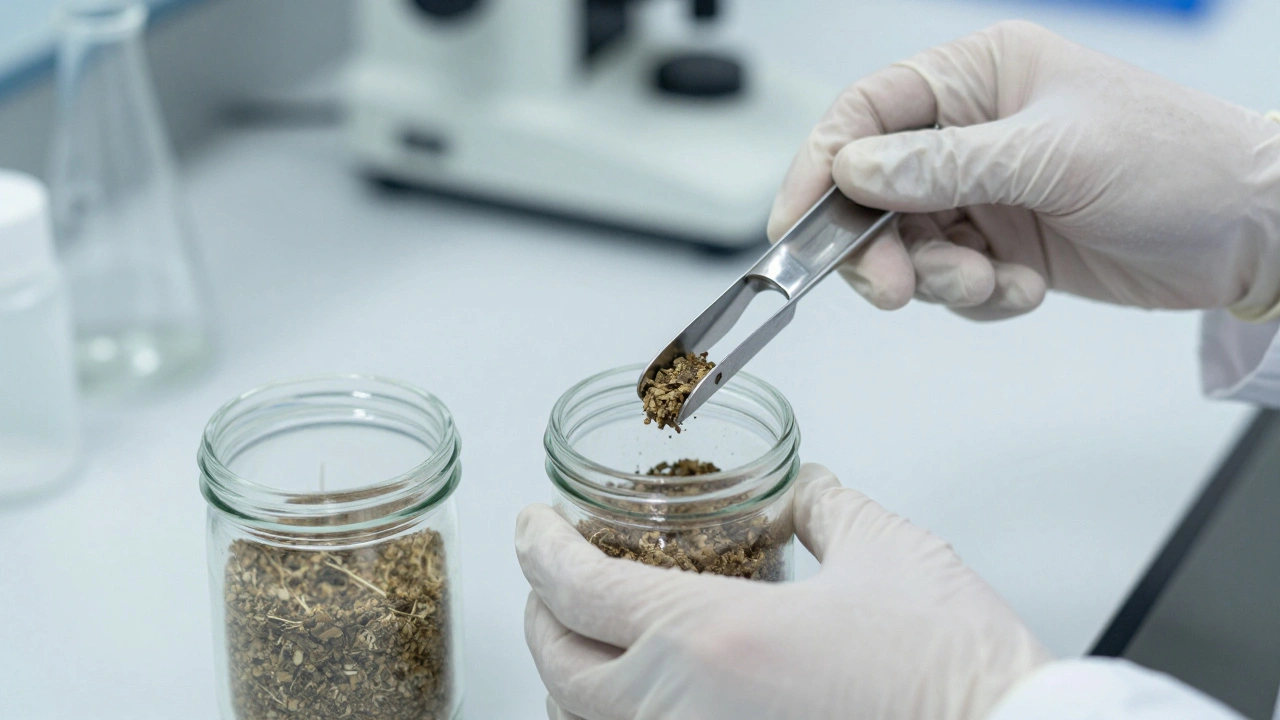
If you just grab a handful of powder from a bag for your primary test and another handful for the duplicate, you’ve already introduced bias. Physical samples are rarely perfectly mixed. To manage sub-samples effectively, you must ensure each subset represents the whole.
In advanced statistical and scientific practices, this is called representative subsampling. While simple random sampling works for small, homogeneous materials, larger or complex samples require more rigorous methods. Two notable approaches often cited in methodology literature are the Duplex method and the SOLOMON method.
The Duplex method maximizes diversity. It identifies the two most different elements in the total sample and places one in each subset. Then it finds the next two most distant elements and assigns them alternately. This ensures that every unique characteristic in the original batch is represented in both halves.
The SOLOMON method sorts participants or data points based on specific distance values and assigns odd-numbered items to one group and even-numbered items to the other. Both methods aim to prevent one subset from being skewed toward certain traits, which is vital when comparing results later.
For physical evidence, the principle is similar: mix thoroughly, then divide using a riffle splitter or quartering cone until you achieve two statistically equivalent portions. Document every step. If you can’t prove the split was fair, the duplicates are useless.
Chain of Custody Protocols for Multiple Sets
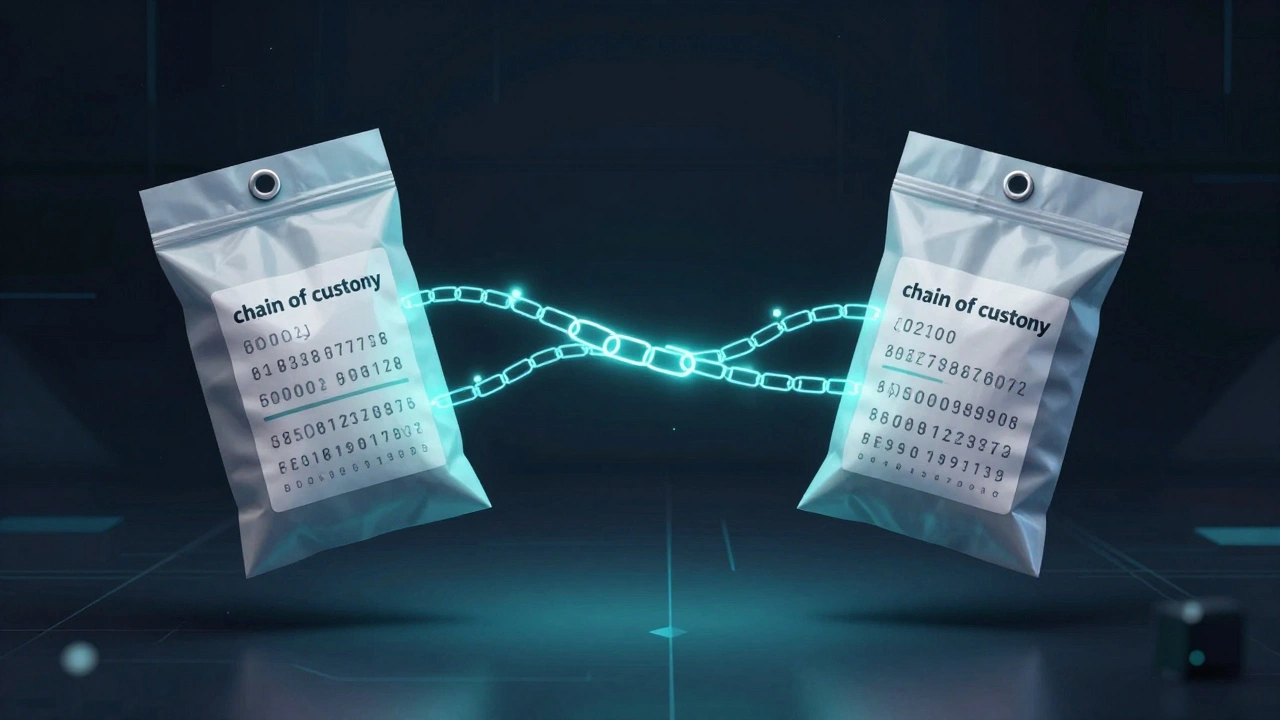
This is where most investigations fall apart. You now have two (or more) pieces of evidence that originated from the same source. Your chain of custody logs must reflect this relationship clearly.
- Unique Identifiers: Never label duplicates as "Sample A" and "Sample B" without context. Use a parent-child naming convention. For instance, if the main exhibit is EXH-001, the duplicates should be EXH-001-DUP1 and EXH-001-DUP2. This links them logically in your database.
- Separate Logs: Each duplicate travels its own path. One might go to Lab X, another to Lab Y. Each movement must be recorded independently. Do not combine their histories into a single entry.
- Blind Labeling: When sending duplicates for analysis, consider blinding the analyst. They shouldn’t know which sample is the "primary" and which is the "backup." This prevents unconscious bias where they might tweak parameters to make the duplicate match the first result.
- Storage Conditions: Ensure both sets are stored under identical conditions. If one sits in a warmer room than the other, degradation rates may differ, leading to false discrepancies.
Failure to link duplicates properly in your records can lead to accusations of tampering or confusion during trial. Judges and juries need to understand that these items are twins, not unrelated objects.

Interpreting Results: What Do Discrepancies Mean?
You’ve analyzed both sets. Now what? There are three common ways to handle the data, depending on your goals.
| Strategy | When to Use | Risk Level |
|---|---|---|
| Average the Results | When high precision is needed and minor variations are expected (e.g., concentration measurements). | Low, if variance is low. |
| Treat as Independent | When assessing reproducibility across different labs or collectors. | Medium; requires statistical justification. |
| Use Primary Only | When the duplicate serves only as a quality control check and passes validation. | High, if the duplicate failed QC. |
If the results match closely, you gain confidence in your finding. If they diverge significantly, you trigger an investigation. Was the sample contaminated? Did the instrument drift? Was the split biased? Documenting this divergence is actually valuable-it shows thoroughness rather than incompetence.
Regulatory bodies like the EPA and FDA provide strict guidelines here. For instance, FDA sampling guidance often specifies ranges for subsamples (e.g., 12 to 36 subsamples in duplicate) to ensure statistical power. Ignoring these standards can render your evidence inadmissible.
Common Pitfalls to Avoid
Even experienced professionals make mistakes with duplicates. Here are the most frequent errors:
- Ignoring Heterogeneity: Assuming a large pile of debris is uniform. It’s not. Always homogenize before splitting.
- Cross-Contamination: Using the same tools to handle both sets without cleaning. This defeats the purpose of having an independent check.
- Poor Documentation: Failing to record who performed the split, when, and how. Without this, the chain of custody breaks.
- Bias in Selection: Picking the "best-looking" parts for the primary test. This skews results upward or downward.
To avoid these, implement standard operating procedures (SOPs) that mandate blind splitting and dual verification. Have two people witness the division process whenever possible.
What is the difference between a field duplicate and a laboratory replicate?
A field duplicate involves collecting two separate samples from the same source in the field, capturing variability in collection and environment. A laboratory replicate starts as one sample that is split inside the lab, isolating only the analytical variability.
How do I label duplicate evidence for chain of custody?
Use a parent-child naming system. If the main item is EXH-001, label duplicates as EXH-001-DUP1 and EXH-001-DUP2. Keep separate custody logs for each to track their individual movements.
What should I do if my duplicate results don't match?
Investigate immediately. Check for contamination, instrument error, or sampling bias. Document the discrepancy thoroughly. In many cases, averaging is inappropriate; you may need to re-collect or re-split the sample.
Are there specific regulations for sub-sampling sizes?
Yes. Agencies like the FDA and EPA provide guidelines. For example, FDA often recommends 12 to 36 subsamples in duplicate for certain analyses to ensure statistical validity. Always consult relevant regulatory standards for your specific industry.
Why is representative subsampling important?
It ensures that each subset accurately reflects the characteristics of the whole. Without it, one sample might contain more of a target substance than the other, leading to false conclusions about presence or absence.