You walk into a messy living room. Broken glass everywhere, overturned chairs, maybe some blood spatter on the wall. You have to find every piece of evidence before you leave. But how do you make sure you don't miss anything? You can't just wander around looking at things randomly. That's how cases get lost in court because a defense attorney asks, "Did you check under the couch?" and you say, "I think so." You need a system. You need a crime scene search pattern.
A crime scene search pattern is a systematic method used by investigators to thoroughly examine an area for physical evidence. The three most common methods are the grid, strip, and zone searches. Each has its place. Choosing the wrong one wastes time or misses clues. Let's break down when to use each one and how to actually do it without losing your mind.
Why Systematic Searches Matter More Than Speed
Imagine you're looking for your keys. If you look randomly, you might check the kitchen twice and forget the bedroom. Now imagine that "key" is a shell casing worth five years in prison. Random searching doesn't cut it. The goal isn't just to find evidence; it's to prove you looked everywhere.
When you document a search, you're creating a chain of custody for your observations. If you use a structured pattern, you can tell a jury exactly where you walked and what you covered. This reduces doubt. It also helps if you need to return later. You know which areas were cleared and which weren't.
The Strip Search Method: Best for Large Open Areas
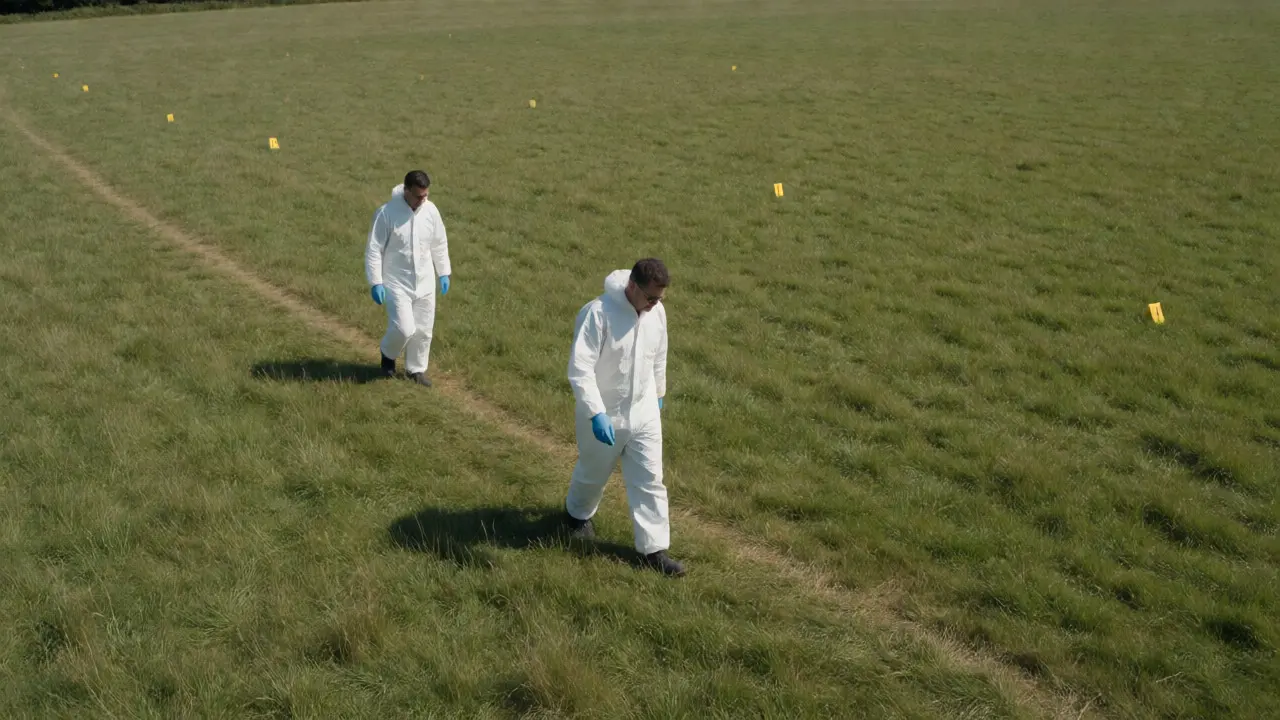
The strip search method, also known as the line or lane search, is probably the first one you learn in basic training. It’s simple. Investigators walk in parallel lines across the scene, usually from one end to the other. Think of mowing a lawn. You go forward, turn around, and come back next to your previous path.
This works best in large, open spaces like fields, parking lots, or big rooms with few obstacles. Why? Because it covers ground quickly. If you’re looking for something visible, like a weapon dropped in a field, this is efficient. However, it has a major flaw: tunnel vision. If you only look straight ahead, you might miss things right at your feet or slightly off to the side.
To fix this, experienced investigators often use a two-pass technique. First, they walk north-to-south. Then, they repeat the process east-to-west. This cross-check ensures nothing hides in the blind spots of the first pass. It doubles the time but drastically increases reliability.
The Grid Search Method: When Detail Is Non-Negotiable
If the strip search is mowing the lawn, the grid search method is checking every blade of grass individually. It’s essentially a double strip search. One team walks in one direction, and another team walks perpendicular to them. The result is a crisscross pattern that leaves no stone unturned.
This method is slow. Really slow. But it’s thorough. Use it when the stakes are high and the area is small enough to manage. A small backyard, a confined alleyway, or a specific corner of a larger room are good candidates. If you’re looking for microscopic evidence, like hair fibers or gunshot residue, the grid is your best friend.
Here’s the catch: coordination. You need clear communication. If two people start walking without agreeing on boundaries, you’ll end up with overlapping paths and missed gaps. Marking your lanes with tape or flags helps keep everyone on track.

The Zone Search Method: Breaking Down Complex Scenes
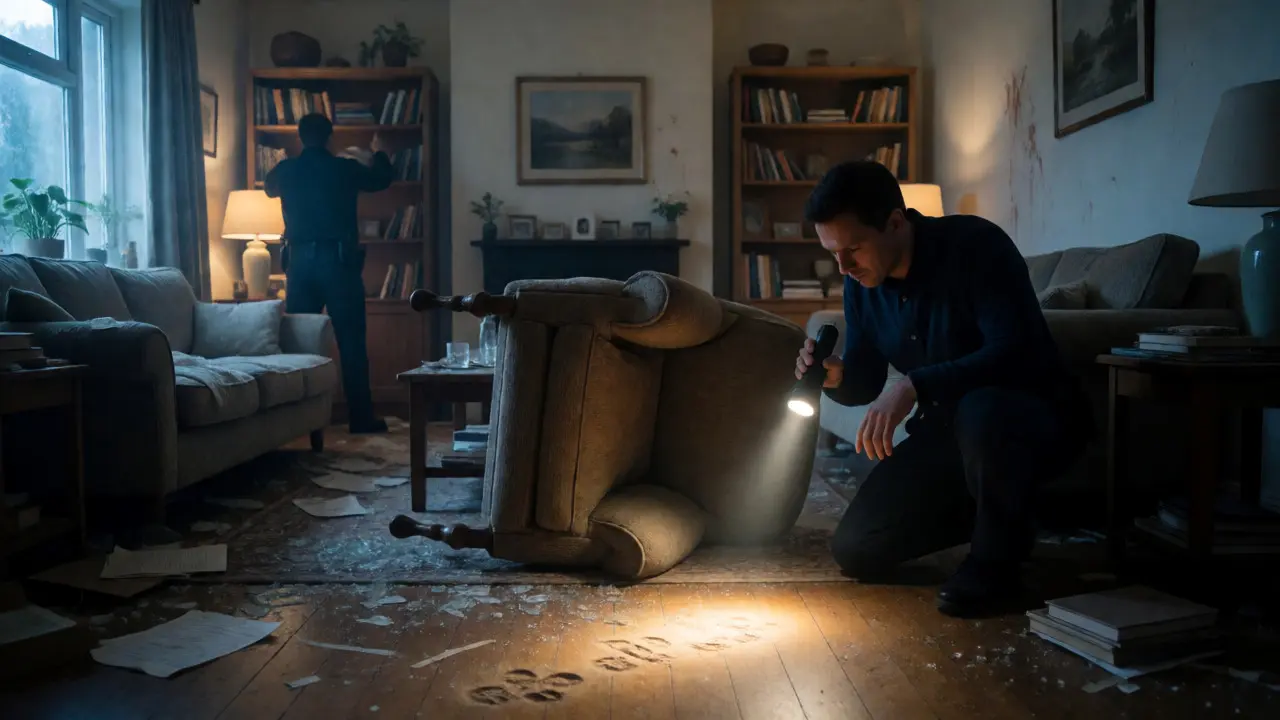
Not all scenes are open fields. Sometimes you’re dealing with a cluttered house full of furniture, shelves, and boxes. Walking in straight lines here is impossible. You’d bump into tables and miss stuff behind sofas. Enter the zone search method.
In a zone search, you divide the area into smaller sections or zones. These could be rooms in a house, quadrants in a yard, or even vertical levels (floor, waist-high, eye-level). Investigators then search each zone using a different pattern-often a spiral or quadrant approach within that specific area.
This method shines in indoor environments. For example, in a two-story home, you might assign one team to the kitchen, another to the living room, and another to the upstairs bedrooms. Within the kitchen, you might search the floor, then the counters, then the cabinets. It allows for specialization. One person might focus on digital devices while another looks for biological samples.
Choosing the Right Pattern: A Quick Comparison
You shouldn’t pick a pattern based on what’s easiest. Pick it based on the terrain and the type of evidence you expect. Here’s a breakdown to help you decide.
| Pattern | Best For | Pros | Cons |
|---|---|---|---|
| Strip (Line) | Large, open areas with few obstacles | Fast, easy to coordinate | High risk of missing items near edges or feet |
| Grid | Small, high-stakes areas needing extreme detail | Most thorough, minimizes missed evidence | Time-consuming, requires multiple personnel |
| Zone | Cluttered indoor scenes or complex layouts | Flexible, allows specialized teams | Risk of gaps between zones if not mapped carefully |
Common Mistakes That Ruin Good Searches
Even with the perfect plan, execution can fail. The biggest mistake? Assuming you’ve seen everything. Human brains filter out noise. You might look directly at a bloody footprint and your brain says, "That’s just a shadow," until you look closer. Always pause. Look low. Look high.
Another error is poor documentation. If you don’t map your search, did it really happen? Take photos of the empty scene before you touch anything. Note where you started and ended each pass. If you find evidence, photograph it in place before moving it. Context matters more than the object itself sometimes.
Also, watch out for contamination. In a rush, you might step on a latent print or kick over a fiber. Wear proper PPE. Change gloves frequently. Keep your gear organized so you aren’t dropping tools into the search area.
Pro Tips for Better Evidence Recovery
Use lighting strategically. Natural light changes throughout the day. Bring portable lights. Shine them at oblique angles to reveal dust impressions or faint scratches on floors. What looks clean under overhead light might glow with trace evidence under a raking beam.
Don’t ignore the vertical space. Most searches focus on the floor. But evidence ends up on walls, ceilings, and door frames. Blood spatter tells a story about height and angle. Fingerprints live on handles and switches. Make sure your zone or grid includes these vertical planes.
Finally, communicate constantly. If you’re working in pairs, talk. "I’m checking the sofa cushions now." "Okay, I’ll move to the bookshelf." This prevents duplication and ensures coverage. Silence leads to assumptions, and assumptions lead to mistakes.
What is the difference between a strip search and a grid search?
A strip search involves walking in parallel lines in one direction, covering the area efficiently but potentially missing details. A grid search combines two strip searches at right angles (e.g., north-south and east-west), creating a crisscross pattern that is much more thorough but takes twice as long.
When should I use the zone search method?
Use the zone search method in cluttered or complex environments, such as inside a house with many rooms or furniture. It divides the scene into manageable sections, allowing investigators to focus on specific areas without getting overwhelmed by the entire layout.
Can I combine different search patterns?
Yes, combining patterns is often recommended. For example, you might use a zone search to divide a large building into rooms, then apply a grid search within critical rooms like the bathroom or kitchen where evidence is likely concentrated.
How do I ensure I don't miss evidence during a strip search?
To minimize missed evidence during a strip search, perform a second pass in the opposite direction (perpendicular to the first). Also, maintain a narrow lane width-no wider than arm’s length-and use angled lighting to spot subtle traces.
Is the grid search always the best option?
No. While the grid search is the most thorough, it is time-intensive and resource-heavy. It is best reserved for small, high-priority areas. For large outdoor scenes, a strip search is often more practical and efficient.