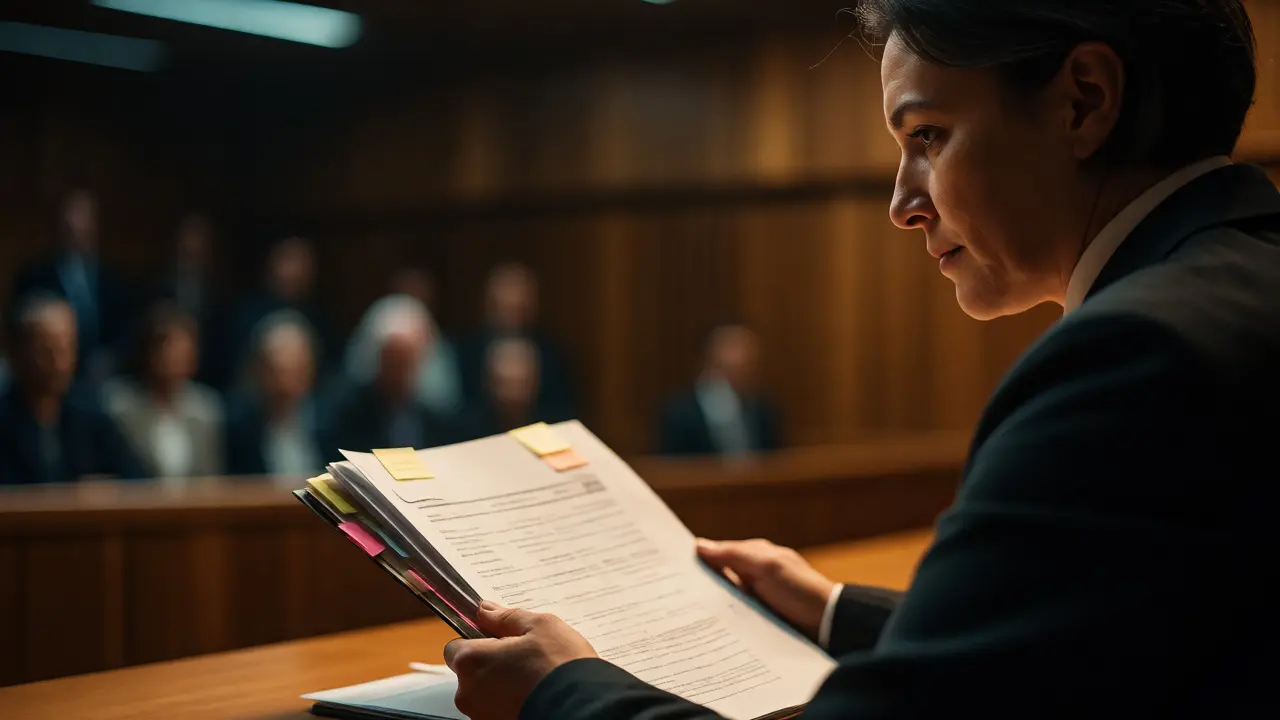
You are on the stand. The opposing counsel is holding your forensic report, and they ask a question about a specific measurement you made three years ago. You look down at the document in front of you. Do you recite it from memory? Or do you read it?
This is where most experts get tripped up. They think reading their own report makes them look unprepared or unsure. In reality, using your report as a reference document during courtroom testimony is not just acceptable-it is often legally required and strategically smarter. But there is a right way to do it and a wrong way that can destroy your credibility.
Why Memory Alone Fails Under Pressure
Human memory is reconstructive, not reproductive. When you testify, you are under stress. Adrenaline narrows your focus. If you try to rely solely on what you remember from a case file closed months or years ago, you risk inconsistency. A single mismatch between your verbal testimony and your written findings can lead to impeachment. This means the jury decides you are lying or mistaken, which invalidates your entire opinion.
Using the report as an anchor stabilizes your testimony. It ensures that the numbers, dates, and observations you state match the evidence already admitted into court. This alignment builds trust with the jury. They see you checking your facts rather than guessing. It shows professionalism, not weakness.
The Legal Basis for Refreshing Recollection
You might wonder if this is even allowed. Yes, it is. Most jurisdictions follow rules similar to Federal Rule of Evidence 612, which allows witnesses to use writing to refresh their memory while testifying. The key concept here is "refreshing recollection." You are not reading the document into evidence as a substitute for your knowledge; you are using it to jog your brain so you can answer based on your personal knowledge and expertise.
However, there is a catch. If you cannot answer without looking at the paper, you might be relying too much on the document. The goal is to use the report to trigger the memory, then look up and answer the attorney directly. If you stare at the page and read sentences verbatim, you are no longer testifying; you are reporting. Jurors connect with people who speak to them, not those who read to them.
Preparation Before You Take the Stand
Effective use of reference documents starts long before you enter the courtroom. You need to know your report inside out. Here is how to prepare:
- Review the Chain of Custody: Know exactly when and where every piece of evidence was handled. If the report mentions a sample received on May 4th, verify that date against your lab logs.
- Highlight Key Findings: Use tabs or sticky notes to mark critical sections. If you have a 50-page report, you do not want to flip through it looking for the DNA profile while the jury waits.
- Anticipate Attacks: Opposing counsel will look for ambiguities. Mark areas where you made assumptions or used standard industry practices. Be ready to explain why you chose one method over another.
- Check for Updates: Did new scientific standards emerge after you wrote the report? Be prepared to address whether your conclusions hold up under current best practices.
In Portland, Oregon, local court rules may vary slightly regarding the physical handling of exhibits. Always confirm with the clerk if you can keep the report on the witness stand or if you must hand it back to the bailiff after each use. Usually, you can keep it nearby, but never hide it from the opposing counsel.
How to Use the Report During Direct Examination
During direct examination, your attorney wants you to tell a story. The flow should be natural. When asked about a specific detail, pause. Look at the relevant section of your report. Then, look at the jury or the judge and give your answer in complete sentences.
For example, if asked, "What did you find in the blood sample?" you might glance at the toxicology section, then say, "I detected ethanol at a concentration of 0.15 grams per deciliter." Notice you did not say, "My report says..." You stated the fact. The report served its purpose by ensuring accuracy, but your voice delivered the information.
If the question is broad, like "Summarize your findings," do not read the executive summary word-for-word. Instead, use the bullet points in your report as prompts. Speak naturally. Say, "The primary finding was X, supported by Y analysis, leading to conclusion Z." This keeps the jury engaged.
Navigating Cross-Examination Traps
Cross-examination is where the report becomes a double-edged sword. Opposing counsel knows you have it. They may try to trick you into contradicting yourself. They might ask, "Isn't it true that on page 12, you noted contamination risks?" If you deny it without checking, and they show the jury the page, you lose credibility instantly.
Here is the strategy: Always check before denying. If the attorney asks a yes/no question about a specific part of the report, say, "May I review the report?" Take the time to look. It shows you are careful. If the text supports their claim, admit it. "Yes, I noted potential contamination, but I concluded it was negligible because..."
Do not let them rush you. If they interrupt while you are reading, stop and wait. You have the right to consult your reference materials. Silence is powerful. It signals that you are thinking, not evading.
Common Pitfalls to Avoid
Even experienced experts make mistakes with reference documents. Here are the big ones:
| Mistake | Consequence | Correction |
|---|---|---|
| Reading verbatim | Jury loses interest; seems robotic | Glance, then speak naturally |
| Ignoring the report | Inconsistencies with written record | Verify facts against the document |
| Hiding the report | Looks suspicious or evasive | Keep it visible and accessible |
| Over-reliance | Seems like you don't know your work | Use only to refresh memory |
Another trap is bringing multiple versions of the report. If you have drafts, final copies, and annotated notes, keep them organized. If opposing counsel asks for "the report," provide the final signed version unless instructed otherwise. Do not pull out a scribbled note from your pocket that contradicts your official statement.

Handling Digital vs. Paper Reports
Many labs now use digital systems. Some courts allow laptops on the stand; others require printed copies. Check ahead. If you use a laptop, ensure your screen is not visible to the jury or opposing counsel. You do not want them seeing your search history or other cases.
Digital reports offer a huge advantage: searchable text. If asked about a specific keyword, you can find it in seconds. However, printing key pages is still wise. Technical glitches happen. Having a hard copy backup ensures you are never stuck without your reference material.
The Role of Daubert and Frye Standards
Your report is the foundation of your admissibility. Under standards like Daubert, judges evaluate whether your methodology is scientifically valid. Your report must clearly articulate this methodology. During testimony, if challenged, point to the sections where you detailed your validation studies and error rates.
For instance, if you use DNA profiling, your report should list the kits used, the software versions, and the statistical calculations. When questioned, you can refer to these specifics to defend your opinion. It transforms abstract science into concrete, verifiable data.
Final Tips for Credibility
Treat your report as an extension of your professional reputation. It is not just paperwork; it is your argument in print. When you testify, you are defending that argument. Use the document to stay grounded, but let your expertise shine through your delivery.
Practice with a colleague. Have them quiz you while you hold your report. Time yourself. See how quickly you can locate information. The smoother you are with the document, the more confident you appear. Confidence comes from preparation, and preparation includes knowing exactly where every fact lives in your report.
Can I bring my report onto the witness stand?
Yes, in most jurisdictions, experts are permitted to have their reports on the stand to refresh their recollection. However, you must inform the judge and opposing counsel that you are referring to it. It cannot be hidden.
Does reading from the report make me look unprepared?
No, provided you do it correctly. Glancing at the report to verify a number or date shows diligence. Reading entire paragraphs verbatim can seem unprepared. The goal is to use the report as a prompt, not a script.
What if my oral testimony contradicts my written report?
This is dangerous. It opens the door for impeachment. If you realize you misspoke, correct it immediately. Say, "Let me clarify, my report states X, which is what I meant to convey." Consistency is key to maintaining credibility.
Should I memorize my entire report?
You should know the major findings and methodology well enough to discuss them broadly. Memorizing every line is unnecessary and risky. Knowing where to find details quickly is more important than rote memorization.
Can opposing counsel demand to see my notes?
Generally, yes. If you use a document to refresh your memory, opposing counsel has the right to inspect it. This is why you should avoid making casual, potentially misleading notes on scratch paper during the trial.