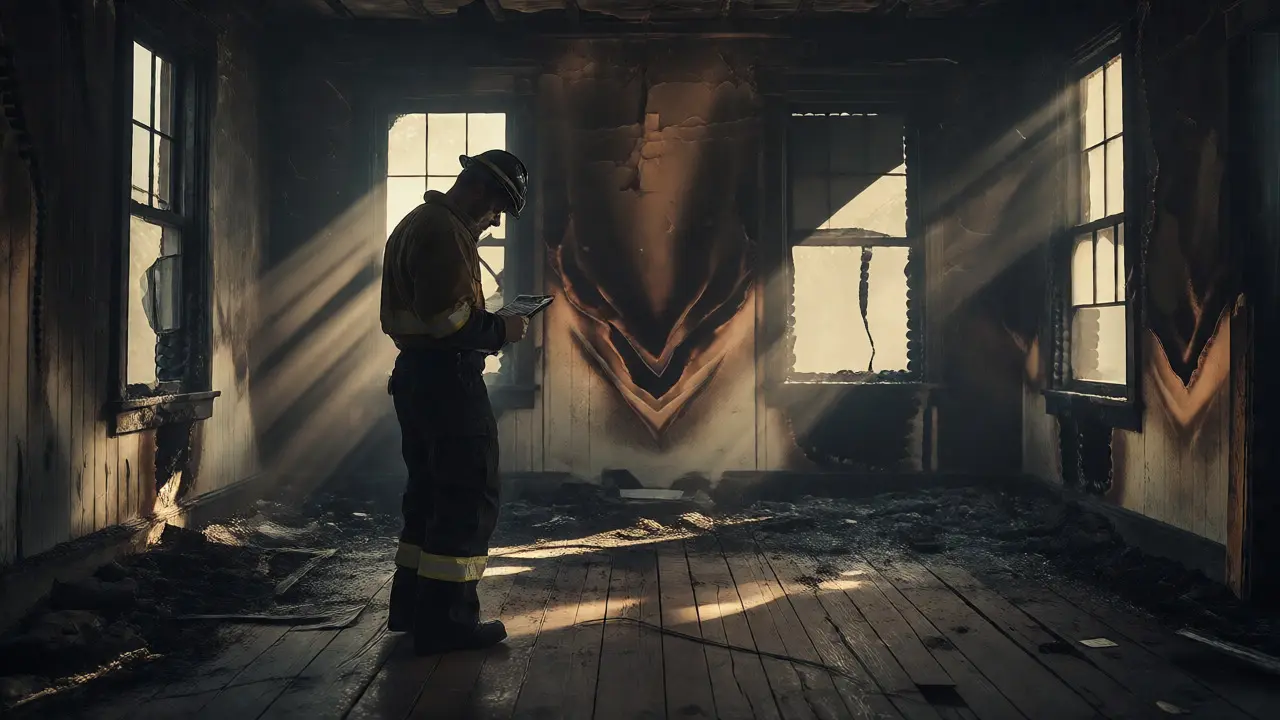
You walk into a room that looks like it went through hell. The walls are blackened, the floor is warped, and everything smells like wet ash. Your job isn't just to say "there was a fire." You need to tell the story of how that fire behaved. Did it start small and grow? Was it a flashover event? Or did someone douse the place with accelerant and light a match? The answer often lies in the wood. Specifically, in the charcoal.
Char analysis is the forensic technique of measuring the depth of carbonized material on combustible surfaces to estimate the heat release rate and duration of exposure during a fire. It sounds simple-measure the black stuff-but getting it right requires understanding physics, chemistry, and a lot of patience. If you get the numbers wrong, you might rule an accidental electrical fire as arson, or vice versa. And in court, those details matter more than your gut feeling.
Why Char Depth Matters More Than Color
New investigators often focus on the color of the soot. Is it black? Gray? White? While color gives hints about fuel type (white smoke from paper vs. black smoke from plastics), it’s unreliable for determining intensity. Why? Because soot deposits can be disturbed by ventilation changes, wind, or even the firefighters' hose streams. A thick layer of soot doesn't necessarily mean high heat; it could just mean poor ventilation trapped the particles.
Burn depth is the linear distance from the original surface of a combustible material to the interface between the unburned substrate and the charred layer. This metric is robust. Wood doesn't lie about how long it cooked. Once the pyrolysis front moves past a certain point, the physical structure changes permanently. Measuring this change allows investigators to reconstruct the thermal history of a specific spot in a room.
The Science Behind Charring Rates
To measure accurately, you need to know what you're measuring against. Not all wood chars at the same speed. The National Institute of Standards and Technology (NIST) has published extensive data on charring rates for various materials. Generally, softwoods like pine or fir char faster than hardwoods like oak or maple. But there's a catch: moisture content plays a huge role. Dry wood chars quicker because less energy is wasted boiling off water before the cellulose breaks down.
Here is the basic relationship you need to internalize:
- High Heat + Short Time: Creates a deep, uniform char layer. Think of a flashover where temperatures spike to over 1,000°F (538°C) rapidly.
- Low Heat + Long Time: Also creates deep char, but the profile might look different, often with more cracking or checking due to slow drying.
- Accelerants: Can create localized deep charring patterns, such as "pour patterns" or "V-patterns," which stand out against the background damage.
When you see a V-pattern on a wall, you aren't just looking at a shape. You're looking at the path of least resistance for the flame plume. The width of the V tells you about the spread rate; the depth of the char inside the V tells you about the peak temperature reached at that location.
Tools of the Trade: Keep It Simple
You don't need a million-dollar lab to do good char analysis. In fact, fancy tools can sometimes distract you. Here is what actually works in the field:
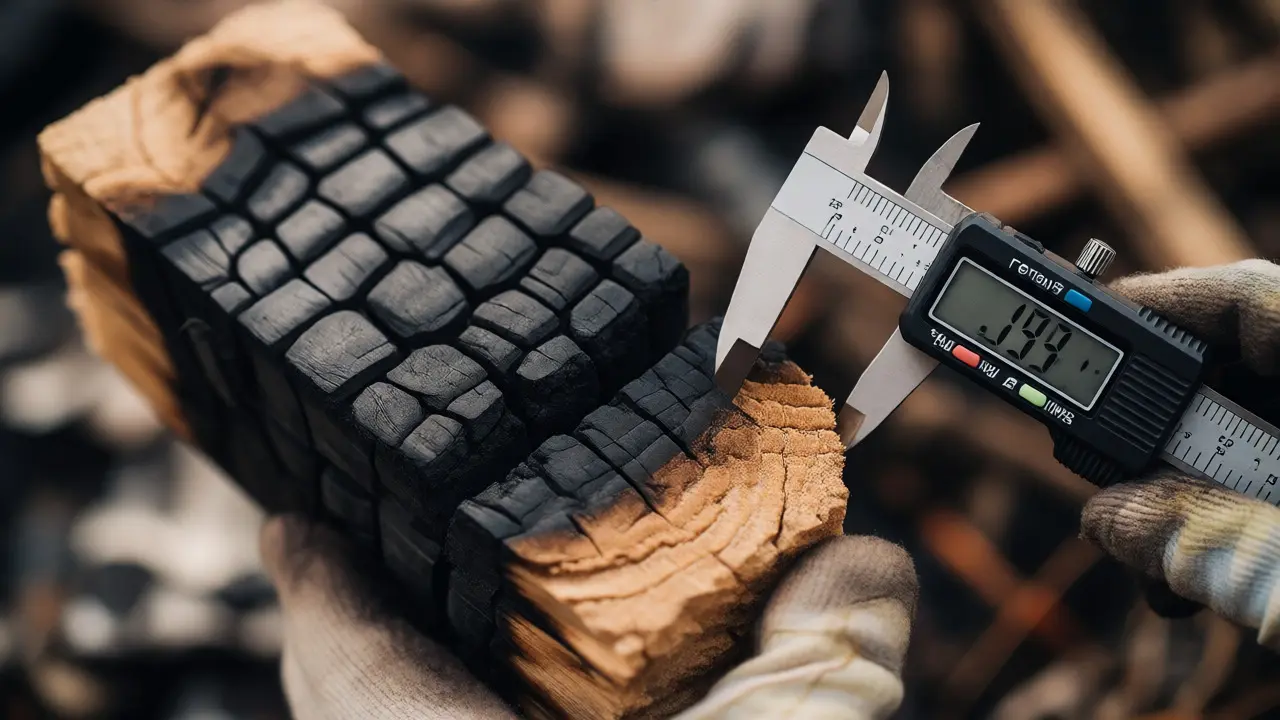
- Calipers: Digital calipers are great for precision, but mechanical ones are tougher. Use them to measure the thickness of the char layer at multiple points on a single piece of wood.
- Ruler and Probe: Sometimes the char is too brittle for calipers. A thin metal probe helps you find the solid wood underneath without crushing the fragile carbon layer.
- Camera with Scale: Always photograph the measurement. Put a ruler next to the sample. Later, when you're writing the report, you'll thank yourself for having visual proof of exactly where you measured.
- Moisture Meter: Optional but helpful. Knowing the pre-fire moisture content of the building materials (if available from construction records) adjusts your expectations for charring rates.
Avoid using lasers or optical scanners unless you have validated models for those specific devices. They can misinterpret soot layers as char layers, leading to inflated depth readings. Stick to physical contact methods whenever possible.
| Material Type | Average Charring Rate (inches/hour) | Conditions Assumed |
|---|---|---|
| Dry Softwood (Pine/Fir) | 1.5 - 2.0 | Well-ventilated, steady heat |
| Dry Hardwood (Oak/Maple) | 0.8 - 1.2 | Well-ventilated, steady heat |
| Plywood (Exterior Grade) | 1.0 - 1.5 | Depends on glue lines |
| Gypsum Board (Paper Facing) | N/A (Burns away) | Paper chars instantly; core spalls |
Note that these rates are averages. Real-world fires are messy. Drafts, ceiling height, and insulation types alter these numbers significantly. Use this table as a baseline, not gospel.
Step-by-Step Field Procedure
So, you're standing in the burned room. Where do you start? Don't just wander around poking things. Have a plan.
1. Identify the Area of Origin Candidate: Look for the deepest charring first. Fire generally travels upward and outward. The deepest char is usually closest to the source, though ventilation effects can skew this. Mark the spot with spray paint or flags.
2. Select Representative Samples: Don't measure one stick. Measure five sticks in the same area. Why? Variability. One board might have had a knot (which burns differently) or been wetter than its neighbor. Averaging reduces error.
3. Clean the Surface Carefully: Brush away loose soot. Do not scrub hard. You want to expose the interface between the black char and the brown/tan unburned wood. If you scrub too hard, you remove char and underestimate the depth.
4. Measure Perpendicular to the Grain: This is critical. Charring progresses along the grain fibers. If you measure diagonally, you'll get a longer, inaccurate reading. Hold your caliper square to the surface.
5. Record Data Immediately: Write down the location, material type, estimated pre-fire condition (dry/wet), and three separate measurements per sample. Take photos of each measurement setup.
Common Pitfalls That Ruin Credibility
I've seen experienced investigators lose cases because they skipped a step here. Let's talk about the mistakes that cost money and time.
Confusing Soot with Char: This is the number one error. Soot is a deposit on top of the surface. Char is the transformed material itself. If you measure from the top of the soot pile to the wood, you're adding inches of false depth. Always distinguish between the two. Scrape gently until you hit the actual carbonized wood structure.
Ignoring Ventilation Effects: A window blowing out mid-fire introduces oxygen. This causes a sudden spike in temperature and a rapid increase in charring rate. If you assume a constant rate throughout the fire, you'll miscalculate the timeline. Look for signs of glass breakage or door failure near deep char zones.
Overlooking Material Composition: Modern furniture isn't just wood anymore. It's particleboard, MDF (Medium Density Fiberboard), foam, and synthetic fabrics. MDF chars very quickly because it's mostly compressed dust and glue. If you treat an MDF cabinet like solid oak, your calculations will be way off. Check labels or construction standards if possible.
Assuming Uniform Exposure: Just because two boards are side-by-side doesn't mean they experienced identical conditions. One might have been shielded by a fallen beam. Another might have been directly under a burning curtain. Context matters more than raw numbers.
Interpreting the Data for Reports
Once you have your measurements, how do you translate that into English for a jury? Avoid jargon where possible. Instead of saying "the pyrolysis front advanced at 1.6 inches per hour," try this:
"The wood in this corner shows significant charring. Based on standard burning rates for this type of pine, it suggests the fire burned intensely in this area for approximately 45 minutes. This aligns with witness statements describing heavy smoke and visible flames early in the incident."
Be honest about uncertainty. If the range is wide, state it. "Estimates suggest a duration between 30 and 50 minutes." Jurors appreciate honesty more than false precision. If you claim accuracy to the second, they'll question your entire methodology.
Also, consider the limitations of your model. Most charring rate charts are based on controlled laboratory tests. Real fires have drafts, varying fuel loads, and human interference (like someone trying to put it out). Acknowledge these variables. It shows expertise, not weakness.
Advanced Considerations: Accelerants and Pour Patterns
If you suspect arson, char analysis takes on a new dimension. Accelerants like gasoline or kerosene burn hot and fast. They often leave behind distinctive patterns.
Pour patterns are localized areas of intense charring caused by liquid accelerants flowing across a surface and igniting. These patterns typically show deeper charring than the surrounding area. However, be careful. Water from firefighting efforts can also cause deep charring if it cools the surface slowly while the underlying material continues to smolder. Differentiating between accelerant-induced deep char and water-induced delayed charring requires looking at the edges. Accelerant patterns often have sharp, defined boundaries. Water damage tends to be more diffuse.
Another clue is the "crazing" pattern on glass. Rapid heating from accelerants can cause crazing (fine cracks) on windows facing the origin. Combine this observation with your char depth data. If you see deep char, sharp pour patterns, and crazed glass, you have a strong case for liquid accelerant use.
Final Thoughts: Practice Makes Perfect
Char analysis isn't magic. It's a skill built through repetition. Every fire scene teaches you something new about how materials react to heat. Keep a log of your findings. Compare your estimates to the final determination made by the full investigative team. Over time, you'll develop an intuition for what "normal" charring looks like versus what "accelerated" charring looks like.
Remember, your goal isn't just to collect data. It's to tell a coherent story. Does the char depth support the hypothesis of an accidental electrical fault? Does it contradict the theory of a staged fire? Use the evidence to guide the narrative, not force the narrative onto the evidence.
How accurate is char depth analysis?
Char depth analysis provides a reasonable estimate of fire duration and intensity, typically within a margin of error of 10-20% depending on environmental conditions. It is most accurate when used in conjunction with other evidence, such as witness statements and fire dynamics modeling. Factors like ventilation, fuel load, and material moisture content significantly influence accuracy, so results should always be presented as ranges rather than exact times.
Can you determine the type of fuel from char alone?
Not definitively. While different materials char at different rates, many common building materials produce similar-looking charcoal. For example, dry pine and dry cedar may look nearly identical after burning. To identify specific fuels, investigators rely on chemical analysis of residues, melting patterns of plastics, and structural remnants rather than char appearance alone. Char analysis primarily informs heat exposure, not fuel identity.
What is the difference between char and soot?
Char is the solid residue left after the volatile components of a material have burned off, representing a permanent structural change to the material itself. Soot is a collection of fine carbon particles produced by incomplete combustion that settles on surfaces. Soot can be wiped away or blown off, whereas char remains part of the object. Investigators must clean soot from surfaces before measuring char depth to avoid overestimating the extent of the fire.
Does humidity affect charring rates?
Yes, significantly. Higher moisture content in wood slows down the charring process because energy is required to evaporate the water before the cellulose can decompose. Wet wood may require twice as much time to reach the same char depth as dry wood. Investigators should note local weather conditions and potential sources of moisture (like leaks or recent rain) when interpreting their measurements.
Is char analysis admissible in court?
Yes, char analysis is widely accepted in courts as a valid method for estimating fire behavior. It is considered part of the broader field of fire dynamics and physics. However, the investigator must demonstrate proper training and methodology. Using standardized techniques, documenting measurements thoroughly, and acknowledging limitations strengthens the admissibility and weight of the testimony.