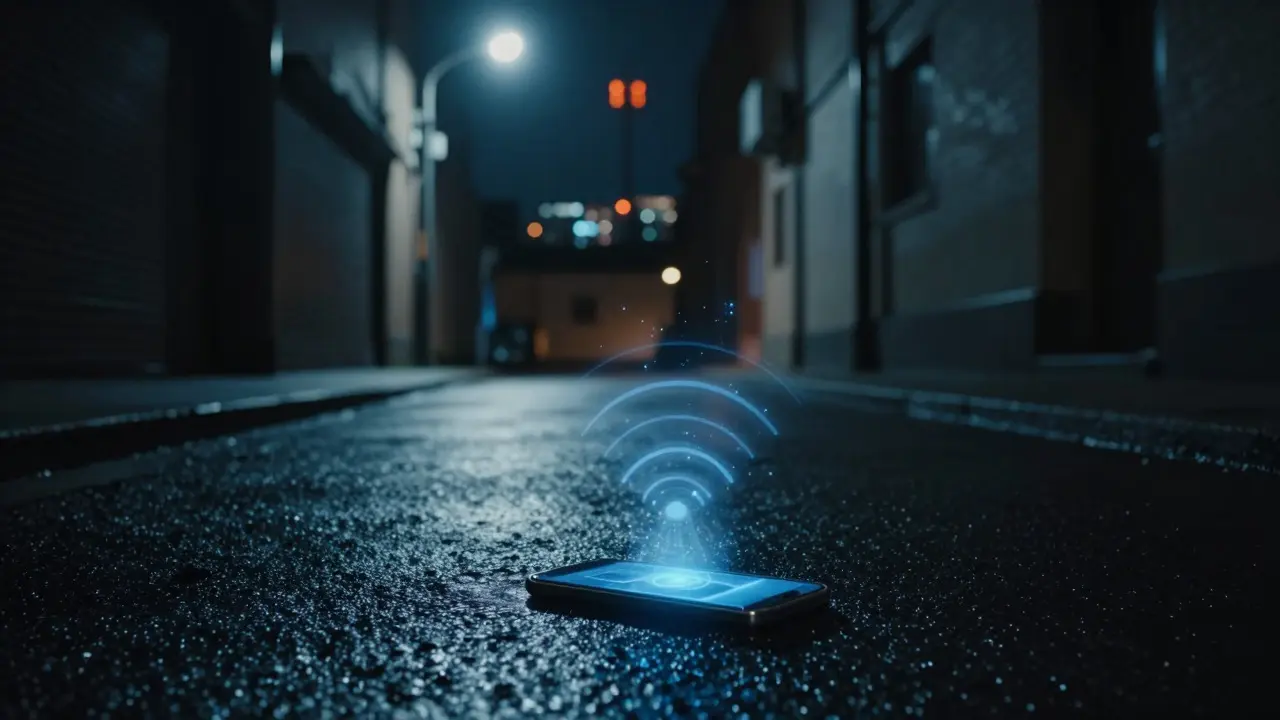
Imagine standing in a dark alley at 2:00 AM. You hear a scuffle, then silence. The victim is gone. The suspect? Nowhere to be found. In traditional homicide investigations, this is where the trail often goes cold. But today, the air around that alley isn't empty. It's filled with invisible signals from cell towers, recording every connection made by every phone within range. This is the power of cell-site location data, a digital footprint that doesn't fade, forget, or lie.
For detectives and forensic analysts, understanding how to extract, interpret, and present this data has become as critical as fingerprinting or DNA analysis. It’s not just about knowing where someone was; it’s about reconstructing their movement, identifying patterns, and building a timeline that holds up in court. If you’re working in law enforcement or criminal justice, mastering this skill set can mean the difference between a case that stalls and one that moves forward.
What Is Cell-Site Location Data?
Cell-Site Location Data (CSLD) is information derived from telecommunications networks that indicates the approximate location of a mobile device based on its connection to specific cell towers. Unlike GPS, which provides precise coordinates, CSLD relies on the infrastructure of cellular networks. When your phone connects to a tower, the network logs which tower it is, along with timestamps. This data comes in different forms, each with varying levels of accuracy:
- Cell ID (CID): The most basic form. It tells you which sector of a tower the phone connected to. In rural areas, this could cover miles. In dense urban centers like Portland, Oregon, it might narrow down to a few hundred meters.
- Triangulation: Uses signals from three or more towers to calculate a more precise position. This is less common in raw carrier data but possible through specialized software.
- GPS Data: If the phone had GPS enabled and was transmitting via Wi-Fi or LTE, you might get exact coordinates. However, this is separate from standard CSLD and requires different legal hurdles.
The key takeaway here is context. A single cell site ping isn’t proof of presence. It’s an indicator. Your job is to layer these indicators over time to create a narrative of movement.
Why CSLD Matters in Homicide Cases
In homicide investigations, time is the enemy. Every minute counts. CSLD helps answer three critical questions:
- Where was the suspect during the crime? If the suspect’s phone pings a tower near the scene at the time of death, it places them in the vicinity. If they were 10 miles away, it might exonerate them or point to a different perpetrator.
- How did the suspect move after the event? Did they flee north toward the highway? Did they circle back? Movement patterns can reveal panic, premeditation, or familiarity with the area.
- Who else was there? Sometimes, bystanders’ phones also ping the same towers. Identifying other devices in the area can lead to witnesses or accomplices.
Consider a real-world scenario: A victim is found in a park in East Portland. The autopsy suggests a struggle. The suspect’s phone shows no activity for two hours before the incident. Then, at 3:15 AM, it connects to Tower A (near the park), stays connected until 4:00 AM, then jumps to Tower B (two blocks east). This pattern suggests the suspect was at the scene, lingered, and then moved quickly away. That’s not just data; that’s a story.
How to Obtain and Analyze CSLD
Getting CSLD isn’t as simple as asking a carrier for a bill. You need proper legal authority. In the U.S., the Stored Communications Act governs this process. For historical CSLD (data older than 7 days), a subpoena or court order is typically required. For real-time tracking, a warrant is needed. Always consult with your prosecutor early to ensure your paperwork is airtight.
Once you have the data, it usually arrives in CSV or XML formats. Here’s how to approach the analysis:
Step 1: Normalize the Data
Carriers use different formats. Verizon might list “Tower ID” while AT&T uses “Site ID.” Standardize these fields so you can merge data from multiple carriers if needed. Include columns for:
- Timestamp (UTC and local time)
- Tower ID / Cell ID
- Sector (if available)
- Signal Strength (RSSI) - higher means closer to the tower
Step 2: Map the Pings
Use GIS software like ArcGIS or QGIS to plot the tower locations. Overlay the pings on a map. Look for clusters. If a phone pings the same tower repeatedly, it’s likely stationary. If it hops between towers, it’s moving. Note: Phones can “ping” distant towers if signal strength is weak, so don’t assume proximity without checking RSSI values.
Step 3: Build the Timeline
Create a chronological table. Mark key events: time of death, last known sighting, emergency calls. Align the CSLD pings with these events. Gaps in data are normal-phones go off, enter airplane mode, or lose signal. Don’t let gaps derail your theory; let them guide your next steps. Maybe the suspect turned off their phone to avoid detection. That’s a behavioral clue.
| Data Type | Accuracy Range | Legal Requirement | Best Use Case |
|---|---|---|---|
| Cell ID (CID) | 100m - 10km | Subpoena/Court Order | Establishing general vicinity |
| Triangulated Position | 50m - 500m | Warrant (for real-time) | Narrowing down specific locations |
| GPS/Wi-Fi Logs | 1m - 10m | Warrant | Precise location verification |

Common Pitfalls and How to Avoid Them
Even experienced investigators make mistakes with CSLD. Here are the top traps:
- Assuming Precision: A ping to Tower X doesn’t mean the person was at Tower X. They could be at the edge of its coverage area. Always show the radius, not just the point.
- Ignoring Time Zones: Carrier data is often in UTC. Convert to local time immediately. A mismatch can shift your entire timeline by hours.
- Overlooking Handoffs: Phones switch towers as they move. A rapid series of handoffs indicates movement. A lack of handoffs suggests stillness. Misinterpreting this can flip your conclusion.
- Failing to Corroborate: CSLD is powerful, but it’s not standalone evidence. Pair it with CCTV, witness statements, or physical evidence. If the phone says the suspect was at the park, but a neighbor saw them at home, investigate the discrepancy.
Presenting CSLD in Court
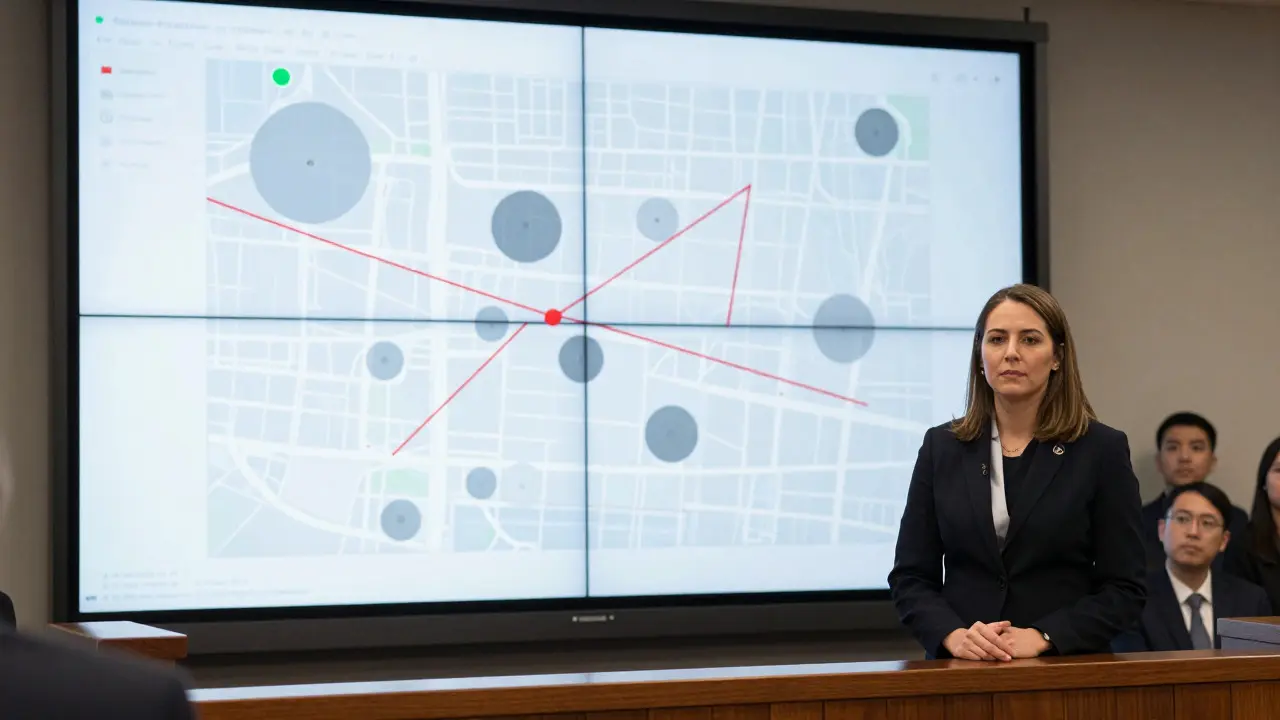
Juries aren’t tech experts. Your job is to translate data into a clear, visual narrative. Use maps with shaded circles showing coverage areas. Annotate the timeline with key events. Explain the limitations honestly. Admitting that CSLD shows “approximate location” builds credibility. If you oversell it, defense attorneys will tear it apart.
Bring a qualified expert to testify. A digital forensics specialist can explain the technical aspects while you focus on the investigative implications. Prepare for cross-examination: What if the phone was stolen? What if the tower data was corrupted? Have answers ready.
Tools and Resources for Analysts
You don’t need expensive software to start. Free tools like QGIS for mapping and Python (with pandas library) for data cleaning are highly effective. Commercial options like Cellebrite or Magnet AXIOM offer integrated solutions for extracting CSLD directly from seized devices. For large-scale cases, consider collaborating with your agency’s IT department to build custom dashboards that visualize movement in real-time.
Stay updated on carrier changes. Network upgrades, like the transition to 5G, can alter tower density and signal behavior. What worked in 2020 might not apply in 2026. Regularly review technical guides from carriers and attend training sessions offered by organizations like the International Association of Identification (IAI).
Frequently Asked Questions
How accurate is cell-site location data really?
Accuracy varies widely. In urban areas, it can be within 100-300 meters. In rural areas, it might cover several kilometers. Signal strength (RSSI) helps refine this estimate. Always present it as a probability zone, not a pinpoint.
Do I need a warrant to get CSLD?
For historical data (older than 7 days), a subpoena or court order is usually sufficient under the Stored Communications Act. For real-time tracking, a warrant is required. Consult your prosecutor to determine the correct legal path for your jurisdiction.
Can CSLD prove someone was at a crime scene?
It can place them in the vicinity, but it doesn’t prove presence at the exact spot. It’s strongest when combined with other evidence, such as video footage or witness testimony. Think of it as a directional tool, not a definitive proof.
What if the suspect’s phone was off?
If the phone is off, there are no pings. This gap itself is significant. It may indicate the suspect deliberately disabled the device to avoid tracking. Investigate when the phone was last seen active and when it reconnected. This timeline can reveal intent.
How do I handle missing data in CSLD reports?
Missing data is common due to dead zones, phone settings, or network issues. Document the gaps clearly. Use surrounding pings to infer movement. If a phone pings Tower A at 8 PM and Tower C at 9 PM, it likely passed through Tower B. State this inference explicitly in your report.