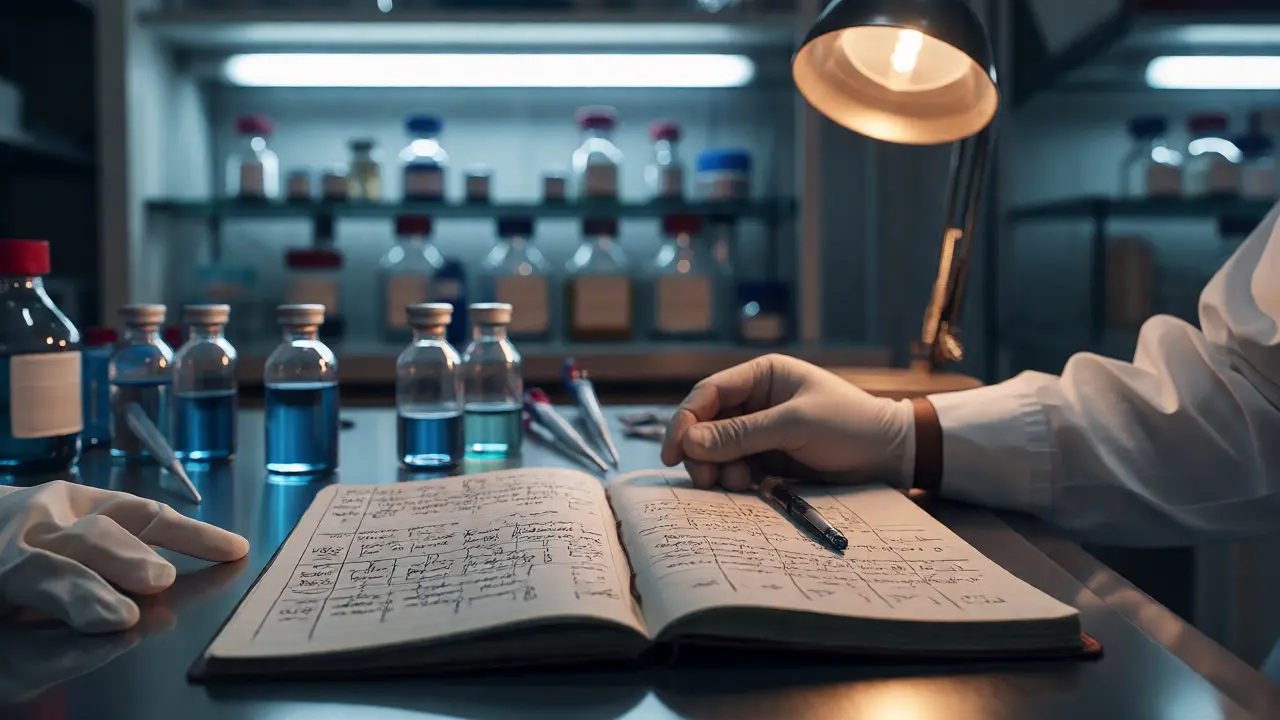
You just finished a grueling eight-hour shift analyzing DNA samples. You’re exhausted, your eyes are burning, and you know that in six months, a defense attorney is going to ask you exactly why you chose buffer solution B over solution A on page 42 of the protocol. If you didn’t write it down then, you won’t remember now. This is where bench notes and case notes save your career. They aren’t just busywork; they are the legal backbone of your scientific work.
Many new analysts confuse these two types of documentation, treating them as interchangeable scribbles. They aren’t. One captures the raw, messy reality of what happened at the bench during analysis. The other synthesizes the investigative context and decision-making process for the final report. Getting this distinction wrong can lead to cross-examination nightmares or, worse, inadmissible evidence. Let’s break down exactly how to handle both so your work stands up in court.
The Distinction Between Case Notes and Bench Notes
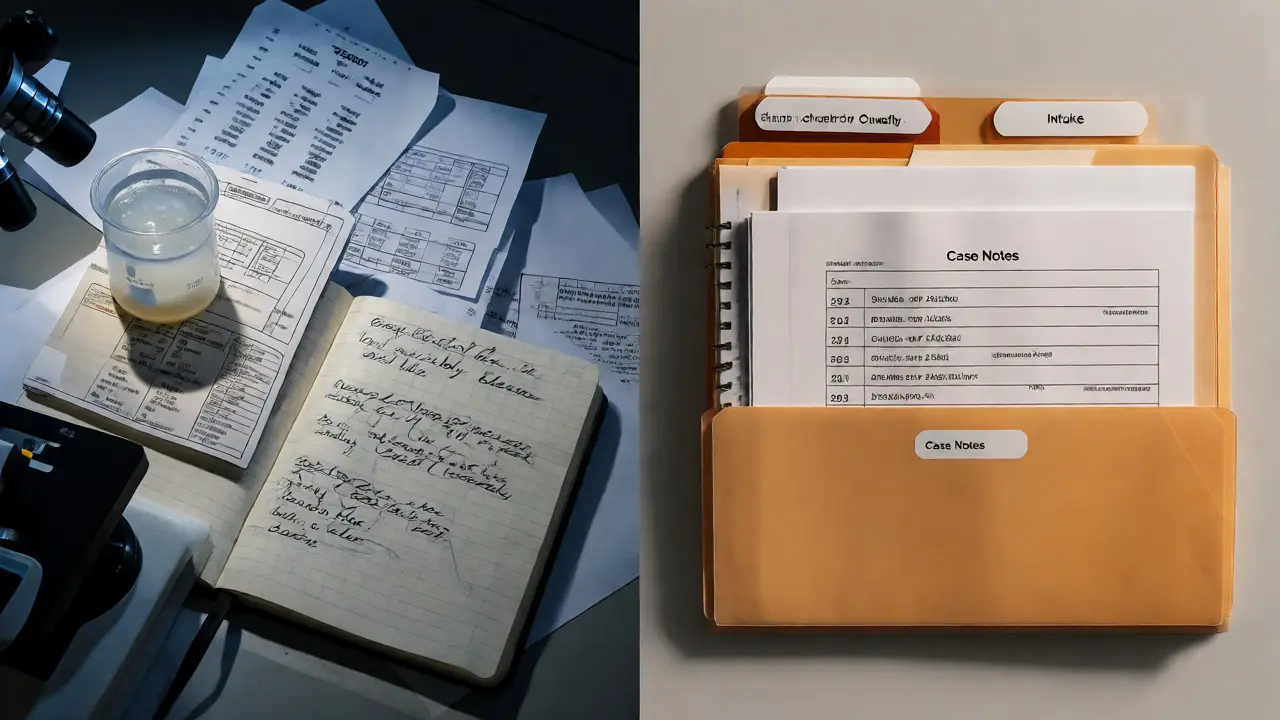
Think of case notes as the strategic map of the investigation. These documents track the lifecycle of the evidence from intake to disposal. They include correspondence with law enforcement, requests for additional testing, and high-level decisions about which analytical methods to apply. Case notes answer the "why" and "what next" questions. They connect the physical evidence to the legal narrative.
In contrast, bench notes are the tactical log of the experiment itself. These are written in real-time while you are pipetting, weighing, or observing under a microscope. Bench notes capture the "how" and "when." They document every deviation from standard operating procedures (SOPs), instrument readings, and environmental conditions. If case notes tell the story of the case, bench notes provide the receipts for the science.
| Feature | Case Notes | Bench Notes |
|---|---|---|
| Primary Focus | Investigative context and workflow management | Analytical procedure and data generation |
| Timing | Updated throughout the case lifecycle | Written contemporaneously during analysis |
| Audience | Supervisors, attorneys, other analysts | The analyst themselves, quality auditors |
| Content Examples | Email chains, sample status changes, method selection rationale | Reagent lot numbers, instrument serials, raw data values, anomalies |
| Legal Weight | Establishes chain of custody and procedural integrity | Substantiates scientific validity and reproducibility |
Why Contemporaneous Recording Matters
There is a cardinal rule in forensic science: if it isn’t written down, it didn’t happen. But more importantly, if it isn’t written down *at the time*, its credibility plummets. Human memory is notoriously unreliable, especially when stress and fatigue are involved. Studies on eyewitness testimony show how quickly details fade or distort; the same applies to technical recall.
When you wait until the end of the day to transcribe your observations, you risk introducing unconscious bias. You might "clean up" a messy observation to make it fit your hypothesis. Contemporaneous recording prevents this. It creates an immutable record of your thought process. For example, if you notice a precipitate forming unexpectedly, writing it down immediately-even if it seems irrelevant-preserves that data point. Later, that anomaly might explain why a control failed. If you only record the successful results, you lose the diagnostic power of the failure.
Juries trust experts who can point to specific timestamps and handwritten entries. They distrust polished reports that look too perfect. Your bench notes should look like what they are: a working document. Scratches, corrections, and marginalia add authenticity. They show you were engaged with the material, not just copying numbers into a spreadsheet after the fact.
Structuring Effective Bench Notes
So, what actually goes into good bench notes? It’s not just random jottings. Structure helps you find information later and proves rigor to auditors. Every entry needs a header with three non-negotiable elements: date, time, and your initials. Without these, the note has no temporal anchor.
- Sample Identification: Always reference the unique case number and item number. Never assume context. If you move pages around, you need to know which vial belongs to which exhibit.
- Method Reference: Cite the specific SOP version used. Methods change. If you used SOP-101 Rev 3 instead of Rev 2, note it. This protects you if the method was updated mid-case.
- Instrument Details: Record the serial number of any equipment used. Was it GC-MS Unit 4 or Unit 5? Which balance was calibrated today? Instrument-specific issues can invalidate results.
- Reagents and Standards: List lot numbers and expiration dates. If a reagent was expired but used due to an emergency, document the approval and the reason.
- Observations: Describe qualitative findings. Color changes, odor, texture, or unexpected reactions. Use objective language. Instead of "it looked weird," write "solution turned cloudy blue within 30 seconds."
- Data Entry: Transcribe raw values directly from the instrument printout or screen. Do not round numbers yet. Rounding happens in the final calculation phase, not during data capture.
One common pitfall is leaving blank spaces. In legal contexts, a blank space suggests something was removed or hidden. Draw a single line through unused space and initial it. This shows nothing was tampered with. Similarly, never use correction fluid. Strike through errors with a single line, write the correct value next to it, and initial the change. This preserves the audit trail.
Managing Case Notes for Workflow Efficiency
While bench notes are about precision, case notes are about clarity and communication. They serve as the central hub for all administrative actions related to a specific case. Imagine you receive a request from a detective to prioritize one sample over another. That conversation, along with the timestamp and the detective’s name, belongs in the case notes.
Effective case notes help manage expectations and prevent scope creep. If a client asks for an additional test halfway through the analysis, documenting that request-and your response regarding timeline impacts-protects your lab from complaints about delays. It also clarifies billing responsibilities.
Another critical function of case notes is tracking the chain of custody. While formal transfer forms exist, case notes often contain informal updates. For instance, noting that "Item 3 was returned to evidence locker at 14:00 by Officer Smith" provides a secondary layer of verification. If the formal form is lost or illegible, your case notes can corroborate the movement of evidence.
Keep your case notes chronological. Start each entry with the date and time. Use headings to separate different phases, such as "Intake," "Analysis Request," "Interim Results," and "Report Drafting." This structure allows a reviewer to scan the document quickly and understand the case history without reading every word.
Common Pitfalls and How to Avoid Them
Even experienced analysts fall into documentation traps. The most frequent error is vagueness. Writing "test performed" tells us almost nothing. Did you run it once or in triplicate? What was the temperature? Be specific. Vagueness invites cross-examination attacks.
Another issue is inconsistent terminology. If you call a sample "Exhibit A" in one section and "Item 1" in another, you create confusion. Stick to the nomenclature defined in the initial intake documents. Consistency builds trust.
Also, beware of "retroactive filling." If you realize you forgot to record a step, do not backdate it. Write a new entry stating, "Correction: Forgot to record pH adjustment at 10:15. Actual adjustment occurred at 10:15 per instrument log." Honesty about omissions is better than pretending you have perfect memory.
Finally, don’t neglect the electronic component. Many labs use Laboratory Information Management Systems (LIMS). Ensure your digital entries match your paper bench notes. Discrepancies between LIMS data and handwritten notes raise red flags during audits. Sync them regularly.
Preparing for Cross-Examination
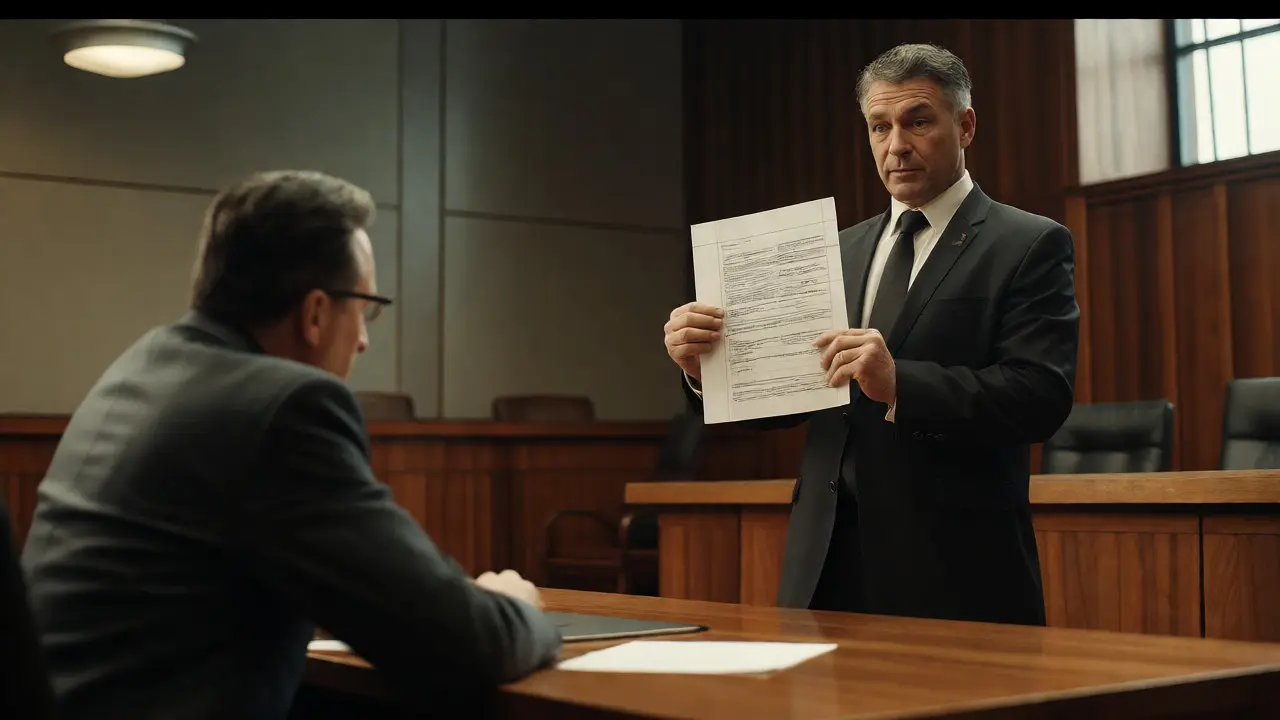
Your documentation will eventually face the ultimate test: cross-examination. Defense attorneys are trained to find holes in your logic. Strong notes close those holes before they open.
Before trial, review your case and bench notes thoroughly. Anticipate questions about deviations. If you skipped a step because you ran out of a reagent, be ready to explain why that didn’t compromise the result. Your notes should support that explanation. If you wrote down "skipped Step 4 due to lack of Reagent X; proceeded with alternative protocol Y approved by Supervisor Z," you have a solid defense.
Bring copies of your relevant notes to court. Don’t rely solely on your memory. When asked about a specific detail, you can refer to your notes and say, "According to my bench notes dated March 12, I recorded the temperature as 22°C." This demonstrates professionalism and reliance on objective records rather than subjective recollection.
Digital vs. Paper Records
The debate between paper and digital notes continues in many labs. Both have pros and cons. Paper offers tactile immediacy and requires no battery life or software updates. However, it is vulnerable to fire, water damage, and loss. Digital systems offer searchability and backup capabilities but require robust IT infrastructure and strict access controls.
Hybrid models are common. Analysts take rough notes on paper at the bench, then digitize them into the LIMS. If you use this approach, ensure the transcription is accurate. Some labs now use tablets with styluses to capture handwritten notes digitally, combining the speed of handwriting with the security of digital storage. Whichever system you choose, consistency is key. Do not mix formats haphazardly within a single case.
Can I erase a mistake in my bench notes?
No, you should never completely obliterate a mistake. Use a single strike-through line so the original entry remains legible. Write the correction next to it and initial/date the change. This maintains the audit trail and shows transparency.
How detailed should my case notes be compared to bench notes?
Case notes focus on administrative and investigative context, such as communications, approvals, and workflow changes. Bench notes focus on technical execution, including measurements, observations, and instrument settings. Case notes are broader; bench notes are deeper and more granular.
What happens if I forget to sign a page in my notes?
If you discover a missing signature after the fact, do not backdate it. Add a new entry explaining the omission and sign it with the current date. Alternatively, follow your lab's specific SOP for late signatures, which usually involves a supervisor's witness signature.
Are electronic bench notes legally admissible?
Yes, provided the system meets validation requirements. You must demonstrate that the electronic record is secure, unalterable (or alterations are tracked), and attributable to the user. Audit trails are essential for proving the integrity of digital notes.
Do I need to keep scratch papers?
Generally, yes. Scratch papers containing calculations or preliminary observations are part of the working record. Discarding them prematurely can be seen as destruction of evidence. Retain them according to your lab's retention policy, often alongside the final report.