Imagine walking into your office on a Monday morning to find that the breakroom floor is covered in blood after an employee suffered a medical emergency over the weekend. Or maybe a pipe burst in the server room, flooding it with sewage before anyone noticed. These aren't just messy situations; they are operational nightmares that can shut down your business for days if you don't have a plan. Most companies think business continuity means backing up data or having a generator ready. But when biological hazards hit, your physical workspace becomes the bottleneck. You need a strategy that moves faster than the bacteria growing in that puddle.
Why does speed matter so much here? Because biohazards degrade quickly. Blood dries and binds to surfaces within minutes, making removal exponentially harder. Mold starts colonizing wet drywall in as little as 24 to 48 hours. If you wait until Tuesday to call a professional because you spent Monday arguing about who pays the bill, you’ve likely turned a $500 cleaning job into a $5,000 remediation project involving drywall replacement and air quality testing. The core problem isn't just the mess; it's the downtime. Every hour your team sits idle waiting for clearance costs you productivity, morale, and revenue.
| Response Window | Typical Action Required | Estimated Cost Impact | Operational Downtime |
|---|---|---|---|
| 0-4 Hours | Containment & Professional Cleanup | Low ($300-$800) | Minimal (Same Day/Next Morning) |
| 4-24 Hours | Deep Cleaning & Disinfection | Moderate ($800-$1,500) | 1-2 Days |
| 24+ Hours | Material Removal & Restoration | High ($1,500+) | 3-7 Days |
Identifying Your Biological Vulnerabilities
You might assume biohazards only happen in hospitals or crime scenes. That’s a dangerous blind spot. In a standard office or retail environment, the risks are often mundane but equally disruptive. Think about the kitchenette where someone cut their finger chopping vegetables. Think about the restroom where a plumbing failure caused a sewage backup. Think about the HVAC system that hasn’t been serviced in three years, potentially spreading Legionella bacteria from stagnant water in cooling towers.
To build a real plan, you need to map these vulnerabilities. Walk through your facility with fresh eyes. Where do fluids accumulate? Where do people gather? A common oversight is ignoring the "invisible" hazards. Airborne pathogens from mold or dust mites don't leave a visible stain, but they trigger asthma attacks and sick days that ripple through your workforce. According to the Centers for Disease Control and Prevention (CDC), poor indoor air quality linked to biological contaminants can reduce worker productivity by up to 11%. That’s not just a safety issue; it’s a bottom-line issue.
Start by categorizing your potential threats into three buckets:
- Acute Events: Sudden incidents like trauma, vomiting, or sewage backups. These require immediate containment.
- Chronic Accumulation: Issues like mold growth behind walls or bacterial buildup in drains. These require scheduled maintenance and monitoring.
- Airborne Risks: Pathogens spread through ventilation systems. These require HVAC audits and filtration upgrades.
Once you know what you’re dealing with, you can stop treating every spill like a minor inconvenience and start treating it like the critical incident it is.
The First 60 Minutes: Immediate Containment Protocols
When a biohazard event occurs, chaos is your enemy. Employees will want to help, but without proper training, they become part of the problem. Untrained staff using household bleach on porous materials can actually drive contaminants deeper into carpets or drywall. Worse, they risk cross-contaminating clean areas by tracking pathogens on their shoes.
Your first line of defense isn't cleaning; it's isolation. You need a clear protocol for the first hour. Here is the step-by-step logic that works best in corporate environments:
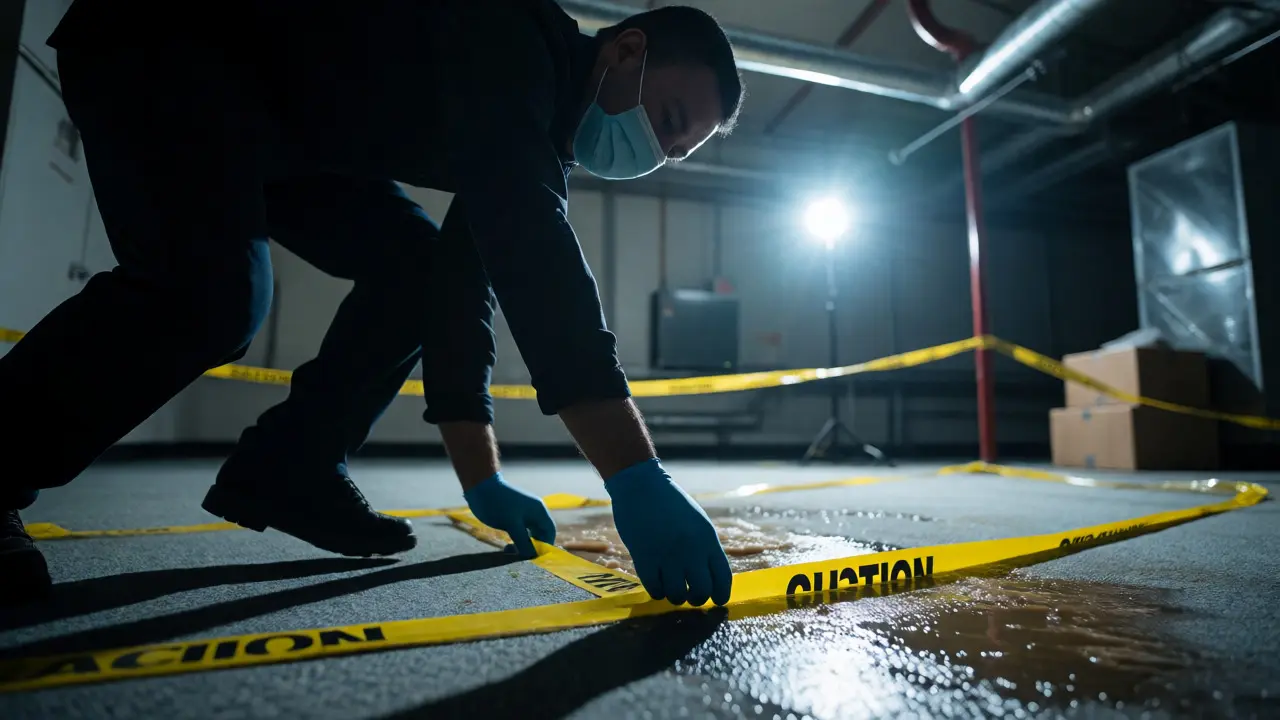
- Secure the Scene: Physically block off the area. Use caution tape or temporary barriers. If the hazard involves airborne particles (like sewage aerosols), close doors and windows to prevent airflow from spreading spores or bacteria to other rooms.
- Account for Personnel: Ensure everyone who was in the affected zone leaves immediately. Do not let them use the restrooms or breakrooms in that section. Ask them to wash hands thoroughly with soap and water, not just hand sanitizer, which doesn't kill all spore-forming bacteria.
- Document Everything: Take photos before anything is moved. This is crucial for insurance claims and liability protection. Note the time of discovery, the nature of the substance (if known), and any witnesses.
- Call the Pros: Don't try to DIY a Category 3 water loss or a significant blood spill. Contact your pre-vetted biohazard remediation partner. Having this number saved in your phone under "Emergency - Biohazard" saves precious minutes.
One key rule: Never mix chemicals. If you’re unsure what spilled, don’t add bleach to it. Mixing ammonia-based cleaners with bleach creates toxic chloramine gas, turning a small cleanup into a hazmat evacuation.
Selecting the Right Remediation Partner
Not all cleaning companies are created equal. When you search for "commercial cleaning near me," you’ll get hundreds of results. But most are janitorial services, not remediation specialists. There is a massive difference. Janitorial services maintain cleanliness; remediation specialists restore habitability after contamination.
How do you vet them before disaster strikes? Look for specific certifications and capabilities. The Institute of Inspection, Cleaning and Restoration Certification (IICRC) offers credentials specifically for biohazard remediation. Ask potential vendors if their technicians hold the AMRT (Applied Microbial Remediation Technician) certification. This ensures they understand the science behind microbial growth, not just how to scrub a floor.
Also, check their insurance coverage. They should carry pollution liability insurance, not just general liability. If a technician accidentally spreads a pathogen or damages your property during extraction, you need to know their policy covers it. Another red flag? Vendors who refuse to provide a detailed scope of work. A reputable firm will inspect the site, take moisture readings, and provide a written plan before starting work.
| Criterion | Janitorial Service | Remediation Specialist |
|---|---|---|
| Certification | General Cleaning | IICRC AMRT / RRT |
| Equipment | Vacuum, Mop, Spray | HEPA Scrubbers, Negative Air Machines |
| Insurance | General Liability | Pollution Liability + General Liability |
| Disposal Method | Standard Trash | Regulated Medical Waste Transport |
Remember, you are hiring a company to handle regulated waste. In many jurisdictions, blood-soaked materials cannot go into a standard dumpster. They must be bagged in red biohazard bags and transported by licensed haulers. If your cleaner throws those bags in the regular trash, you could face fines from local health departments.
Integrating Biohazard Plans into Business Continuity
A standalone biohazard plan is good, but integrating it into your broader Business Continuity Plan (BCP) is better. Your BCP likely already addresses IT outages or supply chain disruptions. Add a module for "Facility Integrity." This module should define thresholds for shutdowns. For example, if more than 10% of your workspace is contaminated, does the whole office close? Or do you shift to remote work?
Consider the scenario of a norovirus outbreak in your office. One person vomits, and within two days, half your sales team is calling in sick. This isn't just a cleaning issue; it's a capacity issue. Your BCP needs to account for reduced staffing levels due to illness. Do you have cross-trained employees who can cover critical roles? Can you operate at 50% capacity without missing client deadlines?
Communication is another critical piece. Who talks to the press? Who talks to the employees? Who talks to the landlord? In a biohazard event, rumors spread faster than the germs. Designate one spokesperson to handle internal communications. Tell employees exactly what happened, what steps are being taken, and when they can return. Ambiguity breeds anxiety, and anxious employees are less productive.
Financial planning is also part of continuity. Review your commercial property insurance policy. Does it cover "contamination" or "pollution"? Many standard policies exclude gradual seepage or mold unless it results from a sudden, accidental discharge. You might need a separate endorsement for environmental cleanup. Check your deductible limits too. If your deductible is $5,000 and the cleanup costs $4,000, you won't file a claim. Knowing these numbers helps you decide whether to negotiate directly with the vendor or involve the insurer.
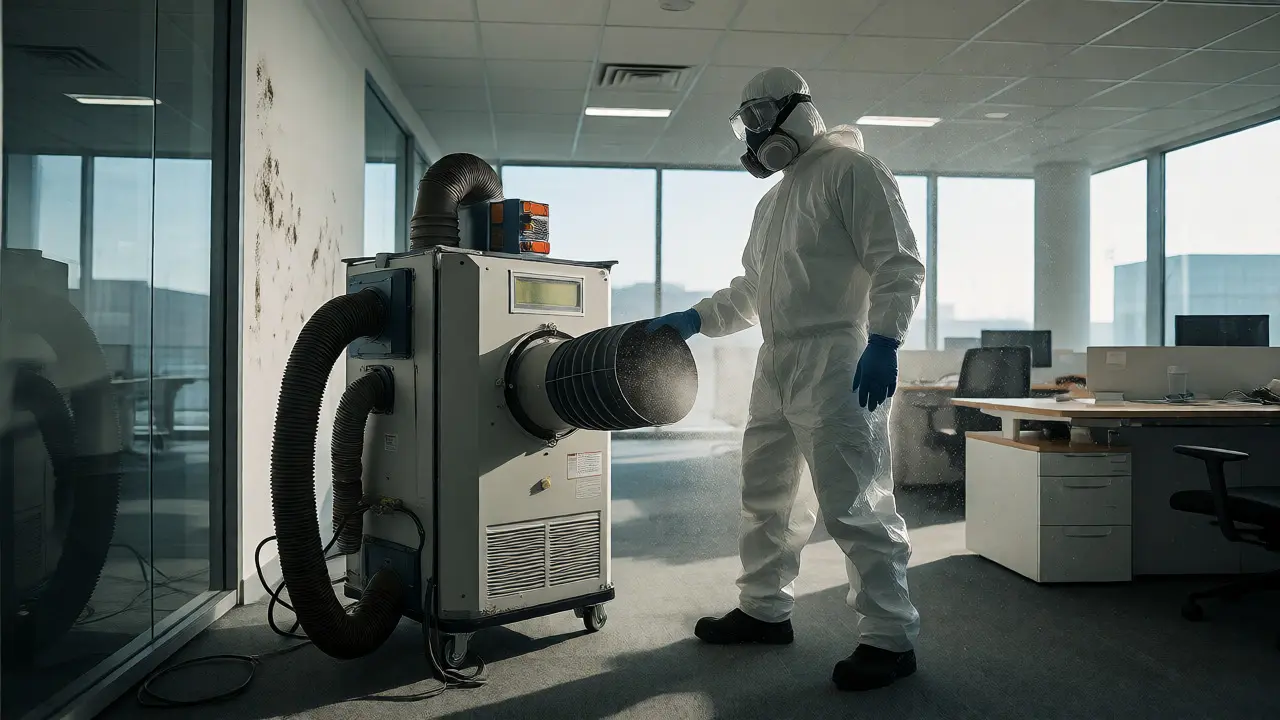
Post-Cleanup Validation and Return-to-Work
The job isn't done when the truck leaves. How do you know the space is safe? Visual inspection isn't enough. You can't see bacteria or mold spores. You need verification.
For severe cases, especially involving sewage or mold, request third-party clearance testing. This usually involves air sampling and surface swabs analyzed by an independent laboratory. The lab compares the indoor spore count to outdoor baseline levels. If the indoor count is significantly higher, or if unusual species are present, the area isn't cleared yet.
Don't skip the documentation phase. Once the area is cleared, get a "Certificate of Completion" from the remediation company. File this with your building records. If a future tenant complains about smells or allergies, you have proof that you handled previous incidents professionally. This protects your reputation and your asset value.
Finally, conduct a debrief. What went well? Did the alarm system notify facilities management fast enough? Was the contact list accurate? Did the cleaning crew arrive within the promised window? Update your plan based on these lessons. A living document adapts; a static binder gathers dust-and potentially mold.
Frequently Asked Questions
Can I use regular bleach to clean blood spills?
While bleach is a disinfectant, it is not always the best tool for initial cleanup. Bleach can damage porous surfaces like carpet and wood, driving contaminants deeper. It also requires specific dilution ratios to be effective against pathogens like HIV or Hepatitis. For large spills or unknown substances, professional-grade enzymatic cleaners or specialized disinfectants used by certified technicians are safer and more effective. Always wear gloves and eye protection.
Who is responsible for paying for biohazard cleanup in a leased office?
This depends on your lease agreement. Typically, tenants are responsible for damage caused by their operations or employees, while landlords handle structural issues like roof leaks. However, many leases include clauses regarding "maintenance of premises." Check your lease for terms related to "repair," "restoration," and "environmental compliance." Insurance may also cover the cost if the event is deemed accidental. Always consult your lease and insurance broker.
How long does a typical biohazard cleanup take?
Small, contained spills (like a single tile area) can often be cleaned and dried within 4 to 6 hours. Larger events, such as a sewage backup affecting multiple rooms or a trauma scene requiring demolition of subflooring, can take 2 to 5 days. Factors influencing time include the extent of saturation, the type of materials involved, and whether drying equipment (dehumidifiers/air movers) is needed to prevent secondary mold growth.
Do I need to evacuate the entire building for a biohazard?
Not necessarily. Evacuation depends on the hazard type and location. For localized liquid spills, isolating the immediate area is usually sufficient. However, if there is airborne contamination-such as asbestos disturbance, widespread mold spores, or aerosolized sewage-closing off the HVAC system and evacuating adjacent zones may be required. A professional assessment determines the necessary containment boundaries.
What is the difference between sanitization and sterilization in this context?
Sanitization reduces the number of microorganisms to a safe level as determined by public health standards. Sterilization destroys all forms of life, including spores. In most commercial biohazard scenarios, sanitization/disinfection is the goal. Complete sterilization of a large open office space is impractical and unnecessary. Professionals aim to bring microbial counts back to normal background levels.