Blood on a wall tells a story. Or at least, that is what we have been told by decades of crime dramas and courtroom dramas. But when a forensic expert stands before a jury to explain that story, the reality is often messier than the TV version. The discipline known as Bloodstain Pattern Analysis (BPA) has become one of the most contentious areas in modern forensics. It sits right at the intersection of physics, biology, and legal strategy, and it is currently facing a reckoning.
If you are looking at how BPA holds up under scrutiny, you need to understand that this field is no longer accepted blindly. Since a landmark report by the National Academy of Sciences (NAS) in 2009, courts have begun asking harder questions about whether blood spatter analysis is truly scientific or just subjective interpretation dressed up as fact. For attorneys, judges, and anyone involved in criminal justice, understanding these challenges is critical because a single misinterpreted drop of blood can change the outcome of a trial.
The Core Methodology of Bloodstain Pattern Analysis
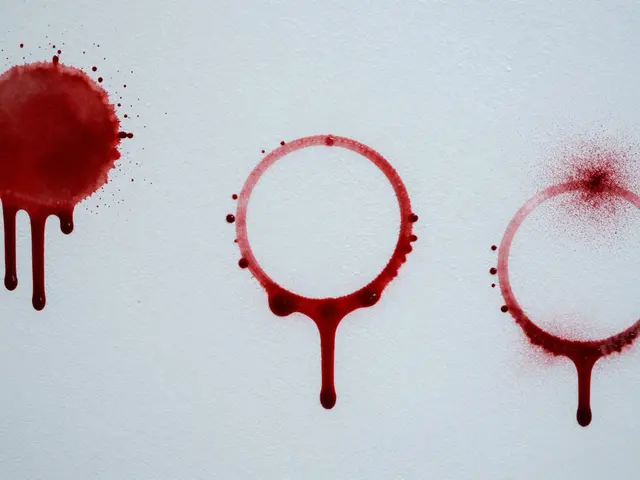
To understand the challenges, we first have to look at what BPA actually does. At its heart, BPA is the study of the size, shape, distribution, and location of bloodstains to infer the events that created them. It relies on the physical properties of blood-viscosity, surface tension, and droplet dynamics-combined with gravity. When blood hits a surface, it leaves a mark. That mark contains data. A round stain usually means the blood hit perpendicular to the surface. An elliptical stain suggests an angle. By measuring the length and width of that ellipse, an analyst can calculate the angle of impact.
Analysts classify stains into categories like impact spatter, cast-off, transfer, drip, pooling, or void patterns. They then propose mechanisms. Was this blunt force? A gunshot? Arterial spray? This process is not done with a machine that spits out a definitive answer. It is largely qualitative. The analyst looks at photos, sketches, and sometimes the scene itself, and uses their training to interpret what they see. This reliance on human interpretation is where the first major challenge arises: subjectivity.
| Pattern Type | Physical Cause | Interpretive Challenge |
|---|---|---|
| Impact Spatter | Force applied to a source of blood (e.g., beating, gunshot) | Determining the exact number of blows or type of weapon is often speculative. |
| Cast-Off | Blood flung from a moving object (e.g., swinging weapon) | Can be confused with other high-velocity spatter; directionality can be ambiguous. |
| Transfer | Blood moved from a wet surface to another dry surface | Hard to distinguish between contact during an assault vs. accidental touch later. |
| Void Patterns | An area free of blood where an object blocked the flow | Requires assuming the original spray pattern, which may not be fully documented. |
The Reliability Crisis: Error Rates and Scientific Critique
The biggest hurdle for any BPA expert witness today is proving reliability. In the past, experts could testify based on "general acceptance" in the forensic community. Today, they face the Daubert standard, which requires testimony to be based on reliable principles and methods, including known error rates. Here is the problem: for years, BPA lacked robust empirical data on how often analysts get it wrong.
This changed with an NIJ-funded study conducted in the late 2010s. Researchers asked practicing analysts to examine bloodstain images where the true mechanism was known. The results were startling. Analysts’ conclusions were wrong on average about 11% of the time. More concerning was the consistency of the errors. When two analysts disagreed, they contradicted each other about 8% of the time. But when they were both wrong, they reproduced the same error 18% to 34% of the time. This suggests that some mistakes are not random; they are systematic, likely rooted in shared biases or flawed training methodologies.
For an expert witness, this data is ammunition for the opposing counsel. If a defense attorney can show that even trained professionals miss the mark more than 1 in 10 times in controlled settings, they can cast doubt on the certainty of the prosecution’s narrative. The NAS 2009 report had already flagged BPA as lacking a strong empirical research base. The NIJ study provided the hard numbers to back that up.
Cognitive Bias and the Problem of Context
Human brains are wired to find patterns. This is useful for survival but dangerous for forensic science. One of the most significant challenges in BPA is cognitive bias, specifically confirmation bias. This happens when an analyst knows the suspect confessed, or knows the police theory of the case, before they analyze the blood. Unconsciously, they may interpret ambiguous stains to fit that narrative.
To combat this, the field is adopting a practice called sequential unmasking. This means controlling the order and amount of information given to the analyst. Ideally, an analyst should classify stains based purely on their physical characteristics before learning whose clothing they are on or what the suspect said. However, implementation varies wildly. Many public lab analysts work closely with detectives from day one. They hear the theories. They see the confessions. When cross-examined, an expert who cannot prove they used sequential unmasking opens themselves up to accusations that their opinion was tainted by context rather than science.

Qualifications and the "Expert" Label
Who gets to stand in court and tell a jury what the blood says? Under Federal Rule of Evidence 702, an expert must be qualified by knowledge, skill, experience, training, or education. Unlike DNA analysis, which requires degrees in biology and work in accredited labs, BPA has no single licensing authority. You can become a BPA expert through various paths: police academy training, short workshops, private courses, or years of casework.
This variability is a major point of contention. A prosecutor might present an officer with five years of crime scene experience and a weekend certificate in BPA as a highly qualified expert. A defense attorney will argue that this person lacks the rigorous scientific background needed to interpret fluid dynamics. The St. Mary’s Law Journal notes that despite Daubert’s strict criteria, admission rates for such experts haven’t dropped significantly. Judges often accept experiential qualifications without demanding proof of validated methodology. This makes challenging an expert’s credentials a key strategy for defense teams.
Overstatement and the Scope of Testimony
Perhaps the most dangerous aspect of BPA in court is the tendency to overstate conclusions. Legal scholars and critics argue that experts often go beyond what the evidence supports. They might testify that a defendant committed the crime, or reconstruct minute-by-minute sequences with unwarranted precision, based on minimal stains. High-profile cases like those of Julie Rea and David Camm highlighted this risk. In both instances, BPA testimony was used to link defendants to scenes based on limited evidence, only for appeals and re-investigations to raise serious doubts about those conclusions.
The proper role of a BPA expert is to describe what the patterns are and what mechanisms they are consistent or inconsistent with. They should not testify to ultimate legal conclusions like guilt. They should not say, "This proves he beat her." They should say, "This pattern is consistent with multiple blows to a standing victim." Crossing that line turns scientific observation into speculative storytelling, which violates the spirit of Rule 403 if it unfairly prejudices the jury.

Strategies for Litigation: Prosecution vs. Defense
How do lawyers handle these challenges in practice? The strategies differ sharply depending on which side of the aisle you sit on.
For Prosecutors: Best practices involve early engagement with the BPA expert. Review the CV thoroughly. Ensure the analysis followed laboratory protocols and included technical review. Plan for cross-examination by anticipating attacks on qualifications and bias. Use clear, open-ended questions like, "Can you explain to the jury why this pattern is consistent with a gunshot?" Avoid letting the expert make grand narrative claims. Stick to the mechanics.
For Defense Attorneys: The goal is to expose uncertainty. Challenge the expert’s training depth. Ask if they used sequential unmasking. Introduce the NIJ error rate data. Highlight semantic differences-show that another expert might call the same stain something else. Retain your own BPA expert to provide competing interpretations or to testify about the limits of the science. Focus on alternative explanations. Could that stain be from a fall? From medical treatment? From post-mortem movement?
The Future of BPA in the Courtroom
Where does this leave us? BPA is not going away. It remains a vital tool for investigating violent crimes. But the era of unquestioned authority is over. The future of BPA lies in standardization. We are seeing calls for uniform terminology, mandatory blind verification, and multi-analyst review models where majority opinion carries more weight. Computer-assisted methods for angle-of-impact calculations and 3D reconstructions are also emerging, adding a layer of quantitative rigor to the qualitative art.
For now, the central challenge for any BPA expert witness is transparency. They must defend their methods with reference to published research, acknowledge uncertainty, and situate their testimony alongside other evidence. They are not oracle figures. They are interpreters of physical clues, prone to human error, operating in a system that demands higher standards of proof. Understanding this shift is essential for anyone navigating the complexities of modern forensic litigation.
What is the error rate of bloodstain pattern analysis?
According to an NIJ-funded study, BPA analysts’ conclusions were wrong approximately 11% of the time in controlled tests. Additionally, there was an 8% contradiction rate between different analysts, indicating significant inter-analyst variability.
Is bloodstain pattern analysis considered reliable science under Daubert?
BPA faces ongoing challenges under the Daubert standard. While it is still admitted in many courts, the National Academy of Sciences and subsequent studies have criticized it for lacking strong empirical validation, standardized error rates, and objective testing methods compared to disciplines like DNA profiling.
What is sequential unmasking in forensic analysis?
Sequential unmasking is a protocol designed to reduce cognitive bias. It involves controlling the order and amount of contextual information provided to an analyst, ensuring they classify evidence based on physical characteristics before knowing case details like suspect confessions or police theories.
Can a bloodstain pattern expert testify that a defendant is guilty?
No. Experts should limit their testimony to describing patterns and mechanisms consistent with the evidence. Testifying to ultimate legal conclusions, such as guilt or specific narratives not supported by direct physical data, is considered overstatement and can be challenged under rules of evidence.
How are BPA experts qualified to testify in court?
Qualifications vary widely. Unlike DNA analysts, BPA experts do not require a specific degree or license. They may be qualified through police training, specialized workshops, casework experience, or private certification. This variability often leads to disputes over their expertise during trials.