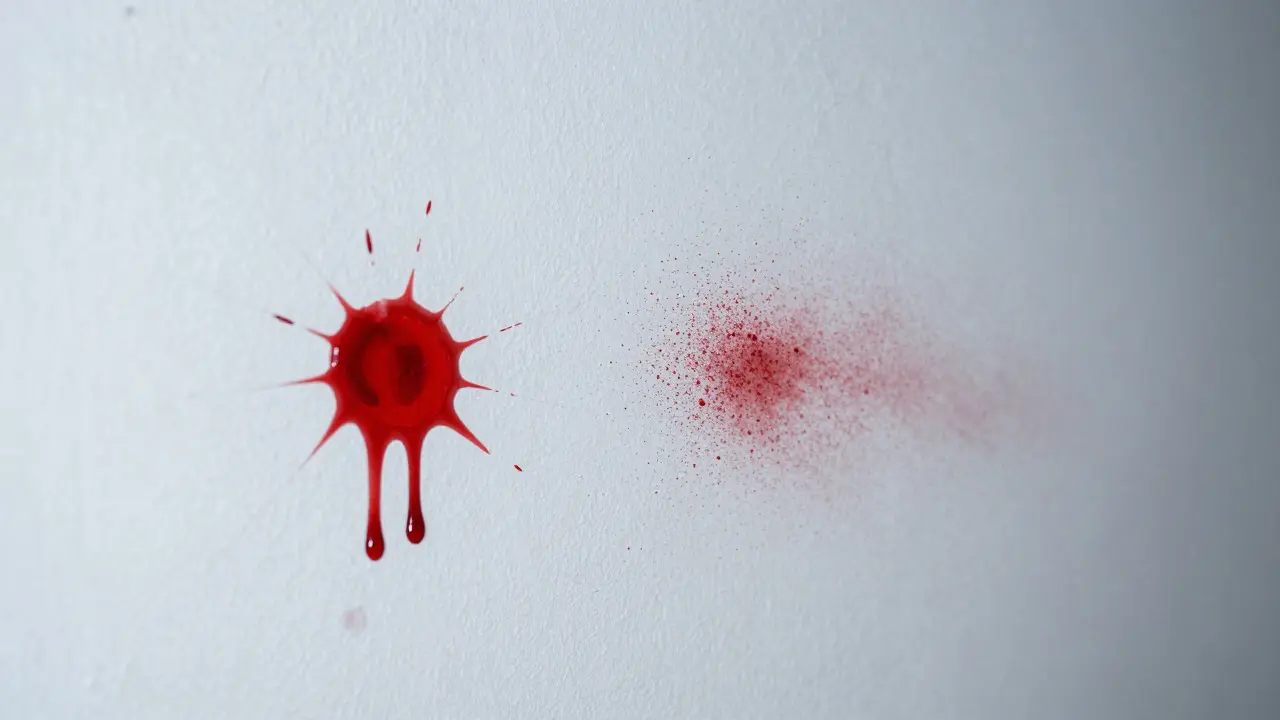
Imagine standing ten feet away from a target that just got hit by a bullet. You expect the impact to send debris flying toward you. But sometimes, surprisingly little comes your way. In forensic ballistics and bloodstain pattern analysis, this counter-intuitive phenomenon is where the distinction between forward spatter and back spatter becomes critical. Understanding these two types of secondary transfer isn't just academic trivia; it’s the difference between reconstructing a shooter's position accurately and building a case on flawed assumptions.
Most people assume that when a projectile hits a body, blood sprays outward in all directions equally. If you’re a shooter or an investigator, you know better. The physics of high-velocity impacts create specific directional biases. Getting this wrong can lead to misidentifying who was present at the scene, how they were positioned, and even whether a self-defense claim holds up under scrutiny.
The Physics of Impact: Why Direction Matters
To understand the distinction, we have to look at the energy transfer involved in a gunshot wound. When a bullet penetrates tissue, it creates a temporary cavity. This expansion forces blood out of the wound channel. However, the path of least resistance dictates where that blood goes.
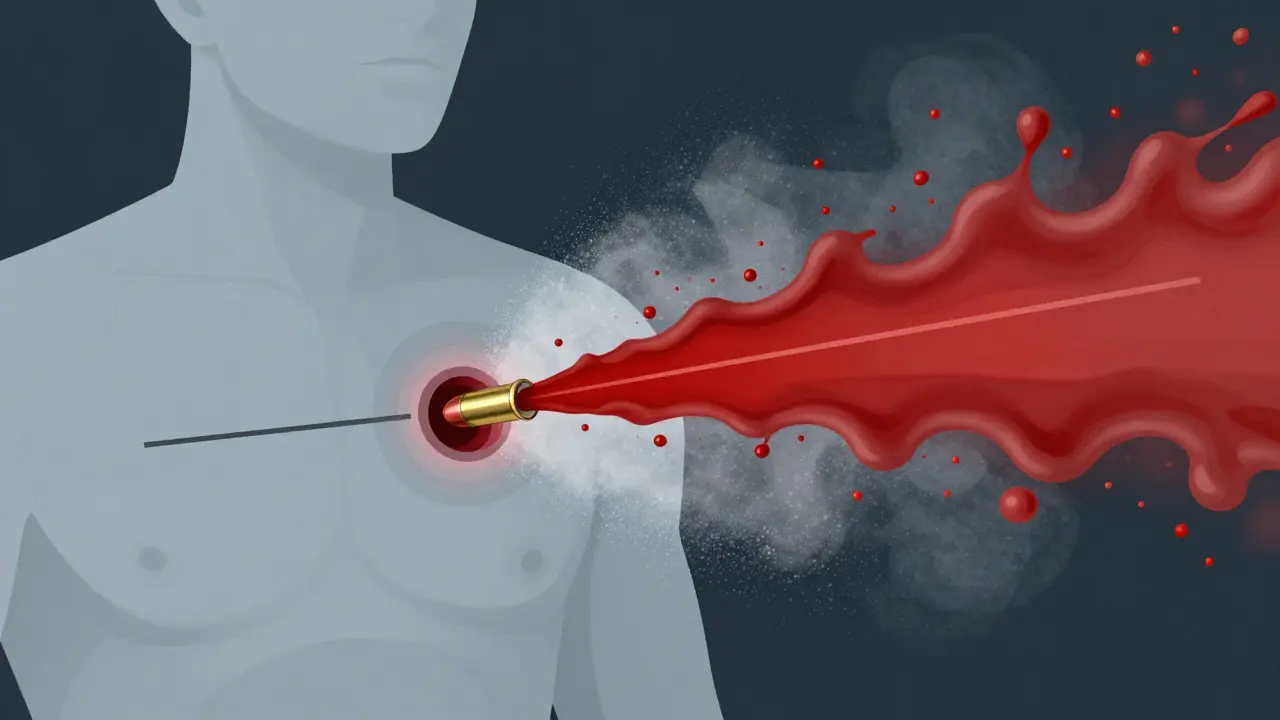
Forward Spatter is bloodstains deposited on surfaces or objects located in the direction of the projectile's travel after exiting the body. Think of it as the "exit" spray. Because the bullet is still moving at high velocity as it leaves the body, it pushes blood forward along its trajectory. This results in larger, more distinct droplets that often retain the shape influenced by the exit force.
In contrast, Back Spatter is bloodstains deposited on surfaces or objects located behind the entry point, opposite the direction of the projectile's travel. This occurs because the entry wound creates a small amount of pressure buildup before the full expansion of the temporary cavity takes over. Additionally, some blood is forced backward into the subcutaneous tissues and then pushed out through the skin pores or minor tears near the entry site.
Here is the key insight that many novices miss: Back spatter is typically much less voluminous than forward spatter. It consists of smaller, finer mist-like droplets rather than large drops. This difference in size and distribution is the primary visual cue investigators use to distinguish between the two at a crime scene.
Visual Differences and Pattern Recognition
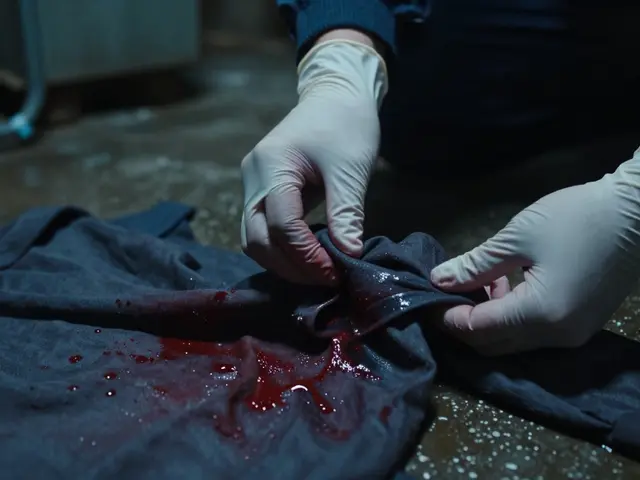
When you walk into a crime scene, your eyes need to be trained to spot these subtle differences immediately. You aren't just looking for red stains; you are reading the history of the event through the geometry of the stains.
- Droplet Size: Forward spatter usually produces medium to large droplets (often greater than 4mm in diameter) due to the higher kinetic energy pushing the blood out. Back spatter tends to produce fine mist or very small droplets (less than 1mm), resembling a spray paint effect.
- Directionality: Forward spatter aligns with the vector of the bullet's exit. If the bullet went left-to-right, the forward spatter will be heavily concentrated on the right side of the victim or nearby walls. Back spatter will be found on the left side, directly behind the entry point.
- Stain Shape: Forward spatter drops may show tails indicating the direction of movement. Back spatter, being lower energy, often forms rounder, more uniform dots unless there is significant turbulence.
A common mistake is assuming that any blood on the shooter’s face is evidence of close-range shooting. While possible, if the shooter was standing three feet away, the presence of only fine mist on their cheek could indicate back spatter from a distant shot, not necessarily contact range. Conversely, large, smeared drops on the shooter suggest they were in the direct path of forward spatter, implying proximity.
Practical Application in Crime Scene Reconstruction
So, why does this matter for the investigation? It matters because it helps determine the relative positions of the shooter and the victim at the moment of impact.
If you find significant back spatter on the shooter’s clothing, you can infer that the shooter was positioned behind the entry wound relative to the bullet's path. If you find heavy forward spatter on the shooter, they were likely in front of the exit wound. This spatial relationship is crucial for validating statements like "I was facing him" versus "He turned around."
Consider a scenario where a suspect claims they fired a warning shot but accidentally hit the victim. If the bullet entered the victim's back and exited their chest, the forward spatter would be directed away from the suspect (assuming the suspect was behind the victim). If the suspect has no forward spatter but has fine back spatter, it supports their position behind the victim. If they had large forward spatter, it might contradict their claimed position, suggesting they were actually in front of the victim when the shot was fired.
This level of detail allows forensic scientists to create a 3D reconstruction of the scene. By mapping the density and direction of both spatter types, experts can triangulate the exact angle of fire. This is far more accurate than relying solely on witness testimony, which is often biased or unreliable under stress.
Common Misconceptions and Pitfalls
Even experienced investigators can fall into traps when analyzing spatter patterns. One major pitfall is ignoring environmental factors. Wind, air conditioning, or open windows can alter the flight path of blood droplets, making them appear to come from a different direction than they actually did.
Another misconception is equating back spatter exclusively with low-velocity weapons. While true that rifled firearms produce more dramatic forward spatter, even handgun rounds generate measurable back spatter. The key is the ratio of volume, not just the presence of the stain.
Furthermore, post-mortem bleeding can mimic spatter patterns. If a victim bled out after death, gravity pulls the blood down. This passive drip pattern looks different from dynamic spatter, which is thrown by force. Distinguishing between active spatter (from a beating heart) and passive dripping is essential before you even start classifying forward vs. back patterns.
Tools and Techniques for Accurate Analysis
Modern forensics relies on specialized tools to quantify what the eye can only estimate. Digital photogrammetry allows analysts to measure the angle of impact for individual droplets. By measuring the width and length of elliptical stains, you can calculate the angle of incidence using trigonometry.
Software programs can then intersect multiple lines of convergence to pinpoint the origin of the spatter. This digital reconstruction provides objective data that supports the qualitative assessment of forward and back spatter distributions. It removes guesswork and replaces it with mathematical precision.
However, technology is only as good as the initial collection. Proper documentation, including scale bars, reference points, and multiple angles, is non-negotiable. A single missed photo of a back spatter pattern on a wall can ruin the entire reconstruction later.
| Feature | Forward Spatter | Back Spatter |
|---|---|---|
| Location Relative to Wound | Behind the exit wound (direction of travel) | Behind the entry wound (opposite direction) |
| Droplet Size | Medium to Large (>4mm) | Small to Fine Mist (<1mm) |
| Energy Level | High Velocity | Low to Medium Velocity |
| Typical Appearance | Distinct drops, potential tails | Misty, diffuse, fine dots |
| Investigative Value | Indicates shooter position in front of exit | Indicates shooter position behind entry |
Case Study: The Importance of Detail
Let’s look at a hypothetical case that highlights these distinctions. A suspect is charged with murder after a single gunshot wound to the chest. The suspect claims they were standing five feet away, facing the victim. The bullet entered the victim's chest and exited their back.
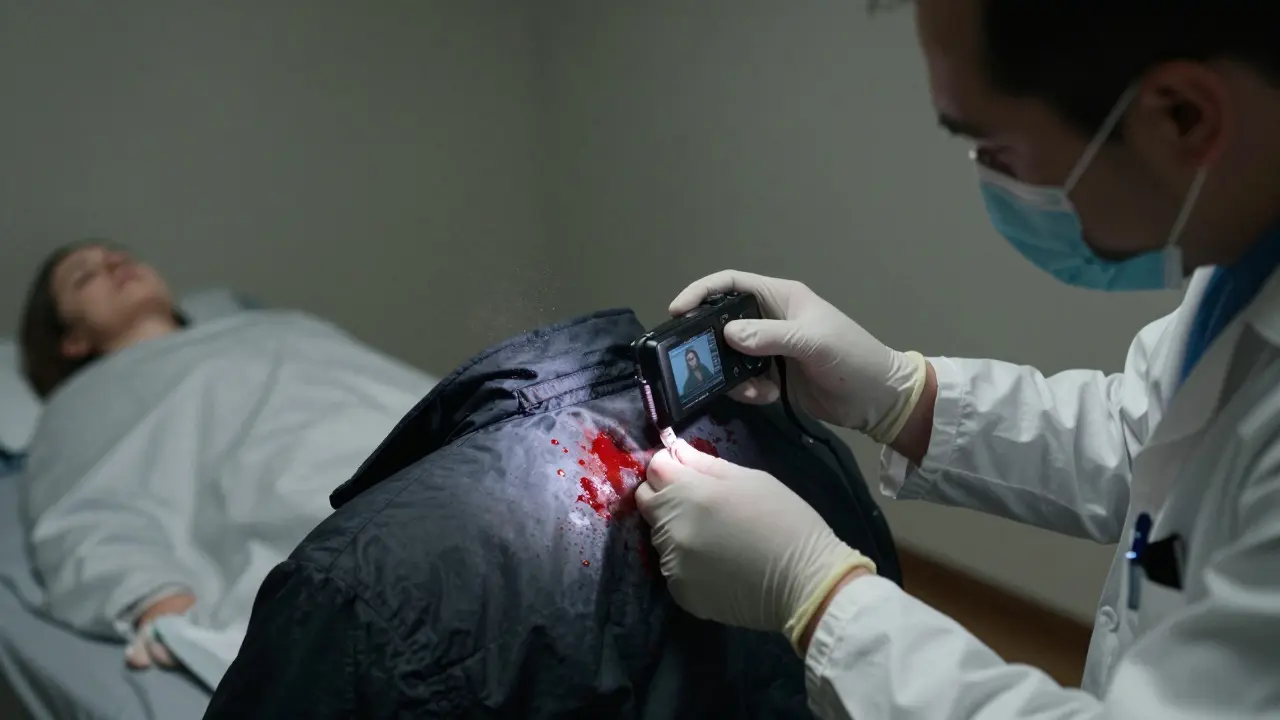
If the suspect was facing the victim, they would be in the path of the forward spatter. We would expect to see medium-to-large droplets on the suspect’s face and upper body. However, the forensic team finds only fine mist on the suspect’s collar, consistent with back spatter. They also find heavy, large-diameter spatter on the wall directly behind the victim’s head.
This discrepancy suggests the suspect was not facing the victim at the time of the shot. Instead, they were likely positioned behind the victim, firing into the victim's back. The back spatter on the suspect confirms they were behind the entry point. The forward spatter on the wall confirms the bullet traveled away from the suspect. This physical evidence contradicts the suspect's alibi and repositions the narrative of the event entirely.
Best Practices for Investigators
To ensure accuracy in your own investigations, follow these practical steps:
- Document Before You Touch: Take photos of all spatter patterns before disturbing any evidence. Use scales and reference cards.
- Map the Vectors: Identify the entry and exit wounds first. Draw lines showing the bullet's path. Then map where the spatter falls relative to these lines.
- Measure Droplet Sizes: Don’t guess. Use magnification tools to measure the diameter of representative droplets from both areas.
- Consider Environmental Factors: Note any airflow sources that could have altered the spatter distribution.
- Correlate with Testimony: Compare the physical spatter data with witness and suspect statements. Look for contradictions.
By treating spatter analysis as a logical puzzle rather than a simple observation, you unlock the story hidden in the blood. The distinction between forward and back spatter is not just a technicality; it is a powerful tool for truth-finding in criminal investigations.
Is back spatter always smaller than forward spatter?
Generally, yes. Back spatter is produced by lower energy forces compared to the high-velocity exit of the projectile, resulting in finer mist and smaller droplets. However, extreme cases or specific weapon calibers can blur these lines, so context is always necessary.
Can wind affect the direction of spatter?
Yes. Strong air currents can push lightweight blood droplets, particularly fine back spatter, altering their final resting position. Investigators must account for HVAC systems, open windows, or outdoor wind when interpreting patterns.
How do I distinguish spatter from passive bleeding?
Passive bleeding follows gravity, creating drips or pools that flow downward. Spatter is projected by force, creating patterns that radiate from a point of origin. Spatter droplets often have tails or directional indicators, while passive drips are typically round and uniform in vertical columns.
Does the type of firearm change spatter patterns?
Yes. High-velocity rifles create larger temporary cavities, producing more extensive forward spatter. Low-velocity handguns produce less dramatic spatter, but the fundamental distinction between forward and back remains consistent based on the direction of travel.
What role does clothing play in spatter analysis?
Clothing can absorb, deflect, or filter spatter. Thick fabrics may block fine back spatter while allowing larger forward spatter to pass through. Analysts must consider the material and layering of clothing when interpreting stains on the victim or shooter.