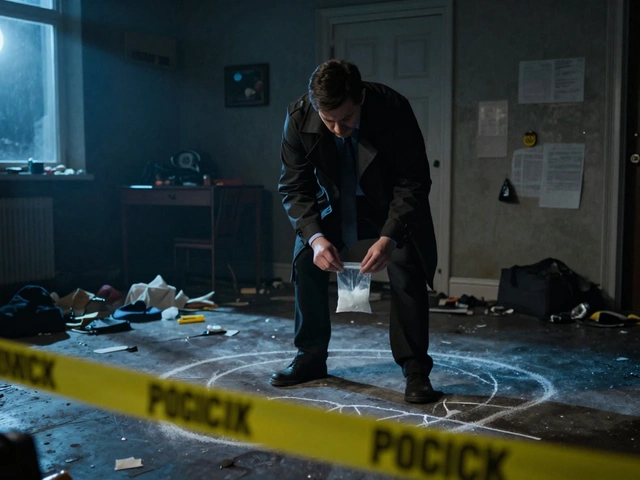
Most people think of fire as an accident. A shorted wire, a grease flare-up, or a candle left unattended. But when the flames don't match the story, investigators start looking for a human hand. Arson is one of the most difficult crimes to solve because it destroys its own evidence. The heat bakes away DNA, melts electronics, and turns solid structures into ash. This makes arsonist profiling a unique blend of physical science and psychological deduction. It’s not just about finding accelerants; it’s about understanding why someone wanted a specific building to burn in a specific way.
Profiling an arsonist isn't like catching a serial killer who leaves trophies. There are no bodies, usually no witnesses, and the crime scene is often gone by the time the first responder arrives. Instead, we look at the "signature" of the fire itself. Did they use gasoline or kerosene? Did they set multiple points of origin? Was the fire started during business hours or in the dead of night? These details paint a picture of the offender's resources, planning level, and emotional state.
The Core Drivers: Why People Set Fires
To understand the "how," you have to understand the "why." In forensic fire investigation, motivations generally fall into four distinct buckets. Each bucket comes with its own set of behavioral clues that help narrow down the suspect pool.
- Profit: The most common reason. Insurance fraud, clearing land for development, or eliminating competition. These fires are often planned meticulously. The arsonist knows exactly what they want to save (documents, jewelry) and what they don’t care about losing.
- Vengeance: Driven by anger. Think of the ex-spouse who burns the house, or the rival business owner who torches the competitor’s shop. These fires are often messy and less calculated than profit-driven ones. The goal is destruction, not salvage.
- Excitement: Common among younger offenders or those with impulse control issues. The fire is the reward. They might be caught in the act because they linger to watch the flames grow. These scenes often show signs of hasty preparation.
- Revenge/Retaliation: Similar to vengeance but often broader in scope. Community disputes, political statements, or personal grudges against institutions. These can range from small nuisance fires to large-scale industrial sabotage.
Identifying the motivation early changes how you search for suspects. If it’s profit, you look at financial records and insurance claims. If it’s excitement, you look at local juvenile delinquency records and recent arrests for vandalism. The motive dictates the method.
Analyzing the Physical Evidence: The Fire Scene as a Map
Once the fire department extinguishes the blaze, the work shifts to the fire investigator. We treat the debris field like a crime scene map. Every item tells us something about the ignition source and the path of the fire.
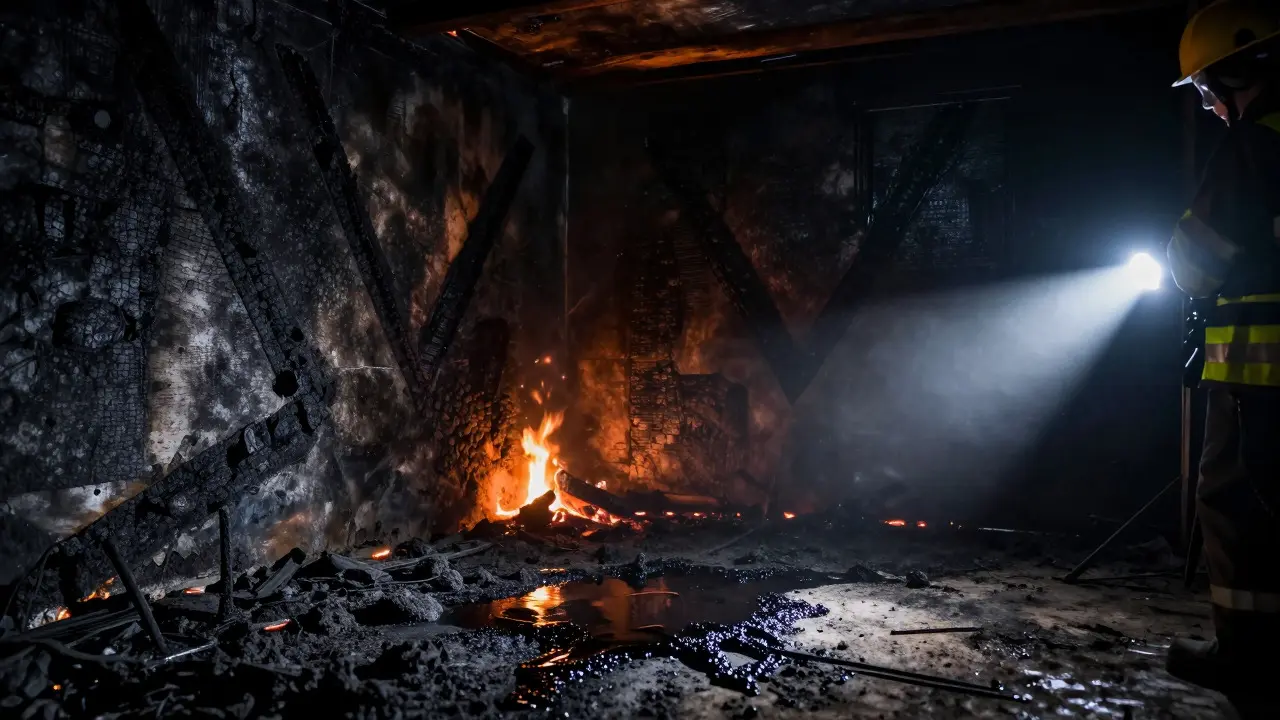
One of the most critical tools in this process is the V-pattern analysis. When a liquid accelerant is poured on the floor, the fire burns upward, creating a distinct V-shape of charring on the walls. The bottom of the V indicates where the liquid was pooled. If you see multiple V-patterns pointing to different locations, it suggests multiple points of origin. A single accidental electrical fire usually has one clear point of origin. Multiple origins are a strong indicator of intentional setting.
We also look at "burn patterns" on objects. Glass windows shatter outward if the heat source is inside, but inward if the heat is outside. If a window breaks outward before the roof collapses, it suggests the fire started on the ground floor. If the doors are locked from the inside, it raises questions about whether the occupant was trapped or if the arsonist locked them out.
| Feature | Accidental Fire | Potential Arson Indicator |
|---|---|---|
| Points of Origin | Single, logical source (e.g., stove) | Multiple, unrelated sources |
| Accelerants | Rarely present unless fuel involved | Fresh smell of gasoline/kerosene; residue found |
| Ignition Source | Electrical fault, cooking oil | Open flame, matches, improvised devices |
| Timing | Random or routine activity times | Strategic times (business hours, holidays) |
| Value Loss | Proportional to cause | Disproportionate damage relative to value |
Psychological Profiles: Who Are They?
While every case is unique, certain demographic and psychological patterns emerge in arson cases. Understanding these helps investigators cast a wider net.
Insurance Fraudsters are typically older, financially stressed individuals. They are methodical. They might stage the scene to look like an accident, perhaps leaving a faulty appliance near the point of origin. Their primary fear is being caught, so they often remove valuables beforehand. You’ll rarely find them lingering at the scene. They disappear quickly.
Serial Arsonists, on the other hand, are often driven by excitement or control. They may have a history of juvenile fire-setting. Unlike fraudsters, they might leave behind clues inadvertently because they are emotionally attached to the act. They may choose targets based on accessibility rather than value. A serial arsonist might burn a car in a parking lot one week and a shed the next. The connection isn't the target; it's the method or the feeling.
Then there are the Revenge Arsonists. These are often impulsive. They might use whatever accelerant is handy-gasoline from their own car, lighter fluid from a grill. Their behavior is erratic. They might call the fire department themselves, either out of guilt or to ensure the fire is big enough to be noticed. Their mental state is often volatile, linked to recent conflicts or stressors.

The Role of Accelerants and Residue Analysis
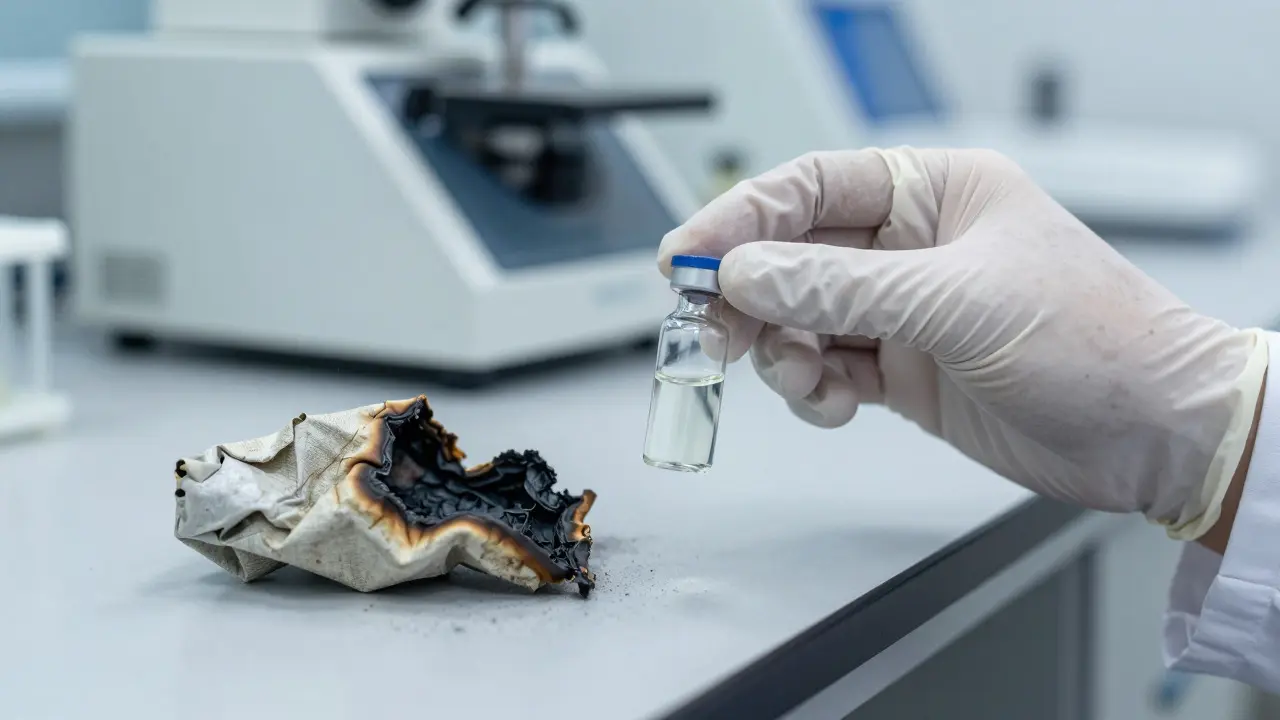
You can’t profile an arsonist without confirming they used an accelerant. This is where chemistry meets detective work. Gasoline, kerosene, and diesel fuel all leave specific chemical signatures. Modern gas chromatography-mass spectrometry (GC-MS) can detect these residues even after the fire has burned out.
However, false positives are common. Wood, plastic, and rubber release compounds that can mimic fuel residues. That’s why context matters. Finding gasoline residue on a chair in a living room is suspicious. Finding it on a car engine block is normal. Investigators must correlate the lab results with the physical evidence. If the GC-MS shows high levels of n-hexane (a component of gasoline) on a rag found under a sofa, and the V-pattern points to that exact spot, the case becomes much stronger.
The type of accelerant also tells you about the offender’s resourcefulness. Gasoline is cheap and easy to get, making it the go-to for opportunistic offenders. Kerosene or specialized solvents suggest more planning and access to industrial supplies. If you find a rare chemical solvent, you’re likely dealing with someone with technical knowledge or access to specific workplaces.
Building the Case: Connecting Dots
Profiling is iterative. You start with the physical evidence, form a hypothesis about the motive, and then test that hypothesis against the suspect pool. Let’s say you identify a V-pattern indicating multiple points of origin and find gasoline residue. Your initial profile is: deliberate, likely motivated by profit or revenge, had access to vehicle fuel.
Now you cross-reference this with local data. Were there any recent insurance claims in the area? Is there a known dispute between neighbors? Have there been similar fires in the last six months? If you find three other fires with the same V-pattern signature and the same type of residue, you’ve got a series. This allows you to link cases that police might otherwise treat as isolated incidents.
Technology plays a huge role here. Geographic profiling software can plot the locations of multiple fires to predict where the offender lives or works. If the fires cluster around a specific intersection, that’s your hotspot. Combine this with witness reports of a suspicious vehicle or person, and you have a concrete lead.
Challenges and Pitfalls in Arson Investigation
It’s not always straightforward. One of the biggest pitfalls is confirmation bias. Once an investigator decides a fire was arson, they tend to see evidence that supports that view while ignoring contradictory signs. An electrical fault can sometimes create patterns that look like multiple points of origin. Always remain open to the possibility of accident until proven otherwise.
Another challenge is the destruction of digital evidence. Phones, laptops, and security cameras are often destroyed in high-intensity fires. If the arsonist knew this, they might wait until the heat peaks to enter. Or, they might destroy the evidence themselves. Investigators need to preserve what remains-charred circuit boards, melted phone casings-and send them for specialized digital recovery.
Finally, public perception can interfere. If a community believes a fire was an accident due to negligence, pressure mounts to close the case quickly. This can lead to missed clues. Maintaining objectivity is crucial. The evidence doesn’t care about public opinion; it only cares about physics and chemistry.
FAQ
What is the most common motivator for arson?
Profit is the most common motivator, primarily driven by insurance fraud. However, in terms of sheer number of incidents, excitement-driven fires (often by juveniles) are also very frequent, though they result in less property damage.
How do investigators distinguish between accidental and intentional fires?
They look for multiple points of origin, the presence of accelerants, and inconsistencies in the burn patterns. A single point of origin with a logical cause (like a stove) suggests accident. Multiple origins or unexplained accelerant residue strongly suggests arson.
Can arson be solved without a witness?
Yes. Many arson cases are solved through physical evidence alone, such as accelerant residue, video surveillance, and financial records linking a suspect to the loss. Witness testimony is helpful but not required for a conviction.
What is a V-pattern in fire investigation?
A V-pattern is a characteristic shape of charring on vertical surfaces caused by a liquid accelerant burning upward from a pool on the floor. The bottom of the V indicates the location of the liquid pool, helping pinpoint the origin.
Do arsonists usually use gasoline?
Gasoline is the most common accelerant due to its volatility, low cost, and availability. However, kerosene, diesel, and lighter fluid are also frequently used depending on the offender's access and preference.