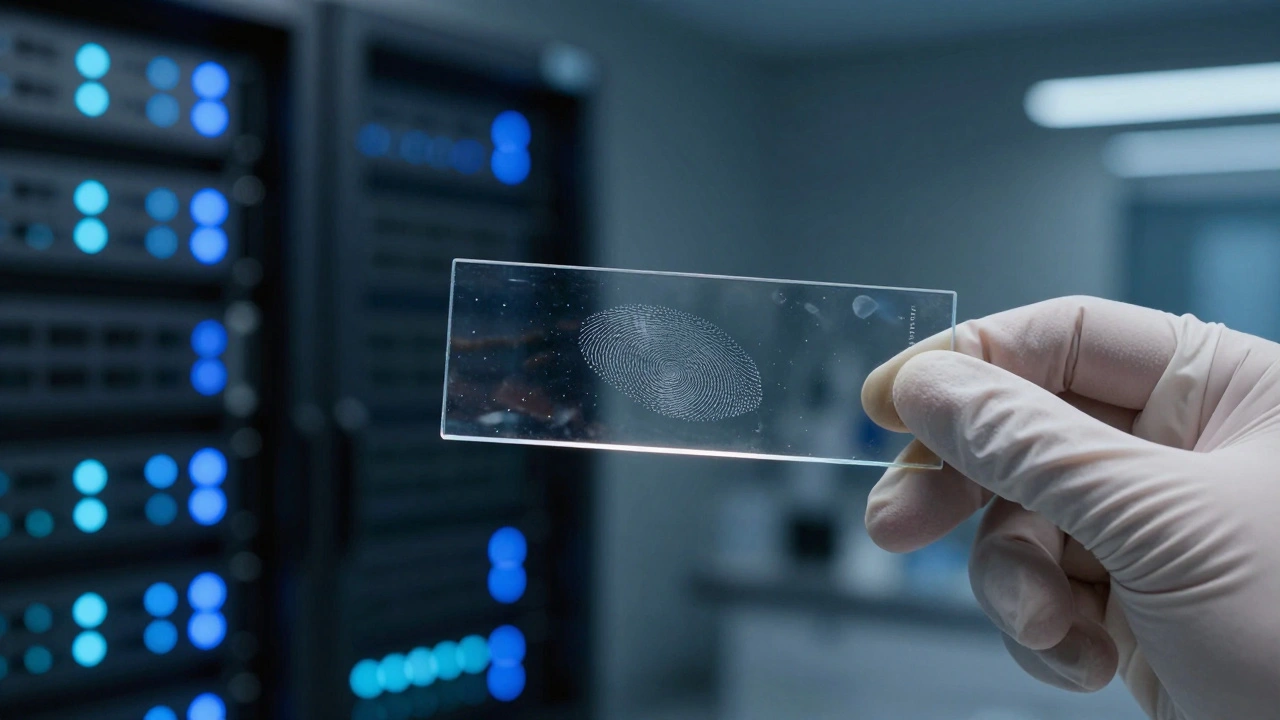
Imagine a crime scene with a smudge of oil on a window frame. In the past, solving that clue might have taken weeks of manual filing and human eye strain. Today, that same smudge can be processed, digitized, and compared against millions of records in seconds. This shift is powered by Automated Fingerprint Identification Systems, or AFIS, which are large-scale biometric solutions that capture, store, analyze, and compare fingerprint data using computerized algorithms to perform rapid identification and verification. These systems have transformed how law enforcement and civil agencies handle identity verification, turning what was once a labor-intensive puzzle into a streamlined digital process.
But AFIS isn't just a fancy search engine for fingerprints. It’s a complex ecosystem of hardware, software, and strict legal standards. Whether you’re a student of forensic science, a legal professional, or just curious about the tech behind the headlines, understanding how these systems work-and where they fall short-is crucial. Let’s break down the mechanics, history, and real-world impact of AFIS technology.
How AFIS Works: From Ink to Algorithm
At its core, an AFIS platform follows a specific pipeline to turn a physical fingerprint into a searchable digital record. It doesn’t just take a picture; it translates biological patterns into mathematical data. Here is the step-by-step process:
- Acquisition: Fingerprints are captured using sensors (optical, capacitive, or ultrasonic) in live-scan devices, or scanned from inked cards. The standard resolution is at least 500 pixels per inch (ppi), though latent prints often require 1000 ppi for clarity.
- Preprocessing: Raw images are noisy. The system cleans them up using techniques like Gabor filtering and contrast enhancement to isolate the ridge structure from background noise.
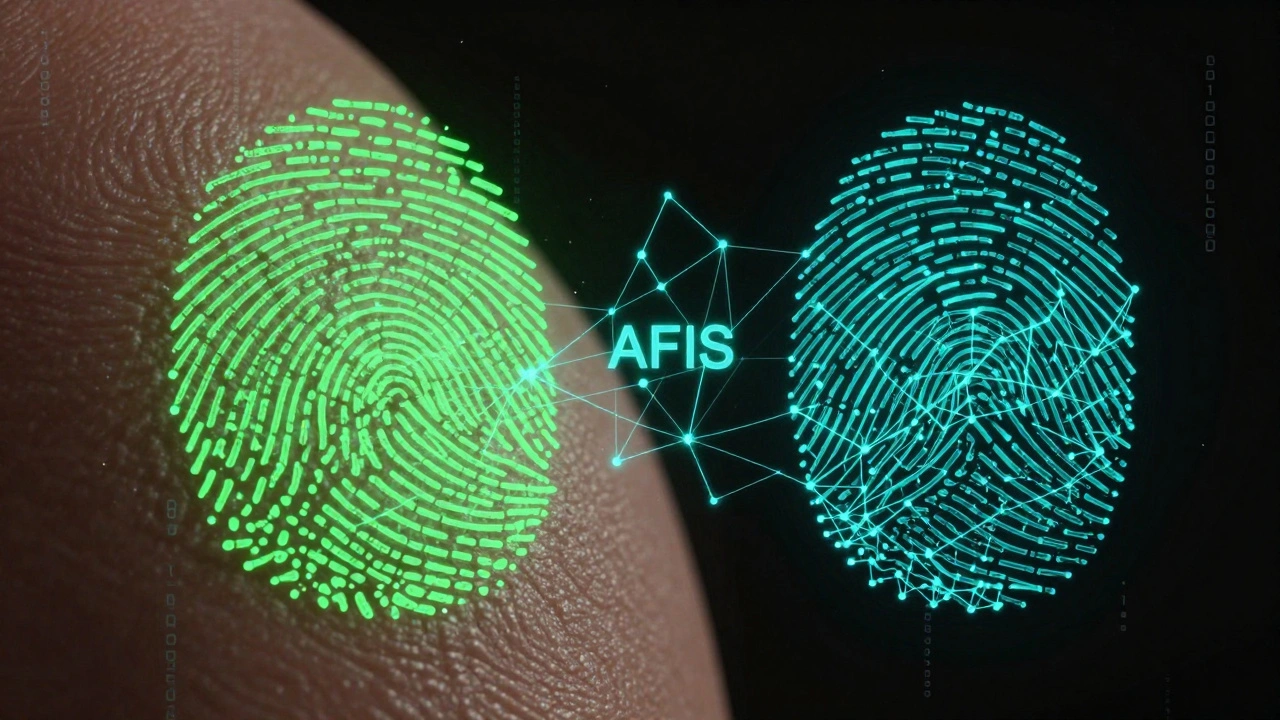
- Feature Extraction: This is the critical step. The algorithm identifies "minutiae" points-specifically ridge endings and bifurcations (where one ridge splits into two). Advanced systems may also look at pore shapes (poroscopy).
- Template Generation: Instead of storing the full image, the system creates a compact template (just a few hundred bytes) containing the coordinates and orientation of these minutiae points. This speeds up searches significantly.
- Matching: When a probe print is submitted, the system compares its template against the database. It looks for a transformation (rotation, translation) that maximizes corresponding minutiae between the probe and candidate prints.
- Adjudication: The system outputs a ranked list of candidates (e.g., top 20 hits). A human examiner then visually verifies these matches. AFIS provides leads, not final verdicts.
The key takeaway here is that AFIS relies on minutiae-based matching. It’s not comparing pixel-for-pixel images; it’s comparing geometric relationships between ridge features. This allows the system to match a partial, distorted latent print against a clean, rolled ten-print.
A Brief History: From Card Files to Cloud Computing
Fingerprinting itself dates back centuries, but automation is a relatively recent innovation. The concept emerged in the late 1960s and early 1970s through research at institutions like the Stanford Research Institute. However, operational deployments didn’t happen until the late 1980s and early 1990s.
A major milestone was the FBI’s Integrated Automated Fingerprint Identification System (IAFIS), which went fully online in July 1999. At launch, IAFIS held over 55 million digitized records. By 2020, that number had grown to approximately 151 million fingerprint images. The transition from manual card files to IAFIS reduced criminal inquiry response times from weeks to roughly two hours.
In 2014, the FBI began transitioning to the Next Generation Identification (NGI) system. NGI expanded beyond fingerprints to include palm prints, facial images, and iris scans, evolving AFIS into a broader Automated Biometric Identification System (ABIS). This shift reflects a global trend toward multimodal biometrics, where multiple types of biological data are used to confirm identity with higher confidence.
Performance Metrics: Accuracy and Speed
When evaluating AFIS, two metrics matter most: speed and error rates. Vendors often boast about speed, with some claiming the ability to search over a billion records in a single second. While impressive, this depends heavily on hardware configuration and optimal conditions.
Accuracy is more nuanced. Performance is measured by False Match Rate (FMR) and False Non-Match Rate (FNMR). According to evaluations by the U.S. National Institute of Standards and Technology (NIST), top-performing algorithms for high-quality plain fingerprints achieve error rates as low as 0.1% FNMR at an FMR of 0.01%. However, latent prints-those left at crime scenes-are much harder to match due to distortion, partial coverage, and poor quality. Miss rates for latent-to-tenprint matching remain significantly higher, often several percent or more.
| Modality | Stability Over Time | Error Rate (General) | Primary Use Case |
|---|---|---|---|
| Fingerprints (AFIS) | High (adult life) | Low for ten-prints; Moderate for latents | Law Enforcement, National ID |
| Iris Recognition | Very High | Very Low | Border Control, High-Security Access |
| Facial Recognition | Moderate (aging, lighting) | Higher in unconstrained environments | Surveillance, Social Media Tagging |
It’s important to note that no biometric system is 100% infallible. Legal scholars and forensic experts emphasize that fingerprint evidence should be treated probabilistically, not absolutely. The Brandon Mayfield case in 2004 serves as a stark reminder: the FBI mistakenly identified an Oregon attorney as a suspect in the Madrid train bombings based on an AFIS hit and examiner confirmation. Spanish authorities later proved the match wrong, highlighting issues of cognitive bias and overconfidence in automated results.
Standards and Interoperability
For AFIS to work globally, different systems must speak the same language. This is achieved through strict data standards. In the United States, the primary standard is ANSI/NIST-ITL 1:2011, which defines how fingerprint images, minutiae, and demographic data are encoded. Internationally, ISO/IEC 19794 series standards govern biometric data interchange.
Compliance with these standards ensures that a fingerprint taken in Portland, Oregon, can be searched against a database in London or New Delhi. Systems like Eurodac in the European Union and Aadhaar in India rely on these interoperable formats to manage millions of records across borders. Without standardized templates, AFIS would be isolated silos rather than a connected network.
Privacy, Security, and Ethical Concerns
As AFIS databases grow, so do concerns about privacy and security. Storing billions of biometric records creates attractive targets for cyberattacks. To mitigate this, modern AFIS implementations use encryption for data at rest and in transit, role-based access controls, and detailed audit logs. Many systems comply with frameworks like the FBI’s CJIS Security Policy or the EU’s GDPR.
Beyond cybersecurity, there are ethical questions about mass surveillance and exclusion. For example, manual laborers often have worn fingerprints, leading to higher False Non-Match Rates. This can result in denial of services or false accusations if the system fails to capture their identity correctly. Critics argue that without rigorous oversight, AFIS can perpetuate biases or enable excessive state monitoring. Balancing investigative power with individual rights remains a ongoing challenge for policymakers and technologists alike.
The Future of AFIS: AI and Multimodal Fusion
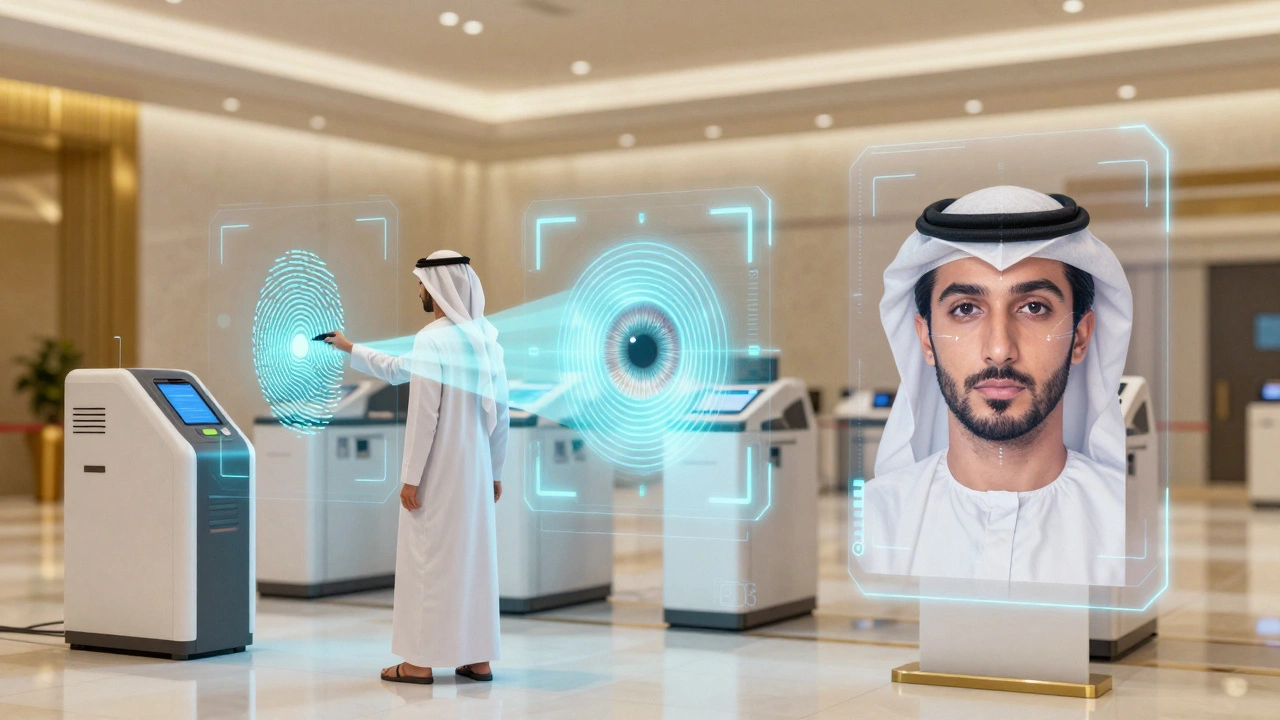
The future of fingerprint identification lies in convergence. We are seeing a shift from standalone AFIS to integrated ABIS platforms that combine fingerprints, faces, and irises. This multimodal approach improves accuracy by cross-verifying identities through multiple biological traits.
Additionally, machine learning and deep neural networks are being applied to enhance latent print analysis. Traditional algorithms struggle with distorted prints, but AI models can learn to recognize patterns in noisy data, potentially increasing hit rates for difficult cases. As cloud computing becomes more prevalent, we may see more agencies adopting scalable, cloud-hosted AFIS services rather than maintaining expensive on-premise servers.
However, technology alone won’t solve all problems. The human element-trained examiners following protocols like ACE-V (Analysis, Comparison, Evaluation, Verification)-remains essential. AFIS is a powerful tool, but it is only as reliable as the people who interpret its results.
Is AFIS 100% accurate?
No. While AFIS is highly effective for high-quality ten-print comparisons, it is not infallible. Latent prints from crime scenes are often partial or distorted, leading to higher miss rates. Additionally, human error in interpreting AFIS candidate lists can lead to misidentifications, as seen in cases like Brandon Mayfield. Experts recommend treating AFIS results as investigative leads that require human verification.
What is the difference between AFIS and ABIS?
AFIS stands for Automated Fingerprint Identification System, focusing solely on fingerprints. ABIS stands for Automated Biometric Identification System, which handles multiple biometric modalities such as fingerprints, facial images, iris scans, and palm prints. Modern systems are increasingly adopting the ABIS model to improve identification accuracy through multimodal fusion.
How long does it take for AFIS to return a result?
For high-quality ten-print submissions, modern AFIS systems can return results in minutes or even seconds. For example, the FBI’s IAFIS reduced criminal inquiry response times to around two hours upon its launch, a significant improvement over the weeks required for manual searches. Latent print searches may take longer depending on database size and print quality.
What data standards does AFIS use?
In the United States, the primary standard is ANSI/NIST-ITL 1:2011, which defines data formats for fingerprints and associated information. Internationally, ISO/IEC 19794 series standards are widely used. These standards ensure interoperability between different AFIS vendors and national databases.
Can AFIS be hacked or spoofed?
Like any digital system, AFIS is vulnerable to cyberattacks if not properly secured. However, modern implementations use strong encryption, secure transmission protocols, and access controls to protect data. Spoofing fingerprints with fake molds is theoretically possible but difficult to execute successfully against advanced sensor technologies that detect liveness (blood flow, skin texture).