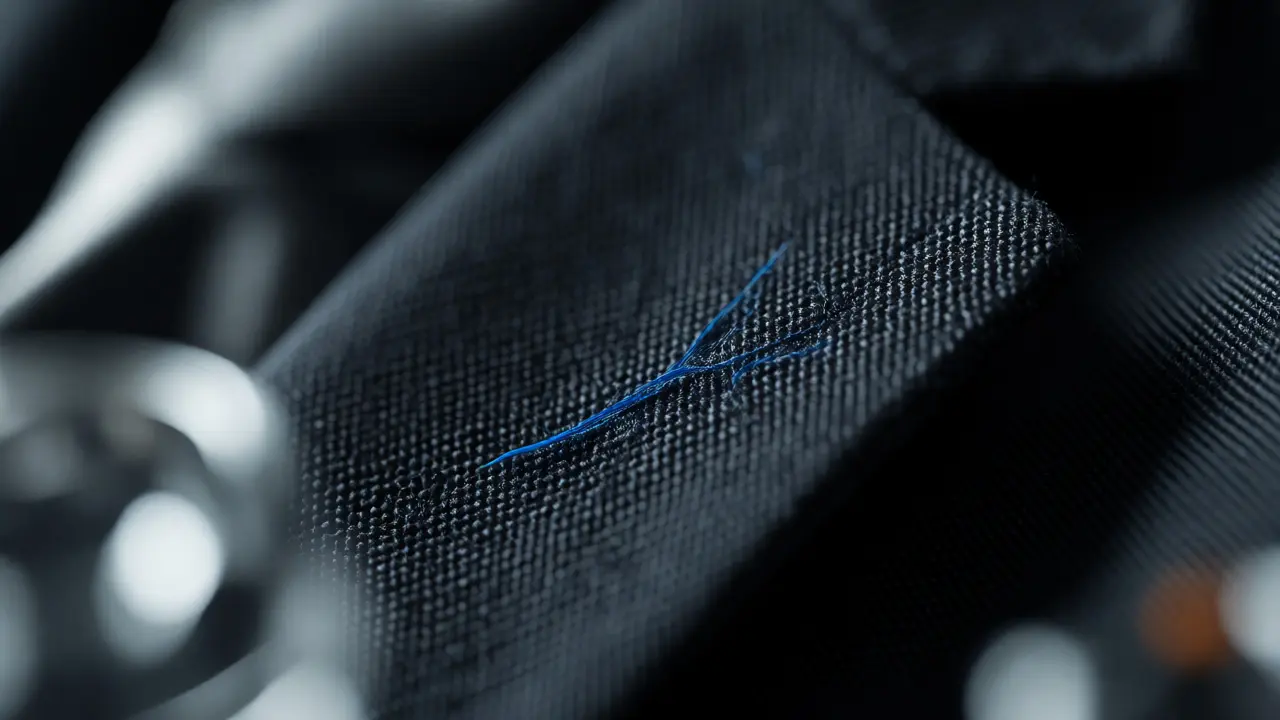
You find a single blue fiber on a suspect's jacket. It looks exactly like the carpet in the victim's living room. Is that proof? Not even close. In the world of trace evidence, which refers to small biological or physical materials transferred during contact, visual similarity is just the starting line. The real work happens when you try to prove that this specific fragment came from that specific source, and not from the millions of other blue fibers manufactured last year.
Most people think forensic science is about finding the smoking gun. In reality, it’s about probability. When experts perform a comparative analysis, they aren't usually saying "this is definitely from there." They are saying, "It is highly probable that these two items share a common origin," or "We cannot exclude this source." Understanding how we get from a speck of dust to a court-admissible link requires digging into the chemistry, physics, and logic behind the microscope.
The Core Principle: Locard’s Exchange Theory
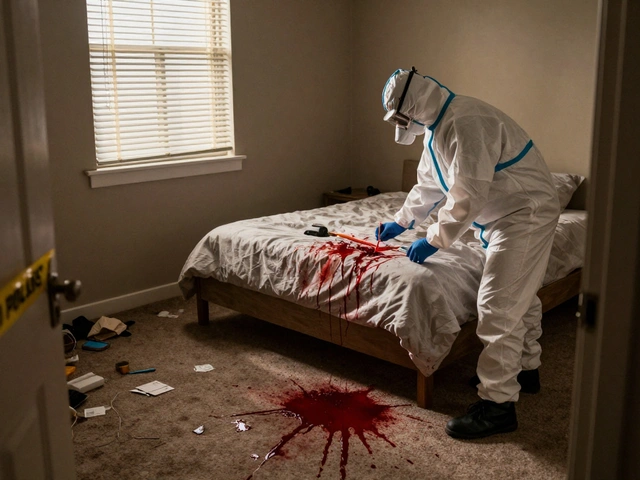
Every crime scene begins with an exchange. This concept, known as Locard’s Exchange Principle, states that every contact leaves a trace. If a burglar climbs through a window, he picks up glass shards and drops skin cells. If a driver hits a pedestrian, paint chips fly off the car and onto the person’s clothing. The challenge isn’t always finding the trace; it’s determining where it came from.
Matching trace evidence relies on two main questions:
- Class Characteristics: Does the evidence belong to a group? (e.g., All red nylon fibers are chemically similar.)
- Individual Characteristics: Can we narrow it down to one unique source? (e.g., This specific red nylon fiber has a unique dye batch defect found only in this rug.)
True individualization-proving something came from one single object-is rare in trace analysis. Most of the time, you are working with class characteristics. Your job is to reduce the size of that class until it becomes statistically significant enough to matter in a legal context.
Fiber Matching: More Than Just Color
Fibers are among the most common types of trace evidence because they transfer easily and stick stubbornly. But comparing them is tricky. A standard cotton t-shirt might have thousands of identical threads. If you pull a thread from the shirt and another from the floor, they will look identical under a basic magnifying glass. That tells you almost nothing.
To make a meaningful match, forensic analysts use a multi-step protocol. First, they examine morphology under a comparison microscope, which allows side-by-side viewing of two samples at high magnification. They look for cross-sectional shapes (round, triangular, trilobal) and surface defects. Next, they move to chemical identification using Fourier Transform Infrared Spectroscopy (FTIR), a technique that identifies polymers by measuring how they absorb infrared light. FTIR confirms if both fibers are polyester, nylon, or wool. But since many clothes are made of the same polymer, this is still just a class characteristic.
The differentiator often lies in the dye. Analysts use thin-layer chromatography (TLC) to separate the dyes within the fiber. Even if two shirts are both "black," the mix of dyes used to create that black can vary wildly between manufacturers. If the dye profiles match perfectly, the probability of coincidence drops significantly. However, remember that mass-produced items share batches. A perfect match means the fibers likely came from the same production run, not necessarily the exact same garment worn at the time of the crime.
Glass Fragments: Refractive Index and Elemental Composition
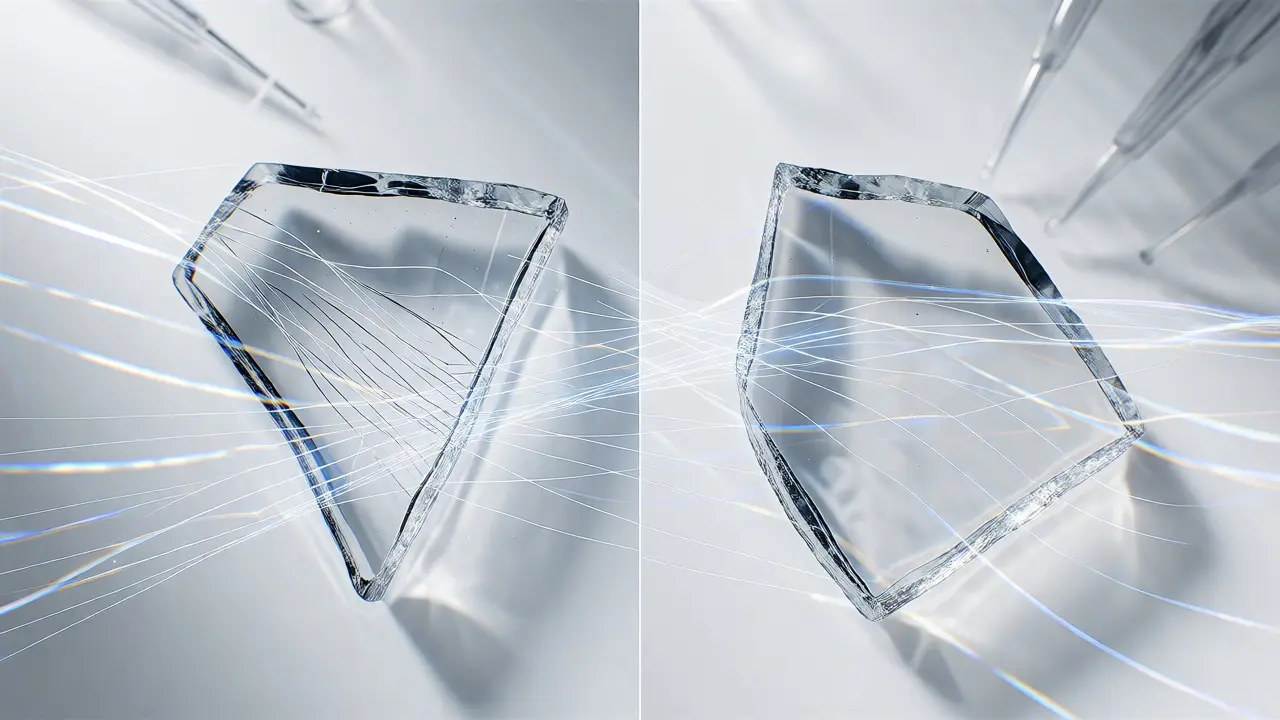
Glass breaks, but it doesn’t vanish. Tiny fragments scatter across the ground and cling to shoes and hair. Unlike fibers, glass is homogeneous. You can’t look at a shard and see a weave pattern. Instead, you measure its physical properties.
The gold standard for glass comparison is the Refractive Index (RI), which measures how much light bends as it passes through the glass. Glass RI varies based on its chemical composition and cooling rate. Two windows from the same factory might have slightly different RIs due to temperature fluctuations during manufacturing. If the RI values of a suspect’s shoe debris and the broken window match within 0.001 units, it’s a strong indicator. But again, it’s not absolute proof unless you also consider thickness and color.
For higher discrimination, labs use Inductively Coupled Plasma Mass Spectrometry (ICP-MS) to analyze trace elements like strontium, barium, and titanium. These elements act as a chemical fingerprint. While all soda-lime glass is mostly silica and sodium, the minor impurities depend heavily on the sand source and furnace location. A match here is powerful because it links the glass to a specific geographic region or manufacturer, narrowing the pool of possible sources dramatically.
Soil and Geology: The Earth’s Fingerprint
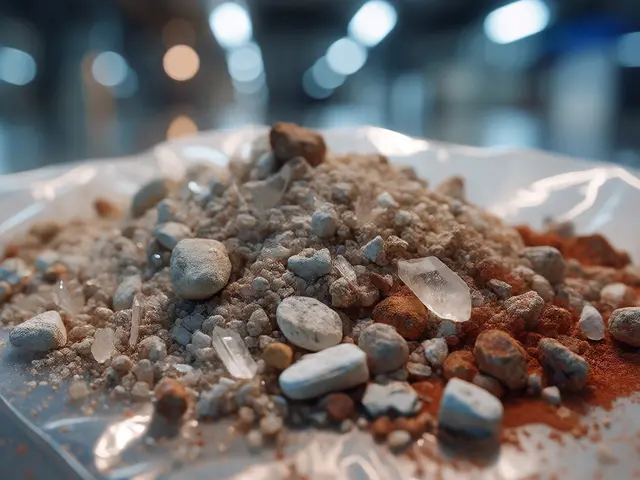
People underestimate soil. We walk on it, track it in, and forget it exists. Yet, soil is incredibly complex. It contains minerals, organic matter, pollen, seeds, and microorganisms. Because soil varies drastically over short distances-a park bench ten feet apart can sit on different layers of sediment-it offers high potential for discrimination.
When matching soil from a suspect’s tire tread to a crime scene, analysts don’t just compare dirt to dirt. They break it down into components:
- Mineralogy: Using X-ray diffraction (XRD) to identify crystalline structures like quartz or calcite.
- Chemistry: Analyzing pH levels and nutrient content.
- Botanical Content: Identifying pollen grains or plant fragments under a microscope.
A match here is compelling because while you can buy a bag of potting soil anywhere, you can’t easily replicate the exact mixture of local clay, decomposed pine needles, and industrial pollutants found in a specific alleyway in Portland. If the pollen in the mud matches a plant species that only blooms in that neighborhood during October, the timeline and location align tightly.
Paint Chips: Layering Up the Truth
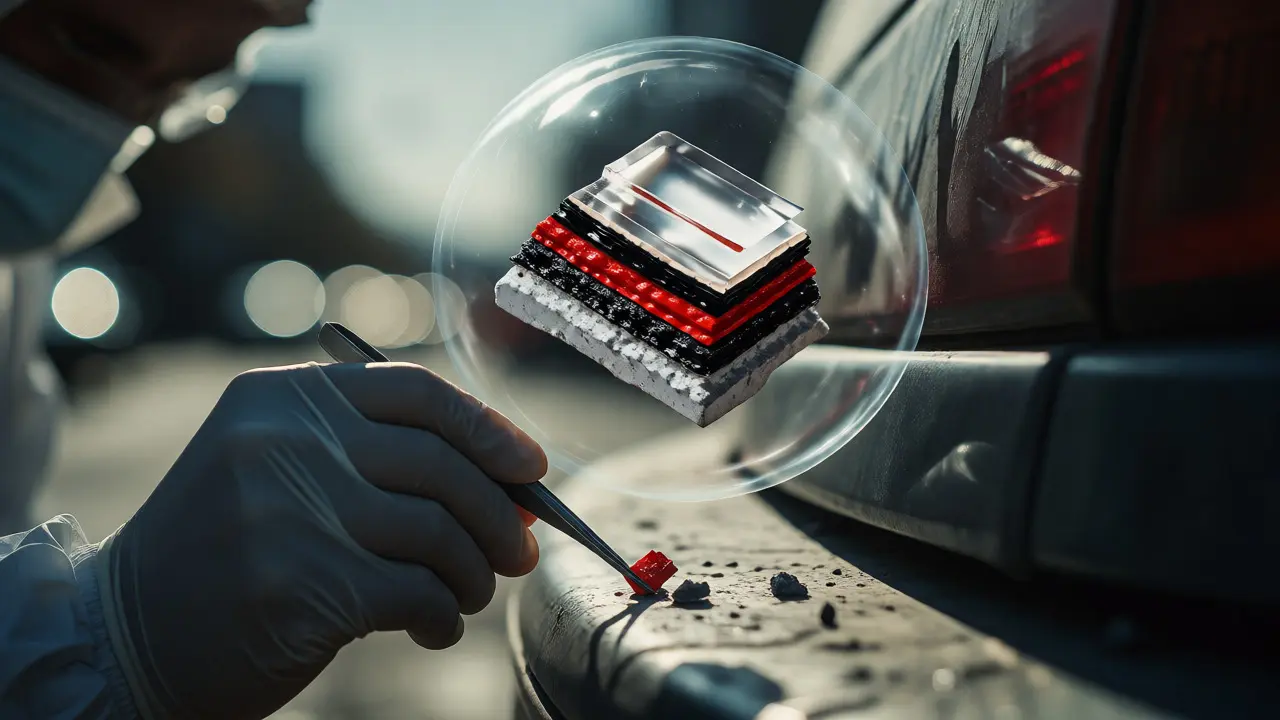
Vehicles are coated in multiple layers of paint: primer, base coat, clear coat. When a hit-and-run occurs, the transfer isn’t just a splash of color; it’s a stratified sample. Matching paint involves analyzing the sequence and thickness of these layers.
Analysts use optical microscopy to count layers and measure their thickness in microns. Then, they use Pyrolysis Gas Chromatography-Mass Spectrometry (Py-GC-MS) to break down the binders and pigments. This reveals the specific brand and type of paint used. For example, a 2015 Toyota Camry might use a specific acrylic resin from a particular supplier. If the chip found on the victim’s jacket matches the layer structure and chemical binder of the suspect’s car, the link is strong. But beware: auto body shops often repaint cars. If the suspect repainted his bumper last week, the new paint won’t match the original factory layers, potentially creating a false exclusion if you’re not careful.
| Evidence Type | Primary Method | Differentiation Level | Common Pitfall |
|---|---|---|---|
| Fibers | Microscopy + FTIR + TLC | Low to Medium (Class) | Mass production leads to identical items. |
| Glass | Refractive Index + ICP-MS | Medium to High | Similar manufacturing batches have similar RI. |
| Soil | XRD + Pollen Analysis | High (Location Specific) | Contamination from foot traffic alters samples. |
| Paint | Layer Count + Py-GC-MS | Medium | Repainting obscures original factory data. |
The Statistical Reality: Probability vs. Certainty
This is where lawyers and juries often get confused. Forensic scientists rarely say "This fiber came from this sweater." They say, "The fiber is consistent with the sweater." What does that mean?
Consistency means the evidence shares all tested characteristics with the reference sample. It does not rule out other possibilities. To assess strength, analysts look at frequency. How common is this combination of traits? If you find a generic white cotton fiber, it’s worthless-it’s everywhere. But if you find a neon-green acrylic fiber with a unique trilobal cross-section and a specific dye defect, the frequency drops. Maybe only 1% of sweaters sold in that city have those traits. Now you have a statistical weight.
Modern databases help here. Labs maintain extensive libraries of commercial products. If a fiber matches a specific upholstery fabric sold by a major retailer, analysts can estimate how many homes have that sofa. This contextualizes the evidence. A match to a mass-market product is weak; a match to a limited-edition designer item is stronger.
Pitfalls in Collection and Handling
No amount of lab magic can fix bad collection. Trace evidence is fragile. If you sweep a floor with a broom, you destroy the spatial relationship of the debris. If you put wet soil in a plastic bag, mold grows and changes the chemical profile within days.
Best practices include:
- Control Samples: Always take samples from areas near the crime scene that were *not* involved in the event. This helps distinguish background noise from relevant transfer.
- Sequential Collection: Collect larger items first, then use tape lifts for fine particles. Never vacuum before lifting fibers, or you’ll lose them.
- Packaging: Use paper folds or pill boxes for dry evidence. Avoid plastic bags for anything that might retain moisture, as condensation promotes degradation.
Also, watch out for secondary transfer. Did the suspect touch the victim directly, or did he shake hands with someone who touched the victim? Trace evidence doesn’t carry a timestamp. It just shows contact happened at some point. Corroborating evidence-like video surveillance or alibi checks-is essential to interpret the trace correctly.
Next Steps for Investigators
If you are dealing with a case involving trace evidence, start by defining what you need to prove. Are you trying to place a suspect at a location? Or are you trying to link two objects together? Be realistic about what trace evidence can do. It rarely provides a definitive ID on its own. It works best as part of a mosaic.
Send your samples early. Degradation happens fast. Provide ample control samples so the lab can establish a baseline. And when you receive the report, read the conclusion carefully. Look for words like "consistent," "cannot exclude," or "probable." Ask the analyst to explain the limitations of the test in plain language. Understanding the gap between "matching" and "proving" is the key to using trace evidence effectively in court.
Can trace evidence alone convict someone?
Rarely. Trace evidence is circumstantial. It proves contact, not intent or timing. Prosecutors usually combine it with DNA, fingerprints, or eyewitness testimony to build a strong case. A single fiber match is rarely enough for a conviction without corroborating facts.
How long does trace evidence last?
It depends on the environment. Indoors, fibers and glass can persist for weeks or months. Outdoors, rain, wind, and UV light degrade evidence quickly. Soil samples can change chemically within days if exposed to moisture. Prompt collection is critical for integrity.
What is the difference between class and individual characteristics?
Class characteristics are shared by a group (e.g., all Ford tires have similar tread patterns). Individual characteristics are unique to one object (e.g., a specific cut in the tire sidewall). Trace evidence often provides class characteristics, requiring statistical analysis to determine significance.
Why is refractive index important for glass?
Refractive index measures how light bends through glass. It varies based on chemical composition and cooling rates. Even glass from the same factory can have slight RI variations. Matching RI narrows down the source significantly, though it doesn't guarantee a unique match without elemental analysis.
Can washing clothes remove trace evidence?
Yes, washing removes most loose trace evidence. However, tightly woven fabrics may trap fibers deep in the weave. Chemical treatments in detergents can also alter dye profiles, making later comparison difficult. If a suspect claims to have washed their clothes, investigators should collect unworn garments for comparison.