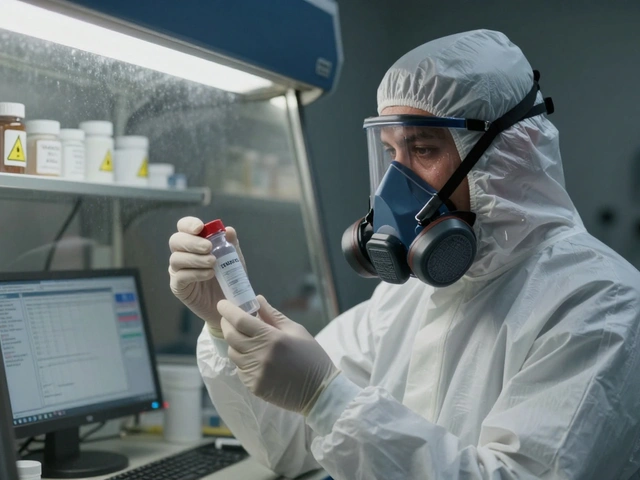
When a lab test result doesn’t match the standard, or a sample is mishandled, or equipment runs out of calibration - that’s nonconforming work. It’s not just a mistake. It’s a risk to your credibility, your clients, and sometimes even public safety. Labs operating under ISO 17025 or similar accreditation standards can’t afford to ignore it. The question isn’t whether nonconformances will happen - it’s whether you’re ready to catch them, contain them, and fix them for good.
What Exactly Is Nonconforming Work?
Nonconforming work means anything that doesn’t meet a defined requirement. That could be a test result outside the acceptable range, a missing signature on a chain-of-custody form, a pipette used past its calibration date, or a technician skipping a step in the SOP. It’s not always dramatic. Sometimes it’s a small slip - but small slips add up. In accredited labs, even minor deviations can trigger audit findings, client complaints, or loss of certification.
According to ISO 9001:2015 and ISO/IEC 17025, labs must have a system to identify, control, and correct nonconforming outputs. This isn’t optional. It’s the backbone of accreditation. If you can’t show you handle errors systematically, you don’t pass the audit.
How Nonconformances Are Detected
Detection starts with people - not software. Technicians, QA staff, and even interns need to be trained to spot when something’s off. Common detection points include:
- Final result review - a value falls outside the method’s validation range
- Equipment logs - a balance hasn’t been calibrated in 90 days
- Sample handling - a blood vial was left unrefrigerated for 4 hours
- Documentation - a critical step in the SOP was skipped and not signed off
- Internal audits - an auditor finds inconsistent record-keeping
- Client feedback - a hospital questions a result because it doesn’t match clinical signs
Modern labs use digital checklists and LIMS systems that flag missing entries in real time. But tech alone won’t catch everything. A culture where staff feel safe reporting errors is just as important. If someone fears blame for reporting a mistake, they’ll stay quiet - and the problem grows.
Documentation: The Non-Conformance Report (NCR)
Once a nonconformance is spotted, it must be documented. No exceptions. The standard tool is the Non-Conformance Report (NCR). A good NCR includes:
- What exactly went wrong (specific deviation)
- When and where it happened
- Who was involved (technician, supervisor, equipment ID)
- Which procedure or standard was violated
- Impact assessment - did this affect patient results? Was a batch compromised?
- Photos, screenshots, or attached data files as evidence
Electronic NCR forms are now standard. They reduce errors, auto-fill dates and IDs, and route the report to the right person. Paper forms? They get lost. Digital ones? They’re searchable, trackable, and audit-ready.
Every NCR must be signed by the person who reported it and the quality manager. No signature, no investigation. No investigation, no closure.
Classifying Severity: Major vs. Minor
Not all nonconformances are equal. Labs must classify them:
- Major: Affects result accuracy, safety, regulatory compliance, or client trust. Example: Using an expired reagent batch that produced 12 false-negative HIV tests.
- Minor: Administrative, procedural, or isolated. Example: A missing initials on a logbook entry - but the test itself was performed correctly.
Classification determines how deep the investigation goes. A major nonconformance triggers a full root cause analysis. A minor one might just need a quick fix and retraining. But even minor ones get documented - because patterns matter. If five people miss the same signature step, it’s not a mistake. It’s a flawed procedure.
Root Cause Analysis: Why Did This Happen?
Fixing the symptom isn’t enough. You need to kill the cause. Two tools work best in labs:
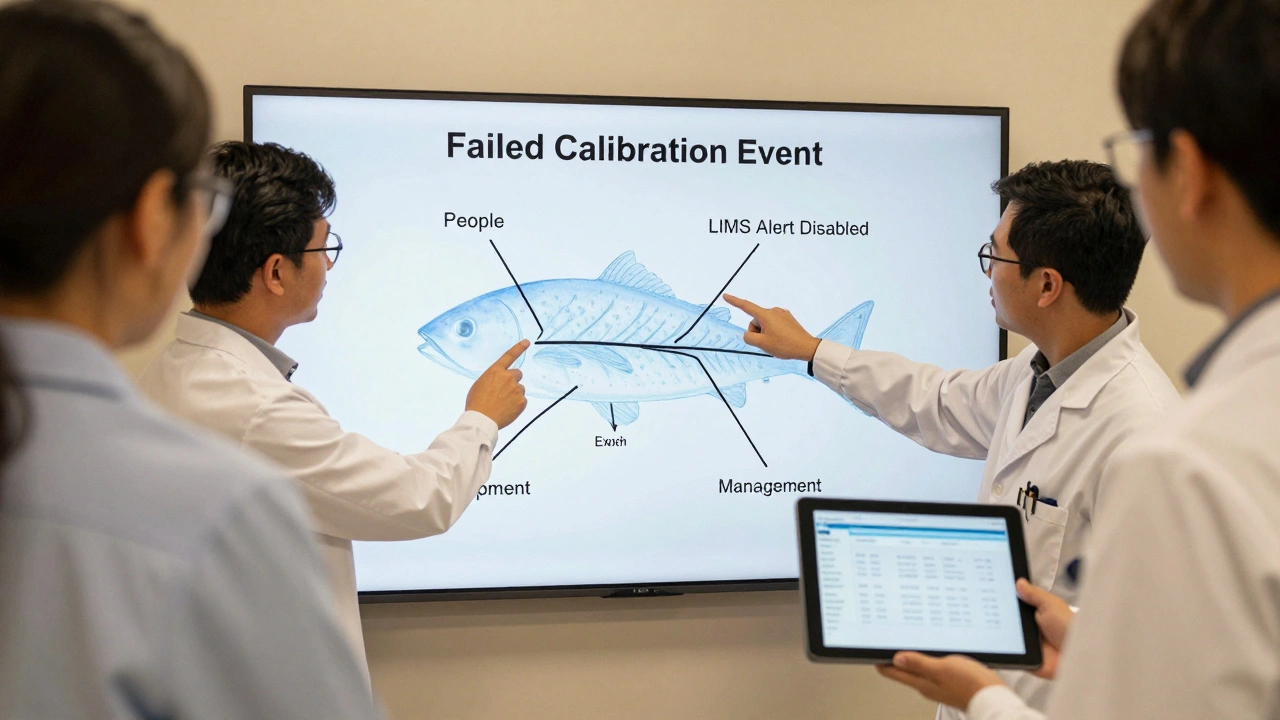
- The 5 Whys: Keep asking “why?” until you hit the real source. Example:
- Why was the result wrong? Because the calibration was off.
- Why was the calibration off? Because the technician didn’t do it.
- Why didn’t they do it? Because the reminder didn’t pop up.
- Why didn’t the reminder pop up? Because the LIMS alert was turned off last month.
- Why was it turned off? Because no one reviewed system alerts after the last update. - Fishbone Diagram: Breaks causes into categories: People, Process, Equipment, Materials, Environment, Management.
Don’t blame the person. Ask: Was the procedure clear? Was the training adequate? Was the equipment reliable? Was there pressure to rush? The goal isn’t to find who messed up - it’s to find why the system let it happen.
Corrective and Preventive Action (CAPA)
Once you know the cause, you act. CAPA is the fix - and the prevention. It has two parts:
- Corrective Action: Fixes the immediate problem. Example: Recalibrate the instrument, retest affected samples, notify clients if needed.
- Preventive Action: Stops it from happening again. Example: Update the LIMS to auto-disable uncalibrated equipment, add a mandatory calibration checklist before sample processing, train all staff on alert systems.
Assign owners. Set deadlines. Track completion. Automation helps here. QMS software can auto-assign CAPA tasks, send reminders, and escalate if deadlines are missed. If a CAPA isn’t closed within 30 days, it should trigger a manager review.
Effectiveness verification is critical. Did the fix work? Six months later, check if the same error occurred again. If yes - your CAPA failed.
Technology That Makes It Work
Manual systems are slow. Digital tools change everything:
- QMS Software: Centralizes NCRs, tracks CAPAs, stores audit trails, and auto-generates reports for accreditation bodies.
- LIMS Integration: Flags out-of-spec results before they’re finalized.
- IoT Sensors: Monitor fridge temps, humidity, or equipment usage in real time - and alert if thresholds are breached.
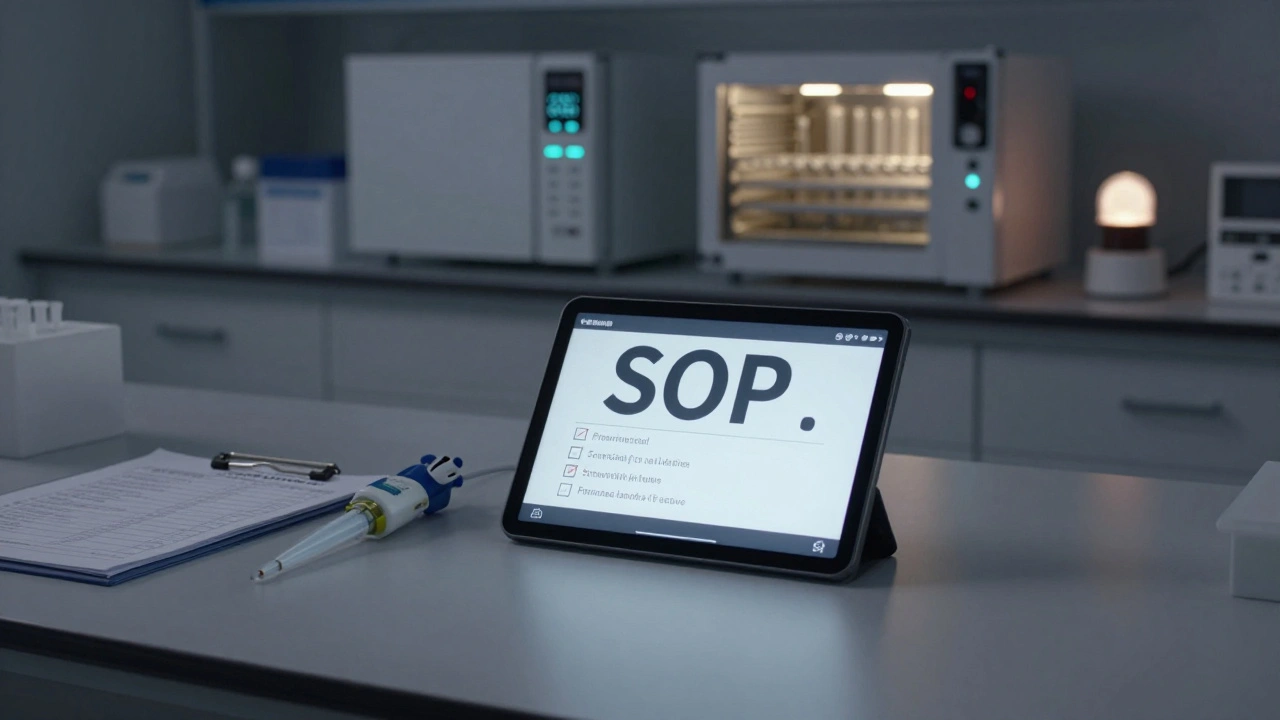
- Digital SOPs: Update lab procedures instantly across all devices. No more printing outdated manuals.
One lab in Ohio cut nonconformance resolution time from 14 days to 3 days after switching to an integrated QMS. Their audit score jumped from 78% to 96% in one year.
Prevention: Stop Problems Before They Start
The best nonconformance is the one you never see. Prevention beats correction every time. Key strategies:
- Regular training: Not a one-time event. Quarterly refreshers on SOPs, safety, and equipment use.
- Checklists: Use them for every high-risk step - from sample receipt to result release.
- Preventive maintenance: Schedule equipment servicing based on usage, not calendar dates.
- Statistical Process Control (SPC): Track trends. If a result drifts slowly out of range, catch it before it becomes a failure.
- Quality culture: Reward reporting. Celebrate teams that find and fix issues early. Make quality everyone’s job - not just QA’s.
One lab started a monthly “No Blame Finding” award. The person who reported the most useful nonconformance got a gift card. Result? Reporting increased by 70%. Errors dropped by 45%.
Common Pitfalls Labs Keep Making
- Delaying NCRs because “it’s not a big deal.”
- Letting CAPAs sit open for months.
- Using outdated SOPs - and not tracking who has them.
- Blaming technicians instead of fixing the system.
- Not verifying that CAPAs actually worked.
- Not training new staff on how to report nonconformances.
These aren’t just bad practices. They’re accreditation red flags.
Final Checklist: Are You Ready?
Before your next audit, ask:
- Do we have a clear, documented NCR process?
- Are all staff trained on how to report nonconformances?
- Is our QMS software set up to auto-route and track CAPAs?
- Do we review nonconformance trends monthly?
- Have we closed every open CAPA from the last 6 months?
- Do we verify that fixes actually prevent recurrence?
If you answered “yes” to all - you’re not just compliant. You’re building trust.
What happens if a lab doesn’t handle nonconforming work properly?
Accreditation bodies like ANAB, UKAS, or ILAC can suspend or withdraw certification. Clients may stop using your services. Regulatory agencies may issue warnings or fines. In clinical or forensic labs, untreated nonconformances can lead to wrongful diagnoses, legal liability, or even criminal charges if patient safety is compromised.
Is a minor nonconformance really that important?
Yes. Minor issues often reveal systemic problems. If three technicians miss the same signature step, it means the form is confusing, the training is weak, or the procedure isn’t practical. Ignoring minor issues creates a culture where mistakes are normalized - and eventually, a major failure will happen.
Can software really reduce nonconformances?
Absolutely. Labs using integrated QMS systems report 40-60% fewer repeat nonconformances. Automation removes human error in routing, reminders, and documentation. It also makes trends visible - so you can fix problems before they become crises.
Who should own the CAPA process in a lab?
The Quality Manager or QA Lead owns the process, but the fix belongs to the team that caused it. A technician who skipped a step should help redesign the checklist. A supervisor who didn’t catch the error should lead the retraining. Ownership drives accountability.
How often should nonconformance data be reviewed?
Monthly. Review trends: Which steps have the most errors? Which equipment fails most often? Which staff need more training? Use this data to update SOPs, adjust training, and allocate resources. Quarterly reviews with leadership should include metrics like time-to-close, cost of nonconformance, and audit findings.