The first few hours after someone is reported missing are the most critical. Whether it is a child who wandered off or an adult who disappeared under strange circumstances, the clock starts ticking the moment the phone rings. In these high-pressure scenarios, guessing isn't an option. Law enforcement officers need a systematic way to gather data and deploy resources without missing a single detail. That is why standardized missing person investigation protocols exist-to turn chaos into a coordinated search.
When a report comes in, the goal isn't just to "look for the person." It is to figure out if they are actually missing, how they disappeared, and how much danger they are in. By following a structured framework, responders can avoid common pitfalls-like ignoring a home search because the family already did it-and ensure that every lead is pursued immediately.
Quick Essentials for First Responders
- Confirm the Status: Determine if the person is actually missing or if there is a misunderstanding about their location.
- Risk Assessment: Identify high-risk factors (age, medical conditions, autism) to trigger immediate resource escalation.
- The "Zone of Safety": Evaluate if the disappearance is within normal parameters for the person's developmental stage.
- Rapid Documentation: Secure recent photos and descriptions of the person, suspects, and vehicles.
- Immediate Reporting: Enter data into the NCIC and notify NCMEC as quickly as possible.
The First Contact: Interviewing and Assessment
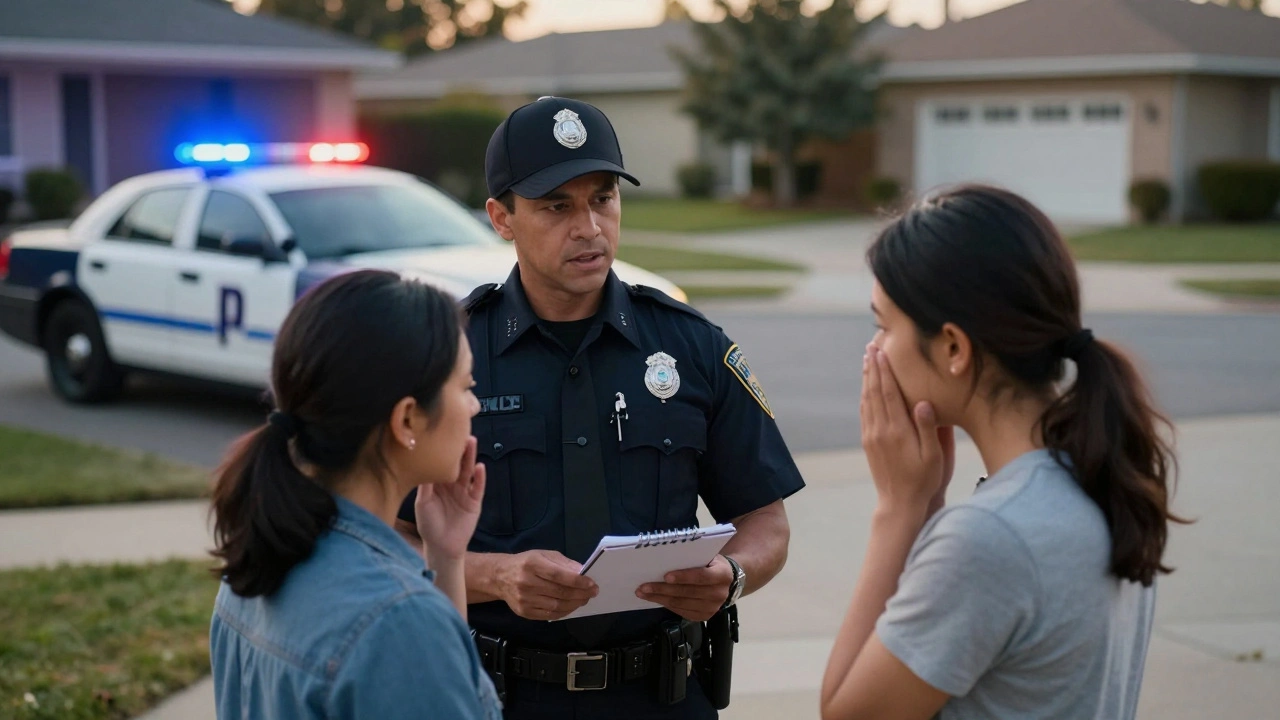
The moment an officer arrives, the primary objective is to build a clear picture of the disappearance. This starts with a detailed interview of the person reporting the loss. It is not enough to know who is missing; responders need to know exactly when, where, and by whom they were last seen. These specifics create the starting point for the search radius.
A key part of this phase is the "zone of safety" assessment. For a toddler, a zone of safety might be the backyard and the immediate neighbor's porch. For a teenager, it might be the local mall or a friend's house. If a person is found outside this zone, the risk level spikes. NCMEC is the National Center for Missing & Exploited Children, an organization that provides critical frameworks and resources for recovering missing children. Their research shows that children on the autism spectrum are at an exponentially higher risk, often attracted to water. If a child with autism is missing, the protocol shifts instantly: call for more responders, search nearby bodies of water, and notify a supervisor immediately.
Securing the Scene and the Residence
One of the most common mistakes in initial responses is skipping the home search because a parent says, "I already looked everywhere." Professional investigators know that family members are often too panicked to be thorough. First responders must obtain consent to search the residence, regardless of prior efforts.
The search should be methodical. Officers need to examine the missing person's room and the entire home for missing personal items-like a favorite toy, a backpack, or a passport-which can hint at whether the disappearance was voluntary or forced. Documenting the scene with photos or video is essential for later analysis. For children or teens, checking for cellular phones or tablets is a priority; these devices are often the fastest way to pinpoint a location through GPS or digital footprints.
| Risk Factor | Immediate Action | Resource Requirement |
|---|---|---|
| High (e.g., Autism, Infant, Medical Need) | Immediate water search, supervisor alert | Full-scale multi-agency response |
| Moderate (e.g., Teenager, Known Runaway) | Digital footprint check, friend interviews | Local patrol and detective support |
| Low (e.g., Adult, Voluntary Departure) | NCIC entry, kinship checks | Standard patrol follow-up |

Interviewing Witnesses and Identifying Suspects
The scene of a disappearance is a goldmine of information if handled correctly. Every person present at the scene must be identified and interviewed separately. This prevents "story blending," where witnesses subconsciously align their accounts. Officers should ask direct, open-ended questions, such as "What do you think happened to the missing person?"
Modern technology plays a huge role here. Activating body cameras or vehicle-mounted cameras helps document everyone present and their emotional state. Responders should also look for anyone who seemed "out of place" in the neighborhood. A car idling at the end of a driveway or a stranger walking a dog in an unfamiliar area can be a vital lead. This extends to technology in the environment; officers must identify all nearby surveillance cameras-from doorbell cams to business security systems-that might have captured the person or a suspicious vehicle.
Alert Systems and National Notifications
Once the facts are gathered, the information needs to move fast. The first stop is the NCIC, which is the National Crime Information Center, a centralized database used by law enforcement to track missing persons and stolen property nationwide. Entering a person into the NCIC ensures that any officer in the country who stops a vehicle or encounters a stranger can check for a match.
For child abductions, the decision to trigger an AMBER Alert is a high-stakes move. This system is designed to broadcast urgent alerts to the public to help recover abducted children. Because of the scale of these alerts, they usually require a supervisory discussion to ensure the case meets specific criteria-such as evidence of abduction and a belief that the child is in imminent danger.
If the case involves a child missing from a foster placement, NCMEC must be notified within 24 hours. In cases of family abduction, where one parent has taken a child, the left-behind parent needs to be advised to contact NCMEC immediately, especially if there is a risk the child will be taken across state or national borders.

Supervisory Oversight and Specialized Resources
While the first responder handles the immediate chaos, the supervisory officer manages the big picture. They are responsible for reviewing all written reports and deciding if the current manpower is sufficient. If the case is complex or high-profile, they may call in specialized agencies. The FBI (Federal Bureau of Investigation) and the USMS (United States Marshals Service) provide advanced tracking and fugitive recovery capabilities that local departments simply don't have.
Supervisors also ensure that the search area is treated as a potential crime scene. This means not just looking for the person, but looking for evidence. They might order searches of nearby vehicles, wooded areas, or other places of concealment. They also coordinate the background checks on every suspect and witness involved to see if there are patterns of criminal behavior that could explain the disappearance.
Do police have to wait 24 hours to file a missing person report?
No. The "24-hour rule" is a myth. In real investigations, especially those involving children, the elderly, or vulnerable adults, every minute counts. Law enforcement agencies encourage reporting immediately so they can begin the initial response procedures and risk assessment without delay.
What is the purpose of the "zone of safety"?
The zone of safety is a developmental assessment. It defines the area where a person of a certain age and ability would typically be expected to be. If a missing person is found outside this zone, it suggests they may be lost, abducted, or in a state of crisis, which triggers a more aggressive search response.
Why is it necessary to search the home if the family already did?
Panic and emotional distress can cause family members to overlook obvious places. Professional first responders use a systematic search pattern to ensure no closet, crawlspace, or vehicle is missed. They also look for missing items that a family member might not realize are gone, which can provide clues about the person's intent.
When is an AMBER Alert activated?
An AMBER Alert is activated when a case meets specific criteria: a child has been abducted, there is a believable threat of death or serious injury, and there is enough descriptive information (like a license plate or vehicle make) to make a public alert useful.
What role does the NCIC play in these cases?
The NCIC acts as a national clearinghouse. By entering a missing person's data into this system, local police make the information available to every law enforcement agency in the US, allowing for rapid identification during routine stops or investigations in other jurisdictions.
Next Steps and Troubleshooting
If the initial search does not yield results, the investigation moves into a secondary phase. This involves deepening the digital dive-analyzing social media logs, bank statements, and cell tower pings. If the case remains unsolved, investigators should re-interview the primary witnesses, as new details often emerge once the initial shock has worn off.
For agencies struggling with resource allocation, the best move is to establish pre-set agreements with neighboring jurisdictions for mutual aid. Ensuring that all personnel are briefed and brought up-to-date on a daily basis prevents the duplication of effort and ensures that the search remains focused on the most likely locations of the missing person.