You’ve seen it on every crime drama: the lab tech holds up a vial, announces a match, and the jury gasps. In real courtrooms, though, that moment is far more complicated. Just because a lab finds DNA doesn’t mean a judge will let the jury hear about it. Before any genetic profile enters the record, it has to survive a rigorous legal gauntlet known as admissibility hearings. If you’re a law student, a defense attorney, or just someone fascinated by how science meets the gavel, understanding these rules is critical. A single procedural error can turn a smoking gun into inadmissible noise.
The core issue isn't whether DNA exists at a scene; it's whether the method used to analyze it is scientifically valid and reliably applied. This concept hinges on two major legal frameworks that dictate how judges act as "gatekeepers" of evidence. The first, and older standard, is the Frye Standard. Established in 1923 in Frye v. United States, this rule asks a simple question: Is the scientific technique generally accepted by the relevant scientific community? For decades, if DNA profiling wasn't widely endorsed by geneticists, it stayed out of court. While many states still use Frye, its rigidity often lags behind rapid technological advances, creating friction between cutting-edge forensics and courtroom procedure.
The Shift from General Acceptance to Reliability
Most federal courts and a growing number of states have moved away from Frye toward a more flexible, yet demanding, framework: the Daubert Standard. Introduced in the 1993 Supreme Court case Daubert v. Merrell Dow Pharmaceuticals, this standard shifts the focus from popularity to reliability. Under Daubert, judges don't just ask if scientists like the method; they scrutinize the methodology itself. This change forced forensic labs to tighten their protocols significantly. You can't just say "it works" anymore; you have to prove why it works, how often it fails, and who tested it.
Why does this matter for DNA cases? Because DNA analysis isn't magic. It involves complex statistical calculations, especially when dealing with mixed samples or degraded material. Under Daubert, an expert witness must be prepared to answer specific questions about their methods. If a prosecutor tries to introduce low-template DNA results without explaining the error rates, a competent defense attorney will likely file a motion to exclude that evidence before trial even starts.
The Four Pillars of Daubert Analysis
Judges applying the Daubert standard typically look at four key factors to determine if DNA evidence is admissible. These aren't checkboxes; they're holistic considerations. Let’s break them down so you know what experts are actually arguing about in pretrial hearings.
- Testability: Can the theory or technique be tested? In DNA terms, this means can we replicate the result? If Lab A extracts DNA from a blood stain using Method X, can Lab B do the same and get the same profile? Reproducibility is non-negotiable.
- Peer Review: Has the method been published and reviewed by other scientists? Forensic journals play a huge role here. If a new sequencing technique hasn't been vetted by independent researchers, a judge might view it with skepticism.
- Error Rates: What is the known or potential rate of error? Every test has limits. For STR (Short Tandem Repeat) analysis, which is the gold standard for human identification, error rates are incredibly low but not zero. Experts must disclose contamination risks and stochastic effects-random variations in small samples.
- General Acceptance: Even under Daubert, acceptance still matters. Is the technique widely used in accredited laboratories? Compliance with ISO 17025 standards or FBI Quality Assurance Standards helps prove this point.
Challenges with Complex DNA Mixtures
Straightforward single-source DNA rarely faces admissibility challenges today. The battle lines are drawn over mixtures. Imagine a touch DNA sample from a steering wheel handled by three people. Separating those profiles is mathematically intense. Here, the debate centers on probabilistic genotyping software like STRmix or TrueAllele. These programs use algorithms to estimate the likelihood of different contributor combinations.
Defense attorneys frequently challenge the "black box" nature of these algorithms. They argue that because the code is proprietary, they can't inspect the underlying logic to find bugs. Courts have split on this. Some judges require full disclosure of source code to satisfy the "testability" prong of Daubert, while others accept validation studies showing the software performs consistently across thousands of simulated cases. If you're tracking recent rulings, note that transparency requirements are tightening. Labs are increasingly expected to provide open-source alternatives or detailed technical manuals to keep their digital tools admissible.
Contamination and Chain of Custody
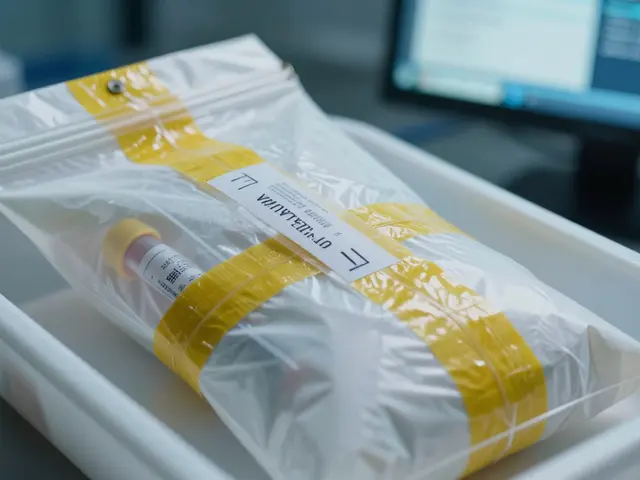
Even perfect science fails if the sample is compromised. Admissibility isn't just about the lab work; it's about the journey of the evidence. The Chain of Custody documents every person who touched the evidence from collection to analysis. Gaps in this paper trail can lead to exclusion, regardless of the DNA's quality.
Contamination is the silent killer of DNA cases. Modern sensitivity allows us to detect trace amounts of DNA, but that same sensitivity makes us vulnerable to false positives. Did the technician sneeze near the tube? Was the swab stored in a plastic bag that leached chemicals? Defense experts will comb through lab logs looking for these red flags. If a lab cannot demonstrate strict negative controls-samples containing no DNA that should return no results-the entire batch may be deemed unreliable. In Portland, where rain and humidity are common, proper drying and storage protocols are especially critical to prevent degradation before the sample even reaches the state lab.
Statistical Weight vs. Binary Match
A common misconception among jurors is that a DNA "match" means certainty. Legally, DNA evidence provides statistical weight, not absolute proof. When a profile matches, experts present a Random Match Probability (RMP). An RMP of 1 in 10 billion suggests it's extremely unlikely someone else would share that profile by chance. However, presenting this number correctly is vital.
| Method | Description | Admissibility Risk |
|---|---|---|
| Random Match Probability (RMP) | Estimates chance of random person matching profile. | Low, well-established. |
| Likelihood Ratio (LR) | Compares probability of hypothesis A vs. B. | Medium, requires clear explanation. |
| Combined Probability Index (CPI) | Used for mixtures; assumes contributors are unrelated. | High, controversial assumptions. |
Judges often hold pretrial hearings to decide which statistical methods are fair to present. If an expert uses CPI without acknowledging that family members share DNA, the testimony could be excluded for being misleading. The goal is to ensure the jury understands the strength of the link without overstating it.
Practical Checklist for Attorneys
If you are preparing for a DNA admissibility hearing, don't wait until trial. Start early. Request all raw data, not just the final report. Look for inconsistencies in electropherograms-the graphs showing DNA peaks. Ask about the analyst's training records. Were they certified? Did they pass proficiency tests recently?
Also, consider the context. Was the DNA collected properly? A swab taken from a door handle six months after a crime might contain background DNA from innocent visitors. Without context, the statistical power diminishes. Challenge the relevance, not just the science. Even if the DNA is valid, does it actually place the defendant at the scene at the time of the crime?
What is the difference between Frye and Daubert?
Frye focuses on whether a scientific method is generally accepted by the professional community. Daubert focuses on whether the method is scientifically reliable, considering factors like testability, peer review, and error rates. Daubert gives judges more discretion to evaluate the validity of new techniques.
Can DNA evidence be excluded if the chain of custody is broken?
Yes. If there are unexplained gaps in the documentation of who handled the evidence, a judge may exclude it due to concerns about tampering or contamination. However, minor clerical errors usually go to the weight of the evidence rather than admissibility, unless they raise serious doubts about integrity.
How do error rates affect DNA admissibility?
Under Daubert, known error rates are crucial. If a lab cannot quantify the risk of false positives or negatives, or if their error rate is high compared to industry standards, the evidence may be deemed unreliable. Experts must transparently discuss limitations, such as stochastic effects in low-copy-number DNA.
Are probabilistic genotyping software programs admissible?
Generally, yes, provided they have undergone rigorous validation studies and peer review. Courts increasingly require transparency regarding the algorithms' assumptions and performance metrics. Defense challenges often focus on the proprietary nature of the code, pushing for greater disclosure.
Does a DNA match prove guilt?
No. DNA proves identity, not action. A match indicates the person was likely present at the location or touched the object, but it doesn't explain how or when. Contextual evidence is needed to link the presence to the criminal act.
Navigating the Future of Forensic Genetics
The landscape is shifting again. With the rise of phenotyping (predicting eye color or ancestry) and investigative genetic genealogy, new admissibility questions emerge. Does searching a public database violate privacy rights? How do we validate AI-driven analysis tools? Staying updated on local jurisdictional rulings is essential. In Oregon, for instance, adherence to state-specific evidentiary codes alongside federal Daubert principles creates a unique hybrid environment. Always check the most recent appellate decisions in your circuit before relying on precedent.